
Wind Indicator for Mahjong Beginners: What to Buy
Last updated: Nov 23, 2026
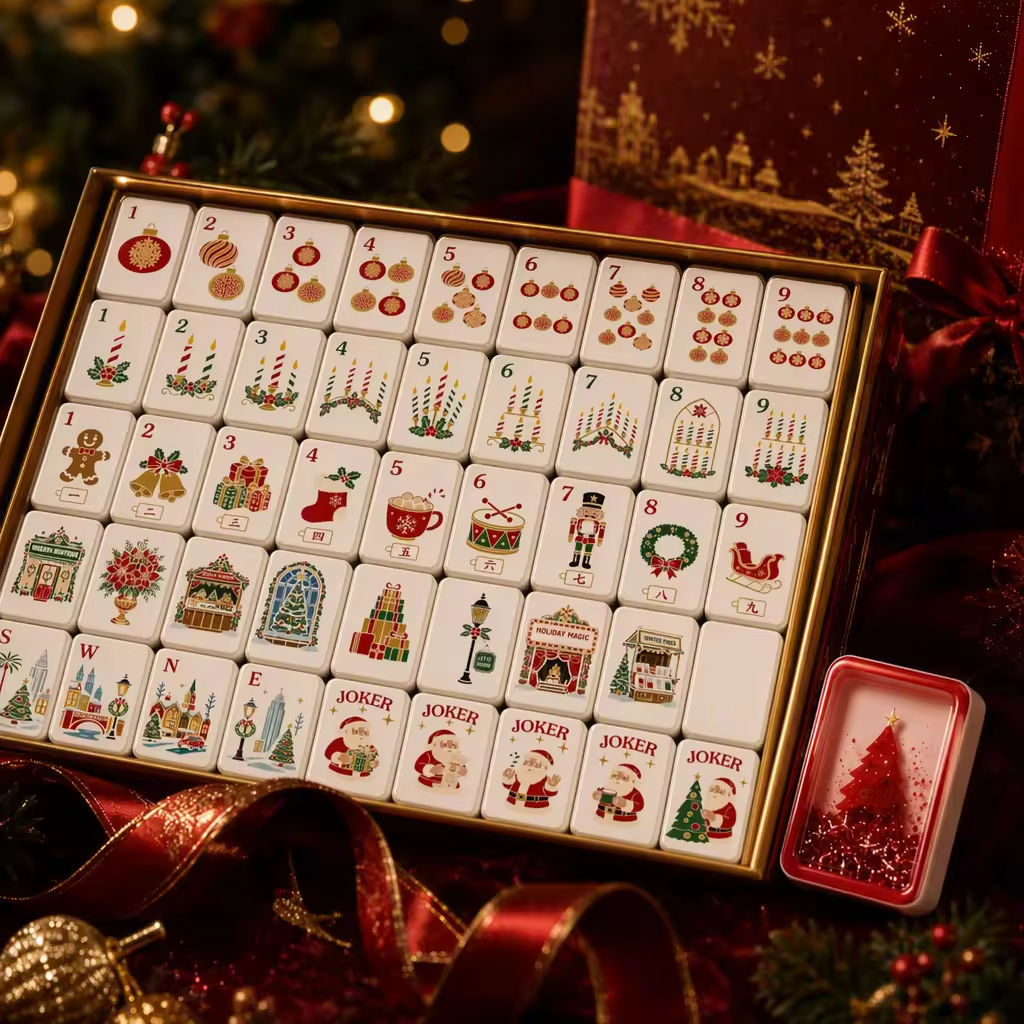
A wind indicator (or wind marker) is a small tile or token that sits in the center of the table showing which player is the dealer this round—North, East, South, or West. It rotates clockwise after each hand to keep everyone clear on turn order and scoring priority. American mahjong requires one wind indicator per game; it's often built into a set or sold separately. Beginners often forget to rotate it or misplace it mid-game, causing confusion about who won and who owes points. Most best-selling mahjong sets include a wind indicator, though some are fiddly tiles that get mixed into your hand by accident. The best ones are chunky, distinct in shape or color, and sit flat so they stay put during a fast-paced round.
A wind indicator tells you who dealt and who plays next in American mahjong—essential for beginners. It's a small tile or token that sits in the center of the table showing which player is the dealer this round—North, East, South, or West. It rotates clockwise after each hand to keep everyone clear on turn order and scoring priority. American mahjong requires one wind indicator per game; it's often built into a set or sold separately. Beginners often forget to rotate it or misplace it mid-game, causing confusion about who won and who owes points. Most best-selling mahjong sets include a wind indicator, though some are fiddly tiles that get mixed into your hand by accident. The best ones are chunky, distinct in shape or color, and sit flat so they stay put during a fast-paced round.
Why do beginners need a wind indicator at all?
Wind (dealer position) determines who starts the hand, who goes first each turn, and who collects or pays points at the end. Without a clear marker, new players mix up the dealer—especially after a joker chase or a quick hand—and end up scoring wrong. In American mahjong, the dealer changes after every hand, rotating from North to East to South to West and back. A visible wind indicator stops mid-game arguments and keeps the game moving. Mahstead's full sets ship with one built in so you don't hunt for it later.

What types of wind indicators are there?
Most wind indicators fall into three categories: loose wind tiles (thin ceramic or acrylic pieces that can slip into your hand), chunky standalone markers (flat plastic or resin shapes that sit upright), and revolving discs (stacked rings you spin to show the current wind). Loose tiles are cheaper and compact but get lost or mixed into your rack. Chunky markers are idiot-proof—hard to lose, easy to see from across the table—and work best for casual groups. Revolving discs look fancy and teach beginner-friendly rotation but take up table space. For a mahjong mat, a chunky marker sits neatly in the center; for a bare table, you want something that won't roll off.
Type | Best for | Durability | Table footprint | Learning curve |
Loose wind tile | Compact sets, backups | Low (easy to lose) | Minimal | Steep (easy to confuse) |
Chunky standalone marker | Casual weekly games | High (stays put) | Medium | Easy (always visible) |
Revolving disc | Hosts who demo rules | Medium (can jam) | Large | Easy (shows rotation) |
Dice tower with wind | Serious players | High | Large | Moderate |
What should you look for when buying one?
Choose a wind indicator that is 3–4 cm tall or wider, clearly labeled with all four winds, non-rolling (sits flat or has feet), and visually distinct from your tiles. If you buy a mahjong set online, check the product photos for the wind indicator size and material; acrylic markers are lighter and less likely to scratch a mat than ceramic ones. Test it in your hand—if it's only the size of a regular tile, it will vanish into your rack. A good wind indicator should never need to be "found" mid-game. Some acrylic sets come with etched or engraved wind markers that match the tile design; these look sharp and are less likely to get confused with spare tiles. Avoid loose tiles without a dedicated holder unless you keep them in a small pouch.
🀄 Shop best-selling mahjong sets →

How do you use a wind indicator correctly?
Place the wind indicator in the center of the table or mat before dealing begins. The side facing North (or the player in the North seat) shows the current dealer. After each hand ends, rotate the indicator clockwise: East replaces North, South replaces East, West replaces South, North replaces West. Whoever is now in the North seat is the new dealer. If a player stays as dealer (for a win or a hand reset), the wind does not rotate. Beginners often forget rotation mid-game or rotate it counter-clockwise by habit; slow down and agree aloud: "East dealer this hand." Using a mat with printed wind labels (sold in our mahjong mats collection) removes doubt—you place the indicator on the correct printed position each round. Some groups skip wind rotation on the first hand to let everyone settle in; this is okay for learning, but switch to real rotation for your second game.
Wind indicators as gifts and set upgrades
If you're buying a full set as a gift for a beginner group, confirm the wind indicator is included in the box. Many engraved American mahjong sets come with one; novelty or themed sets sometimes don't. If your current set's wind indicator is lost or too small, buying a chunky replacement is cheaper than replacing the entire set. Engraved or custom sets let you match the marker to your group's style—some teams prefer brass, others like acrylic to match their tiles. A nice wind indicator also makes a strong impression when you host: it tells new players you take the game seriously and know the rules. For Christmas mahjong sets or themed gifts, a custom-etched wind marker tied to the set's design makes it feel complete.
🎁 See our most-loved mahjong sets & accessories →
What to check before you buy
Included in your set? Open the box and locate the wind indicator before paying. If it's missing, contact the seller—Mahstead replaces lost or broken items.
Size and visibility. Hold it in your hand. If it's smaller than a standard tile, it will vanish. Aim for at least 3 cm.
Material match. Acrylic wind indicators go with acrylic tiles. Ceramic goes with ceramic sets. Mixed materials look clunky.
All four winds labeled. If the marker only shows two winds or is blank, return it.
Non-rolling shape. Test it on your mat or table. Does it stay upright or does it roll? Flat, beveled, or footed markers are best.
Fit with your mat. Measure your mat's center well. A revolving disc won't fit a small portable mat.
✨ Find your Mahstead set — free US shipping →

FAQ
Can I play American mahjong without a wind indicator?
Technically yes, but not fairly. Players will argue about whose turn it is, who won, and what the score means. A wind indicator is the easiest way to settle these disputes before they happen. Use one from round one.
Do I need a separate wind indicator if my set includes one?
No. One per game is enough. Keep a backup only if you host regularly and one gets damaged or lost mid-season. Most players store the backup with their mat or mahjong bag.
What happens if the dealer stays dealer (doesn't rotate)?
This only happens if the dealer wins the hand or if a discard creates a dead hand and no one wins. In those cases, the wind indicator does not rotate—the same player remains dealer for the next hand. Rotate it as soon as someone new wins.
Can I use a coin or dice as a wind indicator?
Coins and dice get lost easily and don't label the winds clearly. Beginners need to see "North," "East," "South," or "West" at a glance. A proper wind indicator is 10 dollars cheaper than replacing three lost games to confusion.
Should I buy wind indicators as backups?
Yes, if you host weekly or host for mixed groups (where someone might drop it, step on it, or spill water on it). One backup per two sets is reasonable. Keep it in a small pouch so it doesn't rattle around in your mahjong case.
How do I teach new players which wind is which?
Use a mat with printed compass points. Have everyone sit in their agreed seat (North, East, South, West) for the first hand. Point to the wind indicator and say the wind and dealer name aloud: "North dealer—you start." Repeat this for two or three hands until they stop asking.


View More
View More
View More
