
Win from the Wall Mahjong: Meaning, Points & Rules
Last updated: Nov 23, 2026
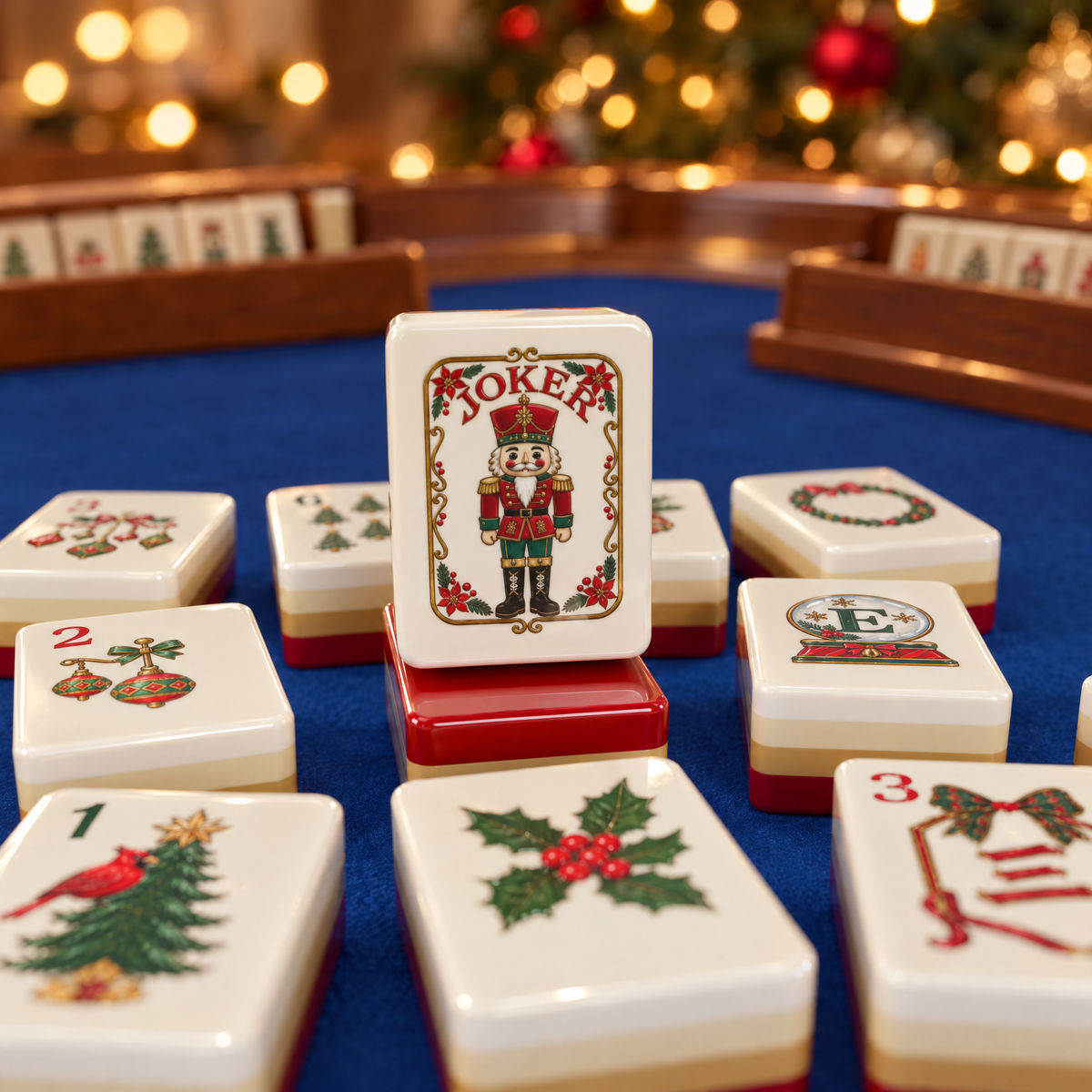
In American mahjong, "win from the wall" (also called a "self-drawn" or "drawing" win) means your 14th tile comes from the wall rather than from another player's discard. You complete your hand with your own draw, triggering a bonus multiplier on your base hand score. The exact points depend on your hand type and your position at the table; the current year's National Mah Jongg League card lists which hands qualify as wall wins and their point values. Not every hand can win from the wall—the card specifies which do. This is one of the highest-scoring outcomes in American mahjong because it rewards both solid play and luck. Mahstead's best-selling mahjong sets come with acrylic tiles that stand up to hundreds of wall draws without wear, so you can practice and celebrate these wins for years.
What exactly does "win from the wall" mean?
When you draw your final tile directly from the wall during your turn, you win without needing another player to discard. The wall is the facedown tile stack that sits between all four players; each player pulls from their section in turn. If that draw completes your hand exactly as listed on the current year's card, you've won from the wall. You announce "Mahjong!" immediately and stop play. Unlike a discard win, where someone throws the tile you need, a wall win proves you did the work yourself—drawing, building, and sealing the hand.
🀄 Shop best-selling mahjong sets →

How many points is a wall win worth?
The point value for a wall win is printed directly on the National Mah Jongg League card in the hand you've completed. Each hand lists a base point total; a wall win typically multiplies that base by a factor (often ×2 or higher, depending on the hand's complexity). For example, if a hand shows 40 base points and is marked as a valid wall-win hand, you might score 80 or 100 points when you draw from the wall to complete it—but the exact multiplier appears on the card itself, not as a universal rule. The card changes yearly, so point values shift. You must check the current year's card to know your exact score before drawing. Scoring also depends on your wind position (East, South, West, North); some positions pay and collect different amounts. The East wind position often scores or pays more on wall wins.
What hands can you win from the wall in American mahjong?
Not every hand on the card qualifies as a wall win; only specific patterns are marked as valid for self-drawn completion. Hands with quints (five identical tiles), sextets (six identical tiles), or complex pung-and-kong combinations often appear. Some hands require all four tiles of a suit to be visible before you draw the fifth to win, while others allow the wall draw to be the critical single or pair. The card organizes these by section—look for notation indicating "wall win" or a specific symbol or column. You cannot win from the wall with any hand you invent; it must match exactly a pattern on the current year's card. If your drawn hand doesn't match the card, you cannot declare Mahjong. This is why reading the card correctly before each game is essential. Beginners often miss the wall-win notation and mistakenly declare a win on a hand that's not valid for a wall draw.
How does a wall win differ from a discard win?
A discard win happens when another player throws a tile you need, and you claim it immediately—you stop play, announce "Mahjong," and score your base points. A wall win awards bonus points because you drew the tile yourself; you didn't depend on an opponent's error or generosity. Some hands appear on the card in both forms: a lower point value if you win from a discard, a higher value if you win from the wall. The hand type also differs: discard wins often have simpler patterns, while wall wins tend to be rarer, tighter combinations. Strategically, a discard win is easier to claim (you just watch and pounce), while a wall win requires you to build and hold your entire hand in secret until your draw. If you're holding a hand that qualifies for both, you're in a strong position—you can win either way, though the wall win pays more.
🎁 See our most-loved mahjong sets & accessories →

What mistakes do players make with wall wins?
Common errors:
Assuming any hand wins from the wall. Only hands marked on the card qualify. Checking the card every single turn prevents frustration and disputes.
Forgetting to announce immediately. The moment you draw from the wall and complete your hand, you must call "Mahjong!" If you delay and another player discards, you've lost the chance and your hand is dead.
Miscounting tiles or jokers. A wall-win hand must contain exactly the right tiles and jokers listed. Count twice before declaring.
Misreading your wind position. East, South, West, and North pay/collect different amounts on the same hand. Know your seat and check the point total that matches your position.
Drawing from the wrong section of the wall. Each player draws from their designated wall section; drawing from another player's side can invalidate your hand. In a proper setup with clear tiles and a quality mat, this is rare, but careless play invites mistakes.
Not setting aside winning tiles clearly. Before announcing, lay your winning hand face-up in a way everyone can verify. Ambiguous tile placement leads to disputes.
Comparison: Hand types and wall-win potential
Hand Pattern | Typical Base Points | Wall Win Multiplier | Difficulty | Card Position |
Quint (5 identical) + pungs | 30–50 | ×2–3 | Moderate | Early sections |
Sextet (6 identical) + pung | 50–80 | ×2–3 | High | Mid sections |
All kongs + pair | 40–70 | ×2 | High | Mixed |
Mixed pung/kong sequence | 20–40 | ×1.5–2 | Low–Mod | Throughout |
Pair + all quints | 60–100 | ×2–3 | Very High | Special sections |
Note: Multipliers and base points vary by year; consult the current National Mah Jongg League card.
Why setups matter for executing wall wins
A stable, well-lit table setup makes wall wins clearer and faster. When tiles are uniform and easy to read, you spot your winning draw instantly—no fumbling, no second-guessing. Our best-selling mahjong sets feature acrylic tiles with bold engraved numbers and symbols that are readable even after years of play. A quality mahjong mat keeps the wall organized and wall draws predictable; tiles don't shift or get mixed with your hand. Racks with pushers hold your hand neatly so you can see your complete pattern before drawing from the wall—you verify your hand matches the card without others seeing what you're holding. When every component is solid, wall wins feel earned and undisputed. Poor equipment—faded tiles, unstable mats, loose racks—breeds errors and claims.
What to check before you buy a set for wall-win play
Tile clarity: Acrylic tiles with engraved characters are easier to read during rapid draws than printed or painted tiles.
Number of jokers: American mahjong uses 8 jokers in play; a 160-tile set includes spares so you always have the right count.
Mat quality: A padded, marked mat shows the wall sections clearly, preventing misdraw accidents.
Rack design: Pushable racks let you adjust your hand display without exposing it; this is especially helpful when you're seconds away from a wall win.
Card compatibility: Always use the current year's National Mah Jongg League card; old cards have different wall-win hands and points.
✨ Find your Mahstead set — free US shipping →

FAQ
Can I win from the wall if I have jokers in my hand?
Yes, as long as your hand matches the card. Jokers substitute for missing tiles and count toward a valid wall win if the card marks that hand as wall-win-eligible.
Do all players score the same points for the same wall win?
No. The National Mah Jongg League card lists different point values for East, South, West, and North. Your wind position determines your payout.
What if I draw from the wall but my hand doesn't match the card?
Your hand is invalid. You cannot declare Mahjong. Play continues, and you discard a tile to stay at 14 tiles while the game goes on.
Is a wall win always higher-scoring than a discard win?
Usually yes, but not always. Some hands appear on the card with one point value for discard wins and a higher value for wall wins. Check the card.
How do I know which section of the wall is mine to draw from?
The wall is divided into four sections, one for each player. Your section sits directly in front of you or to your immediate left. A quality mat marks these clearly.
Can beginners score wall wins, or is it only for experienced players?
Any player can score a wall win if they draw a hand matching the card. Beginners may take longer to recognize patterns and move quickly, but the rule is the same for all skill levels.
Does the tile I draw have to be a specific number or suit?
Yes. The card specifies exactly which tile completes your hand. For example, if the hand requires a 3 Dot as the final tile, drawing a 3 Crak won't work—it must be that exact tile.


View More
View More
View More
