
Why Seniors Love Mahjong: Brain Health, Community & Joy
Last updated: Nov 23, 2026
Seniors love mahjong because it delivers three things aging adults crave: mental sharpness, real friendship, and low-pressure fun. The game demands memory, strategy, and quick pattern recognition—all proven cognitive tools. Unlike chess or poker, mahjong feels social rather than competitive; you're sitting shoulder-to-shoulder with the same people, week after week, learning each other's quirks and jokes. A four-player game lasts 60 to 90 minutes, long enough to feel substantial but not exhausting. The rules are learnable in an afternoon, yet the strategy deepens over months. Most seniors play American mahjong, using the National League card and today's beautiful 160-tile sets—available through retailers like Mahstead—with no intimidating house rules or gambling pressure. Hosting a weekly game at home or a senior center costs almost nothing and builds a routine worth defending. That mix of brain work, laughter, and belonging explains why tens of thousands of older adults have made mahjong part of their weekly life. --- 🀄 Shop best-selling mahjong sets →
What Makes Mahjong a Cognitive Workout?
Mahjong isn't luck—it's memory, planning, and real-time decision-making. Every hand, your brain is tracking 13 or 14 tiles in your rack, remembering what others have discarded, predicting what they need, and calculating which of your holdings has the best odds of completing a hand from the current year's card. Studies on older adults show that games requiring strategy and attention correlate with sharper executive function and slower cognitive decline. Unlike passive hobbies, mahjong demands you stay present: you can't multitask or zone out. The rules force you to learn a new reference card every spring when the League releases it, so your mind is constantly absorbing fresh patterns. This low-pressure, high-engagement style of thinking is exactly what gerontologists recommend for brain aging.

Why the Social Payoff Matters More Than You'd Think
A mahjong table is a friendship incubator. You sit with the same three people for 90 minutes, week after week, and something shifts—you remember Sarah's terrible discards, you know Tom always saves his flowers, you laugh at the same inside jokes. Loneliness is a documented health risk for seniors, linked to depression, weaker immune function, and earlier mortality. Mahjong groups provide a standing appointment, a reason to get dressed and drive somewhere, and faces you genuinely look forward to seeing. Most senior centers, community colleges, and synagogues host mahjong nights. The game demands talk—calling hands, debating risky plays, teasing each other over silly mistakes. Unlike card games played in silence or online games played alone, mahjong is inherently verbal and collaborative. Players often swap stories, ask about grandchildren, notice when someone is quiet and check in. This is the "third place"—not home, not work—that sociologists say is critical for wellbeing in later life.
Physical Accessibility: Why Mahjong Works for Bodies Aging Differently
Mahjong asks almost nothing of your body. You sit. You pick up tiles and set them down. Your hands stay active—fine motor skills and hand-eye coordination are engaged but not strained. Unlike bridge, which requires reading small cards, modern American mahjong tiles are large and printed clearly, easy to read from across the table. Unlike golf or tennis, there's no standing, no endurance demand, no injury risk. Players with arthritis, limited mobility, or chronic pain can play comfortably. Many senior groups set up mahjong mats that hold tiles at wrist height, eliminating the need to reach or bend. If your eyes are weaker, tile sizes (typically 1 to 1.25 inches per tile) work well with reading glasses. A player in a wheelchair rolls right to the table. Mahjong adapts to you, not the other way around.
The Ritual and Rhythm: Why Weekly Games Become Non-Negotiable
A mahjong game isn't an event; it's a rhythm. Thursday nights at 7 p.m., or Tuesday afternoons at 2—the time becomes sacred. Players build their week around it. This predictability is a gift to aging brains and bodies: the calendar is anchored, there's a reason to prepare a snack, the same foursome shows up without question. The ritual includes the Charleston (the tile-passing ceremony that opens play), the shuffle, the wall break, the deal—the same sequence every week. This repetition is soothing; there are no surprises in setup. Many groups play for pennies or just for score, keeping the stakes fun but emotionally low. There's no hangover of regret or financial worry. You can lose a game and still feel great, because the friendship and the mental engagement are the real point. Players often tell us they skip family dinners to protect their mahjong night—not because they're avoiding family, but because that table has become a non-negotiable part of their identity and mental health.

Starting a Game: Where Seniors Find Groups and Get Sets
New players often ask where to find a game. Senior centers, community colleges, and Jewish community centers across the US host open mahjong nights or weekly leagues; most have bulletin boards or websites listing when and where. Libraries sometimes host groups or can connect you to one. Online meetup platforms let you search "mahjong" by city. Some neighborhoods have informal home games—ask around at book clubs or fitness classes. If you want to start your own game, you need a best-selling mahjong set, a mat (optional but helpful), and a copy of the current year's National League card (free online, or printed versions are inexpensive). Many groups recommend sets with racks and pushers, which keep tiles organized and reduce hand fatigue. You'll need exactly 152 tiles and 8 jokers to play; 160-tile sets include spares. The first game is awkward—someone forgets what "pung" means, everyone moves slowly—but by week three, muscle memory kicks in and conversation flows. Hosting a weekly four-player game requires almost no investment and creates a standing reason for four people to gather.
Mahjong Setup | Ideal for | Why It Works for Seniors |
Home game, weekly rotation | Friend groups with a core four | Built-in hosting, familiar furniture, comfort |
Senior center group | Mixed ages, open enrollment | Free or low-cost, transportation often available, staff supervises |
Travel set with mat | Seasonal players, snowbirds | Portable, plays anywhere, keeps the game alive during winter migration |
Gift for a longtime player | Becomes a keepsake, adds prestige to their table, celebrates their commitment |
🎁 See our most-loved mahjong sets & accessories →
What to Check Before You Buy Your First Set
If you're buying a set to start a home game, measure your table—you'll need about 24 inches of width for the wall, mats vary from 24 to 36 inches in length. Check whether players in your group use racks and pushers (many do; it reduces hand strain). Pick a set with clear, large characters and good contrast (black or gold on white or cream is easiest to read across the table). If you're buying as a gift for someone already playing, avoid novelty sets; ask quietly what they already own and whether they're missing a travel set or a second home set. Acrylic tiles are durable and won't chip; bamboo and bone tiles look beautiful but require gentle handling. Verify that any set you buy includes all 152 playing tiles plus jokers—not a short deck. A travel bag or case is worth the investment if someone is shuttling between home and a senior center twice a week.
✨ Find your Mahstead set — free US shipping →
The Mental Health Case: Why Gerontologists Recommend Games Like Mahjong
Cognitive decline and depression correlate; staying mentally engaged correlates with better mood and longer independent living. Mahjong checks multiple boxes: it's engaging (not passive), social (not isolated), achievable (not frustrating), and novel (the card changes yearly). A 2023 analysis of games and cognitive aging found that games with memory, strategy, and social interaction slowed age-related decline in attention and processing speed more than games of luck or solo puzzle-solving. Mahjong delivers all three. The social context also buffers stress—playing with friends you trust is inherently stress-reducing. Many players report that mahjong has helped them through grief, health scares, or isolation; the table is a place where you're needed and known, even on bad days.

FAQ
Is mahjong hard to learn if I've never played before?
No. Most beginners grasp the basics in one session and feel confident within three to four games. You'll make mistakes—everyone does—but the learning curve is forgiving and the group usually enjoys teaching. Bring the National League card and a pen; highlighting valid hands helps. Study the tile names and suits for 20 minutes before your first game, and you'll fit in immediately.
What's the best set for a beginner buying for home play?
A standard 160-tile American mahjong set with clear large characters. Acrylic sets are durable. If players have arthritic hands, add racks with pushers to reduce strain. For a gift, an engraved set personalizes the experience without adding complexity.
Can older adults with arthritis or limited hand strength play comfortably?
Yes. Larger tiles and racks with pushers (which hold tiles upright and let you push rather than pinch) make the game pain-free. Seated play requires no standing or reaching. If someone is in significant pain, mats with tile holders are inexpensive and eliminate hand gripping entirely.
Do I need a special mat, or can we play on any table?
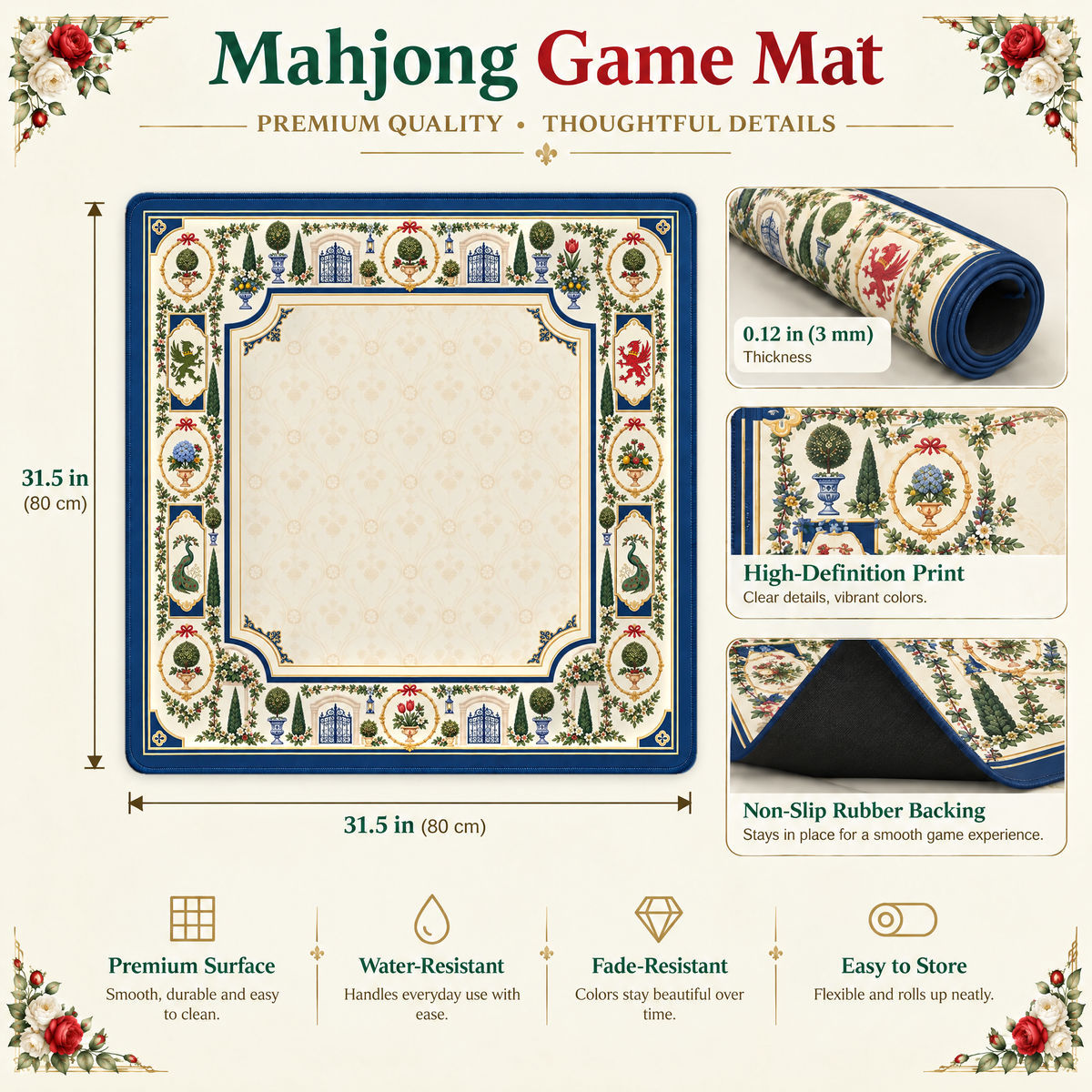
You can play on a bare table, but a mat protects surfaces, contains tile noise, and gives players a visual boundary. Mats come in many sizes and styles. Choose based on your table size (18 inches for card play, 24+ for a four-player wall).
How do I find or start a mahjong group in my area?
Search your local senior center, community college, or Jewish community center website for "mahjong." Check Meetup.com by city. Ask at your library or book club. If no group exists, post a flyer—many older adults are waiting for permission to organize one. All you need is a set, the rules, and three friends.
Is there a cost to play, or can people play without gambling?
Most American mahjong groups play for fun or score-keeping only, with no money involved. Some groups play for low stakes (pennies per hand), but it's entirely optional and social, not financial. Check the group's rules before joining.


View More
View More
View More
