
Why Rummikub Players Love Mahjong: The Switch Guide
Last updated: Nov 23, 2026
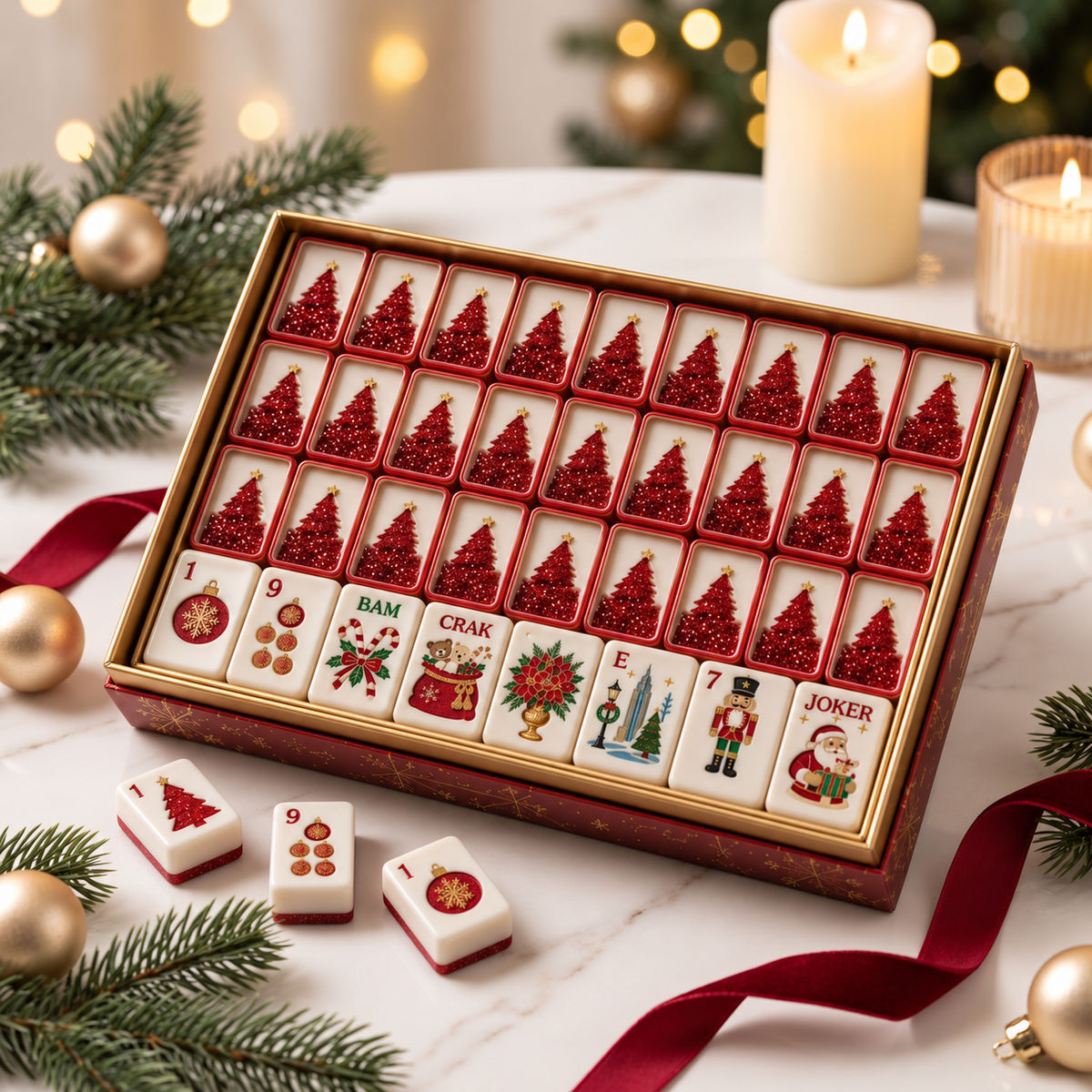
Rummikub players gravitate to mahjong because both games pivot on tile-matching and sequences, but mahjong adds speed, structure, and social ritual. American mahjong uses a 152-tile set with a National Mah Jongg League hand card (updated yearly) that forces you to learn patterns rather than invent them—exactly 54 playable hands each season. Draws happen every turn, not after you play; a game finishes in 30–45 minutes, not 90; and the pre-game Charleston (a choreographed tile-passing exchange) transforms setup into entertainment. Scoring hinges on hand difficulty and payout multipliers on one card, eliminating debate. Rummikub's open-table flow feels restless once you've tasted mahjong's rhythm: exposure rules, joker limits, and wind-based seating rotate roles so every player leads. Start with our best-selling mahjong sets, a 2026 hand card, and a mat. Most Rummikub veterans play their first full game in under two hours of instruction.
Is mahjong just "tile Rummikub"?
No—mahjong is tile-matching distilled to its essence, stripped of the loose improvisation Rummikub allows. In Rummikub, you lay down any valid sequence or group, then draw and rearrange to feed the table. In American mahjong, you hold exactly 13 tiles and draw one per turn; you can only expose groups (pungs of three identical tiles, kongs of four, jokers sparingly)—never a sequence for others to extend. Your whole hand must match one exact pattern from that year's National Mah Jongg League card when you declare mahjong, so you're solving a puzzle, not building a sculpture. Rummikub rewards improvisation; mahjong rewards memory and pattern recognition. The rule structure kills table chaos: in two hours, you'll play four complete games; in Rummikub, one game often stretches twice that long. Mahjong players don't negotiate or reinterpret; the card and the rulebook settle every dispute in seconds.
🀄 Shop best-selling mahjong sets →

What makes the hand card so powerful?
The National Mah Jongg League hand card, issued fresh every spring, lists exactly 54 playable hands arranged by section (like "All Pungs," "Kongs and Quints," "Like Numbers"). Unlike Rummikub's infinite combinations, mahjong's constraint is your teacher: you learn those 54 patterns, their tile counts, and their point values, and you stop reinventing the wheel. Each hand shows what tiles you need (e.g., three Bams, three Dots, one Kong of Craks, one pair of Dragons). Jokers fill gaps—but only one per group, and never in the pair. This card changes yearly, so the game refreshes annually without rule changes. Rummikub players often say the card feels like a cheat sheet at first, then liberating: suddenly you know exactly what you're hunting, and the thrill shifts from "what can I play?" to "can I get there before someone else melds?" It's the difference between freestyle and choreography—both are beautiful, but choreography teaches you the music faster.
Does the Charleston really take 15 minutes?
No—practiced players complete the Charleston (the pre-game tile exchange) in 2–3 minutes: three passes (1) right, (2) across, (3) left, each player sliding 3 tiles face-down, then two passes of 1 tile each. Rummikub players arriving without draws to organize often find this counterintuitive, but it's fast. You're not choosing strategically; you're following a rhythm. The first Charleston pass goes right; you pass three tiles you don't recognize and receive three from your left neighbor—same three you just gave? Too bad, into your hand. No one talks; no one mulls. By the time the wind player (East) calls for tiles (step two: the opening draw), eight minutes have usually passed, and everyone's in a relaxed, joking headspace. Rummikub often opens with someone shuffling for three minutes and arguing about randomization; the Charleston is the social moment, baked into the sequence. First-timers sometimes ask, "Why not just shuffle and deal?" because Rummikub conditions you to expect silence and neutrality. The Charleston is the opposite: it's part of the game's soul.
How much faster is a mahjong game?
American mahjong plays in 30–45 minutes once everyone knows the hand card; Rummikub typically runs 60–90 minutes, sometimes longer. The speed comes from strict draw-and-play sequence (no rearranging after you lay tiles), smaller effective hand size (you hold 13, not 30), and the hard ceiling: the game ends when someone melds a hand exactly matching one of those 54 patterns. No stalling, no late-game dragging. A round of four players draws about 200 tiles per game; once someone takes a discard to complete, the game stops. Rummikub invites strategy within each hand—shuffling, layering, finding gaps—which is fun but drains time. Mahjong's speed means you play four games in one Rummikub session and feel fresher, not burnt out. Many ex-Rummikub players hosting weekly games report playing two or three games per evening instead of one. For weeknight groups, the compression is a godsend. For leisurely Sunday afternoons, you can dial it up: play three games, break for snacks, play three more, and wrap by dinner.

What do I need to switch from Rummikub?
Item | What it is | Why Rummikub players need it |
160-tile acrylic set | Full American set (152 playing + spares) | Heavier, cleaner than plastic; standard in US clubs |
Hand card (2026) | Laminated pattern reference | No more arguing about valid combos; it's the rulebook |
Pushers & rack | Tile holders + pushers | Rummikub players hold tiles in one hand; mahjong racks free your hands and organize your thinking |
Mat | Suede-backed layout surface | Keeps tiles silent, mat marked with dealer zones; prevents accidents |
Bag or case | Travel and storage | Protects acrylic from cracks; keeps 160 tiles organized in one place |
Starting costs are lower than you'd expect: a best-selling mahjong set with a mat and racks is often one purchase. Dice, a 2026 hand card (ordered separately from the National Mah Jongg League or local clubs), and a scorepad round out the setup. Many Rummikub players already own a family Scrabble-style tile bag; that works fine during the learning phase. The gear investment pays off because tiles last decades, and the mat protects your table—Rummikub sets wear out; mahjong sets don't.
🎁 See our most-loved mahjong sets & accessories →
What common mistakes do Rummikub refugees make?
Trying to "improve" a visible hand. In Rummikub, you rearrange tiles on the table after melding; mahjong forbids this. Once you expose a pung (three identical tiles) or kong (four), it stays locked. Jokers can't move. This shocks Rummikub players who spend the first two games rearranging exposed tiles and getting gentle corrections. Accept the lock; it speeds play and removes temptation.
Thinking jokers work like wildcards everywhere. In Rummikub, a joker fills any gap; in mahjong, one joker per group only, and never in a pair or single tile. A hand of "3 Bams, 3 Craks, 3 Dots, plus a Joker" is invalid—the joker has no legal home. You need enough real tiles to form the core; jokers patch, not build.
Holding all 13 tiles face-down. Rummikub trains you to hide your hand; mahjong players fan their tiles so the table sees suit and number. You keep your draws private (don't announce what you drew), but concealing your counts suspiciously slows play and looks evasive. Transparency is the norm—and it reduces confusion because everyone knows you have exactly 14 tiles in hand just before your turn, then 13 after discard.
Forgetting the hand card is law. Rummikub's flexibility means players invent misty "variant" rules. The mahjong card kills this: if a hand isn't on the 2026 card (or whoever's year you're playing), it's not a hand. This seems rigid at first but is pure relief—no debate, no politics, just pattern-matching.
What to check before you buy
Set size: Mahjong uses exactly 152 tiles in play, plus 8 jokers. Ensure you're buying a 160-tile set (152 + spares), not a competitive 144 or older variant. Mahstead ships 160-tile sets.
Tile material and heft: Acrylic tiles weigh more than plastic and produce a satisfying sound; plastic can feel cheap after Rummikub's heavier sets. Feel a sample if your local club can arrange it—or trust that acrylic is the US standard and most clubs use it.
Rack and pusher fit: Racks must accommodate 13 tiles comfortably (plus 1 extra during draw). If you buy a set with racks, verify the racks are stable and pushers slide smoothly. Wobbly racks kill concentration.
Mat protection: A mat with suede backing protects your tiles and table; a bare table or tablecloth invites scratches and sliding. Many Rummikub players host on dining tables; a mat solves that problem instantly.
Hand card currency: Always use the current year's card (2026, as of now). Outdated cards change hand values and availability, which breaks games across different groups. Order from the National Mah Jongg League or a local club before your first session.
✨ Find your Mahstead set — free US shipping →
Why do Rummikub players almost always stick with mahjong?
Once you've lived through the Charleston ritual, memorized five hands, and felt that moment when your draw completes an exact pattern—the mental "click"—Rummikub feels loose and scattered. Mahjong's constraint is its pleasure. You're not negotiating a valid move; you're pursuing one of 54 proven treasures. The speed means you play more; the role rotation (dealer moves around) means no one player dominates momentum. The hand card changes yearly, so you never "solve" the game—every spring brings new patterns, new strategy, new reasons to gather. Rummikub is fun; mahjong is ritual. And if you invest in a quality engraved set from Mahstead and a proper mat, you've built a table that says, "We play here every week, and we're serious about it." That signal—to yourself, to your guests, to your family—often turns a hobby into a habit that lasts decades.
For a deeper dive into American mahjong rules, see our complete beginner's guide.

FAQ
Do I need to replace my Rummikub tiles with mahjong tiles?
Yes. Rummikub and mahjong tile sets are incompatible—different suits, counts, and symbology. Mahjong requires Bams, Craks, Dots, Winds, Dragons, Flowers, and Jokers; Rummikub has numbers and colors. You'll need a full 160-tile American mahjong set to play.
How long does it take a Rummikub player to learn mahjong?
Most pick up the basics in one supervised game (60–90 minutes). Understanding the hand card and exposure rules takes two to three sessions. Mastery—knowing hands well enough to plan mid-game—comes after four to six weeks of weekly play.
Can I use a Rummikub mat for mahjong?
Some Rummikub mats work if they're large enough (mahjong needs roughly 30×30 inches) and have a suede or non-slip backing. Mahjong-specific mats include wind-zone markers and are cheaper than replacing a worn mat. Check your current mat's size and grip first.
Are mahjong hands harder to memorize than Rummikub combos?
No—there are only 54 mahjong hands versus infinite Rummikub combinations. Mahjong players memorize hand categories (All Pungs, Kongs, mixed) and tile counts. Rummikub flexibility requires on-the-fly arithmetic; mahjong requires pattern recall. Most prefer mahjong's structured memory.
What if my Rummikub group doesn't want to switch?
You can play both—host Rummikub nights and mahjong nights on alternate weeks. Many groups find they eventually gravitate to mahjong because games finish faster and rotate players more fairly. Introduce it as an experiment, not a replacement.


View More
View More
View More
