
Mahjong Tote for Beginners: What to Buy & Why
Last updated: Nov 23, 2026
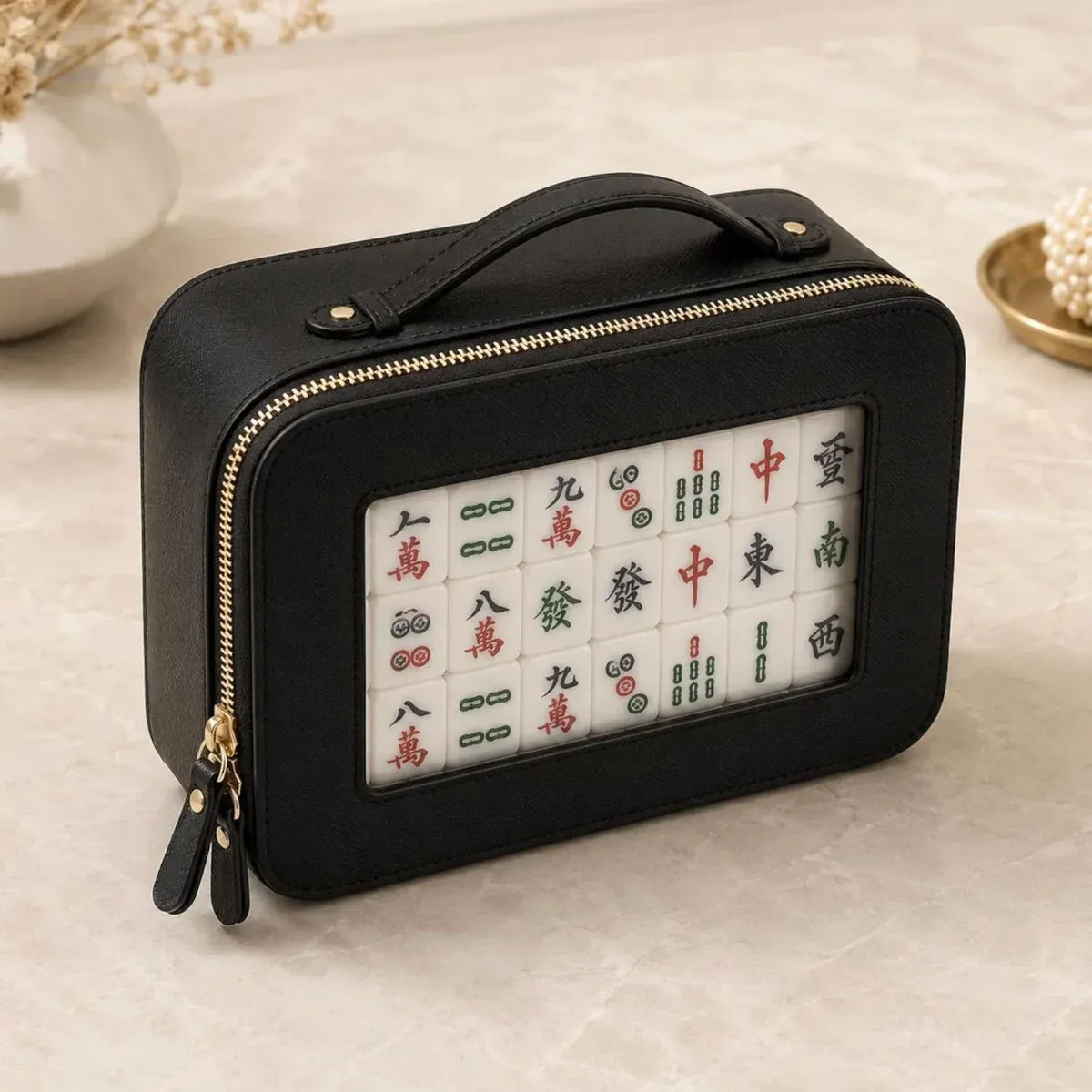
A mahjong tote is a fabric carrying bag designed to hold a complete 160-tile set, racks, mat, and accessories in one portable case. For beginners, the choice matters because a poorly fitted bag can crack tiles, twist your mat, or spill jokers across a parking lot—we've seen it. Mahstead's mahjong bags and cases range from slim canvas totes (best if you play at one home venue) to structured rolling cases (ideal if you travel to tournaments or different homes). Most beginner totes cost less than a new set itself and ship free across the US. Pick based on how often you move your game: weekly at a friend's house = canvas tote; monthly to different locations = padded shoulder bag; frequent travel = hard-shell roller. Avoid oversized bags—the tiles shift and damage each other. Check compartments before ordering: you need tile pockets, a mat sleeve, and a racks pocket. 🀄 Shop best-selling mahjong sets →
What does a mahjong tote actually protect?
A mahjong tote shields your 160-tile acrylic set from dust, moisture, and impact during transport. Acrylic tiles chip or crack if tiles tumble loose; jokers scatter if the bag lacks pockets. A good tote separates the heavy tiles from the delicate mat (which wrinkles if compressed) and keeps racks upright so pushers don't bend. Compartments matter more than size—we prefer bags with individual tile pockets or a mesh divider, a mat sleeve with soft lining, and a dedicated pouch for racks and dice. Canvas and nylon absorb humidity but stay light; padded cases weigh more and cost more but suit frequent movers.
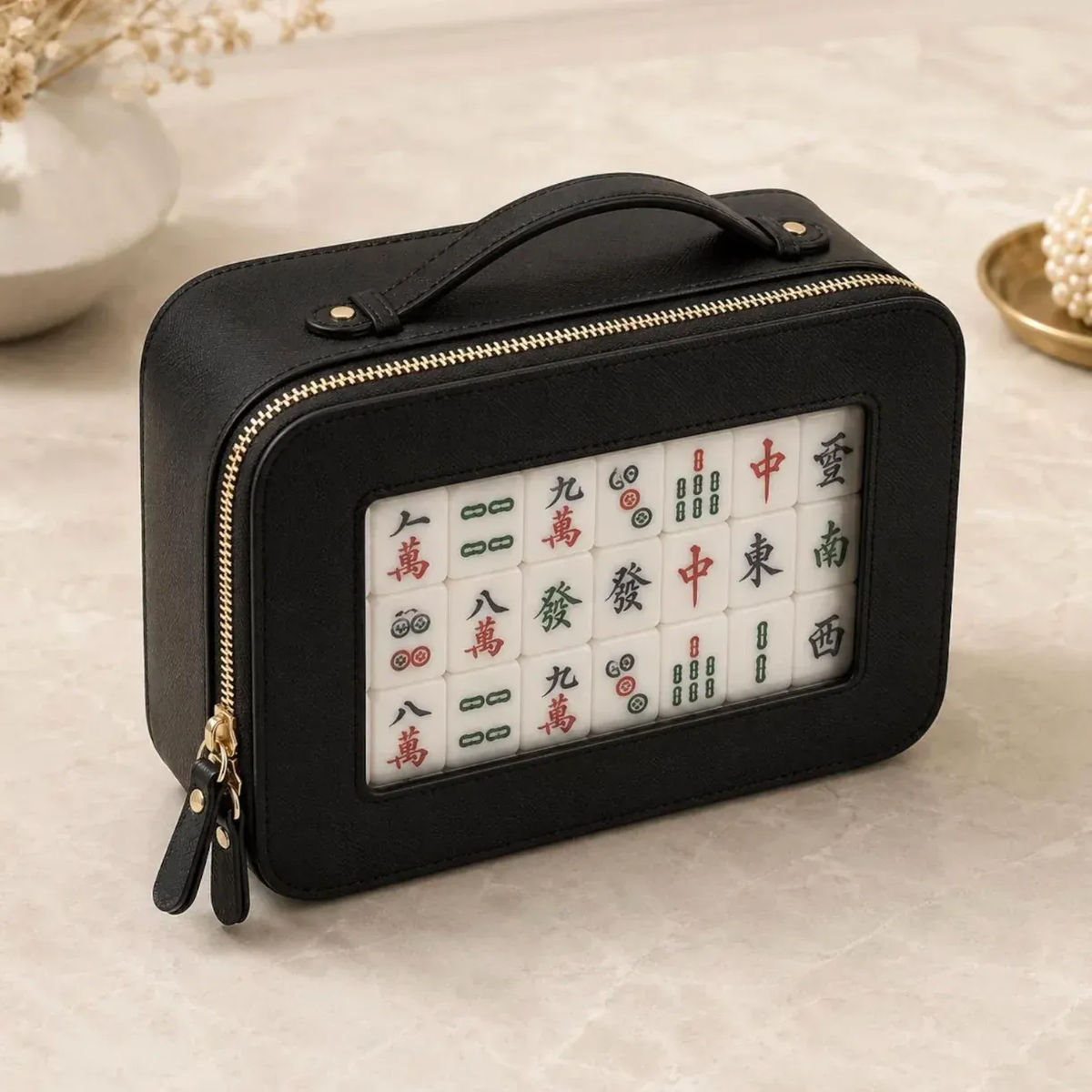
Should I buy a tote, shoulder bag, or roller case?
Bag type | Who it's for | Protection level | Best for |
Canvas tote | Weekly home games | Basic | Budget players, single venue |
Padded shoulder bag | 2–3 venues per month | Moderate | Local club hoppers, car travel |
Hard roller case | Weekly+ tournaments or travel | High | Serious players, airport trips, multi-hour drives |
Drawstring nylon bag | Casual, occasional play | Low | Single games, no regular schedule |
A canvas tote keeps costs down and works fine if your game lives in one living room. A padded shoulder bag (often with a strap and handles) fits car travel and protects tiles better without the bulk of a roller. A roller case protects everything but costs more and takes trunk space. Most beginners start with a padded shoulder bag—it's the middle ground.
🎁 See our most-loved mahjong sets & accessories →
How do I know if a tote is big enough without overdoing it?
Measure your set box first: a standard 160-tile set in its retail box is roughly 12" × 4" × 4". Your tote should fit the box plus a rolled mat (add 2–3 inches) and racks. If the bag is too large, tiles and mat shift during transport—the leading cause of broken tiles we hear about. If it's too small, you'll force the mat or leave racks behind. Check the product description for interior dimensions and whether compartments are fixed or adjustable. A tote with a removable divider lets you reconfigure space if you add a second set or a mahjong mat later. Avoid bags labeled "extra large" unless you play four-player tournaments with multiple sets.
What features should a beginner tote include?
Must-have compartments:
A tile pocket section (mesh or padded dividers) to prevent tiles knocking together.
A mat sleeve with soft inner lining so edges don't fray or crease.
A racks pouch to keep pushers and wooden or acrylic racks from bending under tile weight.
A small zippered pocket for dice, spare jokers, or a reference card.
Nice-to-have features:
Shoulder strap (easier than carrying by handles if you play at multiple homes).
Water-resistant fabric (protects from spills and rain).
Exterior pockets for keys or a scorepad.
Clear sections so you can find tiles without unpacking.
Most beginner-friendly totes include the must-haves; padded versions add the nice-to-haves. Don't pay for features you won't use—a canvas tote with strap and basic pockets often outperforms an overstuffed roller for someone playing weekly in two homes.
✨ Find your Mahstead set — free US shipping →

Common mistakes beginners make when choosing a tote
Buying a tote before you own a set. You can't know if it fits until you try. If you're new, buy a best-selling beginner set first, then measure it and the mat together, then buy a tote.
Choosing a bag for aesthetic alone. A beautiful tote with poor compartments will frustrate you after the third game. Prioritize function—pockets, dividers, mat protection—over color or style.
Overstuffing the tote. Adding a second set, score pads, snacks, and extra racks to one bag compresses tiles and breaks them. Use separate bags for separate sets or extras.
Skipping the mat sleeve. A mat stuffed directly with tiles gets creased and wrinkled. The crease affects how the mat lies flat, throwing off rack placement. Always use a dedicated mat pocket or sleeve.
Not checking drainage or ventilation. Sealed bags trap humidity, especially after a humid game night. A bag with mesh pockets or ventilation keeps tiles dry. If your tote is fully enclosed, air it out after each game.
What to check before you buy a mahjong tote
✓ Interior dimensions: Confirm it fits your set box plus a rolled mat. ✓ Compartments: Verify tile pockets, mat sleeve, and racks pouch are included. ✓ Strap style: Decide between handles, shoulder strap, or both based on where you play. ✓ Material: Choose canvas (light, budget) or padded nylon (durable, travel-friendly). ✓ Weight when empty: A tote you hate carrying won't move with you. ✓ Return policy: Check if Mahstead allows exchanges if the tote doesn't fit your set once it arrives (free shipping across the US makes returns manageable).
Which Mahstead tote is right for you?
Our travel bag collection includes canvas, padded, and structured options. Beginners playing at home or a single friend's house thrive with a simple canvas tote. Local club players or those visiting 2–3 venues per month prefer a padded shoulder bag with strong straps. Serious or tournament-minded players invest in a roller case. All ship free across the US. If you're unsure, start with a mid-range padded tote—it works for most beginner schedules and grows with you if your game expands.
Pair your tote with a complete beginner set, a durable mat, and racks with pushers—we can recommend all three based on your venue and play frequency.

FAQ
Can I use a regular suitcase or duffel bag for my mahjong set?
Yes, but not ideally. Regular bags lack tile pockets, so tiles rattle and crack. If you use a suitcase, wrap the set box in a towel and pack racks and mat separately. A mahjong-specific tote costs less and protects better.
Do I need a tote if I always play at the same house?
Not urgently. If the set lives in a closet at that venue, skip the tote. But if you transport it even once per month, a basic canvas tote ($) prevents tile chips and mat creases and takes minimal closet space.
What's the difference between a mahjong tote and a mahjong case?
Totes are soft-sided fabric bags (lighter, cheaper, easier to store). Cases are hard-sided or heavily padded (bulkier, pricier, maximum protection). Choose a tote for home-to-home play; upgrade to a case if you fly to tournaments or play in high-traffic venues.
Can a tote fit two mahjong sets?
Most standard totes hold one 160-tile set with a mat and racks. Two sets need either a large roller case or two separate totes. Check interior dimensions before assuming.
How do I keep the mat from wrinkling inside a tote?
Use a tote with a dedicated mat sleeve (not a shared compartment). Roll the mat loosely rather than folding it. If your tote lacks a sleeve, roll the mat in a yoga mat carrier or a separate canvas tube and lay it flat in the tote.
Does the tote material matter for humidity or temperature?
Yes. Canvas breathes and suits dry climates but absorbs moisture. Padded nylon resists spills and humidity but can trap moisture if sealed. In humid climates, air out your tote after each game. Avoid leaving it in a hot car overnight.
What happens if tiles crack inside a tote during transport?
Cracked tiles can't be played and typically can't be replaced individually (sets are sold as complete units). This is why compartments matter. Use a tote with tile pockets and never overstuff.


View More
View More
View More
