
Why Bridge Players Love Mahjong: Card Skills Transfer
Last updated: Nov 23, 2026
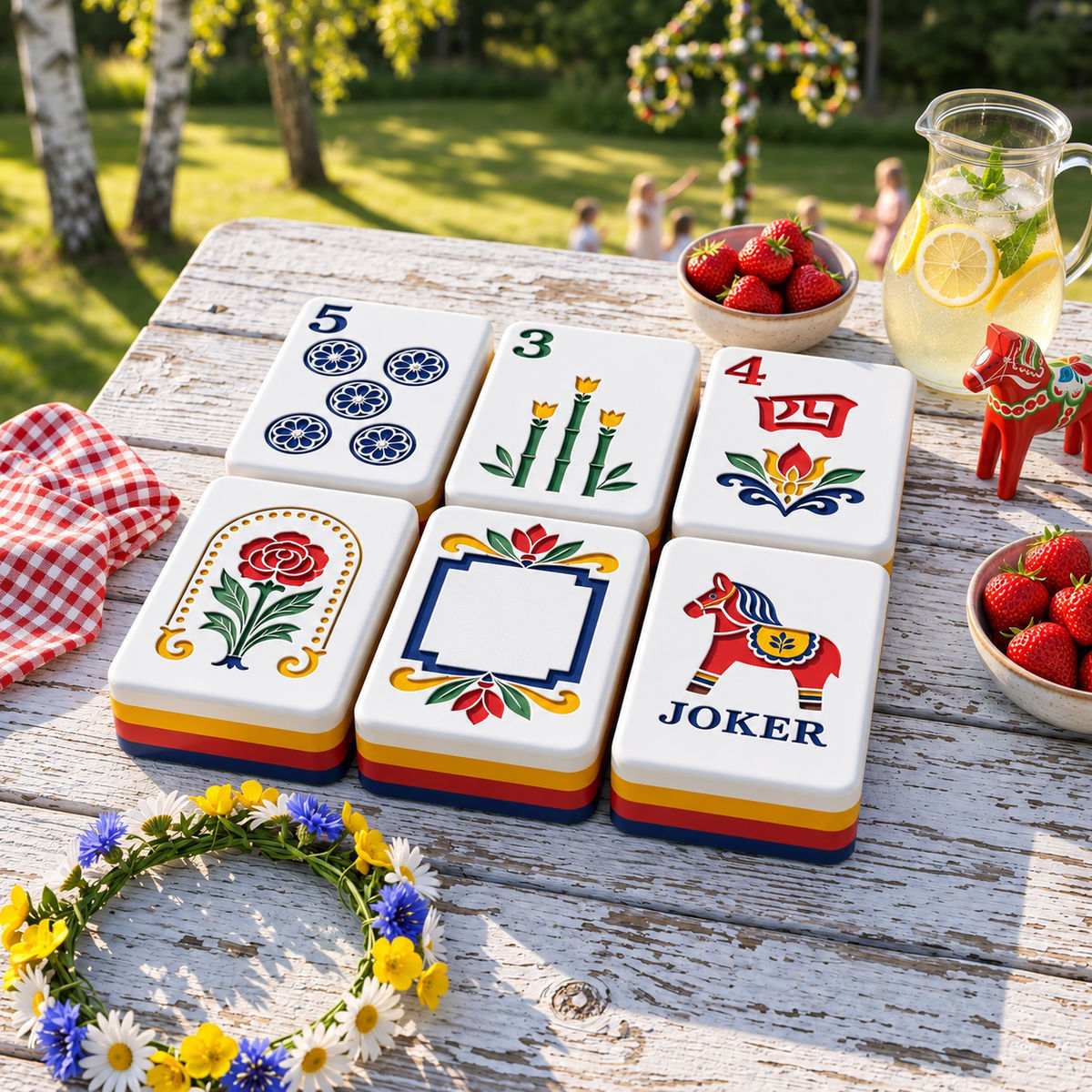
Bridge and American mahjong share deep structural DNA: both demand hand memory, probability judgment, signaling through play, and the discipline to evaluate risk on every turn. A bridge player already thinks in patterns—honor combinations, distribution counting, trick math—and mahjong asks the same brain to read 14 tiles, track discards, infer opponents' melds, and execute long-term strategy under time pressure. The tile count (152 playing tiles per hand across four players) and the National Mah Jongg League card (updated yearly with playable patterns) replace bridge's bidding system, but the mental machinery is identical. You'll find mahjong easier to learn than bridge players expect because you've trained your eyes for incomplete information, your memory for sequences, and your patience for sitting through misdeals. Most bridge players at our table pick up American mahjong rules in a single session and are competitive within four games.
Bridge and mahjong aren't just games—they're patterns your brain already knows how to hunt. If you've bid for tricks and counted points, you're halfway to reading a mahjong hand.
What exactly do bridge players already know?
Bridge players spend years training three core skills: hand memory, inference from incomplete data, and risk calculation on every decision. You memorize a 13-tile hand, infer 39 unknown tiles from discards and bidding, and decide whether to bid or pass based on probability. In mahjong, the skills are identical. You hold 14 tiles, track discarded tiles to infer what opponents need and hold, calculate odds on each draw, and choose whether to call a meld or discard safely. Bridge taught you that sitting out one trick costs less than failing a contract; mahjong taught us the same through a different lens—fold early rather than chase an impossible hand. The rhythm of attention is the same: watch, count, decide, move. No bridge player at our table has struggled with the rules; they've stumbled only on which hands the card allows, because mahjong is more rigid than bidding (you can't invent a hand; it must match the yearly card).

Why do bridge players pick up the rules faster?
American mahjong is simpler to teach than bridge. The rules fit on one page: four players, 13 tiles in hand, one draw, four discards per turn, call melds of identical tiles, win when you've matched a hand pattern from the current year's card. Bridge requires you to learn bidding systems, trick-taking theory, and partnership conventions—months of work. Mahjong rules take an afternoon. But here's what makes bridge players dangerous learners: they already know how to evaluate "should I act on this information?" A bridge player sees an exposed meld and instantly thinks "three 5 Dots are out, so two remain in the wall or deck"—that's second nature. They know to hold a safe tile when someone is close to winning. They understand that a discard tells a story. So teaching a bridge player mahjong isn't teaching strategy; it's translating strategy into a new tile language. We've hosted dozens of bridge players, and the difference between a first-timer and a fourth-time player is often just one session—not because mahjong is simple, but because the thinking pattern is already wired.
Which bridge habits help, and which slow you down?
Habits that transfer directly:
Counting memory. Bridge trained you to track cards in your mental hand. Mahjong asks the same of tiles. You'll barely notice the shift.
Probability intuition. "My partner probably has honors" becomes "someone probably holds that Kong." The logic is identical.
Patience with information asymmetry. Bridge thrives on knowing nothing until partners bid. Mahjong rewards the same cold-start thinking—you don't know what's winning until you see what's left.
Reading opponents through action. A fast discard means weakness; a held tile means strength. Bridge players read this automatically.
Habits to unlearn:
Signaling through the card. In bridge, you show strength with high cards, distribution with play order. In mahjong, the National Mah Jongg League card is public and fixed—no one "signals" a hand. Discards and calls are read at face value. You can't bid your way into a different hand.
Negotiating rules mid-game. Bridge has established authorities and house rules vary by region, but interpretation is always debatable. American mahjong is categorical: either a hand matches the card, or it doesn't. No exceptions. Accept this upfront, and you'll avoid friction.
Playing for trick count. Bridge rewards marginal gains—one extra trick. Mahjong is binary: win or lose, full payment or nothing. A hand that's 99% complete but doesn't match the card is zero points.
🀄 Shop best-selling mahjong sets →
How is mahjong strategy similar to bridge strategy?
Both games center on one principle: don't expose what you need, and watch what others discard. In bridge, you hold a tenace (K-J without the Q) and don't play low; your partner learns to read your hesitation. In mahjong, you hold a pair and don't discard tiles adjacent to it; opponents read the pattern. Both teach you to think three moves ahead: "If I call this meld, am I closer to winning or closer to locked tile?" A bridge player already knows the answer—closer to a single line of play means less flexibility, means higher risk.
The partnership element differs. Bridge is collaborative within a pair; one partner must know the other's hand through bids and plays. Mahjong is four independent players—each trying to win alone. But that changes only the emotional tone, not the strategic spine. You still count, infer, and manage risk. You still weigh "I'm probably losing; discard safely" against "I'm close; take the risk." A bridge player recognizes this calculus instantly.

What does your first mahjong session look like?
Come with your bridge habits intact. Bring a pen for note-taking (smart bridge players track discards; smarter mahjong players track them systematically). You'll need a copy of the current year's mahjong card and a set of 160 tiles. Ask for a teaching hand—a simple one from the card, nothing exotic. You'll learn the Charleston (the tile-passing ritual before each hand, explained in full in our Charleston guide), then hold your first 14 tiles and compare them against the card. The card is printed in columns; each column is a hand pattern. Your tiles must match one column exactly (same tile types, same counts). If they do, you call "Mahjong!" and win. If not, you play like bridge: discard a safe tile, hope to draw what you need.
Most bridge players win their first hand by session five. The card feels weird at first (it's a constraint bridge players don't face), but your counting brain adapts. The real learning curve isn't rules; it's fluency with the card itself—knowing which columns are rare, which are built on exposed kongs, which are traps for beginners. That takes four or five hours of play. By session three, you'll feel the rhythm. By session six, you'll start reading discards like the bridge signals you already know.
What should bridge players buy to start?
You need a 160-tile American mahjong set with clear tile markings and a sturdy bag or case for carrying to weekly games. Bridge players often travel; mahjong is the same. Look for sets with crisp suit symbols (Bams, Craks, Dots) and high-contrast wind and dragon tiles—easier to scan when you're building hands in your head. Avoid novelty sets with dark tiles or unclear suit marks; they slow down experienced players and will frustrate you as you climb the learning curve. A mahjong mat is optional but smart—it marks the center, keeps tiles organized by wall, and shows the winds. Racks with pushers are luxury for bridge players used to hands fanned in your palm; mahjong racks hold your 14 tiles upright and let you see all of them without turning your head. If you're hosting, a mat is professional and saves time. If you're learning, any smooth table works fine.
Bridge player mahjong setup comparison:
Item | Bridge equivalent | Why a bridge player wants it | Cost basis |
160-tile set | Deck of 52 + jokers | Clear symbols, durable for weekly play | Entry-level standard |
Mahjong mat | Rubber bridge mat | Organizes wall, marks dealer position | Optional but professional |
Racks with pushers | Hand holder | Displays all 14 tiles, prevents repetitive strain | Comfort, not essential |
Tile bag or case | Card case | Protects tiles, easy transport to games | Highly recommended |
Current-year card | Convention card | Reference for legal hands; updated annually | Free or minimal cost |
🎁 See our most-loved mahjong sets & accessories →
Common bridge-player mistakes to avoid
Mistake 1: Expecting bidding-style negotiation. Bridge has conventions and disputes; you talk through them. Mahjong has no bidding and no room for debate. If your tiles don't match the card exactly, you don't win. Don't argue the card design; accept it and move to the next hand. This is hardest for bridge players, who are used to ruling committees and regional variations.
Mistake 2: Holding too many safe tiles. Bridge teaches defensive discipline: keep honors, discard losers. Mahjong requires the opposite early on: discard anything that doesn't build your hand. A bridge player often holds three "safe" Winds and discards two Bams, then draws a third Bam and realizes they've locked themselves out of any Bam-based hand. Discard with urgency; the hand expires faster than a bridge deal.
Mistake 3: Calling melds too slowly. In bridge, hesitation signals strength; silence is golden. In mahjong, hesitation costs you. If another player's discard matches your exposed meld, you must call immediately or you lose the tile. Bridge teaches you to think; mahjong teaches you to think faster. Practice speed.
Mistake 4: Forgetting the card rotates yearly. Bridge rules are static for decades. Mahjong's legal hands change every April. A hand you won last year might not be on the new card. Bookmark the National Mah Jongg League card each spring and check before your first game of the season.
What to check before you buy your first set
Tile clarity. Can you read the suit marks (Bamboo, Circle, Character) at arm's length? Dim marks slow the game.
Tile weight and feel. Acrylic is standard for American mahjong. Avoid sets so light they slip or so heavy they strain your wrist during a long session.
Wind and Dragon clarity. These symbols are smaller and less intuitive than number tiles. Make sure you can distinguish N/E/W/S and Red/Green/White tiles in low light.
Joker count. A 160-tile set includes 152 playing tiles and spare tiles. You never need more than 8 jokers in play; extras are backup. Don't pay for a "luxury joker count"—it's not used.
Bag or case. If you're joining an established game, you'll carry your set weekly. A bag protects tiles and fits in a car seat. A case is overkill unless you're flying with it.
Price. Entry-level sets are affordable; mid-range sets offer longer durability. Don't overspend until you know you'll play regularly. See current price on our best-selling collection.
✨ Find your Mahstead set — free US shipping →
Bridge and mahjong are siblings, not strangers. Your card sense, your counting habit, and your patience with incomplete information are superpowers at the mahjong table. Start with a solid set, learn the card, and let your bridge brain do the rest. You'll be competitive by game four and hungry to understand why certain hand patterns are rarer than others—a question that will occupy you for years, just like bridge.

FAQ
Can I use my bridge hand-holding technique in mahjong?
Yes and no. Mahjong tiles are heavier and wider than cards, so fanning them in your palm works but strains your fingers. Most players use mahjong racks to stand tiles upright; this lets you see all 14 at once without turning your head, and your hands stay on the table. If you prefer palm-holding, you can—no rule against it—but a rack is easier on your wrist and faster to scan.
How quickly do bridge players typically learn the mahjong card?
Card fluency takes 8–12 hours of play (roughly 4–6 sessions of 2 hours each). You'll recognize simple patterns (three of the same tile, all Dots) immediately. Rare patterns (exotic dragon combos, five-tile kongs mixed with pairs) take longer. Bridge players often learn faster because they're accustomed to pattern recognition and constraint-based thinking.
Do bridge partnerships carry over to mahjong?
No. American mahjong is four independent players competing to win alone. There's no partnership, no signaling between allies. This is a major shift for bridge players, and it's liberating—you play for yourself, read all three opponents equally, and don't have to coordinate. Some players miss the partnership aspect; others love the independence.
What if my bridge group wants to try mahjong as a night out?
A group of four bridge players is a perfect mahjong table. You'll need one 160-tile set, the current year's card, and 30 minutes to learn the Charleston and basic rules. Use your first hand to explore; by hand three, you'll have real strategy. Expect a slower pace than bridge the first night (more rule questions), then speed up by session two.
Are there rules differences between American mahjong and other variants?
Yes. Chinese, Hong Kong, and Riichi mahjong use 144 tiles, allow sequences (chows), and have entirely different winning hand calculations. If your bridge club joins an established mahjong group, confirm they're playing American mahjong—152 tiles, no chows, hands from the annual card. This article covers American rules exclusively.
Should I buy a set before trying mahjong, or borrow one first?
Borrow first if possible—attend two or three games with a club set to confirm you like the game. Once you're hooked, invest in your own set from our best-selling collection. A personal set ensures your tiles are familiar (some tiles wear differently), and you'll feel ownership over your learning curve. Most bridge players buy within four sessions.


View More
View More
View More
