
How to Host a Spring Mahjong Party: Rules, Setup & Planning
Last updated: Nov 23, 2026
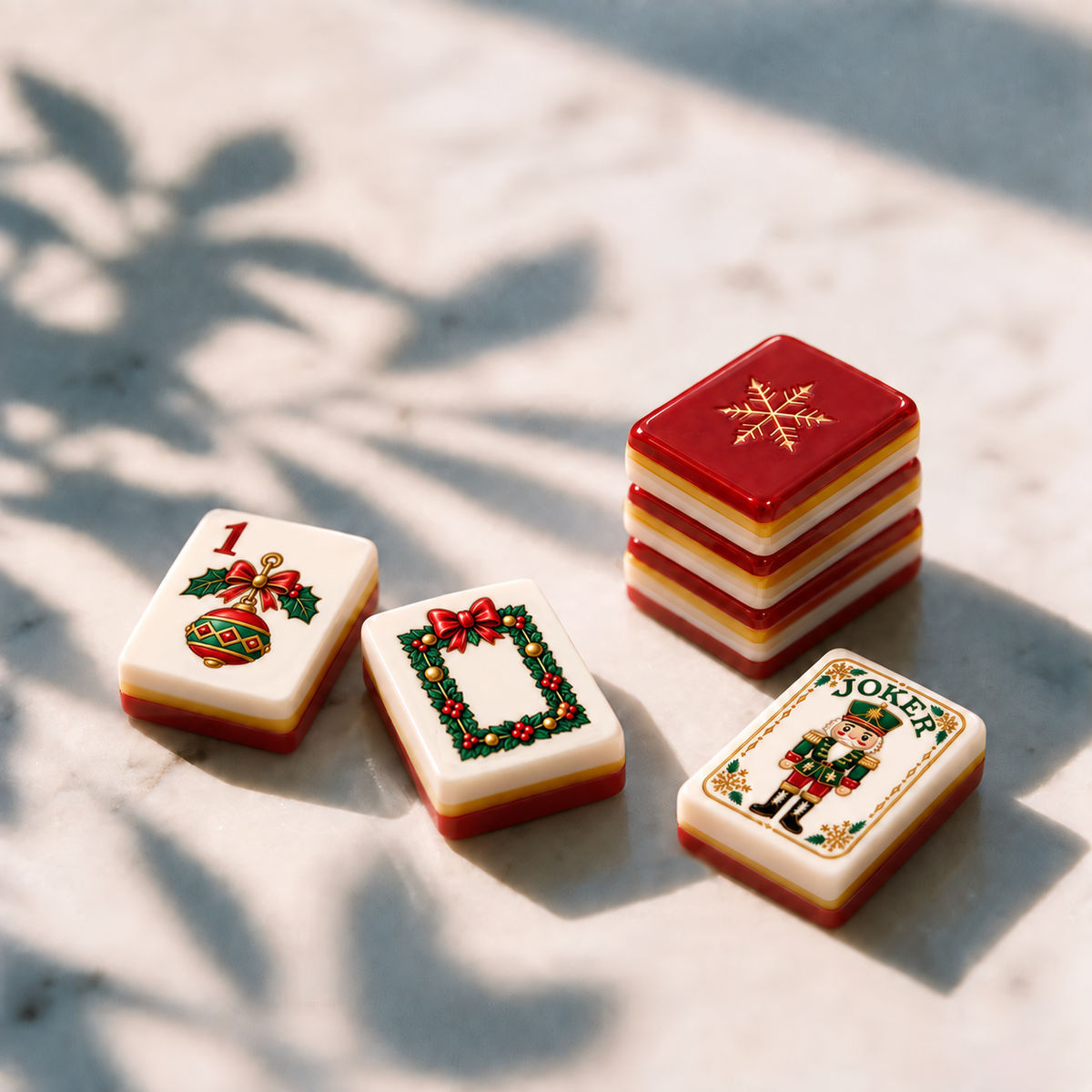
A spring mahjong party for four players takes two to four hours, depending on pace and skill. You'll need one 160-tile American mahjong set with eight jokers, a mat (optional but widely used), four racks with pushers, the current year's National Mah Jongg League hand card, dice, and snacks. American mahjong is played by drawing and discarding tiles to match patterns from the card—no chows allowed, only pungs (three identical), kongs (four), and longer melds. Plan for a Charleston (tile-passing ritual) before each game, about 15 minutes of teaching beforehand if you have new players, and clear sightlines so everyone can see discards. Our best-selling acrylic sets are durable for weekly play, ship fully assembled, and include everything but the hand card and dice—a solid foundation for hosting.
What does hosting mean—serving tiles or just organizing?
When we say "host," we mean supplying the set, mat, and space—not dealing tiles every hand (that rotates among the four players). You'll exchange tiles during the Charleston, manage the wall of undrawn tiles, and keep the hand card visible. If players are new, you teach the Charleston and basic gameplay before starting. As host, you typically sit in a specific position determined by rolling dice, but there's no special obligation to buy sets for guests or teach advanced strategy. Just provide a clean space, working equipment, and refreshments; everyone else handles their own gameplay. This typically takes one weekend afternoon or evening.
🀄 Shop best-selling mahjong sets →

How do you set the table for four American mahjong players?
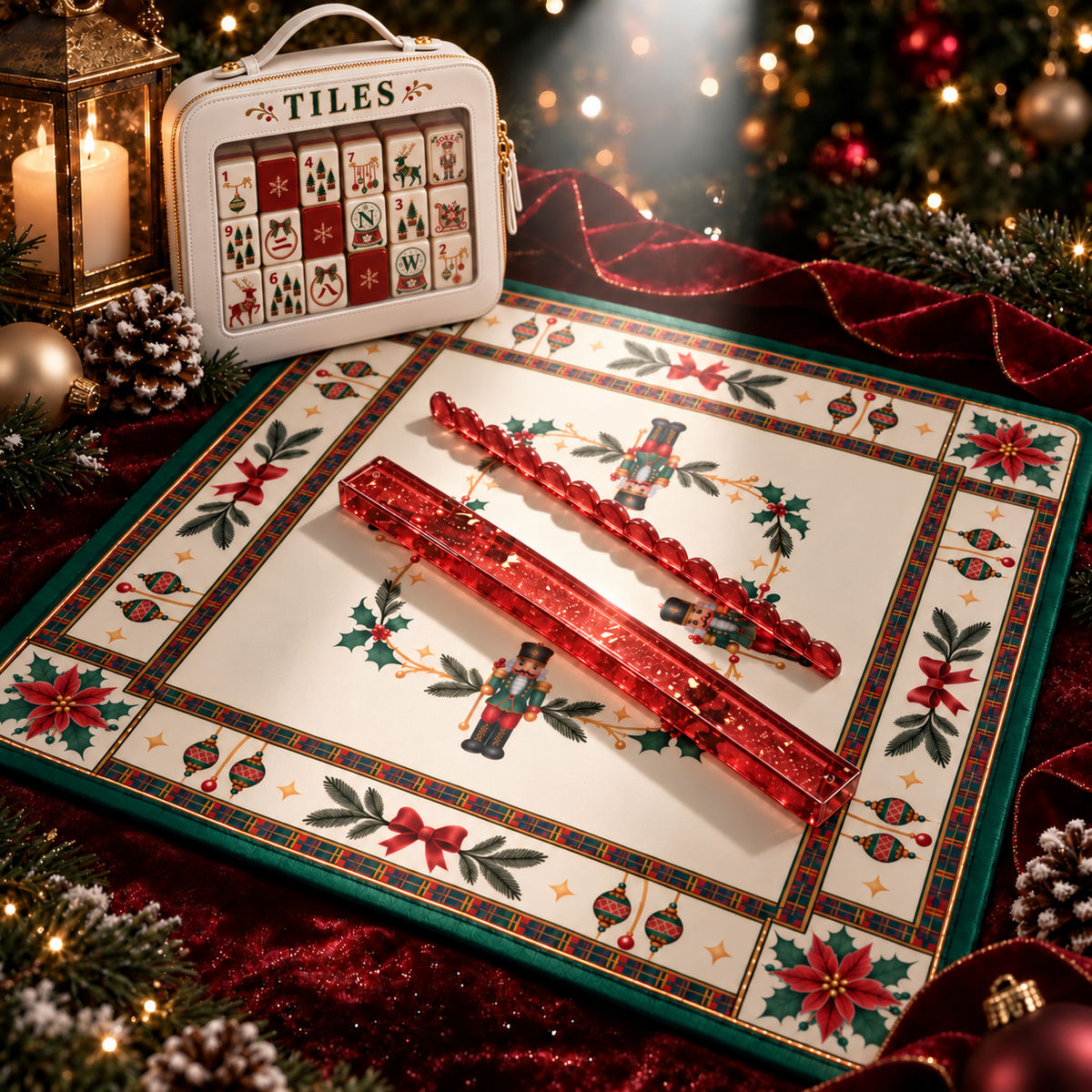
Arrange your table so each of the four players sits on a different side—East, South, West, North. Place the mat in the center (or use a tablecloth if you prefer). Each player gets one rack with pusher, positioned in front of them at an angle so tiles don't slide. Leave space in the center for the discard pile and the wall (the undrawn tiles arranged in a square). Set out the hand card where all four players can see it equally—propped upright on a stand or tilted toward the center. Place dice, a timer, and a notepad (for scoring) off to one side. Dim overhead lights if possible; good sidelighting reduces glare on tiles. Verify all four racks work smoothly before guests arrive—sticky pushers or loose tile grooves ruin the rhythm.
How to choose a mahjong mat covers materials and sizes if your table is non-standard.
What's the absolute must-have equipment list for spring hosting?
Essential (you cannot play without these):
One 160-tile American mahjong set (152 playing tiles + 8 jokers, kept intact)
Four racks with pushers (one per player)
Current year's National Mah Jongg League hand card
Pair of dice (any standard dice; these determine seating rotation)
Pen and paper for scoring
Strongly recommended (serious players expect these):
A mahjong mat (protects tiles and table, reduces noise, looks professional)
A travel bag or case if you plan to host regularly (keeps the set safe between games)
Nice to have (improves the experience):
A timer (15–20 minutes per hand keeps pace consistent)
Good lighting or a lamp focused on the table
Water and light snacks nearby (no eating over the tiles)
Acrylic sets are most durable for frequent spring hosting; our best-selling designs are made to withstand regular play and pack flat for transport if you ever host at a friend's home.
What do spring newcomers get wrong about the Charleston?
The Charleston is the pre-game ritual where players pass tiles to each other in a precise sequence—many beginners assume it's random shuffling. It's not: East passes three tiles facedown to West, South passes three to North, West passes three to South, and North passes three to East. Then each player may pass up to three tiles back to their opposite player (West-East, North-South). Finally, a three-tile pass occurs one more time. This takes 10–15 minutes the first time; by hand three, players move faster.
Common mistakes: passing the wrong number of tiles, passing to the wrong player, or trying to "choose" tiles strategically (it's meant to be semi-random, so you can't stack advantages). Newcomers also ask if the Charleston applies every hand (yes, always). Walk through it step-by-step before you roll dice for seating—literally have people move tiles across the table so they see the rhythm. The Charleston explained is a standalone read if anyone wants to study it beforehand.
🎁 See our most-loved mahjong sets & accessories →

How do you keep the game moving and fun for mixed skill levels?
The hand card is the single biggest leveler. Everyone uses the same card (issued each spring by the National Mah Jongg League); no one can win unless they match a pattern on the card. This means a new player with a lucky draw can win a hand just as easily as a veteran. To keep pace:
Keep the card visible. All four players reference it openly; no memorizing.
Use a timer. Set 15–20 minutes per hand (adjust for your group). This prevents analysis paralysis and keeps the social energy high.
Explain winning conditions one time clearly. A winning hand is 14 tiles arranged as melds (three of a kind, groups of five or six, pairs, etc.) that match exactly one of the patterns on the card. That's it.
Call out when someone is close to winning. "Player A is one tile away from the right side of the card"—this keeps everyone engaged and makes the draw feel suspenseful.
Rotate who scores. Beginners learn by watching others tally points. By hand two, they catch on to the basic scoring rhythm.
If someone is really struggling, a more experienced player can sit nearby and whisper suggestions—not for every decision, but for understanding what tiles to look for. Spring parties are social; the goal is connection, not crushing the newcomer.
What's a realistic spring party hosting checklist?
Task | Timing | Notes |
Verify all tiles and racks work | Day before | Replace any missing or cracked tiles; test pusher smoothness. |
Clean the mat or tablecloth | Day before | No dust or spills. |
Print or display the current-year hand card | Day of | Post on a stand or tape it to the table edge. |
Set the table: four racks, centered mat, space for wall | 30 min before | Test sightlines from each seat. |
Brief newcomers on Charleston and basic rules | 15 min before | Use one sample hand to walk through it. |
Roll dice and assign East, South, West, North | At start | East always deals first (they draw the first tile from the wall). |
Play the first hand (expect 20–25 minutes) | Hand 1 | Pace will slow; that's normal. |
Tally score and rotate winds for next hand | After each hand | North becomes East, East becomes South, etc. |
Offer a break after three hands | ~90 min in | Stretch, snack, chat—players appreciate it. |
Hosting a spring game is fundamentally about managing the first 15 minutes well. After that, the rules and rhythm carry the evening.
✨ Find your Mahstead set — free US shipping →
What to check before you buy
Set completeness: A 160-tile set must have 152 playing tiles (36 Bams, 36 Craks, 36 Dots, 16 Winds, 12 Dragons, 8 Flowers) plus 8 jokers. Count if you're unsure; one missing tile ruins a game.
Rack condition: Each pusher should slide freely without grinding or sticking. Test all four.
Mat durability: If you plan to host weekly, acrylic or premium fabric mats outlast cheap alternatives. Check seam quality.
Tile weight and feel: Heavier acrylic tiles are easier to handle and less likely to scatter if bumped. Light plastic feels cheap and increases mistakes.
Storage: Does your bag or case seal properly? Spring humidity can warp tiles if they're not protected.
Hand card access: Confirm the current year's card is available (the National Mah Jongg League updates in spring; older cards won't match hands you can win).
FAQ
Can I host mahjong on a regular dining table without a mat?
Yes. A mat protects the table and muffles noise, but a tablecloth works. Ensure the surface is level and tiles don't slide when players handle them. Acrylic tiles on a smooth surface can shift unexpectedly—a mat prevents that friction problem.
What if a newcomer asks me to explain American mahjong in one sentence?
"You draw and discard tiles to build a 14-tile hand that matches a pattern on the card. First to match exactly wins." Save detail for after the game starts if they want more.
How many hands should a spring party include in one session?
Four to six hands (90–180 minutes of play) is standard for a social gathering. More than six, and fatigue sets in. Fewer than four feels rushed; players just start warming up.
Should I teach the hand card before or after the Charleston?
Teach it after. First walk through the Charleston so everyone knows the rhythm. Then sit down, explain how to read the card, and play the first hand with patience. Theory plus practice sticks better than theory alone.
What if I'm missing one joker from my set?
You cannot play. American mahjong is always 152 tiles + exactly 8 jokers. One missing joker throws off the tile count and makes certain hands impossible to complete. Buy a replacement set or borrow a spare joker from a friend's set (it must match color and style to work visually, though any joker functions mechanically).
Is spring a special season for mahjong hosting, or does the date matter?
Spring itself isn't special—the hand card changes in spring (issued March–April by the National Mah Jongg League), so all hands are refreshed. Hosting in spring means your guests are learning "new" patterns, which feels exciting. Otherwise, the rules and gameplay are identical year-round.


View More
View More
View More
