
White Dragon Mahjong Tile Meaning in American Play
Last updated: Nov 23, 2026
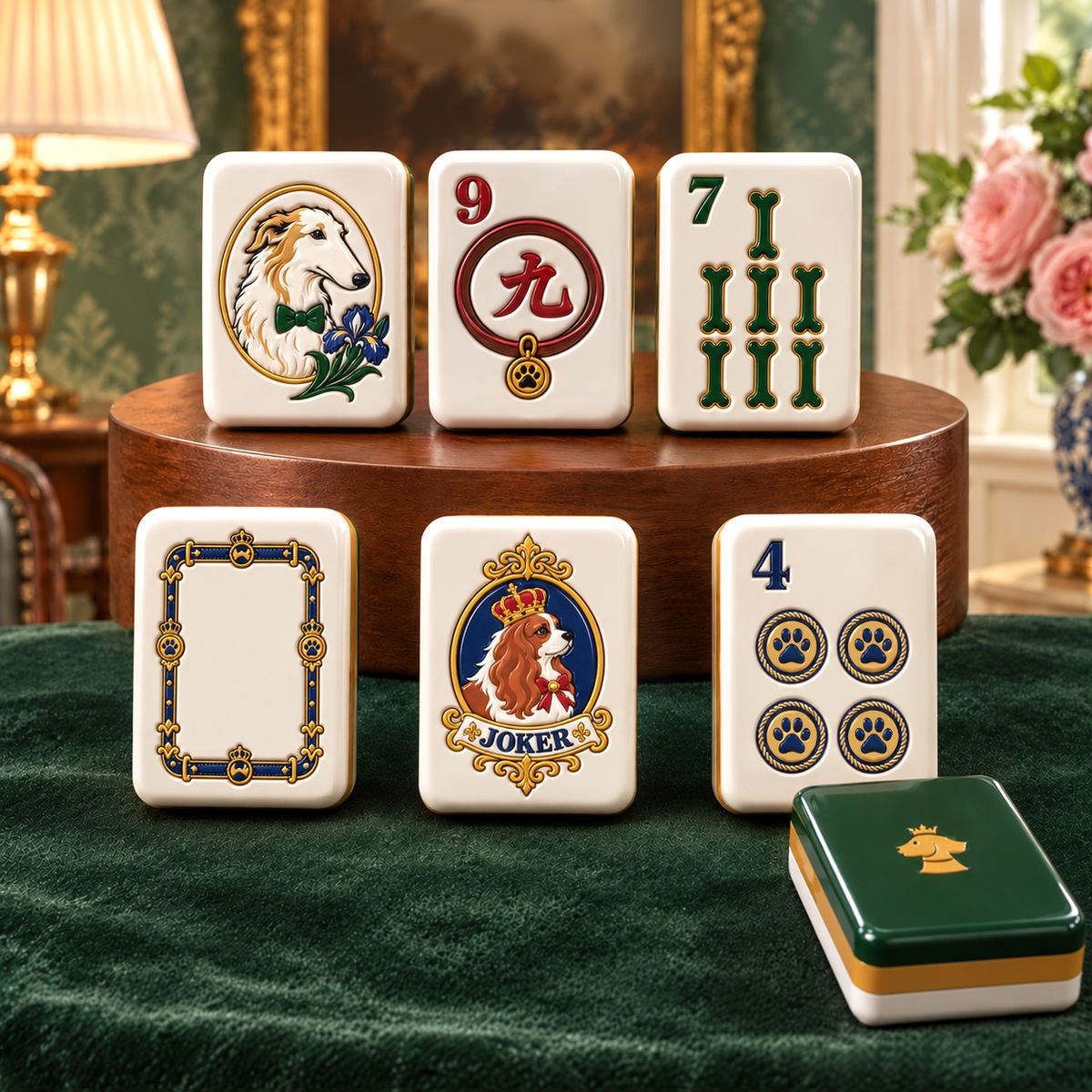
The White Dragon—often called "Soap" by players—is one of 12 dragon tiles in a standard American mahjong set (four copies each of Red, Green, and White). Unlike Red and Green, which pair exclusively with Craks and Bams respectively, the White Dragon serves as the zero tile and associates with Dots. In hand patterns, the White Dragon can stand alone as a dragon pung or kong, or it can substitute for zero in numerical sequences and dot-heavy combinations. You'll spot it as a blank or lightly marked tile among the what's in an American mahjong set. Every American game uses exactly four White Dragons from the standard 152 active tiles; they never function as jokers or wild cards in single-tile or pair positions—a critical rule that separates American from other variants.
What does White Dragon represent in mahjong?
The White Dragon is a dragon honor tile with two distinct identities. First, it's one of three dragons that must appear together in certain patterns on the National Mah Jongg League card. Second, it functions as the numeral zero, filling the role of blank in dot-based or mixed sequences. This dual nature makes it unique: Red pairs with Craks (1–9), Green with Bams (1–9), but White belongs to Dots and can appear as 0-1-2, 0-3-6-9, or other zero-inclusive patterns. Players often confuse this with joker status—a mistake. The White Dragon is a fixed tile with a specific place in the hand structure, never a universal replacement.

How do you identify the White Dragon at the table?
White Dragons typically appear as blank tiles with minimal marking—a clean white or ivory surface, sometimes with a thin border. In acrylic sets, the design is instantly recognizable compared to numbered tiles, which carry bold symbols (bamboo sticks for Bams, coins for Craks, circles for Dots). Some vintage tiles feature a subtle character or outline; modern sets often leave them unmarked. At game start, after the wall is built and tiles drawn, you'll sort your hand by suit and honor. When you see a blank among your Dot tiles, that's almost certainly the White Dragon (not a joker—jokers are typically distinct in color or design). The key: every White Dragon belongs to the Dot family. If you're unsure, count your dragons: you should have up to four blanks in a hand, one per copy of the White Dragon. Never assume a blank is a joker or a mistake in set manufacturing.
Which hands use the White Dragon tile?
The White Dragon appears in dozens of hand patterns from the current year's card, depending on whether it's filling a dragon requirement, acting as zero, or both. Common structures include:
Hand Type | Role of White Dragon | Example Pattern | Why It Works |
Dragon Pung | Honor tile (complete set) | Any three matching dragons | Fulfills the dragon group requirement |
Dragon Kong | Honor tile (complete set) | Any four matching dragons | Kong variation of dragon requirement |
Zero-Dot Sequence | Blank/zero tile | 0-1-2 Dots, 0-3-6-9 Dots | White Dragon substitutes for zero numerically |
Mixed Dragon & Number | Dual role | Dragon pung + dot sequence with 0 | Combines honor and numerical functions |
Because jokers are never legal in a single-tile or pair position in American mahjong, the White Dragon cannot serve as a joker. If a hand calls for "two dragons and jokers," you must use two actual dragon tiles (possibly including a White Dragon) plus exposed jokers elsewhere—the White Dragon does not substitute for a joker, even if the hand looks incomplete. This is the most common rule mistake new players make.
What's the difference between White Dragon and joker?
Jokers are wild cards that can replace any tile only in exposed groups of three or more (pungs, kongs, quints, sextets). The White Dragon is a fixed, non-wild tile with a specific identity: it's a dragon honor and the zero. A joker cannot be used as a single tile or in a pair under American rules; neither can the White Dragon in a pair context, but for a different reason—the White Dragon in a pair is not a valid pair (pairs must be identical tiles, and a single White Dragon tile paired with another White Dragon is valid, but a White Dragon paired with a joker is illegal). The practical difference: if your hand shows "two White Dragons and a joker in a pung," that's illegal in American mahjong. You need three identical tiles (three White Dragons, or three of any other tile). Jokers work in groups of three or more where at least one is the tile being represented; the White Dragon works as the tile itself. Understanding this distinction keeps you from calling invalid hands and losing credibility at the table.

How do you use the White Dragon in a winning hand?
Step one: read the card for the current year to identify all hands. Step two: sort your 14 tiles by suit and honor, grouping any White Dragons with your Dots. Step three: look for patterns that include zero, dragon trios, or both. Step four: determine whether your White Dragons are exposed or hidden. If exposed (played as a group), they form a pung or kong with no jokers in a single-tile role. If hidden (in your concealed hand), they count toward your hand structure without obligation to declare them immediately.
Example: Your hand is one pung (three Red Dragons), one kong (four Green Dragons), one quint (five consecutive Bams), and three White Dragons. If the card shows a legal hand with "dragons and quint," your three White Dragons complete a pung, and the hand is valid. If the card instead calls for "dragon pung, dragon kong, Bam quint, zero-dot pung," your three White Dragons fill the zero-dot pung perfectly. You discard your extra tile (typically one you don't need) to complete the hand and declare a win. The White Dragon's role is determined by the card pattern, not by your preference.
🀄 Shop best-selling mahjong sets →
Common mistakes players make with the White Dragon
Mistake 1: Treating it as a joker. The White Dragon cannot replace a missing tile in a pair or single. If you need a fourth Dot to complete a sequence, a White Dragon fills that need only if the card explicitly allows zero-dot sequences. Otherwise, it's unusable for that hand—no creative substitution.
Mistake 2: Confusing it with a blank spare tile. When you unpack a 160-tile acrylic set, extra tiles beyond the 152 in play are spares; they never enter the game. The four White Dragons in active play are never blank spares—they're counted, recorded, and part of your tile distribution.
Mistake 3: Assuming all blank tiles are White Dragons. In mixed sets, jokers may also appear blank or light-colored. Count your tile types carefully at game setup: 36 Bams, 36 Craks, 36 Dots, 16 Winds (four each), 12 Dragons (four each), eight Flowers, and eight Jokers. Any blank tile in the Dot count (9 tiles per Dot number 1–9, plus four zeros = 40 Dots total) is a White Dragon.
Mistake 4: Playing two White Dragons in a pair without checking the card. Pairs must be identical in American mahjong. Two White Dragons form a valid pair only if the card pattern requires a dragon pair or zero-dot pair. If the pattern requires "two 5 Dots," two White Dragons do not substitute.
Mistake 5: Declaring a hand with a White Dragon in an illegal position. Before you call "mah-jongg," verify that every group (pung, kong, quint, sextet) and your pair match the card. A White Dragon in the wrong suit family (e.g., paired with a Bam when the pattern requires Dots) invalidates the hand.
What you'll need: spotting and using White Dragons
To play confidently with White Dragons, choose a set where the tiles are clearly legible and the blank tiles (White Dragons) distinct from jokers. Engraved American mahjong sets with high-contrast acrylic and printed symbols make the White Dragon immediately identifiable, even under poor light. Pair your set with a sturdy mat and racks with pushers to keep tiles organized by suit, so White Dragons sort cleanly with your Dots. Many players also keep a current-year card guide and a small reference card for zero-dot patterns at the table to avoid disputes.
🎁 See our most-loved mahjong sets & accessories →
What to check before you buy a mahjong set
Tile clarity: Can you instantly spot the White Dragon (blank) distinct from jokers and numbered tiles?
Four copies present: Confirm the set includes exactly four White Dragons (and four of every other tile).
152-tile count: The standard American game uses 152 tiles. Any set sold as 160-tile includes spares beyond play.
Card included or accessible: You must have current-year card access to verify White Dragon usage in each hand.
Material durability: Acrylic tiles resist wear; verify edges are smooth and faces print-clear after extended play.
Storage options: Will you store your set in the original container, or do you need a dedicated case or travel bag?
✨ Find your Mahstead set — free US shipping →

FAQ
Is the White Dragon the same as a joker in American mahjong?
No. The White Dragon is a fixed tile—the zero digit paired with Dots. Jokers are wild and replace any tile only in exposed groups (pungs, kongs, quints, sextets). The White Dragon cannot substitute for a joker or fill a single-tile position as a joker can.
Can I use a White Dragon in a pair?
Yes, if the card pattern requires a dragon pair or zero-dot pair. Two White Dragons form a legal pair in those cases. Any other pair composition (e.g., "two 5 Dots") cannot use White Dragons as substitutes.
How many White Dragons are in a standard American mahjong set?
Four, like every other tile type. The 152-tile active game includes four copies of each dragon (Red, Green, White), 16 winds, and other honor and suit tiles.
What does "Soap" mean in mahjong?
"Soap" is a slang nickname for the White Dragon, used by many American players. The origin varies by region; it's simply an informal name that persists in spoken game commentary and house rules.
If a hand calls for "three dragons," can I use three White Dragons?
Yes, if the card allows it. However, most "three dragons" patterns require a mixed trio (one Red, one Green, one White). Always check the card to confirm which dragons are permitted in that specific hand.
Can a White Dragon be exposed as a kong if I draw four copies?
Yes. A kong of four White Dragons is legal and visible at the table, occupying the same space as any other kong. It counts as a dragon honor group and may also fulfill a zero-dot requirement depending on the hand pattern.


View More
View More
View More
