
Where to Learn American Mah Jongg: Classes, Clubs & Self-Study
Last updated: Nov 23, 2026
American mah jongg is best learned in person through community centers, synagogues, libraries, country clubs, or via online group lessons; expect to invest 4–8 weeks of consistent weekly 2–3 hour sessions before playing comfortably. Start by searching your local library for flyer boards, contacting nearby synagogues and senior centers (mah jongg hubs in many regions), and checking Meetup or Facebook for active game groups. A good teacher will explain tile structure, the Charleston passing ritual, how to read the current year's National Mah Jongg League card, and hand-building strategy. Costs range widely—some clubs charge nominal dues, others are free. You'll also want a quality American mah jongg set so you can practice at home.
Where do most beginners actually find teachers?
Libraries and community centers host the most accessible beginner classes, usually free or low-cost. Synagogues run regular women's groups and mixed games; call the temple office directly. Senior centers always know where active games meet. Country clubs often have mahjong groups; ask membership. Search Facebook groups for your city + "mah jongg" and Meetup.com filtered by your zip code. Ask at local card shops—they often post game schedules. Many regions have a single high-energy club; locals can point you there.

What should a beginner expect in week one?
Your first session covers tile names (Bams, Craks, Dots, Winds, Dragons, Flowers), the hand layout, and the Charleston—the tile-passing ceremony that opens every game. You won't play a full hand yet; you'll sort tiles, practice exposure rules (pugs, kongs, quints, sextets only; jokers never alone or in pairs), and learn why the current year's National Mah Jongg League card is your bible. A good teacher brings extra sets so everyone plays together. By the end, you'll recognize a pung (three identical tiles) and know why American mahjong has no sequences—only groups of three or more identical or matching tiles. Wear reading glasses.
How is American mahjong different from what you'll learn elsewhere?
American mahjong uses 152 tiles (no sequences like Chinese variants), requires hands from the league-issued card (released every spring), and limits exposures to groups of three or more identical tiles—never two. Jokers are wildcards that fill gaps in exposed groups only, never appear alone, and never form a pair. The Charleston is mandatory before each game; players pass tiles three times. Learn the core rules so you're not confused by Chinese, Hong Kong, or Riichi variants your search might surface. American is its own beast; commit to one style while learning.
How long until you're ready to join a regular game?
Most players are comfortable at a casual group after 4–8 weeks of weekly 2–3 hour sessions. You'll know the 152 tiles by sight, understand hand-reading basics, and stop asking "can I call that?" every 30 seconds. Expect to play slower than veterans for months; that's normal. Join a beginner-friendly game—many clubs host newcomer nights. Bring a notepad to jot hand patterns. Speed comes from repetition, not from cramming; the card stays on the table. Your first official game will feel chaotic; that's the Charleston's job.
Learning Path | Time Frame | Cost Basis | Best For |
Library class | 6–8 weeks | Free–nominal | Budget-conscious, structured learning |
Private teacher | 4–6 weeks | Variable | Fast learners, one-on-one pace |
Senior center group | Ongoing | Free–low | Retirees, social learners |
Synagogue women's group | Ongoing | Nominal/free | Community-oriented, established circles |
Online group lesson | 4–8 weeks | Variable | Remote learners, flexible schedule |
Self-study + casual game | 8–12 weeks | Minimal | Independent learners, already know someone |
🀄 Shop best-selling mahjong sets →
What supplies do you need before week one?
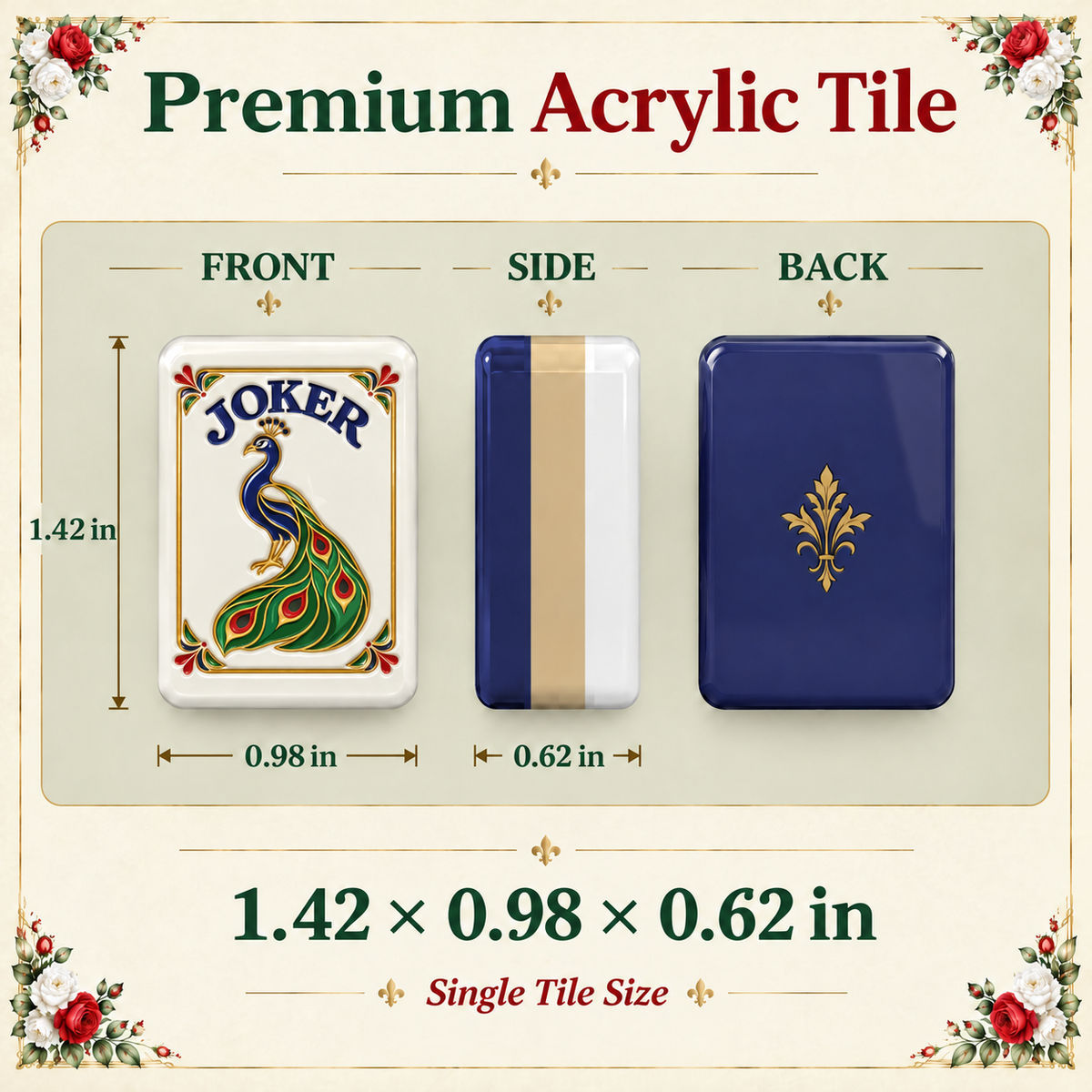
A full American mahjong set (152 tiles, 8 jokers), a mat, a rack with pushers, pen, paper, and reading glasses. Your teacher may loan you a set for the first few weeks, but owning your own is a game-changer: you practice Charleston at home, learn tile feel and weight, and build muscle memory. A good mat (felt or bamboo) protects tiles and keeps sound low. Racks let you organize your hand neatly so others can't see what you're holding. Engraved sets make practice feel intentional. Skip novelty dice-only sets; you need a complete 152-tile game.

Should you learn to score before or after playing?
Learn hand recognition and play first. Scoring—the point value of each hand type—comes naturally once you've seen a pattern 20 times. Beginners who memorize scoring numbers before touching tiles burn out fast. Play five or six hands, recognize what a "like number" hand looks like, then ask why it scores what it does. The league card already assigns points; you're just reading and adding. American mahjong scoring is logical, not arbitrary—it rewards harder-to-build hands. Once you've called "mah jongg" three times, scoring clicks.
🎁 See our most-loved mahjong sets & accessories →
How do you decide: in-person class vs. online group vs. self-teach?
Format | Pros | Cons | Best If |
In-person class | Instant feedback, social, tiles ready, one teacher | Fixed schedule, location-dependent, can be crowded | You want structure & community |
Online group | Flexible, global, home-based, replayable | Harder to spot mistakes, no tile feel, screen fatigue | You live rurally or have odd schedule |
Self-teach (video + casual game) | Total control, free, pace yourself | Slow, high confusion rate, risky first games | You already know someone who plays |
In-person beats online for mahjong: tile handling and table rhythm matter. Online beats silence. If your city has no class, ask that club—many run beginner nights; if none exist, online beats waiting. Many players do both: class for basics, club for speed and strategy later.
What common beginner mistakes should you avoid?
Never think jokers are free wildcards for any position; they fill only gaps in exposed groups and never pair together. Don't expose a single tile thinking you "control" it—American rules ban single exposures entirely. Don't memorize every hand type from the card; read it as you play. Don't skip the Charleston—it's not optional. Don't assume your home variant (Cantonese mom's rules, your sister's house-rules) is American; the league card is law. Don't buy a 144-tile set by mistake; American uses exactly 152 tiles plus 8 jokers. Ask your teacher to confirm the right set before you spend money. What goes inside a proper set is non-negotiable.
✨ Find your Mahstead set — free US shipping →
What to check before you buy a beginner set
Buy a best-selling American set that explicitly states "152 tiles + 8 jokers." Avoid 144-tile (Chinese), 136-tile (Japanese), or any unlabeled count. Check that tiles are acrylic or bone (durable for years of shuffling), not paper or resin. Ensure the set ships with a mat; if not, buy one separately—practice on a bare table wrecks tiles and creates noise. Confirm jokers are present and visible (usually red or marked differently). Test the rack weight if buying online; light racks flip when you lean on them. Ask your teacher for a set recommendation before ordering; Mahstead's engraved titles let you personalize your game, and every set includes free US shipping.

FAQ
How much does a beginner class cost?
Library classes are typically free or up to $50 total; synagogue and senior center groups cost $0–$20/session or a nominal monthly dues. Private teachers vary widely. Always ask upfront; mah jongg classes should never break your budget.
Can I learn mah jongg entirely from YouTube videos?
Not comfortably. Videos teach rules, but you need live feedback on hand-reading and play speed. Pair video learning with one monthly in-person game; live players spot mistakes instantly that videos miss.
What's the difference between learning American and learning online variants?
American mah jongg has no sequences (only groups of three identical tiles), uses the yearly league card, and requires the Charleston. Chinese and Japanese variants have different tile counts and play systems entirely. Commit to American first; switching variants later confuses your instincts.
How long until I'm competitive, not just playing?
Comfort takes 4–8 weeks; competitive play (knowing when to discard strategically, reading the board) takes 6–12 months of weekly games. Most players stop measuring time once they can finish a hand without panicking.
Should my first set be cheap or high-quality?
Buy mid-range quality (acrylic, 152 tiles, clear markings). Cheap sets have worn tiles and unclear suits; high-end sets are worth it later when you play weekly. Your first set needs durability and readability, not prestige.
Is there a "best" place to learn—synagogue, senior center, or library?
The best place is the one with a beginner-friendly teacher and people your age. Synagogues and senior centers have established groups; libraries often run structured classes. Visit two or three before committing; personality and pacing matter more than venue.
Do I need to own a set before I start learning?
No. Most teachers provide sets for the first 4–6 weeks. Buy your own once you're sure you'll keep playing; it accelerates home practice. A set is an investment in habit-building, not a requirement.
What if my city has no classes or clubs?
Search Facebook (city + "mah jongg"), Meetup.com, and ask at synagogues and senior centers directly—many host games without advertising publicly. If truly isolated, an online group + one local friend who knows the game gets you started; then join a club when travel is possible.


View More
View More
View More
