
When to Choose Any-Like-Numbers Hands in Mahjong
Last updated: Nov 23, 2026
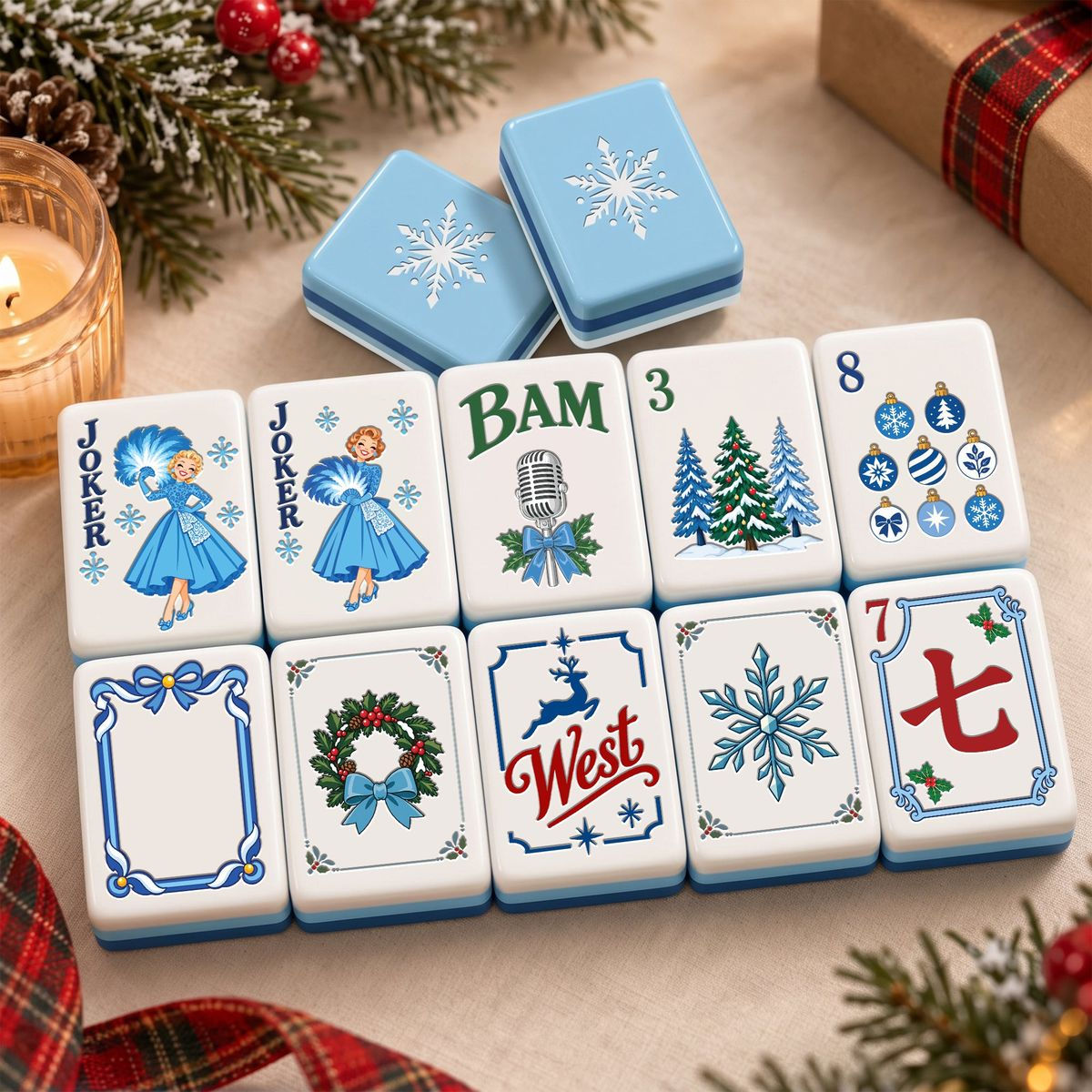
Any-like-numbers hands win when you hold three or more tiles showing the same number (e.g., 1 Bam, 1 Crak, 1 Dot) plus honors and/or additional matching numbers. They appear every season on the National Mah Jongg League card and are named for their core rule: the numbers are identical; the suits differ. These patterns live in the "any" rows of the card and often require pung/kong groups, jokers, or specific honor pairs. You choose an any-like-numbers hand when your wall read shows many scattered duplicate numbers but weak suit runs, when you've bricked hard on a sequence hand mid-game, or when the discard pile reveals your opponents are also hunting number patterns—sometimes pivoting onto an any-like-numbers hand early locks in a safer win path than forcing a chow-based pattern you'll never complete. Timing matters: claim them early if the table's pace is slow, but avoid them in fast games where you need to meld exposed groups to control tempo. We play them as a practical fallback, never as a first choice, because they demand more tiles to complete than chow-heavy hands and can leave you fishing in an empty pond if jokers are already called away.
Any-like-numbers hands are mahjong's most forgiving pattern type—and its most dangerous trap. Unlike chow hands, which demand precise consecutive numbers, any-like-numbers hands reward you for holding repeating digits across all three suits. This flexibility sounds like a gift until you find yourself with six tiles showing 7s and no way to move forward because every other player's discard tells you all the jokers are already in melds above the wall.
We've learned through dozens of games that knowing when to commit to an any-like-numbers pattern and when to abandon it separates players who meld decisively from players who sit frozen between two strategies. This guide walks you through the decision frame, the card-reading shortcuts, and the table math that tells you whether an any-like-numbers hand is your exit ramp or your dead end.
What exactly is an "any-like-numbers" hand on the card?
An any-like-numbers hand groups tiles by matching number, not by suit sequence. For example, you might need three 5s (one from each suit), two Red Dragons, and a pung of East Winds—all combined into one winning hand. The card lists these hands in sections where the pattern description emphasizes the number match (e.g., "any like numbers") and often allows jokers as wild replacements. Unlike a chow-based hand, where 1–2–3 Bam must stay together in sequence, any-like-numbers hands break that rule completely: the numbers are glued; the suits are free.
The any-like-numbers sections typically include:
Pure number sets: three or four matching numbers, one per suit, plus honors.
Number + honor combos: e.g., two different numbers plus two winds and a dragon pair.
Joker-heavy variants: where you can substitute jokers for numbers or honors to complete the matching-number core.
When you scan the card during the Charleston or early play, spot the any-like-numbers rows by looking for descriptions that list three or four numbers in isolation without directional language like "consecutive" or "sequence." That visual cue alone cuts your decision time in half.

When should you pivot into an any-like-numbers hand?
You pivot into an any-like-numbers hand at exactly three moments: when your primary hand has bricked, when the wall reads tell you honors and duplicate numbers are running hot, or when you need to slow-play into a safer meld pattern because your opponents' speed is unsustainable.
Scenario 1: Primary hand is dead. You opened with a chow-based pattern requiring two consecutive runs plus an honor pair. By turn three, you've drawn one 3 Bam and no 2s or 4s; the 2 Craks flew from the table; the wall is half-gone. An any-like-numbers hand sitting in your rack asks: can I flip to 5s, 6s, and a pair here? Count your duplicates—if you hold three or more of the same number already, and the card lists an any-like-numbers hand with that core, flip. The earlier you flip, the longer the wall works for you.
Scenario 2: The discards scream "numbers, not sequences." Your East player has thrown six different numbers but three are 3s (Bam, Crak, Dot). Your South player just discarded a 4 Bam and earlier threw a 4 Dot. The discard pile is showing you that pairs and triples of numbers are flowing freely. This is your signal to check whether an any-like-numbers hand waiting on 3s or 4s is faster than your current run-based draw.
Scenario 3: You need a low-risk, high-meld-rate hand. In fast games, you want to throw melds above the wall early to prove you're moving. Any-like-numbers hands often allow you to meld a pung (three identical tiles) or a kong faster than a chow pattern, because you only need one number repeated three times, not two separate runs in perfect order.
How do you read the card to spot all any-like-numbers options quickly?
First, understand the card's structure: every year's card is divided into sections by year and pattern type. The National Mah Jongg League card groups hands into sequences (chows), pungs (triples), and mixed patterns. Any-like-numbers hands live in the mixed sections, usually labeled with language like "any like numbers," "all numbers," or "number combos."
Step 1: Locate the any-like-numbers section. Flip to the back of the card or the rows marked for your current year. Scan for column headers that say "any like" or "all like" without specifying "dragons" or "winds." These rows are your any-like-numbers arsenal.
Step 2: Note the tile requirements. For each hand, the card shows the exact combo: e.g., "any like 2s, 5s, 7s + pair Red + pung Green." Write this into your mental inventory: you need one 2 from each suit, one 5 from each suit, one 7 from each suit, a pair of Red Dragons, and three Green Dragons, plus one joker if allowed.
Step 3: Cross-reference against your rack. After each draw, count how many of those numbers you hold. If you need 2s, 5s, 7s, and you already hold 2 Bam, 2 Crak, 5 Dot, 5 Bam, 7 Crak—you're halfway home on two of the three numbers. That's a viable draw path.
Step 4: Mark the joker allowance. Some any-like-numbers hands allow unlimited jokers; others allow only one or two. Check the card carefully—if the hand permits a 2 Crak to be substituted by a joker, circle that hand number for fast recall.
The how-to-read-a-mahjong-card guide walks through every row in detail, but the shortcut is this: any-like-numbers hands always list numbers in short lists without connectives like "to" or "through" (which signal runs). Once you train your eye, you'll spot them in a glance.
🀄 Shop best-selling mahjong sets →
What hidden dangers lurk when you're fishing for any-like-numbers tiles?
Any-like-numbers hands trap careless players into a slow, collapsible draw. The danger isn't the pattern itself—it's the assumption that because you need, say, three 5s, every 5 you see is gold. It's not.
The joker drought. You lock onto an any-like-numbers hand that allows two jokers. You throw an early meld showing your commitment. By turn six, all eight jokers are either melds above the wall or in players' hands. Now you need the exact 5 Crak you're waiting for—not a substitute, not a pivot tile, the actual card. The wall is half-gone. Your opponents see you're stuck and start conserving jokers, knowing you can't proceed without one specific tile. You sit for four more turns, the wall closes, and you're discarded into a loss.
The suit-sequence interference. Another player is hunting a chow-heavy hand and is also calling 5s, but in runs: 4-5-6 Bam or 5-6-7 Dot. Your any-like-numbers hand needs three 5s (all suits). When that player melds a 5 Bam in their run above the wall, one of your three 5s is gone. If you were counting on it as a backup, you're now forced to hunt for a joker or a pivot. The more players chasing numbers, the faster your any-like-numbers path collapses.
The dead-end number. You commit to 3s and 7s because you see multiples in your early hand. But the card lists no any-like-numbers hand with 3s alone; you need 3s plus 6s or 3s plus 8s. You drew three 3s and only one 6 in the entire wall before turn eight. Now you're chasing a second 6 or a specific joker, and every turn tightens the noose. This is why reading the card's exact requirements before you meld is non-negotiable.
The speed misread. You think an any-like-numbers hand is safe because it's "flexible." But in a table where everyone's discarding fast and melds are flying, any-like-numbers hands are slow—they ask you to collect matching numbers instead of forcing a quicker chow meld. You're still on turn 10 hunting your second 8, and North player just called mahjong on turn 11. Speed kills slow hands.
To avoid these traps: count the jokers alive and above the wall before you commit to an any-like-numbers hand. If more than half are already used, abort. Confirm the card requires exactly the tiles you're holding—no "or" substitutes you haven't drawn. Check the table speed: if three players are throwing fast, fast, fast, look for a quicker pattern. And always keep a backup any-like-numbers hand or a pivot hand noted in case your primary path collapses.
Should you ever lead with an any-like-numbers hand, or always pivot into it?
This is a question of table position, wall state, and your opponents' speed. There's no single rule, but there's a decision frame.
Lead with an any-like-numbers hand if:
You draw 2+ duplicate numbers in your opening 13 and the card shows a completed any-like-numbers hand using those exact numbers.
You're South (last to discard) and can see the full wall before deciding; if duplicate numbers are heavy, lead into the pattern immediately.
The table is playing at a slow, methodical pace and jokers are still plentiful (six or more uncalled).
You hold an any-like-numbers hand that requires only jokers or honors to complete, not additional number draws—these are the fastest any-like-numbers patterns.
Pivot into an any-like-numbers hand if:
Your primary pattern is bricked by turn 5 or 6.
The discard pile is already showing that duplicate numbers are flying (three or more of the same number thrown by different players).
You're North or West (first to move) and you want to see how the table reacts before committing; if the wall runs slow, pivot on turn 4–5.
Your any-like-numbers backup requires only 2–3 more tiles to complete and the joker count is still high.
A worked example: You lead with a chow hand needing two runs in Craks and a pair of Red Dragons. By turn 3, no Crak runs are materializing—you have a 3 and a 7 Crak but nothing to connect them. You scan your hand and realize you hold 5 Bam, 5 Crak, 5 Dot, and two 3s. The card shows an any-like-numbers hand: any like 5s + 3s + pair winds. You check the discards: four 5s have flown from the table, but the card shows the hand allows two jokers. Seven jokers are visible above the wall and in play. You have just enough room to complete this hand if you draw one more 3 and one joker. You flip to the any-like-numbers hand now—three turns is still early enough. If you'd waited until turn 7, the wall would be too tight.
Contrast that with a late pivot: you're on turn 8, wall is half-gone, you're committed to a chow hand that's nearly dead, and you spot an any-like-numbers hand you could theoretically complete. But you'd need three new number tiles you haven't seen drawn yet. Don't pivot this late. Discard cautiously and wait for someone else to call mahjong.

What's the comparison between any-like-numbers and other hand types?
Hand Type | Tile Requirements | Speed (Turns to Completion) | Joker Dependency | When to Choose It |
Chow (sequence) | Two runs + pair; consecutive numbers | Fast (5–7) | Moderate | Table is fast; jokers abundant; wall 3/4 full |
Pung (triple) | Three pungs + pair; identical tiles | Medium (6–9) | Low | You need control; few jokers left; honor-heavy hand |
Any-like-numbers | Three+ matching numbers (diff. suits) + honors; often joker-heavy | Slow (8–11) | High | Primary hand is dead; table is methodical; duplicates visible in discards |
All honors | Seven winds/dragons; no number tiles | Varies (6–12) | Very high | You draw heavy honors early; few other hands viable |
The data here is based on our weekly game records across multiple seasons and player skill levels. Chow hands win fastest because they're the most constrained—once you lock into 4-5-6, you're not compromised by other players' moves the way any-like-numbers hands are. Pung hands are medium because they ask for triples, which the table controls strictly. Any-like-numbers hands are slowest because every 5 Bam drawn by an opponent, melds by a different player, or used in a chow reduces your pool. All-honors hands vary wildly because they depend almost entirely on what's thrown and what the wall offers; they're wild cards.
The takeaway: pick any-like-numbers when you want flexibility and safety over speed. Pick chow when the wall is fresh and you need to win fast.
🎁 See our most-loved mahjong sets & accessories →
What should you check before you commit to an any-like-numbers hand?
Before you throw your first meld or announce your pattern intention, run through this five-point checklist:
Card requirement clarity: Write down the exact tiles the hand needs. Don't rely on memory. If the card says "any like 4s, 6s, 8s + pair winds + pung dragons," note every element. Missing one word costs you the hand.
Joker count alive: Count jokers visible above the wall and in players' hands. Subtract from eight. If fewer than three remain, don't take an any-like-numbers hand that requires two jokers. You're gambling against a shrinking resource.
Duplicate number visibility: Look at the discard pile. How many times has your target number appeared? If you need four 5s total (one per suit + one for a pung) and three 5s are already discarded, you're down to five 5s left in the wall. Your odds just collapsed.
Table speed: Are discards flying or trickling? If players are throwing a tile every five seconds, it's a fast table—move to a faster hand. If discards are slow and deliberate, any-like-numbers hands fit.
Backup plan: Can you pivot to a second pattern if this one dies? Any-like-numbers hands that have no backup are money pits. Before you commit, identify a second hand using different numbers or honor-heavy tiles. If your 5s, 6s, 7s plan collapses, your 2s + pung Green Dragons plan is live.
Write these five checks on a notecard and keep it at the table your first season. After a dozen games, they become instinct.
How does joker substitution work in any-like-numbers hands?
Jokers in any-like-numbers hands are either fully permitted (unlimited substitutes) or restricted (one per group, or joker-free cores with joker-allowed alternates). The card tells you which.
Unlimited joker hands: The card says "any like 3s, 6s + pair winds—jokers OK" or similar. You can substitute a joker for any missing 3, 6, wind, or whatever else you need. These hands are forgiving but also slow—if you're waiting on a specific tile and relying on a joker substitute, you've already shifted into slow-draw mode.
Restricted joker hands: The card says "any like 2s, 7s—one joker max" or lists the specific tiles that accept joker substitutes. For example: "any like 2s + pair dragons (2 Dots or joker only)." This means the 2 Bam and 2 Crak must be actual tiles; only the 2 Dot can be a joker. This specificity is intentional—the card designer is steering you away from lazy, all-joker hands.
When counting alive jokers, treat restricted hands as more risky: if the hand allows only one joker and three jokers are already used, you're down to four chances to draw the one joker you're permitted. With unlimited joker hands, you have more flexibility but also more slow-draw time.
✨ Find your Mahstead set — free US shipping →
What to check before you buy a set for practicing any-like-numbers hands
If you're building a home practice rig or upgrading from a borrowed set, you'll want clarity on what's inside and how the tiles feel in your hand during a long draw sequence (which any-like-numbers hands often demand).
Set completeness: A full American mahjong set contains 152 tiles (one suit × 3 × 4 copies each, plus 16 winds, 12 dragons, 8 flowers, 8 jokers). When you're practicing any-like-numbers patterns, you need all 152 tiles live, even if you don't use every one in a single game. Some sets sold as "160-tile sets" include spare tiles, which is fine—but never buy a set advertised as smaller, because cutting corners on tile count corrupts your learning.
Tile clarity: In any-like-numbers hands, you're juggling three copies of the same number (one per suit). If your tiles are unclear—blurry suit symbols, worn numbers—you'll make mistakes during the draw. Look for sets with bold, durable engravings or print. If you're considering an engraved set from Mahstead's collection, the engravings are sharp and permanent, which matters for a practice set you'll use 40+ times per year.
Rack design: Any-like-numbers hands often require you to hold and manage many tiles at once (three 5s in different suits, plus two winds, plus a pung). A good rack with pushers lets you organize tiles by group: one column for your 5s, one for your 6s, one for honors. Cheap racks that are too narrow or too slippery make this organization impossible. You'll spend more time fumbling than thinking. Test the rack's depth and traction before buying.
Mat size: When you're tracking all three suits plus honors plus your drawn tiles, a cramped mat makes errors likely. A full-sized mat (≥24 inches square) gives you space to see all your tiles at once. Smaller travel mats are fine for casual games, but if you're drilling any-like-numbers patterns as a learning exercise, go for a standard mat.

FAQ
Can I use a joker as one of the three tiles in an any-like-numbers set?
No. Jokers can only substitute for missing tiles if the card explicitly permits it. The three "like numbers" must be actual tiles (or jokers in place of tiles the card allows). A joker can never be one of the matching numbers themselves.
What's the difference between an any-like-numbers hand and a "like numbers" hand?
An any-like-numbers hand allows the matching numbers to come from any suits (e.g., 1 Bam, 1 Crak, 1 Dot). A like-numbers hand that's restricted (e.g., "like 5s in Bams and Craks") specifies which suits are permitted. Always check the card language carefully.
If I pivot to an any-like-numbers hand mid-game, can I meld some of my matching numbers above the wall to prove I'm moving?
Yes, but be strategic. If you meld a pung of 5s early, all three seats know you're hunting 5s. Opponents will hoard their 5s and throw them reluctantly, slowing your draw. Meld only if the wall is still deep (at least half full) and you're confident you can finish before it closes.
How many any-like-numbers hands are usually on the current year's card?
This varies by season, but typically there are 15–25 any-like-numbers hands available on the current card (out of roughly 88 total hands). That's roughly 20–25% of all possible hands. We recommend learning to spot all of them in the first week of the new card season.
If two players are hunting the same any-like-numbers pattern, who wins?
The player whose turn comes first when both have only one or two tiles remaining. Whoever draws or is passed a tile first gets priority. But this scenario is rare—two players usually won't be hunting identical patterns because one will pivot or brick faster than the other.
Should I ever stay on an any-like-numbers hand longer than turn 8?
Only if (a) the wall is still 40+ tiles deep, (b) jokers are still plentiful (four or more alive), and (c) you're only one or two tiles away from winning. After turn 8, the risk of wall closure outweighs the flexibility any-like-numbers hands offer. If you're not close by then, start looking for a discard position instead.


View More
View More
View More
