
What to Look for in Mahjong Pushers: A Buyer's Guide
Last updated: Nov 23, 2026
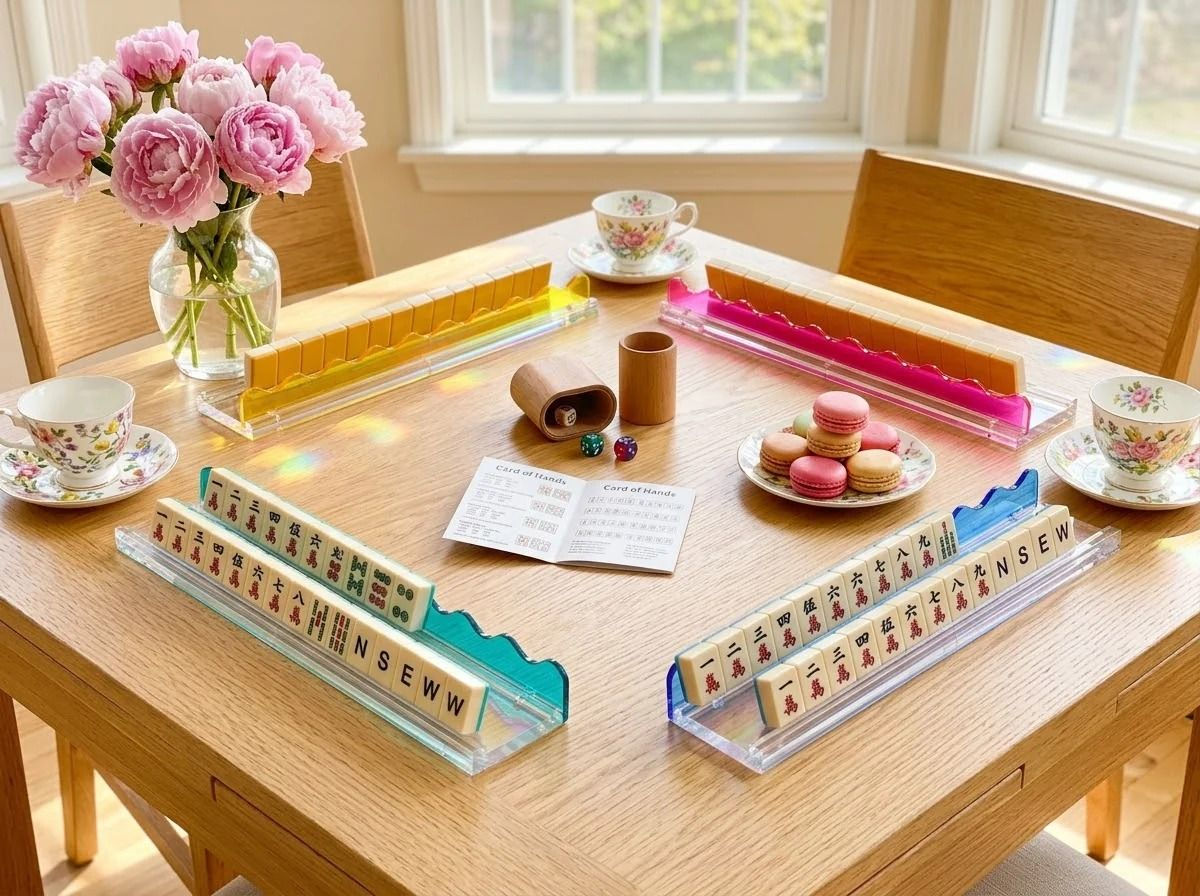
A mahjong pusher is a flat tool, usually 6–8 inches long, designed to nudge tiles smoothly along the rack without toppling them or pinching fingers. In American mahjong, you use pushers to advance tiles as you draw from the wall, discard, or organize your rack during play. Quality matters: cheap pushers warp, bend, or have rough edges that snag acrylic tiles. A good pusher glides without resistance, fits your hand comfortably, and lasts through hundreds of games. Most players buy pushers as part of a mahjong rack set with pushers, which pairs a holder with two matched pushers. Mahstead's racks are crafted from durable materials, pre-assembled, and ship free across the US. If you play weekly, pushers are worth upgrading—cheap ones accelerate hand fatigue and slow the game's rhythm.
What size and shape work best?
Most pushers are 6–8 inches long with a flat, slightly tapered blade and a handle grip. The blade width should be 1–1.5 inches—wide enough to move multiple tiles at once, narrow enough to fit between a wall and your rack. The handle usually has a contoured grip or a simple rounded end. Shorter pushers (under 6 inches) are harder to control; longer ones (over 8 inches) catch on neighboring racks. A tapered blade (thinner toward the tip) glides more smoothly than a blunt edge. Look for a pusher where the grip sits comfortably in your fingers for a full game without your hand cramping or the tool slipping.

Which materials last longest?
Pushers come in wood, bamboo, acrylic, and plastic laminate. Wood and bamboo are traditional but absorb moisture and warp over time, especially in humid climates. Acrylic is smooth, durable, and matches acrylic tiles—it won't scratch them. Plastic laminate (coated engineered material) is affordable but tends to chip or become sticky after months of use. Acrylic pushers stay flat, maintain a consistent glide, and last years with normal care. If you play in a humid room or near a kitchen, acrylic or sealed laminate beats untreated wood. Check the product description for material; if it's not stated, email before ordering.
🀄 Shop mahjong racks with pushers →
How do pushers fit different rack styles?
Racks come in two main designs: the rail rack (two parallel bars that hold tiles standing upright) and the tray rack (a shallow dish that cradles tiles). Rail racks work with standard-length pushers and let you see all tiles clearly. Tray racks often have lower walls and benefit from shorter, more tapered pushers to reach tiles at the back without lifting the whole rack. Some players prefer racks with one or two pusher slots built into the frame; others keep pushers loose on the table. If you use a rail rack, a 7-inch pusher with a firm grip is standard. For a tray, test the pusher's reach—it should glide from front to back without jamming or tipping tiles. Mixing rack and pusher styles can cause frustration mid-game, so buy them as a matched set when possible.

What's the difference between budget and premium pushers?
Pusher Type | Who It's For | Key Trade-Offs | Best For |
Basic plastic | Casual players, beginners | May warp, sticky feel after 1–2 years | Learning the game, occasional play |
Laminate with grip | Weekly players, tournaments | Good glide, can chip at corners | Regular games, value-conscious buyers |
Acrylic matched set | Serious weekly hosts | Premium price, crystal-clear durability | Serious players, aesthetic appeal |
Wood/bamboo traditional | Heritage players | Warps in humidity, requires care | Players who value appearance over longevity |
Budget pushers work for beginners who play 2–3 times a year. If you host weekly games or play competitively, invest in acrylic or quality laminate—the smoother glide reduces hand strain and keeps the game's pace consistent. Premium pushers from Mahstead's best-selling mahjong sets are paired with matching racks and designed to work together seamlessly.
What mistakes do players make when choosing pushers?
One: buying mismatched pusher and rack. A pusher designed for a tray won't work smoothly on a rail, and vice versa. Two: ignoring grip comfort. A slippery handle slows tile movement and tires your hand. Three: choosing appearance over function. A pretty wooden pusher is useless if it warps after two seasons. Four: buying single pushers instead of pairs. You need two to manage tile flow efficiently—one to advance, one to hold back. Five: not checking blade thickness. A blade thinner than 0.1 inch bends too easily; thicker than 0.25 inch snags tiles. Test the pusher's weight and balance before ordering if the seller offers a return window. Most online buyers make their choice without reading material specs, then regret it three months later.
✨ Find your Mahstead rack and pusher set →
What to check before you buy
Fit your rack. Confirm the pusher length matches your rack style (rail vs. tray). Measure your rack's width and depth if ordering separately.
Material durability. Choose acrylic or sealed laminate if you play weekly or in humid conditions. Untreated wood warps.
Grip comfort. A good handle should rest naturally in your fingers for 2–3 hours without slipping or causing fatigue.
Blade edge. The tip should be smooth and slightly tapered, not sharp or rough. Run a finger across it mentally before ordering.
Reviews mention glide. Avoid pushers described as "sticky" or "rough." Smooth glide is the whole point.
Paired set. Buy two pushers together—they should match in weight, length, and feel. Mismatched pushers disrupt your rhythm.
Shipping and return policy. Mahstead offers free US shipping and clear return terms on all racks and pushers. Confirm before ordering.
🎁 See our most-loved mahjong sets & accessories →
FAQ
Can I use pushers from any mahjong set with my current rack?
Not reliably. Pushers are designed for specific rack types (rail vs. tray) and tile thicknesses. Mixing them causes jamming or missed tiles. Buy pushers and racks as a matched pair or verify compatibility before ordering.
What's the ideal pusher length for a standard American rack?
7 inches is standard for rail racks with typical tile dimensions. Tray racks often suit 6–6.5 inches. Measure your rack's interior depth and add an inch for comfortable grip overhang.
Do acrylic pushers scratch acrylic tiles?
No—acrylic on acrylic is the smoothest, safest combination. Both materials have the same hardness and won't gouge each other. Wood or bamboo is gentler on tiles than rough plastic.
How often do pushers need replacing?
Quality acrylic or laminate pushers last 3–5 years with weekly play. Wood warps sooner in humid climates. Budget plastic may need replacement after 12–18 months if used frequently.
Should I buy pushers separately or as part of a rack set?
A matched set is cheaper and guarantees compatibility. Separate purchases work if you already have a rack and need exact replacements—but finding the same model months later is difficult.
Why do some pushers feel sticky after a few months?
Poor-quality plastic absorbs dust, oil, and humidity, creating friction. Sealed laminate or acrylic resists this. Clean pushers with a dry cloth weekly; avoid moisture near them.


View More
View More
View More
