
What to Look for in a Mahjong Travel Set
Last updated: Nov 23, 2026
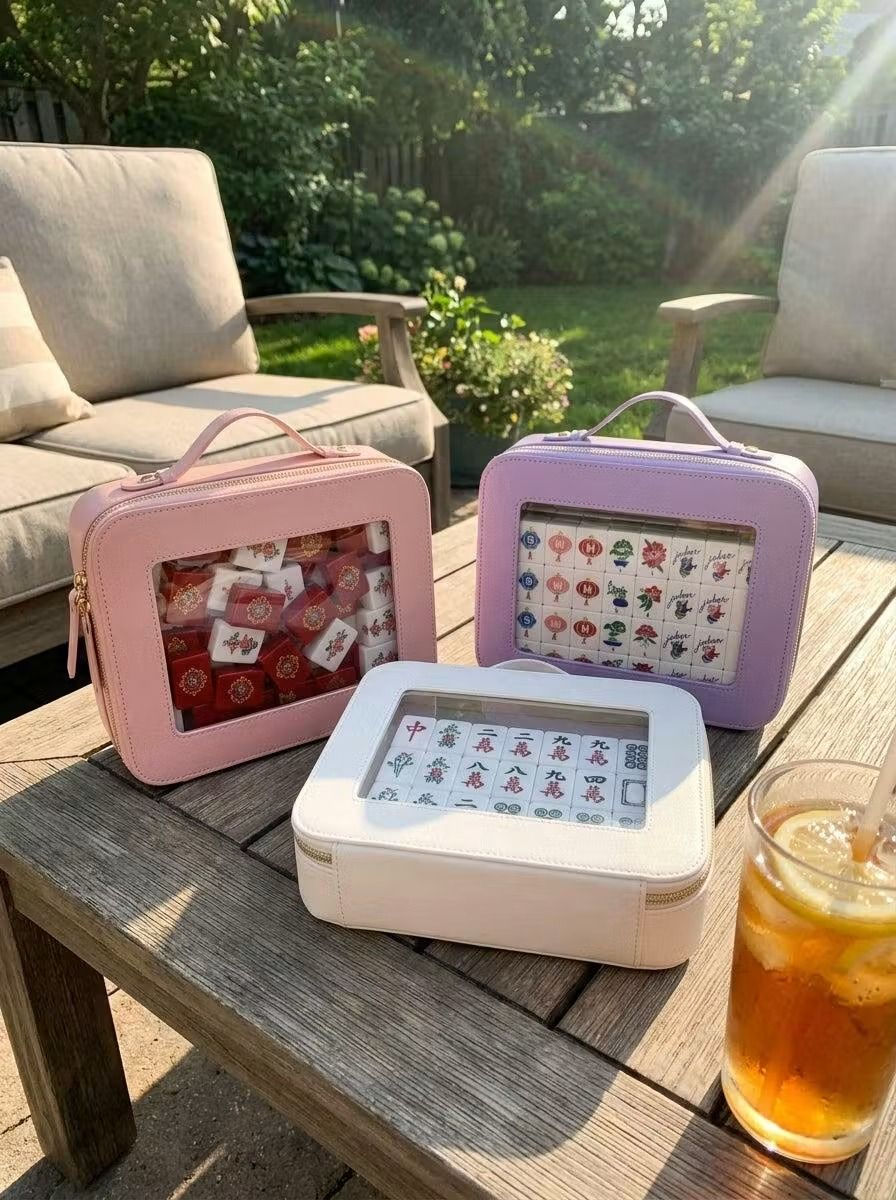
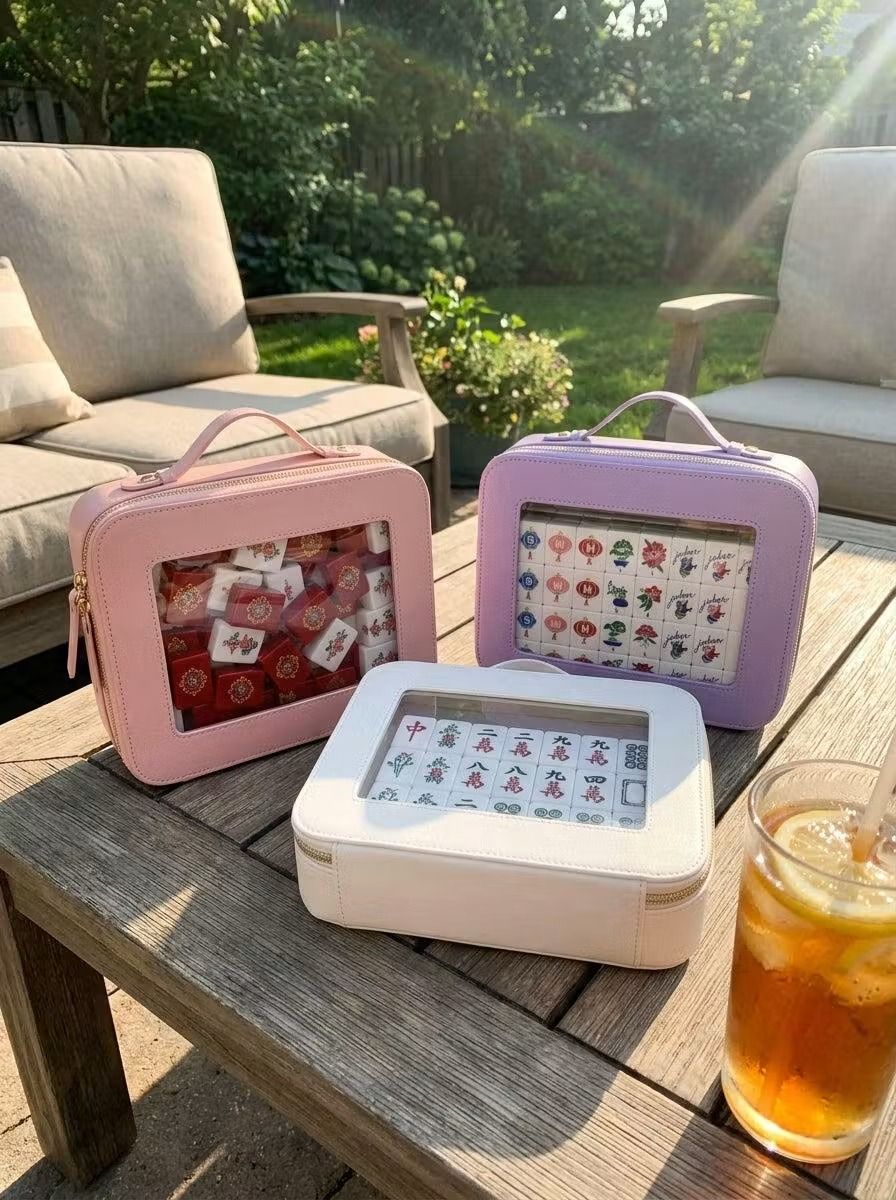
A mahjong travel set is a complete 160-tile American mahjong set (152 playing tiles plus spares) packaged in a protective bag or case designed for transport. The best travel sets combine acrylic tiles that resist chipping, a case that protects from moisture and impact, and a lightweight bag that fits in a car trunk or plane overhead bin. What to avoid: cheap vinyl cases that crack in temperature shifts, tile bags without rigid cases (tiles shift and edges crumble), and sets too heavy for a single person to carry. Our best-selling travel-ready designs come in soft drawstring bags with reinforced corners and hard-shell cases that keep tiles safe during repeated packing and unpacking, so you can host games at a friend's house or bring a set to a weekend retreat without fearing damage or missing tiles on arrival.
A mahjong travel set lives in the gap between a casual display set and a competition-grade home set—it needs to be durable enough for frequent moves, light enough that you'll actually bring it, and protected well enough that tiles stay intact through a season of road games.
We've hosted portable games in living rooms, vacation rentals, and car trunks. Here's what separates sets that survive the trip from ones that arrive with cracked tiles and frayed bags.
What size and weight works for transport?
Most American mahjong sets weigh between 5 and 8 pounds once cased. A set you can carry one-handed in a padded bag is genuinely portable; anything heavier shifts from a travel set to a home-only setup. Check the product photos: a good travel bag has a handle long enough to sling over your shoulder and a strap that doesn't dig into your palm after ten minutes of walking. The case itself should nest flat enough to fit under a car seat or between suitcases.
🀄 Shop best-selling mahjong sets →
Do acrylic tiles really survive repeated packing?
Yes—acrylic is significantly more durable than bamboo or bone for travel because it resists chipping when tiles jostle during transport and won't crack if the case temperature swings (like going from a cold car into a warm house). The edge quality matters most: tiles with rounded edges or reinforced corners survive thousands of shuffles and case openings better than flat-edged tiles. Acrylic also won't absorb moisture, so a set that's been in a damp garage or a humid cottage stays playable. Check that the supplier uses consistent acrylic thickness (thin tiles crack faster) and that jokers and flowers match the tile quality—cheap spares hurt resale or force you to buy a replacement set mid-season.
Our acrylic sets for travel feature uniform tile thickness and beveled edges so they glide smoothly in racks and survive the repeated impact of case closures.
What protection does the case really need to provide?
A travel case must do three jobs: keep tiles from shifting loose during bumps, protect against moisture, and prevent tiles from stacking into tight clumps that crack corners. The ideal case is semi-rigid (hard plastic shell, not cloth-only) with dividers that hold tiles in organized trays instead of loose piles. Look for cases with secure latches (not velcro alone) so the lid doesn't pop open in transit. Check the seal: a case with a rubber gasket won't dry-rot tiles if they sit in a humid car overnight. Soft drawstring bags alone are not sufficient for travel—use them for storage at home, but pair them with a protective shell case for any transport longer than a single car ride.
✨ Find your Mahstead set — free US shipping →
Should you buy a set with a mat included?
It depends on your travel frequency and venue. If you're driving to a friend's house with a dining table, a mat is optional—acrylic tiles slide smoothly on wood or laminate. If you're playing in hotel rooms, outdoor patios, or uneven surfaces, a mat becomes essential because it stabilizes tiles and protects against spills. Mats for travel should be lightweight nylon or felt (not heavy bamboo) and roll small. A thin mat adds only 1–2 pounds to your case and prevents the "tile skate" problem where tiles slide during the Charleston or play. Pair a travel set with a portable mahjong mat if you'll play on surfaces outside your control.

What should you compare before ordering?
Use this checklist to narrow your choice:
Feature | What to check | Red flag |
Tile material | Acrylic, uniform thickness | Thin tiles or mixed materials |
Tile count | 160 total (152 playing + spares) | Fewer than 152 playable tiles |
Case type | Semi-rigid with latches and dividers | Soft bag only, loose latches |
Weight | ≤8 lbs with case | Over 10 lbs; hard to carry one-handed |
Edge finish | Beveled or rounded corners | Flat sharp edges prone to chipping |
Seal | Rubber gasket or tight closure | Open ventilation (humidity risk) |
Handle | Padded, ergonomic strap | Thin nylon that cuts into palm |
Spare tiles | Extra jokers clearly marked | No spares or unclear which are spares |
Pick a set that scores "check" on at least five of these eight criteria. If the product page doesn't show the case interior or handle detail, email the seller before ordering—travel sets fail when the case pops open at a friend's house or tiles chip en route.
What's the real difference between soft and hard cases?
A soft case (reinforced drawstring bag with light padding) weighs less and fits small spaces—ideal if you're walking three blocks to a game night. A hard case (molded plastic shell with rigid dividers) protects tiles from pressure damage if the bag is crushed in a car trunk or stacked with other luggage—ideal for car trips over 30 minutes or frequent travel. Most of us own both: we use soft cases for neighborhood games and hard cases for road trips or storage between seasons. Hard cases cost more upfront but extend tile life by 2–3 years if you play weekly, because they prevent the "tile compression" that happens when a soft bag sags and tiles press against each other.
Our travel bags and cases come in both styles so you can choose based on your game schedule and storage space.
How do you avoid damage during shipping and after arrival?
Tile damage happens during three moments: at the supplier's warehouse (rushed packing), in transit (temperature swings and vibration), and at your home (unpacking and first use). Before you accept delivery, open the case immediately and count the tiles—if any corner is chipped or a joker is cracked, photograph it and contact the seller within 24 hours. Once you receive the set, store it upright in a climate-controlled space (not a garage or basement prone to humidity shifts). After each game, wipe tiles with a dry cloth before returning them to the case—stacking wet tiles traps moisture and invites mold. Never leave a mahjong set in direct sunlight or a hot car; acrylic can become brittle if exposed to UV or temperature above 90°F for extended periods.
🎁 See our most-loved mahjong sets & accessories →
What if you're buying as a gift for a traveling player?
If the recipient plays weekly and travels to games, buy a complete set with a semi-rigid case and clearly mark the spare tiles so they don't get mixed into play. If they're a casual player or just starting, a best-selling set with a soft case is enough—they can upgrade the case later. Include a note explaining which jokers and blanks are spares, and remind them to store the set in a cool, dry place. A travel set is a three-to-five-year investment if cared for, so the gift succeeds when the recipient understands that the case is part of the value, not just packaging.
What to Check Before You Buy
Count the tiles in the product photo or description. Confirm 152 playable tiles (108 suits + 16 winds + 12 dragons + 8 flowers + 8 jokers).
Verify the case includes dividers or trays. Loose tiles = chipped corners by game three.
Check the handle length and padding. Carry the case in your mind for 10 minutes—does it feel realistic?
Look for a rubber gasket or secure latch. If the product page doesn't show it, assume it's not there.
Compare weight. If unspecified, a complete set under 8 lbs is rare—ask the seller directly.
Read the material. Acrylic tiles survive travel; bamboo and resin do not.

FAQ
Can I take a mahjong travel set on an airplane?
Yes. A standard travel set in a hard case weighs under 8 pounds and fits TSA carry-on rules (typically 22 inches × 14 inches × 9 inches). Place the cased set in your carry-on bag, not checked luggage, to prevent tile loss if the case opens in cargo handling.
How often should I replace tiles in a travel set?
With weekly play and careful packing, acrylic tiles last 3–5 years before corners noticeably chip. If a single tile cracks mid-game, you can order replacement tiles; most suppliers sell them individually or in spare sets.
Should I buy a mahjong travel set or a home set and a portable case separately?
A bundled travel set saves money and ensures the case is designed for the tile volume. If you already own a home set, a protective case alone is cheaper, but verify the case fits your exact tile count and case dimensions.
What's the difference between a mahjong travel set and a casino-grade set?
Casino sets prioritize uniformity and speed (thinner tiles, smoother shuffle); travel sets prioritize durability and protection (thicker acrylic, reinforced cases). Travel sets are heavier but survive repeated packing; casino sets are faster but chip more easily.
Do I need a mat if I'm traveling with a set?
A mat is optional for smooth tables but essential for uneven surfaces, outdoor games, or hotel rooms. A lightweight travel mat adds 1–2 pounds and prevents tiles from sliding during the Charleston and play on unfamiliar surfaces.
Can acrylic tiles survive temperature changes during car travel?
Yes. Acrylic resists cracking through temperature shifts better than bone or bamboo. Keep the set in its case to buffer extreme heat or cold, and avoid leaving it in a car in direct sun above 90°F for more than a few hours.


View More
View More
View More
