
Filipino Mahjong Winning Hands: Rules, Patterns & Play
Last updated: Nov 23, 2026
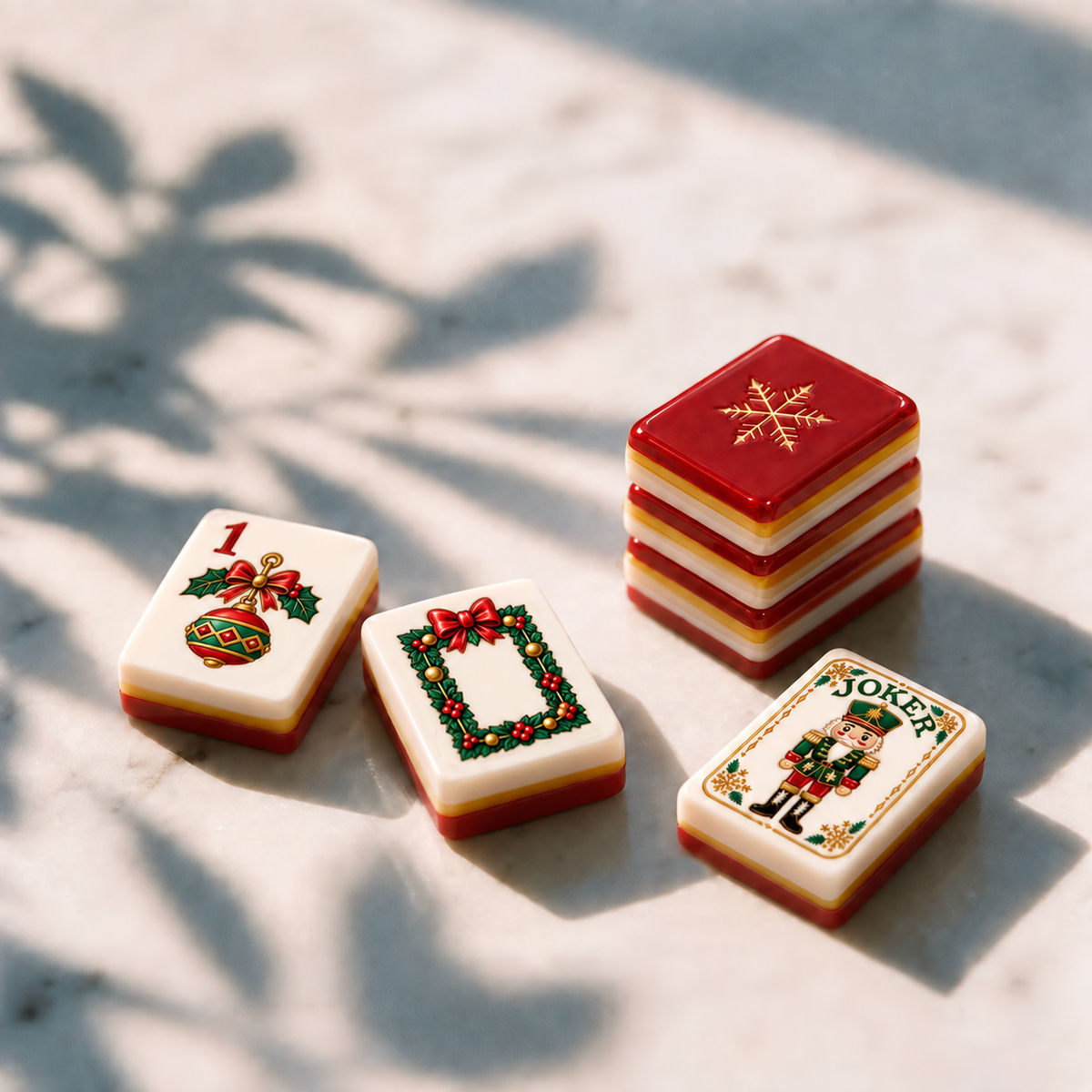
Filipino mahjong winning hands combine Pung (three identical tiles), Kong (four identical), and Chow (three consecutive numbered tiles in one suit)—a key difference from American mahjong, which forbids Chows in exposed melds. A hand typically requires four melds and a pair, using 14 tiles total. Chows can be called from the discard and exposed on the table, making the game faster and more interactive than American play. Winners announce "mahjong" when they complete their hand legitimately; common winning tile sources include a live draw, a discard, or (in some house rules) the kong tail. Score depends on your hand complexity, wind position, and whether you're East (dealer). The best sets for learning Filipino mahjong include a full 160-tile acrylic set with clear suit markings and reliable pushers on your rack to keep melds organized and visible to all players. 🀄 Shop best-selling mahjong sets →
How do Filipino mahjong winning hands differ from American mahjong?
The biggest difference is Chows. In Filipino mahjong, you can form and expose a Chow (1-2-3, 4-5-6, 7-8-9 of the same suit) in melds called from the discard or drawn live. American mahjong forbids Chows entirely—hands are built only from Pungs, Kongs, and joker-wild tiles following the current year's card. Filipino hands are also typically 14 tiles (four melds plus a pair), whereas American hands vary in hand length depending on the official League card. Filipino play rewards speed and tactical discarding; American demands hand planning before the game starts.

What are the basic winning hand patterns in Filipino mahjong?
A standard winning hand requires four melds and one pair totaling 14 tiles. A meld is either a Pung (three identical tiles—e.g., three 5 Dots), a Kong (four identical), a Chow (three consecutive tiles of the same suit—e.g., 3-4-5 Bams), or a triplet combination using honors (winds, dragons). The pair must be two identical tiles (e.g., two East Winds). The simplest winning pattern is "common hand": any four melds and a pair, no special requirements. More advanced patterns—like "all Pungs," "all Chows," or mixed—carry higher scores depending on your house rules and regional scoring table.
Can you walk through a real winning hand example?
Let's say your 14 tiles are:
Pung: 3 Red Dragons, 3 Red Dragons, 3 Red Dragons
Chow: 2 Bams, 3 Bams, 4 Bams
Chow: 5 Dots, 6 Dots, 7 Dots
Kong: North Wind, North Wind, North Wind, North Wind
Pair: 8 Craks, 8 Craks
You have four melds and a pair—you win. If you drew that final 8 Crak from the live wall, it's called a "live hand" and scores higher. If you took it from another player's discard (called "robbing the Kong" or claiming the discard), it's also valid but may score less depending on rules. Declare "mahjong" immediately and show all tiles so players verify your hand before you claim the score.
How do jokers and special tiles affect winning hands?
Jokers in Filipino mahjong can substitute for any tile in a Pung, Kong, or Chow, but house rules vary widely on how many jokers you can use in a single meld or hand. Some groups allow unlimited jokers; others cap them at one or two per meld. A hand with many jokers is often considered "cheaper" (lower score) than one using only genuine tiles. Additionally, some house rules allow honors-only hands (all winds and dragons, no numbered suits) or mixed hands that earn bonus points. Always confirm your group's joker rules and scoring table before playing, as Filipino mahjong lacks a single universal standard—regional and family variants are common.
What common mistakes prevent a Filipino mahjong win?
Mistake | Why It Fails | How to Avoid |
Incomplete meld | Having fewer than four melds or no pair totals only 13 tiles. | Verify every meld before claiming; count to 14. |
Invalid Chow | Chows must be consecutive (1-2-3, not 1-3-5). | Double-check suit and sequence. |
Premature declaration | Announcing "mahjong" when you have 13 tiles or a broken pair. | Wait until you draw or claim the 14th tile and verify. |
Breaking the pair | Using one of your pair tiles in a meld; you need two identical left over. | Reserve your pair early; never use one as part of a Pung. |
Calling a discard incorrectly | Claiming a tile someone else needs for their own win. | Wait to confirm the discard is safe before claiming. |
A few seconds spent reviewing your tiles and melds before declaring saves you from disputes and teaches the table respect for the rules.

What scoring system do most Filipino mahjong groups use?
Filipino mahjong scoring varies by region, family, and house rules—there is no single official standard like the American League's system. Most groups use a point-based table that awards points for hand complexity: a common hand (any four melds and pair) might be worth 1 point; all Pungs, 2 points; all Chows, 3 points; mixed honors, 4 or more. Some add bonus multipliers for winning as East (dealer), or for winning on a live draw versus a discard. Others use a "limit" system capping payouts at a certain maximum. Before every game session, clarify the scoring table with your group—write it down if it's your first time playing with them. Many long-standing groups have house cards or printed sheets defining their exact ruleset.
What to check before you buy a set for Filipino mahjong
Tile clarity: Look for sets with high-contrast, deeply engraved numerals and symbols so Chows and sequences are easy to spot across the table.
Rack pushers: Filipino play moves fast—racks with smooth, reliable pushers keep your melds organized and prevent accidental reveals or fumbles.
Tile count: Confirm you have a full 160-tile set (152 playing tiles plus spares) so games never stall for missing pieces.
Mat size: If you host regularly, a spacious mahjong mat with clear meld zones helps all four players see discards and melds without leaning.
Travel readiness: If your group rotates hosts, a durable bag or case protects tiles, racks, and mats from chips and cracks during transport.
🎁 See our most-loved mahjong sets & accessories →
Why Philippine players often prefer visible, engraved tiles
In Filipino mahjong, melds sit exposed on the table much longer than in American play (every Chow and Kong is public), so tile legibility matters. Worn or poorly marked tiles create disputes. Acrylic sets with clear, deep engravings resist fading and are easy to read from a distance. Many experienced Filipino players also prefer slightly heavier tiles and sturdy racks, as the frequent exposure and claiming of discards puts more handling stress on equipment over a long session. Our best-selling collection includes durable acrylic sets designed for years of weekly play.
How hand-ranking and bonus multipliers work in some Filipino variants
Some Filipino groups score using hand rankings (similar to poker). A "common hand" is lowest; "all Pungs," "all Chows," and "all honors" rank higher. Bonus multipliers apply for winning as East, for a live draw, or for a Kong tail win. Example: a common hand from a live draw as East might pay base points × 2. An all-Pung hand from the discard as a non-dealer pays base points × 1. Some families add seasonal or ceremonial multipliers (e.g., double pay on New Year). Again, house rules reign—always ask your host or veteran player to explain the scoring sheet before your first hand.
✨ Find your Mahstead set — free US shipping →

FAQ
Can I use jokers in every tile of a Filipino mahjong winning hand?
No. Most house rules cap jokers per meld or hand; some allow only one joker per Pung or Kong, others limit the whole hand to two or three jokers. Hands with fewer jokers score higher. Always ask your group before the game starts.
What happens if two players both want to claim the same discard in Filipino mahjong?
Priority order typically follows: East (dealer) first, then South, West, North (based on wind position). If both players are the same wind, the player closest to the discharger (usually the player immediately after the discarder in turn order) claims it. Confirm your table's priority rule upfront.
Is the Charleston (tile exchange) used in Filipino mahjong?
No. Filipino mahjong skips the formal Charleston. Players draw tiles directly from the wall in turn, and East draws first. The game begins immediately after the wall is set and East's first hand is drawn.
Can I form a Chow with honors (winds or dragons) in Filipino mahjong?
In standard Filipino play, Chows are limited to numbered tiles (Bams, Craks, Dots in sequences like 1-2-3). Honors cannot form Chows. Some house variants allow honors sequences, so verify your group's rule.
How many tiles does a winning hand contain in Filipino mahjong?
Always 14 tiles: four melds (Pungs, Kongs, or Chows, each 3 or 4 tiles) plus one pair (2 tiles). The total must equal exactly 14 when you declare mahjong.
What's the difference between a "live" win and a "discard" win in Filipino mahjong scoring?
A live win occurs when you draw the winning tile from the wall; it typically pays a higher score (1.5× to 2× the base). A discard win happens when you claim another player's discarded tile; it usually pays the base rate or slightly less, depending on house rules.


View More
View More
View More
