
What to Look for in a Mahjong Tote: A Buyer's Guide
Last updated: Nov 23, 2026
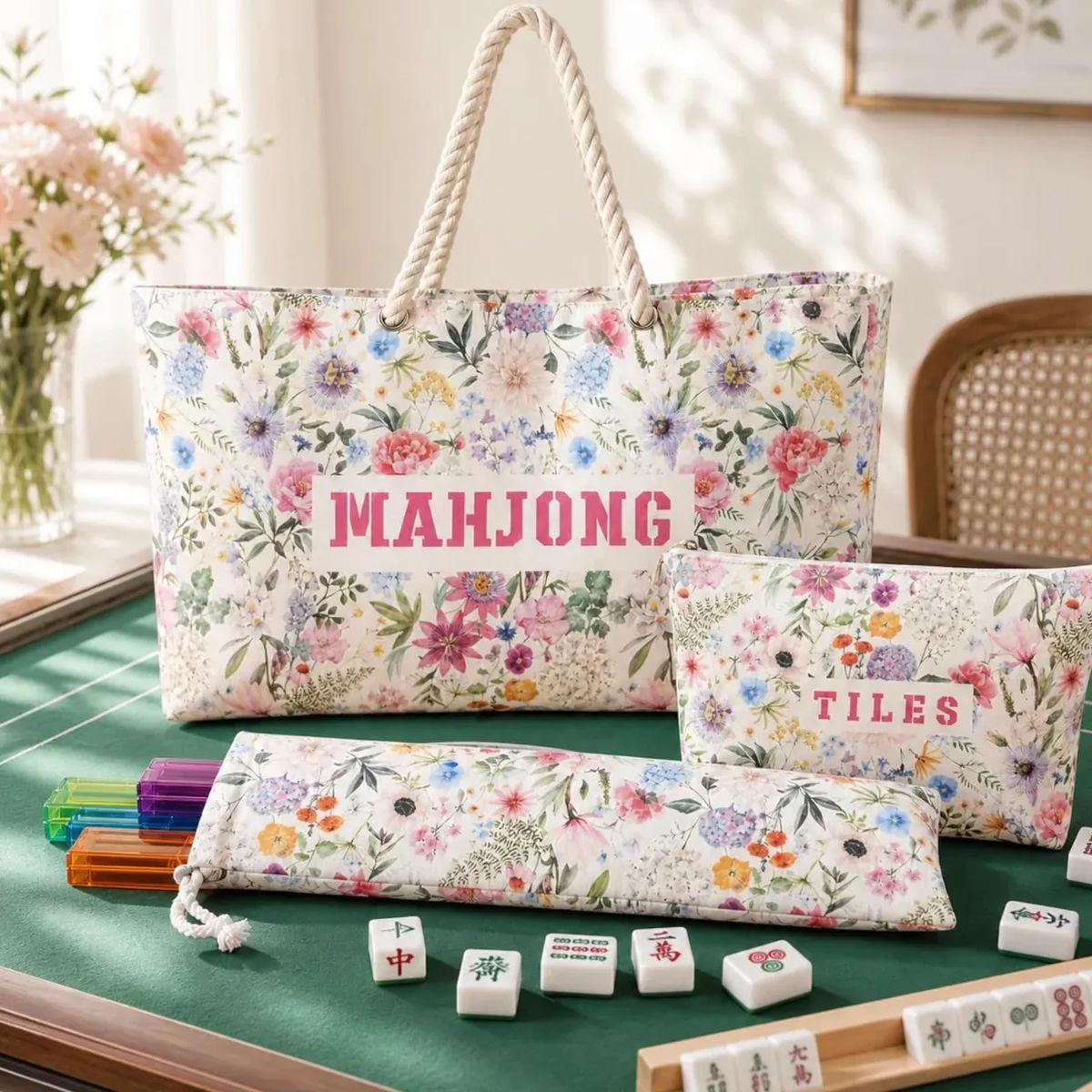
A mahjong tote is a dedicated bag designed to hold a complete 160-tile American mahjong set, mats, racks, pushers, and dice in one organized carrier. Most totes fit two to four standard acrylic sets depending on size and depth, with interior compartments to prevent tile chipping and handle options for comfort on the commute to your weekly game. Totes range from basic zippered canvas styles to padded cases with hard shells; choice depends on how often you travel, how many sets you carry, and whether you want your bag to double as home storage or a statement piece at the table. The best way to compare is to know your set's dimensions—width, height, depth—before ordering, measure the bag's internal space, and check whether handles and zippers can take repeated use. At Mahstead, we design totes with acrylic players in mind: reinforced stitching, moisture-resistant fabric, and layouts that fit our 160-tile set specs so tiles stay level and stable during transit.
A mahjong tote is more than a gym bag with a fancy name—it's an investment in protecting tiles that cost time and money to replace if cracked, and in making your game portable. Whether you host at home, play at a friend's table, or rotate between multiple venues each month, your bag choice shapes how much prep work you do before game night and how confident you feel unpacking at the table.
How much space do you actually need?
A full American mahjong set with mats, racks, pushers, and dice takes up more room than many shoppers expect. A single 160-tile acrylic set in its case occupies roughly 11–13 inches long, 5–7 inches wide, and 2–3 inches tall, depending on the case design. If you carry one set plus a mat (usually rolled or folded to 24–30 inches by 24 inches), you need a tote with at least 18 inches of usable length, 12–14 inches of depth, and 8–10 inches of height to avoid crushed corners. Add a second set, and you're looking at internal dimensions closer to 20 × 15 × 10 inches minimum. Measure your largest set's case before you shop, then add 2–3 inches of breathing room; a snug fit looks organized but risks tile damage if the bag shifts in a car.
🀄 Shop best-selling mahjong sets →

What materials actually protect acrylic tiles?
Acrylic tiles are beautiful and loud—a satisfying click at the wall—but they chip and scratch if they collide with hard surfaces during transport. Canvas and nylon totes offer water resistance and some impact absorption, but the real protection comes from padding: a 1/4-inch to 1/2-inch foam or fleece liner inside the bag reduces vibration and keeps tiles from sliding against the bag's exterior. Hard-shell cases (usually plastic or lightweight composite) protect against crushing if someone sits on your bag or stacks luggage on top of it, but they weigh more and take up precious car space. Soft-sided totes with interior compartments let you organize your set, backup jokers, and scoring pads in separate pockets, which prevents friction between objects and reduces noise on the drive. Look for bags with reinforced stress points—corners and seams—where weight concentrates; double-stitched seams and bar-tacked handle attachment points outlast single-threaded construction by years, especially if you're hauling sets twice a week.
Which handle style works best for your game routine?
Handles matter more than they sound. A single rigid handle (like a briefcase) forces you to shift weight from one hand to the other mid-walk, which can tire your shoulder if your bag weighs 8–12 pounds. Dual soft handles let you carry the bag like a grocery tote, distributing weight evenly but offering less stability if you need to set the bag down quickly. Shoulder straps free your hands entirely but can dig into your collarbone on long walks from the parking lot or during setup. The best choice depends on how far you carry it: if you park close and carry for under a minute, dual handles are fine; if you're walking more than a few blocks or climbing stairs, a crossbody strap or backpack-style design reduces strain. Also check whether handles are reinforced with webbing or just stitched to fabric—webbing-reinforced handles hold up to repeated heavy loads much better and won't tear at the seams after a few months of use.
🎁 See our most-loved mahjong sets & accessories →

Tote style: function, aesthetics, and when to choose each
Tote Type | Who It's For | Best Features | Trade-Off |
Canvas utility (unpadded, zippered) | Casual players, single-set carriers, budget-conscious | Lightweight, folds flat when empty, washable fabric | Minimal protection; tiles can shift during bumpy rides |
Padded soft-sided (foam-lined interior) | Weekly gamers, two-set carriers, commuters | Interior compartments, shock absorption, water-resistant | Slightly heavier; doesn't compress for storage |
Hard-shell case (plastic/composite exterior) | Serious collectors, travel by plane/taxi, climate control needed | Maximum crush protection, looks professional, locks available | Weighs more; takes up space even when empty |
Backpack-style (dual straps, ergonomic) | Players who walk far or carry multiple sets + accessories | Weight spreads evenly, hands free, doubles as travel pack | Less organized than compartmented totes; harder to access single items |
Custom engraved or logo-printed | Group hosts, club players, tournament teams, gifts | Personalized aesthetic, team identity, memorable | Limited inventory; longer lead times; may cost more |
The first step is honest self-assessment: do you play weekly, monthly, or for special tournaments? Do you carry one set or rotate between two or three? Does your car have plenty of trunk space, or are you squeezing the bag into a sedan? A casual player who hosts every other month can get by with a basic canvas utility tote; a weekly player who drives to three different homes should invest in padded sides and reinforced handles. If you're buying a tote for a gift or as a group set, consider options with engraved titles or custom printing—they add personality and help your group's sets stay organized if multiple people bring bags to a shared venue.
What to check before you buy
Measure your set case. Before clicking "add to cart," pull out a ruler and measure the longest, widest, and tallest set case you own. Compare those dimensions to the tote's internal space listed in the product description. If the description doesn't include interior dimensions, that's a red flag—email the seller and ask.
Test the handle attachment. Look at product photos closely: are handles sewn only to the fabric, or are they attached with webbing that extends down the sides of the bag? Webbing adds durability. If you can't see the construction, ask.
Check the zipper spec. Cheap zippers jam or crack after 20–30 cycles. If the product page mentions the zipper brand or rating (e.g., "heavy-duty nylon coil zipper"), that's usually a good sign. Single-slider zippers fail faster than dual sliders on large bags.
Verify compartments match your workflow. Do you need separate slots for mats and sets, or do you prefer one large cavity? Does the bag have an external pocket for scorecards and pencils? Picture your unpacking routine and choose a layout that matches it.
Read the care instructions. Some padded totes are hand-wash only; others go in the washer. If you're clumsy (we are—spilled wine and dropped popcorn happen at game night), machine-washable fabric saves the day.
✨ Find your Mahstead set — free US shipping →
We also stock mahjong bags and cases in multiple styles and sizes, all tested by players who carry them weekly. Many pair well with our acrylic mahjong sets—measure both together to make sure they fit snugly but not crushed. If you're unsure whether a specific bag will hold two sets or one, reach out; we're happy to confirm dimensions against your inventory before you order.
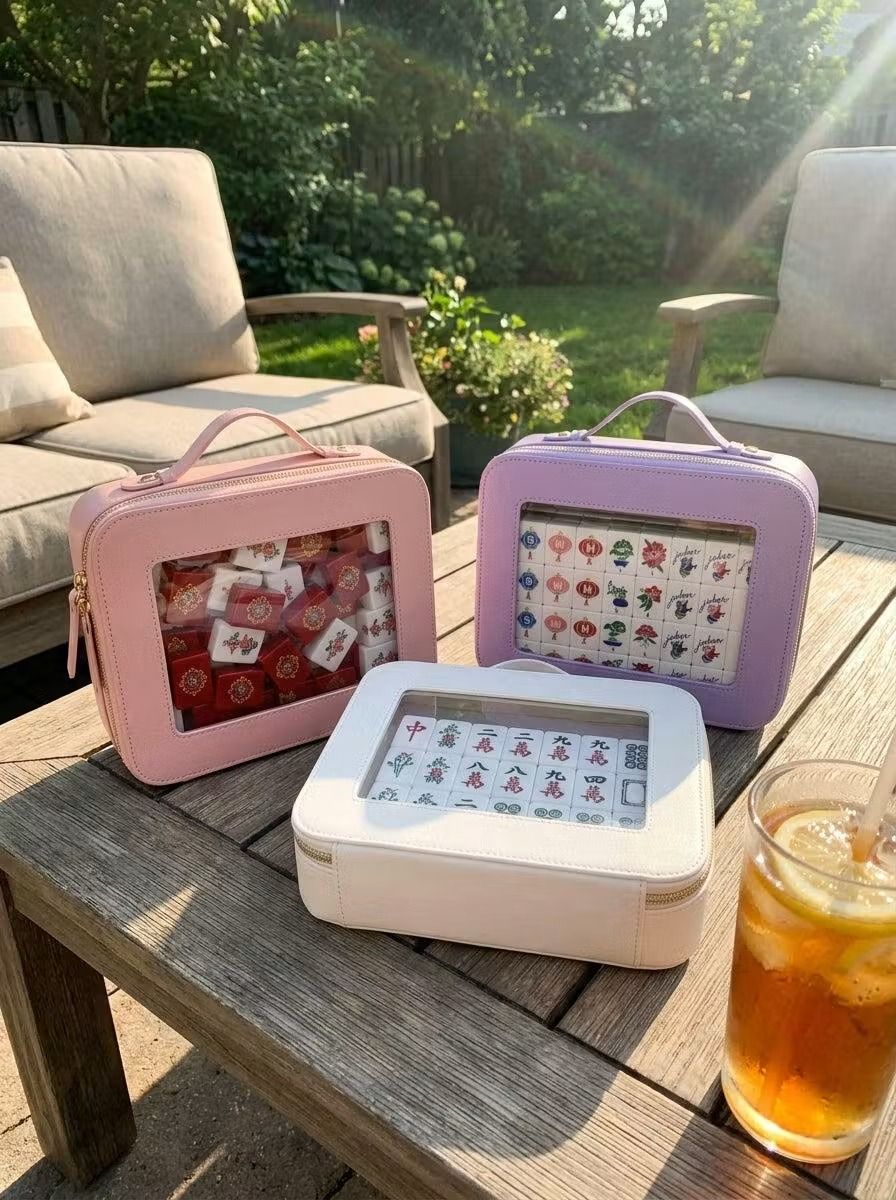
FAQ
Can a mahjong tote fit a mat rolled inside it?
Yes, if the tote is at least 18 inches long and 6 inches wide inside. Most mats roll to about 24 inches long × 2–3 inches diameter, which fits alongside a set case in a medium or large tote.
What's the difference between a tote and a hard case?
A tote is soft-sided, folds flat when empty, and is easier to carry by hand; a hard case crushes-proofs your tiles but weighs more and takes up space even when empty. Choose a tote for regular commutes, a hard case if you're flying or need maximum protection in cars with tight spaces.
How do I stop tiles from sliding around inside my bag?
Use a tote with interior compartments, or add a divider insert. Some players wrap their set case in a small microfiber cloth before placing it in the tote—it cuts friction and noise.
Can I wash a mahjong tote?
Most canvas and nylon totes are hand-washable or machine-washable on gentle cycle with cold water; check the product care tag first. Padded totes may need hand-washing to preserve interior foam. Avoid bleach and high heat.
Should I buy a tote that matches my set's color or design?
Personal preference. Some players love a coordinated look; others prefer a neutral tote that hides wear. Lighter colors show dirt faster; darker colors hide stains but may fade in sun. Choose based on your lifestyle and car interior.


View More
View More
View More
