
How Many Tiles in Wright-Patterson Mahjong?
Last updated: Nov 23, 2026
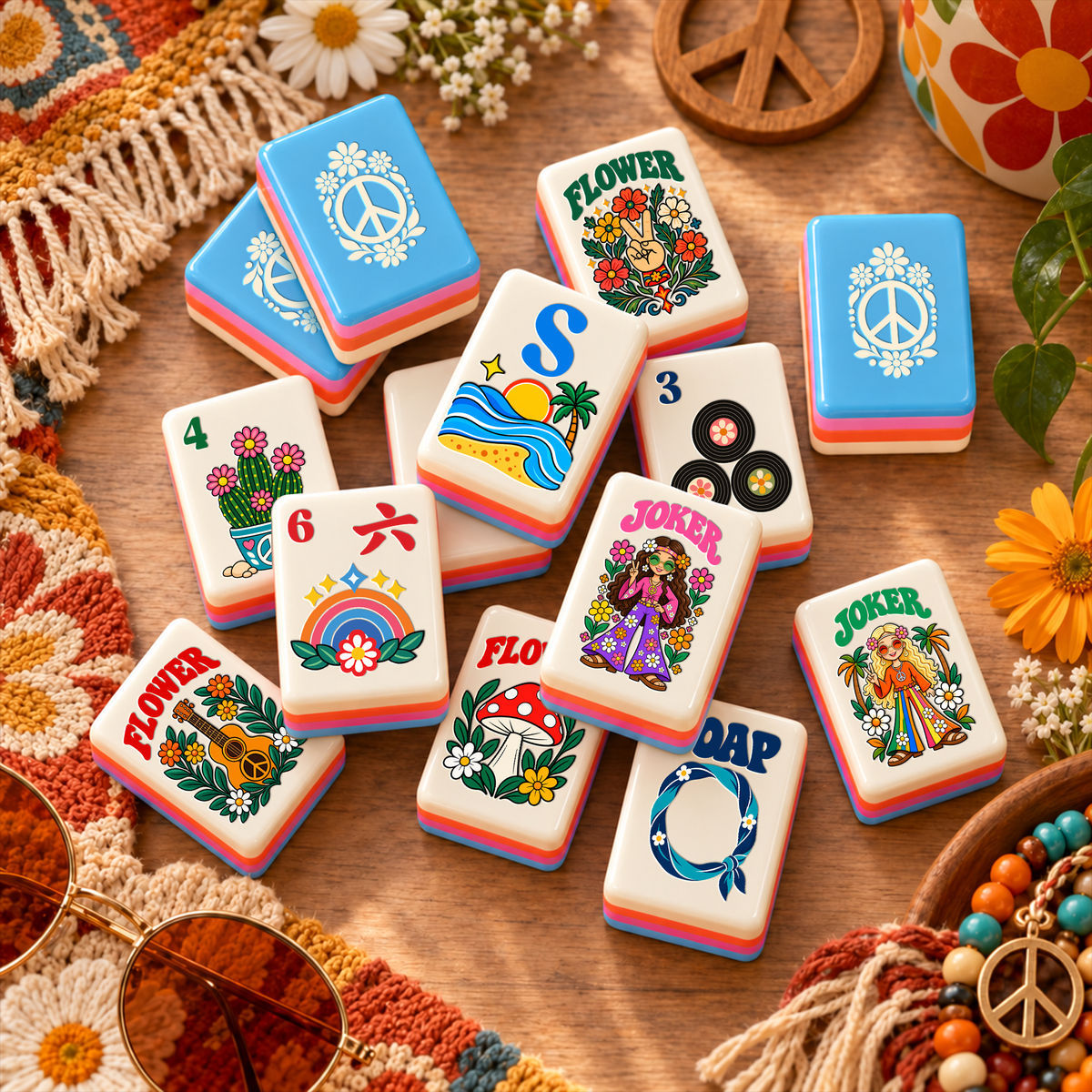
Wright-Patterson mahjong follows American mahjong rules, which means every game uses exactly 152 tiles: 108 numbered tiles (three suits—Bams, Craks, Dots—numbered 1–9, four copies each), 16 winds (four each: North, East, West, South), 12 dragons (four Red, four Green, four White), and 8 flowers. The 8 jokers used during play are separate; they're included in the tile count as replacements. Sets sold as 160 tiles contain the full 152 playing tiles plus 8 spare tiles (extras for loss or damage). This tile count never changes—it's the legal requirement under National Mah Jongg League rules. When choosing a set for your group, confirm it's labeled for American mahjong with either 152 or 160 total tiles; other variants (Chinese, Hong Kong, Riichi) use different counts entirely. Our best-selling mahjong sets all follow the American 152-tile standard.
Why does American mahjong always use exactly 152 tiles?
The National Mah Jongg League standardized the tile count to ensure fair, predictable gameplay. With 152 tiles, the math works: each player draws and discards in a balanced sequence over 13 rounds, and the wall never runs short or leaves extras. This uniformity lets players move between tables, clubs, and tournaments knowing the deck is identical everywhere. Any deviation breaks the game's rhythm—you'd have too few tiles for all players to win or too many left undrawn. The count includes jokers as playing tiles (replacements for called pungs, kongs, quints, and sextets), not as something separate.

What's inside the 152 tiles?
Numbered suits (108 tiles): Three suits—Bams (one Bam shows a bird), Craks, Dots—each with numbers 1 through 9, four copies of each number. Winds (16 tiles): Four each of North, East, West, South. Dragons (12 tiles): Four Red (paired with Craks), four Green (paired with Bams), four White or "Soap" (paired with Dots; also represents zero). Flowers (8 tiles): Eight individual flower tiles, typically numbered 1–4 twice or simply as flowers. Jokers (8 tiles): Eight jokers used during play as wild replacements. Total: 108 + 16 + 12 + 8 + 8 = 152. When you buy a 160-tile set, you get the full 152 plus 8 spares (usually extra jokers or blanks) for replacements if a tile cracks or goes missing.
🀄 Shop best-selling mahjong sets →
How do military games differ from civilian play?
Wright-Patterson, Nellis, and other bases often host mahjong tournaments and weekly games. The tiles themselves—152, always—stay the same; the difference is usually house rules or scoring preferences. Some military clubs favor faster rounds, stricter seat rotation, or the Miami scoring variation. A few groups play with house-ranking tables (published annually), just like civilian clubs do. The core rules—Charleston pass, exposure rules, joker usage—remain identical to American mahjong nationwide. If you're new to a base game, arrive early and watch one hand; most tables welcome newcomers after the first game.
Are military-themed sets a thing?
Yes, and they're popular gifts for service members and their families. Mahstead offers engraved American mahjong sets with custom text—ideal for base tournaments, retirement gifts, or unit game nights. You can engrave a set with a name, rank, or squadron. These sets contain the standard 160 tiles and are indistinguishable from any other American mahjong set during play; the engraving is purely personal. Many players who travel between bases or retire prefer a custom set as a keepsake.

What do you need to host a Wright-Patterson game night?
One 160-tile set per table (or one shared set if hosting multiple rounds). A mahjong mat (optional but recommended for smooth tile movement and visible hand organization). Racks with pushers to hold tiles and keep hands tidy—especially helpful for players with arthritis or shaky hands. A bag or case for transport if you rotate hosting duties. Current year's National Mah Jongg League card (one per table, printed or digital). Dice for seat assignment and opening hand. A quiet table with good lighting. That's it.
What You Need | Why It Matters | Best For |
160-tile American set | Standard tile count + spares | Any weekly or tournament game |
Mahjong mat | Tile grip, visible layout, protects furniture | Fast play, outdoor games, new players |
Racks with pushers | Ergonomic hand-holding, clear tile display | Long sessions, players with hand fatigue |
Bag or case | Portability between bases or homes | Mobile games, travel, storage |
Current year's card | Legal hands only; updates annually | Compliance with League rules |
Dice | Random seat/opening assignment | Fair play, tournament standard |
🎁 See our most-loved mahjong sets & accessories →
Common mistakes when buying a mahjong set for group play
Buying a 144-tile set: Older or imported sets sometimes contain 144 tiles (no flowers or fewer jokers). These don't work for American mahjong—hands won't match the current card, and the wall runs dry or overfull. Always confirm "160 tiles" or "152 tiles" on the label. Mixing tiles from two sets: Never combine tiles from two different sets. Wear patterns, color, or weight differences make it obvious during play, and it's considered cheating. Forgetting jokers count toward the 152: Some beginners think jokers are "extra" and should be added on top. They're already part of the count—only 152 total play. Buying a Riichi or Chinese set by accident: These use 136 or 144 tiles, no flowers, and different rules entirely. Check the packaging: "American mahjong" or "NMJL" ensures you have the right set. Storing tiles loose without a bag: Acrylic tiles chip if tossed around. A padded mahjong bag or case protects your set and keeps jokers from sliding out during transport.
Why acrylic beats bamboo for military game nights
Acrylic tiles are louder (satisfying click-clack), easier to read under varied lighting (important in outdoor or base recreation halls), less prone to warping in humid climates, and cheaper to replace if one cracks. Bamboo feels luxe and is quieter—good for home games—but chips easily and requires more care. For base game nights with multiple players and frequent travel, acrylic is the practical choice. Mahstead's best-selling mahjong sets are all acrylic, 160-tile American sets, designed to survive heavy rotation.
✨ Find your Mahstead set — free US shipping →
What to check before you buy
Label says "American mahjong" or "NMJL-compliant." Not "Riichi," "Chinese," "Hong Kong," or just "mahjong."
Tile count is 160 (152 playing + 8 spares) or explicitly 152 + jokers.
Set includes 8 jokers (or confirms jokers are inside the 152-tile count).
Set includes flowers (8 tiles—required for American play).
Tiles are acrylic or bone/bamboo (not plastic or resin)—check product photo or description.
Bag or case included (or plan to buy one separately for transport).
Free US shipping if ordering online (Mahstead offers this standard).

FAQ
Is Wright-Patterson mahjong different from standard American mahjong?
No. Wright-Patterson and other military communities follow National Mah Jongg League rules and the 152-tile standard. The only differences are house rules (scoring variation, seat rotation) that vary by club, not location. Tiles, hand structure, and joker use are identical to civilian games nationwide.
Can I use a set with more or fewer than 152 tiles?
No. American mahjong requires exactly 152 tiles in play. Sets with 144 or 136 tiles (usually Riichi or Chinese sets) won't work—hands won't match the current year's card, and the wall math breaks. Always buy a set labeled "160 tiles" or "152 tiles" for American play.
What happens if a tile goes missing or breaks?
That's why sets are sold as 160 tiles (152 playing + 8 spares). Swap in a spare joker or blank tile. If you don't have spares, the game stops until you find or replace the tile. Keep your set in a padded bag to prevent chips and cracks.
Do jokers count toward the 152?
Yes. The 152 tiles include 8 jokers. They're not "extra"—they're part of the count. During play, jokers replace tiles in exposed melds (pungs, kongs, quints, sextets), but the total tile pool stays 152.
Why does tile count matter for military games?
Consistent tile count ensures fair play across all tables at tournaments and base game nights. It also means players can move between games without learning new rules. Any deviation (144, 136, or mixed sets) creates confusion and is against League rules.
Where can I find a Wright-Patterson mahjong group?
Check base recreation centers, community boards (Morale, Welfare & Recreation), or local library bulletin boards. Many military communities host weekly games through the Officers' Club or enlisted club. Ask at the base game room or post office—regular players usually know the schedule.


View More
View More
View More
