
What to Look for in a Mahjong Case: Buyer's Guide
Last updated: Nov 23, 2026
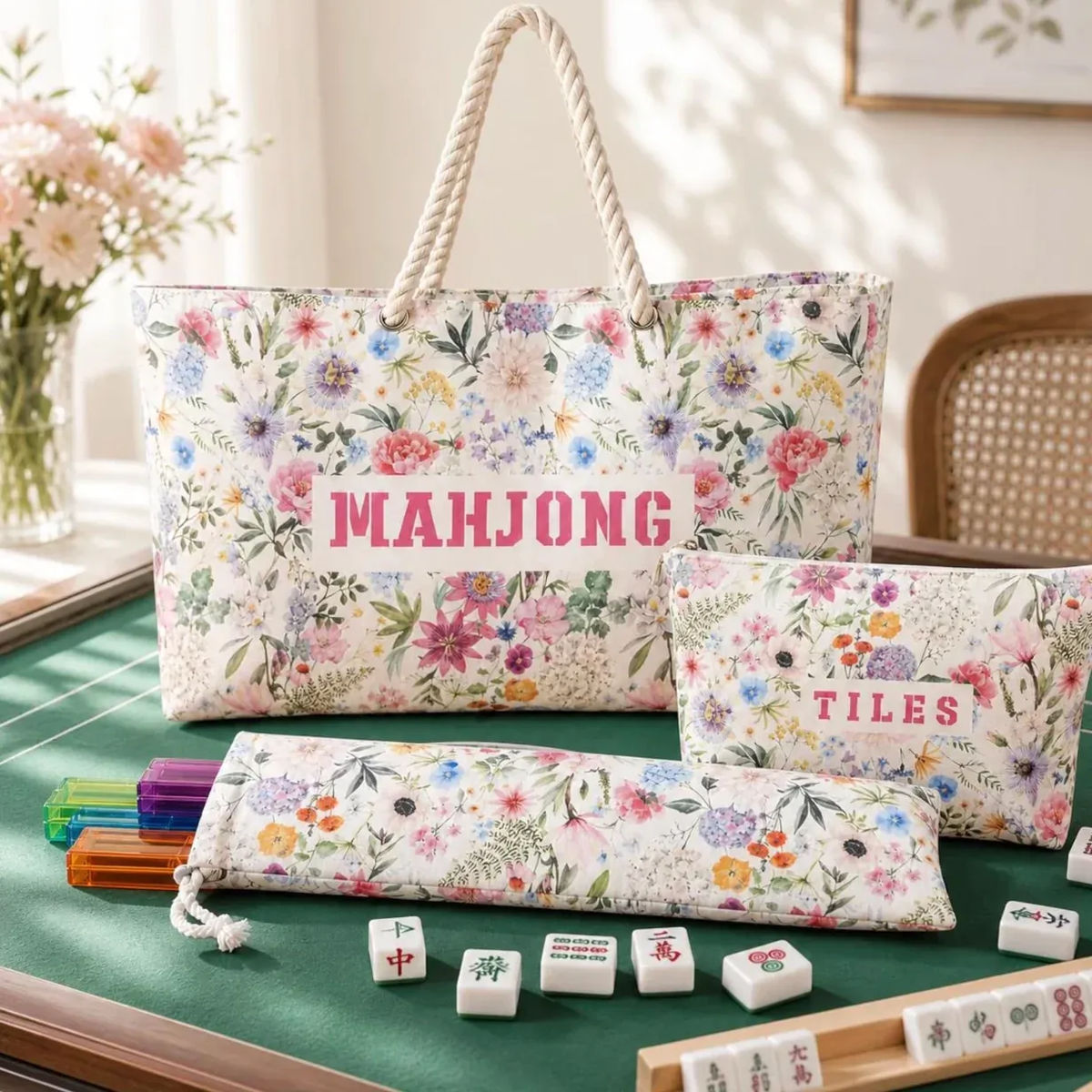
A mahjong case is a protective container—soft bag, hard shell, or reinforced hybrid—built to hold a 160-tile acrylic set, racks, mats, and accessories during transport and between games. We carry bags and cases in multiple sizes and materials, from lightweight canvas carryalls to padded hard-sided boxes. Most cases fit a standard American set plus a mat and one or two sets of racks. Cost depends on material and interior padding: canvas and basic fabric run modest; reinforced hard cases cost more but survive airport handling and rough car trunks. Choose based on how often you travel, whether you fly, and whether you store the set indoors or in variable humidity. Avoid undersized cases that force tiles to stack or compress; that breaks seals and cracks acrylic. Always check interior dimensions before ordering—a standard mat (usually 30"–36" folded) plus tiles and racks need real room.
A quality case does two jobs: it keeps your set intact during transit and protects tiles from humidity, dust, and accidental spills between Thursday-night games and the next season's travel. We've seen sets survive subway rides, car trunks, airport baggage, and wine-glass mishaps because they were packed right in the right container. Choosing one means balancing protection level, portability, and how much gear you're moving.
Do I need a case for weekly home games?
If you play in the same house every week and store tiles in a climate-controlled room, a basic bag is enough. A soft canvas or nylon carryall protects from dust and casual bumps without weighing you down on the drive. You're not rushing through airports or stacking sets in a humid garage. Most players we know who host regularly grab a lightweight travel bag that fits in a closet and takes thirty seconds to load. Verdict: soft bag is practical and affordable for home-only play.

What's the difference between soft and hard cases?
Soft cases use canvas, nylon, or padded fabric; they're lightweight, pack flat, and cost less. Hard cases are rigid plastic, molded wood, or reinforced composite—they absorb direct impact, survive airline baggage systems, and keep tile temperature stable. Soft bags are fine for car travel and home storage; hard cases are insurance if your set flies or lives in an uncontrolled space (car trunk, garage, storage unit). Choose soft if you play locally and store indoors; go hard if you travel by air, play in multiple homes, or live somewhere with big humidity swings.
What interior layout matters most?
Look for compartments or soft dividers. Ideally, the case holds tiles in their original rack or in a separate sealed pouch, keeps the mat (often folded to 30"–36") flat or roll-able without creasing, and has small pockets for jokers, dice, and scorepads. A case without compartments forces you to bubble-wrap everything or risk tiles sliding into the mat. Wide, flat interiors (versus tall, narrow) are easier to pack and unpack. Depth matters too: if your mat folds to 2 inches thick and your tile racks add 3 inches, you need a case that's at least 6 inches deep, plus room for air circulation. Measure your folded mat and stacked racks before you check the case specs.
🀄 Shop best-selling mahjong sets →
How do I check if a case fits my set and mat?
Measure three things: (1) tile footprint—a standard 160-tile set in four racks is roughly 12"W × 6"D × 2"H; (2) mat folded—most American mats fold to 30"–36"L × 10"–12"W × 2"–3"H; (3) total stack—will tiles, racks, and mat all fit without crushing? A case that's 36"L × 14"W × 6"D works for most combos. Always add an inch for padding and tile shift during transport. If the case lists exterior dimensions only, subtract 1–2 inches per side for wall thickness. Ask the product listing for interior dimensions before you order—undersizing is the most common frustration we hear about. When in doubt, size up: extra room beats a game cancelled because tiles cracked mid-transport.
Case Type | Best For | Weight | Cost Basis | Durability |
Soft canvas / nylon | Local home play | Light | Modest | Good for bumps |
Padded fabric with zippers | Weekly travel (car) | Light | Moderate | Good for dust, moisture |
Hard plastic shell | Air travel, storage | Medium | Moderate to higher | Excellent impact |
Reinforced hybrid (fabric + hard edge) | Frequent travel | Medium | Moderate to higher | Excellent all-around |

Should I buy a case with my set or separately?
Bundled cases are convenient if they match your travel plan. Stand-alone cases let you choose exact dimensions and padding level. We recommend buying separately if you already have a mat and racks you like—that way you size the case to what you actually own, not to a generic combo. If you're starting fresh, a bundled option saves decision-making time, and you can always swap in a better bag later as your play frequency grows. Either way, check return or exchange policies: a case that doesn't fit your mat is wasted money.
🎁 See our most-loved mahjong sets & accessories →
What protection features prevent tile damage?
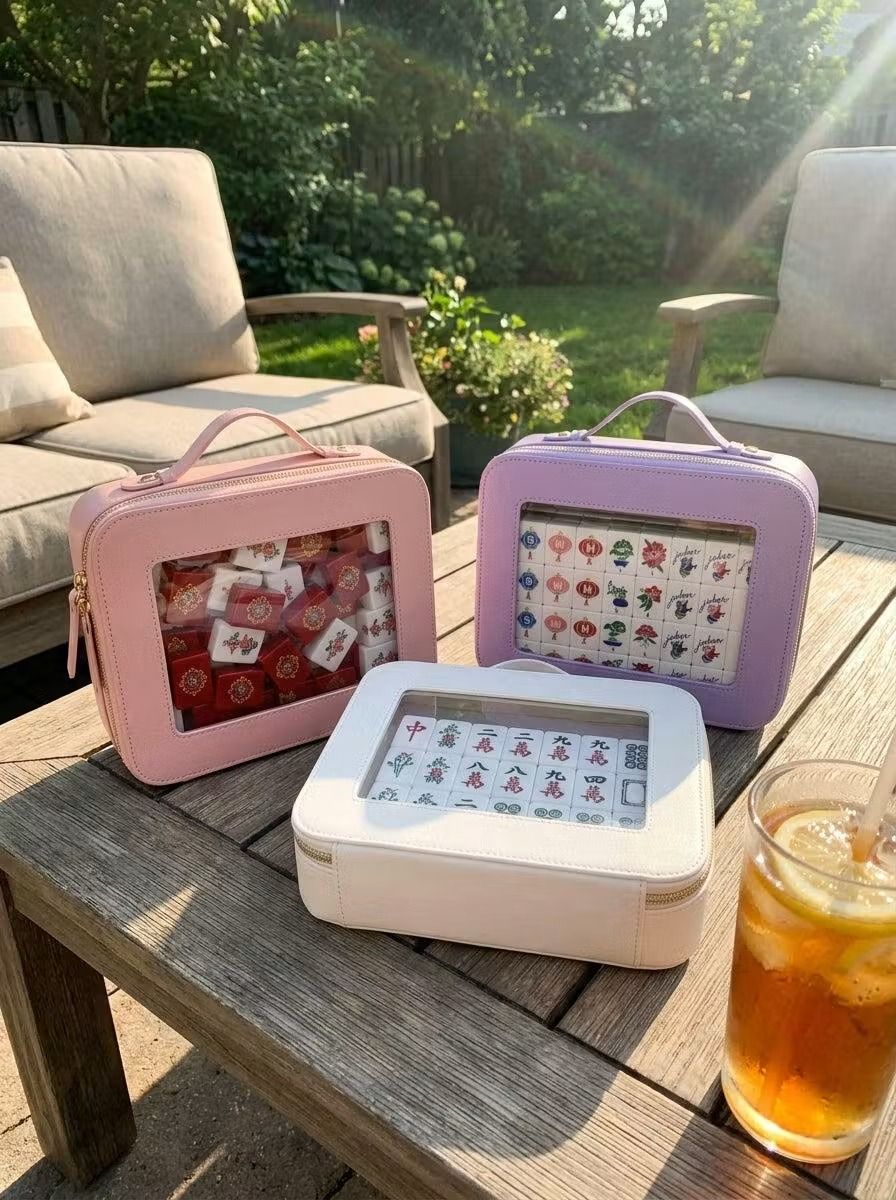
Padding is non-negotiable. Look for interior foam, bubble wrap, or felt—anything that absorbs shock and keeps tiles from knocking together. Hard-shell cases often have molded inserts or compartments; those are ideal. Soft cases should have 0.5–1 inch of padding minimum. Ventilation matters too: if a case is airtight and sweaty, humidity gets trapped and can warp tile surfaces. Small perforations or mesh panels help. Avoid cases that compress tiles into a vacuum-sealed state; acrylic needs gentle pressure, not clamping. Finally, check zippers and seams: cheap zippers jam on fabric, and broken seams split under luggage weight. Mahstead cases are tested by our game group; we pack them for real travel, not theory.
What to check before you buy
Interior dimensions: Confirm length, width, and depth in inches. Measure your folded mat and stacked racks first. Compartments: Does it have pockets for dice, jokers, scorepads, or pencils? Padding thickness: Aim for at least 0.5 inches of foam or felt. Weight capacity: If flying, check that the full set + case stays under airline limits (usually 50 lbs checked bag). Ventilation: Look for mesh or perforations to prevent moisture buildup. Zippers and seams: Test reviews or product photos for durability feedback. Return policy: Can you exchange it if it doesn't fit?
✨ Find your Mahstead set — free US shipping →
FAQ
Can I use a large suitcase instead of a mahjong case?
Yes, if you're flying. Line it with towels or bubble wrap to cushion tiles and keep moisture out. But a dedicated case is faster to pack, uses less luggage space, and keeps your set organized between trips. Many of us who play multiple nights per week keep a case in the car so we're always ready.
How much does a good mahjong case cost?
Costs vary by material and size. See current prices on the product page for specific models. Budget-friendly soft bags are ideal for local play; reinforced cases cost more but last longer and protect better during air travel.
Can I store my mat and tiles in a case long-term?
Yes, if the case has ventilation and sits in a climate-controlled room. Avoid sealed airtight cases or humid garages—moisture damages tile seals. Store in a cool, dry closet or cabinet instead. If you must store in a variable-temperature space, use silica packets inside the case to absorb humidity.
What's the best way to pack tiles in a case?
Keep tiles in their racks or in a padded pouch. Lay the folded mat flat on the bottom, then stack racks on top with the tallest edge toward the case wall. Fill gaps with small cloth or bubble wrap. Never stack bare tiles loose; they shift and crack during transport.
Do I need a separate case for a travel mat?
Not always. If your mat rolls tight (< 3 inches diameter), it fits in most mahjong cases alongside tiles. If it's thick or unwieldy, a thin canvas tube or yoga mat carrier keeps it organized. We usually pack the mat flat in the bottom of the case.
How do I prevent humidity from damaging my set during storage?
Keep the case in a climate-controlled indoor space, not a car trunk or garage. Use silica packets or desiccant packs inside. Avoid sealing it in airtight plastic. Check your tiles every few months—if you see condensation on the acrylic, open the case and let it air dry for an hour.


View More
View More
View More
