
What to Look for in a Mahjong Bag: A Buyer's Guide
Last updated: Nov 23, 2026
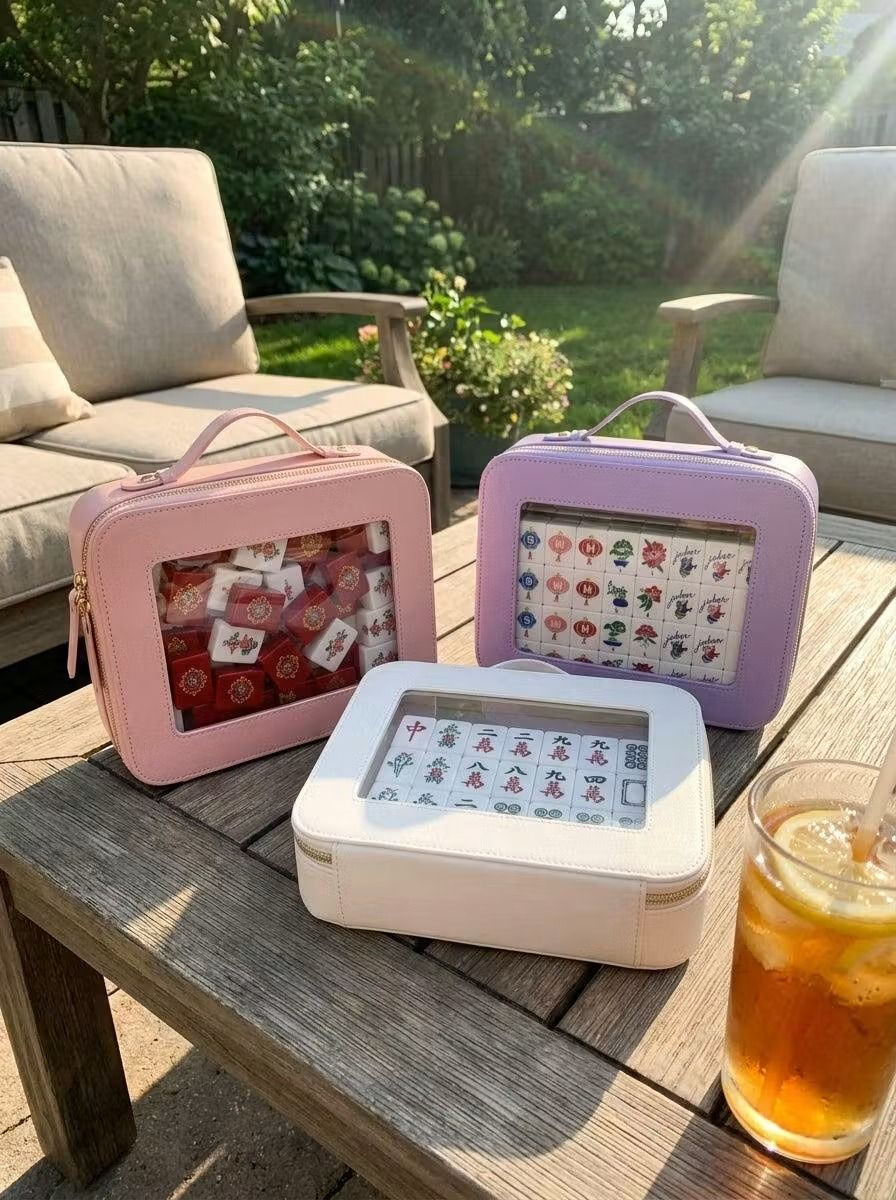
A mahjong bag is a protective carrier designed to hold a 160-tile American mahjong set, racks, mats, and accessories during transport. We host weekly games across the country, and the right bag makes the difference between arriving with ready-to-play tiles and dealing with scratched racks or scattered pieces. Bags range from simple drawstring pouches that hold only tiles, to hard-sided cases that accommodate an entire setup—racks, pushers, mats, dice, and jokers. Most bags use durable canvas, faux leather, or molded plastic; dimensions typically fit a standard tile set (roughly 10×10×4 inches for tiles alone). Cost varies widely based on material and capacity, but protection is the real return: a cracked tile or bent rack costs far more to replace. Choose based on frequency of travel, whether you host at home or play elsewhere, and how much gear you need to carry. Browse Mahstead's full collection of travel bags and cases →🀄 Shop best-selling mahjong sets →
Do you need a bag or a case?
A bag and a case serve different trips. A bag is soft, lightweight, and fits tile sets plus a mat; you sling it over a shoulder or pack it into a car. A case is rigid, stackable, and locks—ideal if you drive long distances weekly or host tournaments. If you play in one room and rarely move your set, a bag handles occasional shuffles to a friend's house. If you travel more than twice monthly or want protection from accidental drops, a case pays for itself through durability.
What material protects tiles best?
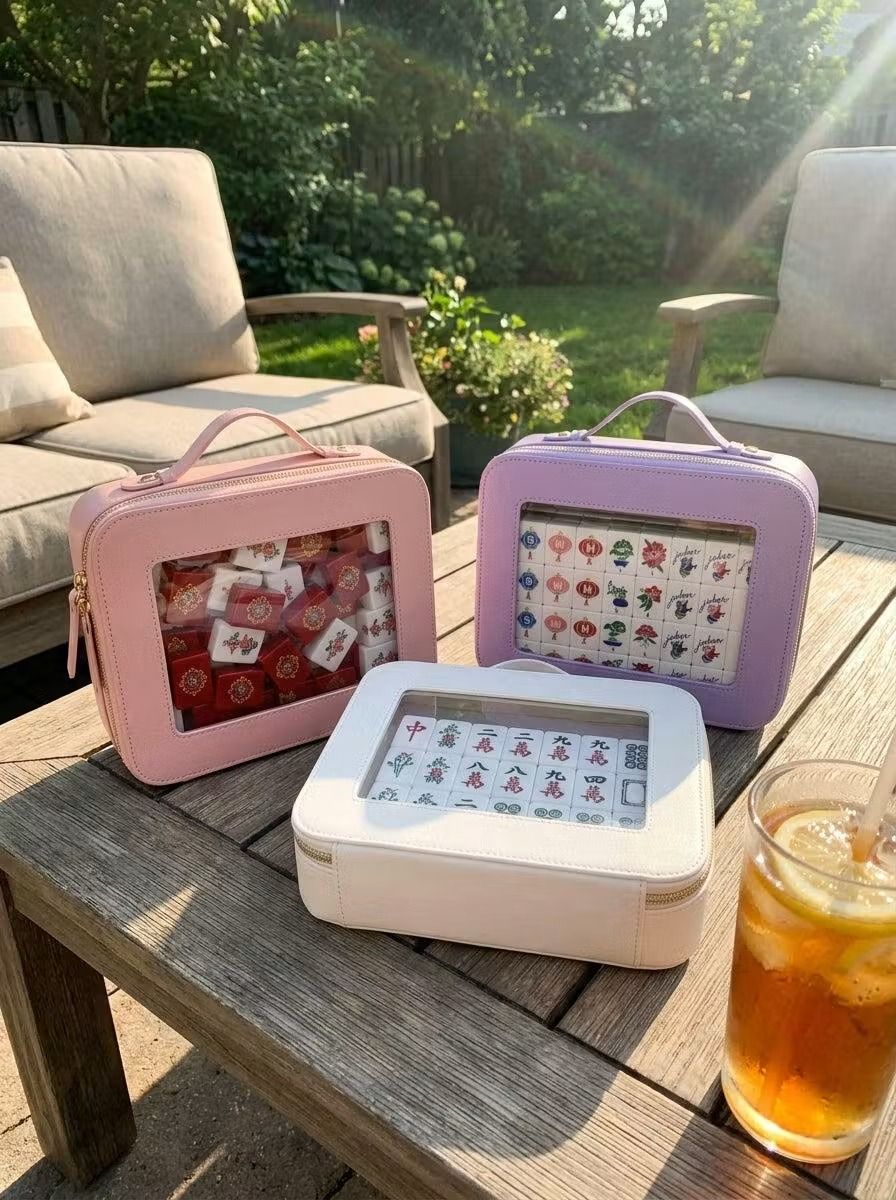
Canvas and faux leather are the most common carriers in American mahjong. Canvas breathes, resists spills, and ages well; faux leather wipes clean and sheds moisture. Both allow tiles to shift slightly inside, which is normal and not harmful—acrylic tiles are impact-resistant. Hard-sided cases with foam inserts offer maximum protection but add weight and cost more. For casual weekly players, any material from a quality maker will outlast your set; for frequent travelers, faux leather or hard cases justify the upgrade.
How much space do you actually need inside?
A 160-tile set occupies roughly 10×10×4 inches when stacked in a tile case. Add your mats (thin, roll up), racks with pushers → (three or four inches tall when stacked), and dice (negligible). A bag that fits 12×12×6 inches comfortably holds everything without crushing. If you carry only tiles and a small mat, a 10×10×5-inch pouch is plenty. Measure your set's container at home, then add an inch per dimension for breathing room—tight bags wear faster and make unpacking a hunt.
What separates a gaming bag from a travel case?
Feature | Gaming Bag | Travel Case |
Best for | Weekly games in one town | Cross-state trips, tournaments |
Weight | 2–4 lbs empty | 5–10 lbs empty |
Interior | Soft, often one compartment | Divided foam or removable trays |
Water protection | Splash-resistant; not waterproof | Sealed gaskets, fully waterproof |
Portability | Shoulder strap; fits car seat | Rolling wheels or carry handles |
Cost basis | Entry-level option | Higher investment, long-term value |
Tile safety | Good; minor movement okay | Excellent; fully immobilized |
A gaming bag suits players who host or meet locally—you're not bouncing it on airport belts. A travel case makes sense if your game moves: league tournaments, regional competitions, or family games in multiple cities.
🎁 See our most-loved mahjong sets & accessories →
Should you buy a bag designed specifically for mahjong?
Yes, and here's why. Generic board-game or tile bags often lack the internal structure to stop a 160-tile set from shifting; tiles can tumble into one corner, stressing the corners of the tiles and the bag seams. Mahjong-specific bags → feature compartments or padding sized for tiles, racks, and mats. A mat bag lets you roll the mat separately, keeping creases and tears away from tiles. Many players bring a mahjong mat → to every game, so a bag that protects both tiles and mat is worth the slightly higher cost. You avoid the headache of repurposing a purse or project bag and discovering, mid-game, that your rack slipped into a gap and cracked.
✨ Find your Mahstead set — free US shipping →

How do you know a bag is well-made before you order?
Check three things: seam placement, interior lining, and handle attachment. Seams should run along the edges, not across load-bearing areas like corners—weak seams split under weight. Lining should be smooth and washable, with no sharp plastic edges that catch tiles. Handles and straps should be stitched through to the outer layer, not glued; glued handles fail within months of weekly use. Read product descriptions carefully: a bag that lists interior dimensions, compartment count, and material fiber type (canvas blend, genuine faux leather, polypropylene) reflects a maker who tests durability. Avoid vague terms like "durable" or "spacious" without numbers. If you're unsure, email the maker and ask how long the warranty covers—real manufacturers stand behind their bags.
What else should travel with your bag?
Your bag holds the set, but also carry the current year's National Mah Jongg League card in a sleeve so it doesn't bend, and a small soft cloth to wipe dust off tiles before play. Some players add a notepad and pen for scoring, though most play to a card. If you use racks with pushers →, store them flat inside the bag to avoid warping. Never leave tiles in a hot car for hours; acrylic can soften. Store bags in a cool, dry place—basements and garages are fine, as long as they're not damp.
What's the difference between a bag and a Mahstead set with built-in carrying?
Some best-selling sets → include a small pouch or canvas bag as part of the package. These are convenient for keeping tiles together and are often large enough for basic transport. However, if you carry racks →, mats, or multiple sets, the included pouch won't fit everything. A dedicated travel bag or case gives you the flexibility to pack a complete game—tiles, mats, racks, and accessories—into one organized carrier. Think of the included pouch as a "keep tiles from scattering at home" solution; a purpose-built bag is an "I take my game on the road" investment.
What to check before you buy
Measure your set's current container. Does it slide into the bag with an inch to spare on all sides?
Count your gear. How many mats, racks, and accessories do you carry every time?
Test the handles or straps at home. Can you comfortably lift the packed bag with one hand?
Review the interior layout. Are compartments sized for tiles (roughly 1 inch thick when stacked), or are they generic?
Confirm material washability. If you spill coffee at a game, will soap and water clean the bag without damage?
Check the return policy. If the bag arrives and your set doesn't fit, can you swap it within 30 days?
Many of us have learned the hard way: a bag that looks spacious online can feel cramped when your mat → rolls up inside. Order from makers who photograph the bag with tiles and racks visible, not empty.
FAQ
Can I use a regular suitcase for my mahjong set?
Yes, but it's overkill for a set. Suitcases are heavy, hard to access quickly, and take up cabinet space. A mahjong bag is lighter, stays organized, and cost less. Reserve a suitcase for trips where you're also packing clothes.
How often do mahjong tiles need replacement if I carry them in a bag?
Well-made acrylic tiles last decades with normal handling. A quality bag protects against the wear that shortens tile life—scratches from rough transport, pressure cracks from shifting, edge chips. Most tiles last longer than the game.
Should I buy a bag from the same maker as my set?
Not required, but it helps. Makers who design both know the exact tile dimensions and weight distribution. Third-party bags can work, but sizing mismatches are more common. If you love a particular set, its matching bag is a safe pairing.
What's the difference between a drawstring pouch and a structured bag?
A pouch is minimal—tiles can shift and compress. A structured bag has a rigid base and walls, so tiles stay flat and separated. For weekly games, a pouch works; for any travel, a structured bag protects better.
Can I fit two sets in one large mahjong bag?
Rarely without crushing tiles. Two sets weigh about 8–10 pounds and need twice the space. If you carry two sets regularly, buy two bags—you'll each get one anyway, and splitting the load is easier to manage.
Do I need a waterproof bag?
Depends on where you play. If you live in a dry climate or play indoors year-round, water resistance is enough. If you travel in rain or carry your bag on a boat, a sealed or waterproof case protects tiles from swelling and damage.


View More
View More
View More
