
What Set Do You Need for Fujian Mahjong
Last updated: Nov 23, 2026
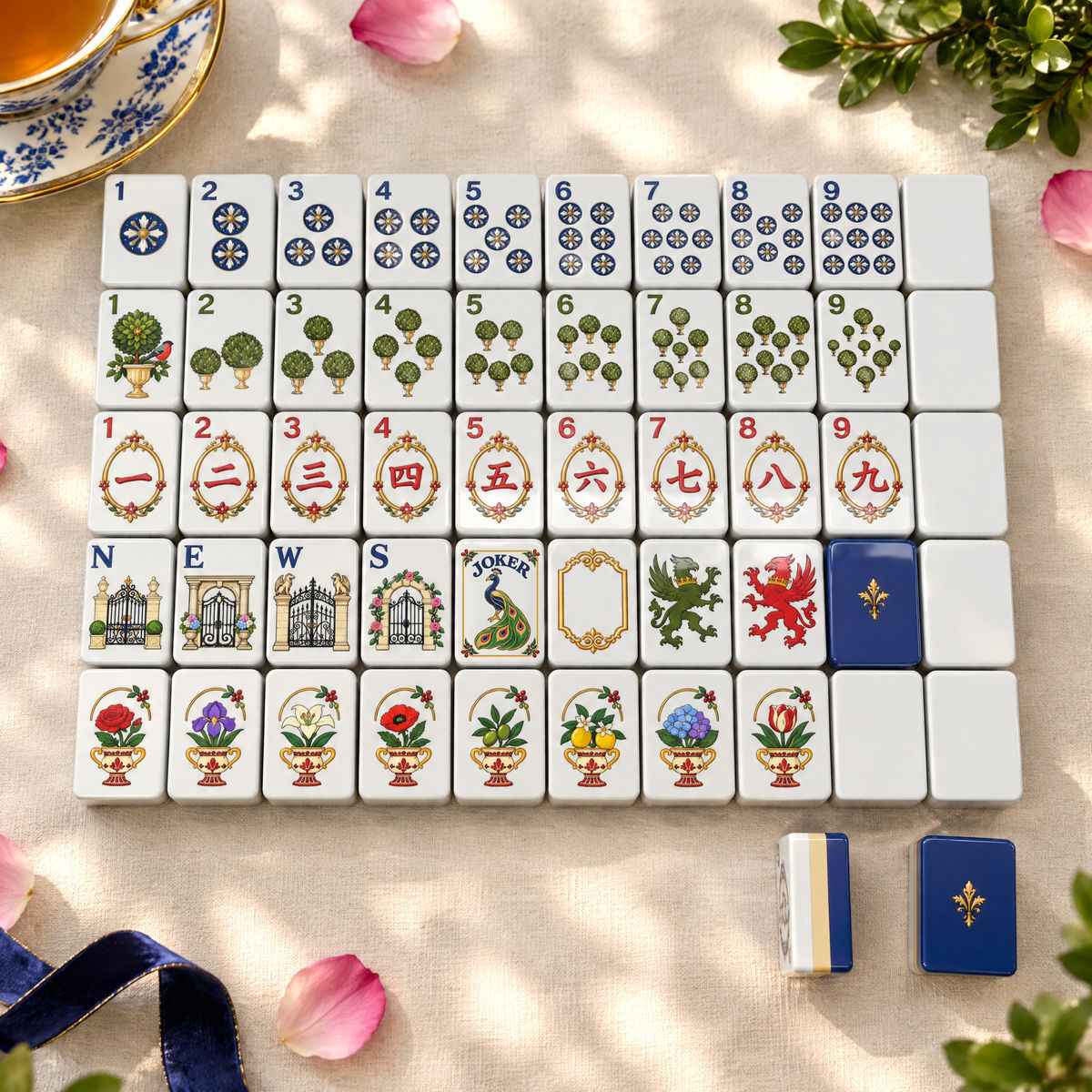
Fujian mahjong uses 108 tiles (Bams, Craks, Dots 1–9, four of each suit = 108 total) plus optional jokers, making it fundamentally different from American mahjong's 152-tile game. Fujian play allows sequences (chows)—which American rules forbid—and plays with no reference card, relying instead on memorized hand patterns. The tile layout, winning conditions, and scoring are entirely separate from American standards. If you own an American set, you cannot play Fujian without sourcing a second, purpose-built set with the correct tile count and markings. Fujian variants exist across Xiamen, Quanzhou, and other Fujian cities, each with minor rule tweaks. Before buying, confirm which Fujian sub-variant your group plays, since a Xiamen-style set won't match Quanzhou house rules. We focus on American mahjong sets at Mahstead, but this guide clarifies how Fujian equipment differs so you know what to seek from a specialist Chinese supplier.
Fujian mahjong (闽南麻将) is a beloved Chinese family game played across southeastern coastal provinces. If you're learning or hosting Fujian play, the first question is simple: what tiles and set do you actually need? The answer is completely different from American mahjong—and most players who own a Western set cannot pivot to Fujian without a second purchase.
Why Fujian mahjong needs a totally different set
American mahjong uses 152 tiles; Fujian uses 108. That's not a minor tweak—it's a structural difference that changes hand building, calling rules, and pace. Fujian includes no winds, no dragons, no flowers, and no honors. Instead, you play with a pure tile lineup: Bams (筒), Craks (条), and Dots (万)—each numbered 1–9, with exactly four copies of each tile. That's 9 × 3 suits × 4 = 108 tiles, period. American mahjong's extensive animal/honor tile system doesn't exist in Fujian. If you tried to play Fujian with an American set, you'd have 44 extra tiles lying unused, wrong hand patterns on the table, and no way to follow the game. The physical set must be purpose-built for Fujian play.
🀄 Shop best-selling mahjong sets →

What tiles come in a Fujian set, and how many of each?
A legal Fujian mahjong set contains exactly 108 playing tiles: three suits (Bams, Craks, Dots), numbers 1–9 in each suit, four identical copies per number. The layout is stark and symmetrical—no character tiles, no wind tiles, no "flowers" or seasonal bonuses. Some Fujian sets add optional jokers (typically 2–4) to allow flexible hand combinations, but jokers are not required; base play is 108 tiles only. Some sets may include blank tiles as spares, but these are never in active play. The tiles are usually marked clearly: Bams show tubular shapes, Craks show bamboo stalks or lines, and Dots show solid circles. Markings differ from American tile art, which often uses different iconography. If you order a Fujian set online or from a Chinese supplier, verify that the tile count is 108 active tiles, not 144 or 160, and confirm the suit symbols match your group's regional preference.
How Fujian play rules differ (and why the set must reflect that)
Fujian mahjong allows chows (sequences like 3-4-5 of the same suit), which are called and exposed on the table during play. American mahjong forbids chows entirely—you can only show pungs (three identical tiles) or kongs (four identical). This rule difference means Fujian play is faster, requires fewer jokers to complete hands, and demands a set with clear, uniform numbering so sequences are instantly readable. Winning hands in Fujian often consist of mixed chows and pungs; there is no reference card dictating which hand patterns are legal (as American mahjong uses annually). Instead, Fujian players memorize regional hand hierarchies. The set itself must reflect this: tiles must be uniform in size, easy to arrange in rows for sequence-calling, and free of the ornate American design language (which can obscure number values on quick reads). Because Fujian players call and discard much faster than American players, the physical tiles need to be durable and handle frequent shuffling without degrading.
Comparing a Fujian set to an American set: what's actually different
Attribute | Fujian Mahjong | American Mahjong |
Tile count | 108 (3 suits × 9 numbers × 4 each) | 152 (108 base + 16 winds + 12 dragons + 8 flowers + 8 jokers) |
Suits | Bams, Craks, Dots only | Bams, Craks, Dots + winds, dragons, flowers |
Sequences allowed | Yes (chows called/exposed) | No sequences; only pungs, kongs, quints, sextets |
Reference card | None (memorized patterns) | Required (current-year National Mah Jongg League card) |
Jokers | 0–4 optional extras | 8 mandatory in play |
Game pace | Faster (fewer tiles, more calls) | Slower (more tiles, fewer calls) |
Hand memorization | High (players must know all valid hands) | Low (reference card present at table) |
Typical tile size | Standard (about ¾″ × ½″) | Standard (about ¾″ × ½″) |
The table shows why buying an American set won't work for Fujian: you'll have too many tiles, the wrong honor tiles, and no chow mechanics in your rules.

Where to source a Fujian set and what to verify before ordering
Fujian sets are sold by Chinese game suppliers, online marketplaces serving Asian communities, and specialty game shops in areas with large Fujian expatriate populations. Look for distributors that specify "Fujian mahjong" (福建麻将) and list the tile count as 108. Before clicking "buy," verify three things:
Tile count: Confirm 108 tiles + any optional jokers/blanks listed separately.
Suit symbols: Check that Bams, Craks, and Dots match your group's regional variant (Xiamen-style vs. Quanzhou-style symbols can differ slightly).
Material and durability: Ask whether tiles are bone, bamboo, acrylic, or plastic—and whether the supplier guarantees resistance to wear from frequent shuffling.
Most Fujian sets come in a cloth or wooden carrying case. Shipping to the US from Chinese suppliers typically takes 2–4 weeks; confirm shipping cost and duty responsibility before ordering. If you cannot find a Fujian set locally, online marketplaces that serve Asian communities often have verified Fujian set sellers with customer reviews and return policies.
🎁 See our most-loved mahjong sets & accessories →
Can you adapt an American set to Fujian, or do you need a separate set?
No—you cannot practically adapt an American set to Fujian play. Removing the 44 extra tiles leaves you with 108 tiles, but the problem runs deeper: the 1 Bam in an American set usually depicts a bird, not a simple number marker; dragon and wind tiles have no meaning in Fujian; and joker rules are incompatible. More importantly, an American set's design language—ornate art, mixed iconography—can slow down rapid Fujian play, where players must instantly identify sequences. Your players will be frustrated, the game will drag, and you'll eventually buy a proper Fujian set anyway. The upfront cost of a dedicated Fujian set is the right path.
If you're hosting both American and Fujian players in the same group, we recommend owning both sets. Our best-selling American mahjong sets are built for long-term weekly play and come with matching racks, mats, and travel bags so you can host American games confidently. For Fujian, source a separate 108-tile set from a Chinese supplier specializing in regional variants.
✨ Find your Mahstead set — free US shipping →
What to check before you buy a Fujian mahjong set
Tile count matches: 108 active tiles, not 144 or 160. (Extra jokers or blanks, if any, should be listed as "spares" and not counted in the active game.)
Suit markings are clear: Bams, Craks, and Dots are instantly readable even in low light and during fast play.
Variant matches your group: Confirm whether your players follow Xiamen, Quanzhou, or another regional ruleset, then match the supplier's variant.
Durability: Ask the seller whether tiles are glazed or varnished to withstand frequent shuffling and humidity.
Case and racks included: Many Fujian sets include a wooden or cloth carrying case; racks are less common and may cost extra.
Return policy: If the tiles arrive damaged or don't match your group's needs, ensure you can return or exchange within 30 days.
Import duties and shipping: Factor in total landed cost, including any tariffs, before deciding.

FAQ
Is a Fujian mahjong set the same as a Hong Kong or Chinese standard mahjong set?
No. Hong Kong mahjong (144 tiles, includes winds and dragons, plays with melds and no sequences) and Chinese standard mahjong (108–136 tiles depending on variant, mixed sequences and melds) both differ from Fujian. Fujian is strictly 108 tiles, no winds, no dragons, and fast chow-based play. Confirm your group's exact variant before buying.
Can I use American mahjong jokers in a Fujian set?
Jokers are optional in Fujian play and not part of the core 108 tiles. If your group uses jokers (some Fujian players do), they function as wild tiles to complete sequences or melds. American joker rules (no single-tile or pair use) don't apply to Fujian. Use only jokers your supplier includes or your group explicitly allows.
How much does a Fujian mahjong set typically cost?
Prices vary widely by material, region, and supplier. Entry-level acrylic or plastic sets range from affordable to moderate; bone or bamboo sets cost more. We recommend checking current pricing from Chinese suppliers or Asian marketplaces serving your area, as pricing changes seasonally and by import conditions.
How many people play Fujian mahjong at one table?
Fujian mahjong is played by four people, just like American mahjong. Each player takes a wall of 27 tiles during setup. The game pace is faster than American play because sequences are allowed and there is no reference card slowing calls.
What if my group plays a regional Fujian variant I can't find a set for?
Contact local Chinese cultural centers, libraries, or game clubs in your area—they often know regional suppliers or can recommend a trusted seller who sources that exact variant. Online forums for Chinese game players also share supplier recommendations and variant-specific tips.
Do I need a mat and racks for Fujian mahjong?
A mat is helpful but not required; it protects your table and marks each player's space. Racks and pushers are less common in Fujian play than in American mahjong, though some players use simple tile holders. Start without racks; if your group finds them useful later, source them from the same Fujian supplier or a general game accessory vendor.


View More
View More
View More
