
What Set Do You Need for Filipino Mahjong
Last updated: Nov 23, 2026
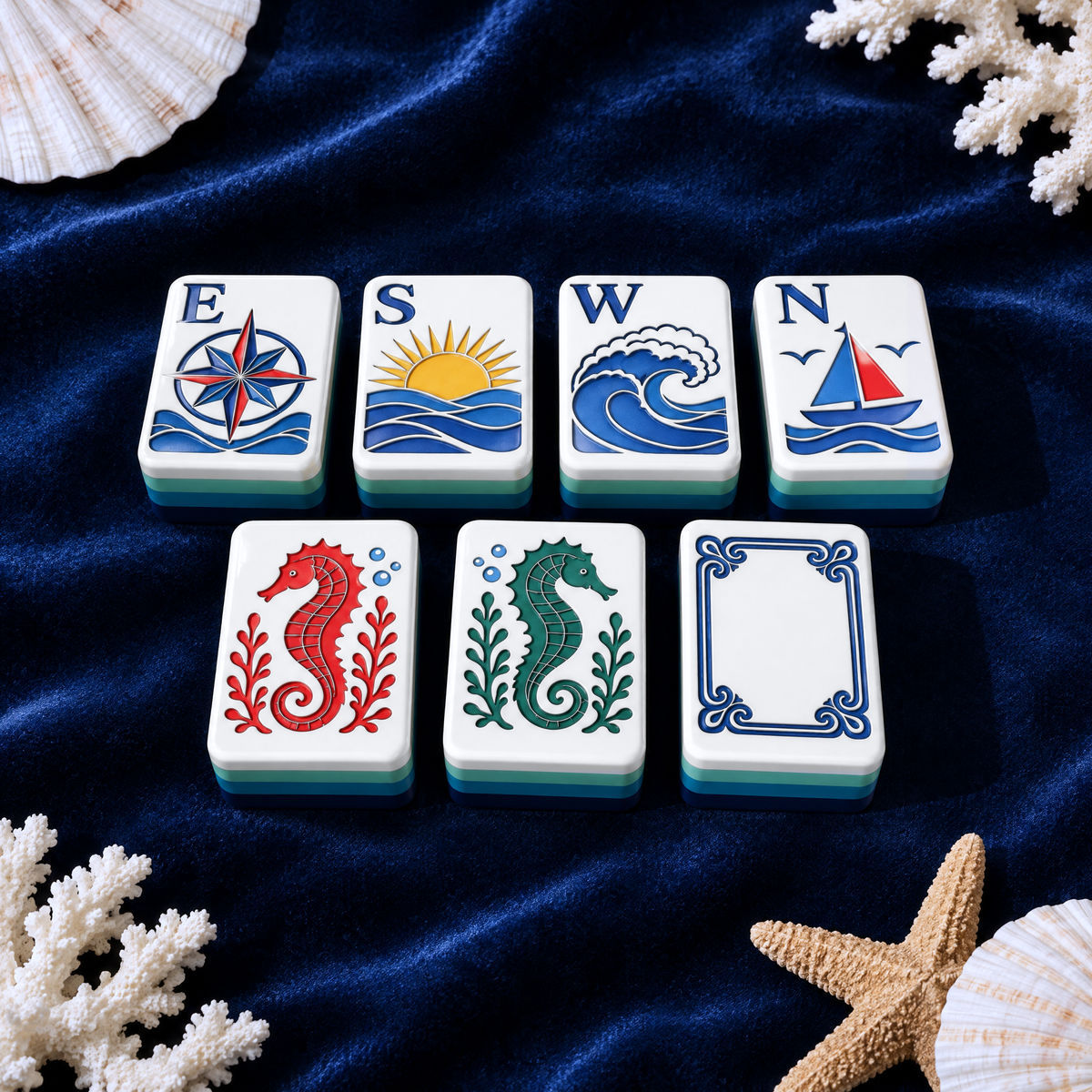
Filipino mahjong uses a 144-tile Hong Kong set—not the 152-tile American standard. The game includes three suits (Bams, Craks, Dots numbered 1–9), four winds, three dragons, and four flowers, with no jokers or blanks in play. Hands are called from traditional patterns (like "pung" for three identical tiles), not a yearly card. Unlike American mahjong, Filipino mahjong allows chows (sequences: 1-2-3, 4-5-6, etc.) to be called and exposed. If you're hosting a Filipino game at home, you'll need a 144-tile Chinese set (not Mahstead's American 160-tile sets, which won't work). Look for sets labeled "Hong Kong" or "144-tile standard" from suppliers who specialize in Chinese variants. The game plays faster and flows differently; most players find the learning curve smooth if they've played American before. 🀄 Shop best-selling mahjong sets →
Is Filipino mahjong the same as American mahjong?
No. Filipino mahjong follows Hong Kong rules, not American rules. American mahjong has 152 tiles, no chows, and hands from a yearly card; Filipino uses 144 tiles, allows chows, and plays off traditional Chinese hand patterns. American sets won't work for Filipino games.
Filipino players often learn American mahjong too, but they're distinct games with different equipment needs. If you've played American, Filipino will feel both familiar and different—the tile mechanics overlap, but calling hands works completely differently.

What's in a 144-tile Hong Kong set?
A 144-tile Hong Kong set contains: three suits (Bams, Craks, Dots, numbered 1–9, four copies each = 108 tiles) + four winds (N/E/W/S, four copies each = 16 tiles) + three dragons (Red, Green, White, four copies each = 12 tiles) + four flowers (numbered 1–4, one copy each = 4 tiles) + four seasons (numbered 1–4, one copy each = 4 tiles). Total: exactly 144. No jokers, no blanks—every tile is functional. The tile count is final and non-negotiable for Hong Kong play.
How does tile count affect gameplay in Filipino mahjong?
The 144-tile count creates a faster, tighter draw structure. American's 152 tiles mean 14 tiles per player; Hong Kong's 144 means 13 tiles per player at the start. That single-tile difference changes wall depth, draw probability, and hand completion pacing—games finish quicker and feel more urgent. Fewer tiles in circulation mean fewer defensive options and sharper discarding strategy.
For players used to American's leisurely pace, Filipino mahjong will feel snappier. The smaller tile pool rewards memory and pattern recognition over luck.
Can I use an American mahjong set for Filipino mahjong?
No. American sets have 160 tiles (152 play + spares), include jokers, and lack seasons. Filipino/Hong Kong sets need exactly 144 tiles with no jokers, including both flowers and seasons. Mixing them breaks the game's math and hand-calling rules. You need a proper 144-tile Hong Kong set; don't improvise.
Where do I buy a 144-tile Hong Kong mahjong set?
Hong Kong/Chinese-variant sets are stocked by suppliers specializing in Asian games and travel retailers. Look for "144-tile Hong Kong mahjong set" on online marketplaces, specialty game shops, and Chinese import retailers. Check that the listing confirms "144 tiles," "no jokers," "four seasons," and "Hong Kong rules" before purchasing.
Avoid American-branded sets; they're labeled clearly as "152-tile American mahjong" and won't suit Filipino play. If you're in the United States and want to host Filipino games, order online from retailers who serve the Hong Kong or Taiwanese market.
🎁 See our most-loved mahjong sets & accessories →
What's the difference between Filipino, Hong Kong, and Chinese mahjong?
Variant | Tile Count | Chows? | Hand Source | Jokers? | Seasons? | Best For |
Filipino (Hong Kong) | 144 | Yes | Traditional patterns | No | Yes (4) | Fast casual play, family games |
Hong Kong Standard | 144 | Yes | Traditional patterns | No | Yes (4) | Regional play, same as Filipino |
Chinese (Simplified) | 136–144 | Yes | Regional variations | Varies | No | Mainland play, rule flexibility |
American | 152 | No | Yearly card | Yes (8) | No | Structured tournament play |
Filipino and Hong Kong mahjong are the same game. "Filipino mahjong" is the name used in the Philippines for the Hong Kong variant. If you're buying a set to play Filipino rules, order a "Hong Kong 144-tile set"—the labels are interchangeable in this context.
What's the role of seasons and flowers in Filipino mahjong?
Seasons and flowers are bonus tiles, separate from the main hand. Four flowers (1–4, one each) and four seasons (1–4, one each) are drawn at the start—if you get one, you set it aside, reveal it, and draw a replacement from the dead wall. They're worth points and must be collected as part of winning hands. This mechanic doesn't exist in American mahjong, where flowers are purely decorative or absent.
Understanding flower/season drawing is crucial: it changes your starting tile count and hand formation rhythm. New players often forget to draw replacements—one of the most common mistakes in Filipino play.

How do chows work in Filipino mahjong (compared to American)?
In Filipino mahjong, a chow is three consecutive tiles in one suit—e.g., 4 Bam, 5 Bam, 6 Bam. You can call a chow (expose it and show all players), or play it concealed (hidden in your hand). Calling a chow stops the game briefly while you verify it, then play resumes.
American mahjong forbids chows entirely—you can only expose pungs (three identical), kongs (four identical), and higher sets. This single rule difference transforms strategy: Filipino play rewards suit sequences; American rewards matching tiles. If you're learning Filipino after American, this shift will feel liberating—suddenly you have more hand combinations to work with.
✨ Find your Mahstead set — free US shipping →
What other equipment do I need for a Filipino mahjong table?
Beyond the 144-tile set, you'll want:
A mat or table surface to organize tiles and discard zones. A mahjong mat keeps tiles visible and organized.
Racks or pushers (optional but helpful) to hold and manage your hand. Racks with pushers speed up play and reduce dropped tiles.
Dice (two standard six-sided, included in most sets) to determine seating and the first draw.
A scoring pad or reference card for hand values—the scoring differs from American mahjong.
A storage bag if you're taking the set to weekly games. Durable mahjong bags protect tiles during travel.
The tiles themselves are the main investment. Most Hong Kong sets ship with dice and basic storage. Mats and racks upgrade comfort and pace.
What to check before you buy a Filipino mahjong set
Tile count: Confirm "144 tiles" in the product title or listing—not 136, not 152.
Seasons included: The set must include four season tiles (1–4). If the listing doesn't mention seasons, ask the seller.
Flowers present: Four flowers (1–4, one each) should be included separately from seasons.
No jokers: Hong Kong sets don't use jokers. If the product lists jokers, it's not a Hong Kong set.
Tile material and size: Bamboo-core tiles with bone or acrylic faces are traditional; plastic-only sets are cheaper but wear faster. Standard tile dimensions are about 1¼" × 1" × ¾"—confirm the set isn't miniature.
Included accessories: Check what ships with the set—dice, scoring sticks, a carrying bag, and a rack. Gaps mean extra purchases.
Return policy: If the set doesn't work for your game, ensure the seller accepts returns. Hong Kong sets are less common in the US market, so verify shipping and return terms before ordering.
Seller reputation: Buy from retailers who specialize in Chinese games, Asian imports, or tournament suppliers—not general toy stores that may have outdated or hybrid sets.
How do I transition from American to Filipino mahjong?
If you know American mahjong, Filipino will feel 60% familiar and 40% new:
Tiles and suits are the same: Bams, Craks, Dots, winds, dragons all work the same.
Pungs and kongs are identical: Three of the same tile, four of the same tile—no change.
Chows are new: Learn that 1-2-3, 5-6-7, etc. in one suit are legal exposed or hidden melds.
The hand-calling process is different: Instead of matching a yearly card, you're building patterns from memory. This takes practice.
Scoring is different: Hand values, bonuses, and penalties follow Hong Kong rules, not American. Study a Hong Kong scoring guide before your first game.
Seasons and flowers are functional: They're not decorative—they're drawn, revealed, and scored.
Most American players pick up Filipino within 3–5 games. The hardest part is unlearning "no chows" and adjusting to pattern-based calling instead of card-based calling.
Are there online resources or tutorials for Filipino mahjong?
Yes. Search for "Hong Kong mahjong rules" or "Cantonese mahjong tutorial" (the Philippines inherited the game from Cantonese traditions). YouTube has beginner walkthrough videos; websites dedicated to Hong Kong mahjong also cover Filipino play since they're identical. Look for resources that explain:
Hand patterns and their values.
The flower/season drawing mechanic.
Chow, pung, kong, and pair formation.
Discard strategy.
Be cautious with generic "mahjong rules" pages—they often mix American and Hong Kong rules, which will confuse you. Seek out pages explicitly labeled "Hong Kong," "Cantonese," or "Filipino" mahjong.
What's the typical cost range for a 144-tile Hong Kong set?
Hong Kong mahjong sets typically cost less than American equivalents because they're simpler—no jokers, no spares, smaller tile count. Exact pricing varies by retailer, material (plastic vs. bone/bamboo), and included accessories. Check current prices on the seller's site; don't assume all sets are equal. Budget for a mat and racks if you want a complete table setup.
Mahstead specializes in American mahjong sets, which won't work for Filipino play. For a proper Filipino/Hong Kong set, consult retailers specializing in Chinese and Asian games.

FAQ
Will an American 152-tile mahjong set work for Filipino mahjong?
No. American sets have jokers, lack seasons, and contain 8 extra tiles. Filipino mahjong requires exactly 144 tiles with no jokers and all four seasons included. The rule sets and hand-calling systems are incompatible—you need a dedicated Hong Kong/144-tile set.
Do I need to learn a new rule book to play Filipino mahjong?
If you know American mahjong, yes—but the learning curve is modest. Chows (sequences) are the biggest change; everything else (suits, winds, dragons, pungs, kongs) is familiar. Most American players master Filipino within 3–5 games. Study a Hong Kong mahjong guide before your first session.
Can I find a Hong Kong 144-tile mahjong set in the United States?
Yes, from online retailers specializing in Asian games, Chinese import shops, and tournament suppliers. Search "Hong Kong 144-tile mahjong set" or "Cantonese mahjong." Avoid general toy stores. Confirm the listing specifies "144 tiles," "no jokers," and "seasons included" before ordering.
Is Filipino mahjong faster than American mahjong?
Yes. Fewer tiles per player (13 vs. 14) and a smaller wall make games tighter and quicker. The draw sequence feels more urgent. Most players find Filipino games wrap up 10–15 minutes faster than American rounds, though this depends on group experience and table pace.
What's the difference between seasons and flowers in a Filipino mahjong set?
Seasons (1–4, one each) and flowers (1–4, one each) are bonus tiles drawn at the start. If you draw one, you reveal it, set it aside, and draw a replacement. Both are functional; they're worth points and must be part of your final hand. This mechanic doesn't exist in American mahjong.
Do I need to buy a new mat or rack for Filipino mahjong, or can I reuse my American mat?
You can reuse an American mat—the tile size is the same. However, if your mat is printed with American hand patterns, it won't help you learn Filipino hands. A generic blank mat works fine. The same applies to racks with pushers—they work with any standard-size tiles.
Where can I find tutorials or videos for learning Filipino mahjong rules?
Search YouTube for "Hong Kong mahjong tutorial" or "Cantonese mahjong rules"—Filipino mahjong is the Hong Kong variant played in the Philippines. Look for resources explicitly labeled "Hong Kong" or "Cantonese" to avoid mixing American rules. Many Chinese game websites also have step-by-step guides.
Can I mix American and Filipino mahjong in the same session?
Not recommended. The tile sets are incompatible (144 vs. 152), hand-calling systems are different, and scoring rules don't overlap. Switching games mid-session will confuse the table. Pick one game and stick with it for the night.


View More
View More
View More
