
What Is Wall in American Mahjong? Rules & Setup
Last updated: Nov 23, 2026
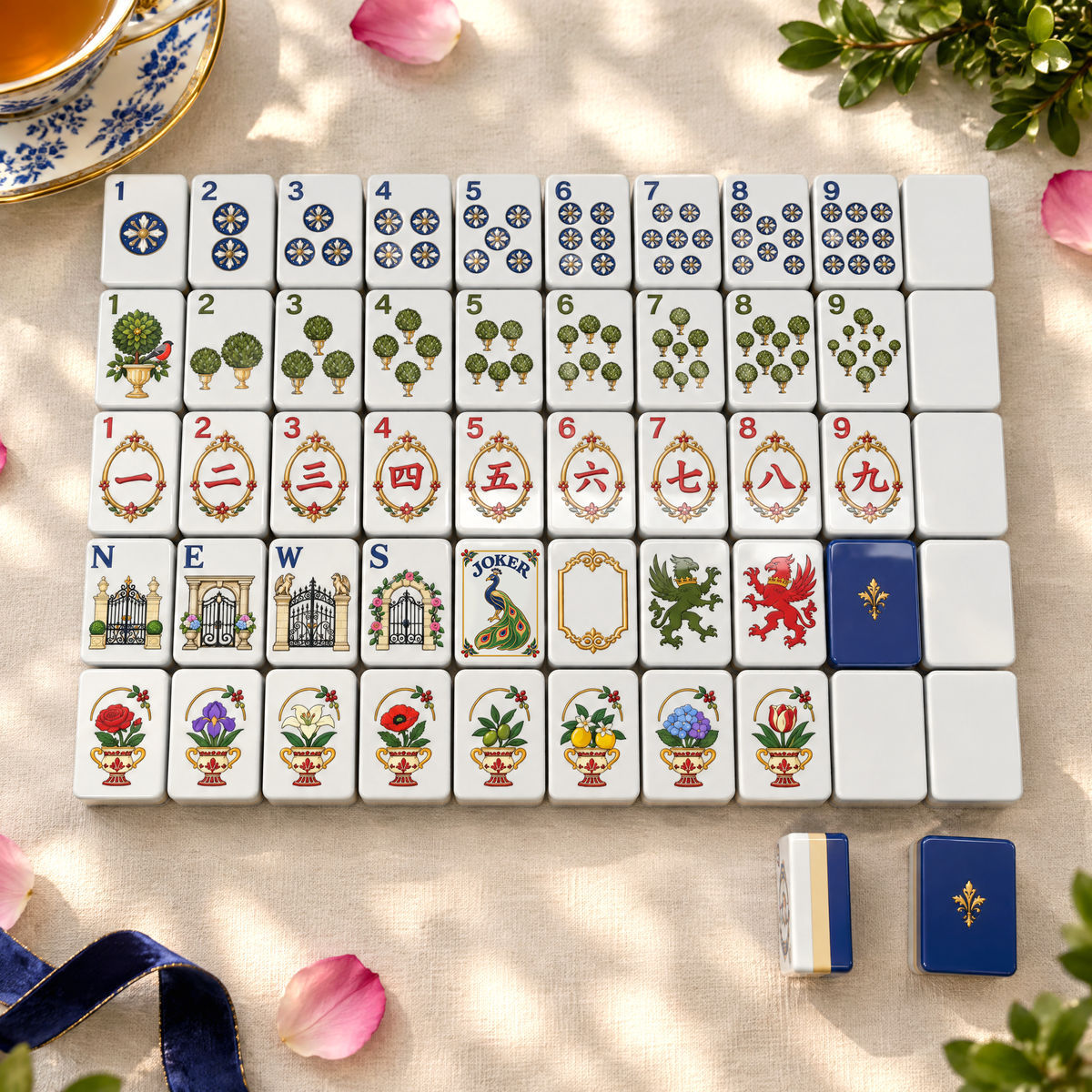
In American mahjong, the wall is the stack of face-down tiles (152 tiles total, divided into four sides of 38 tiles each) that sits in the center of the table, separating the four players. Before the Charleston tile exchange, one player designated the dealer stacks all tiles into a long line, which is then divided into four equal sections and turned face-down. The wall serves two purposes: it contains all undrawn tiles during play, and it determines tile distribution—as players call melds or the hand progresses, they draw from specific positions in the wall according to a fixed protocol. Each player breaks the wall (draws from it) at different points in the hand, starting with the player to the dealer's left after the dealer's opening draw. The wall is never shuffled mid-hand and must remain intact until all playable tiles are exhausted or someone wins.
How do you build the wall correctly?
Building the wall is the first physical step in any American mahjong hand. The dealer takes all 152 tiles and arranges them into a single long line, face-down, in front of them. That line is then divided into four equal stacks of 38 tiles each. Each stack is rotated 90 degrees and positioned to face one of the four players—creating a square or rectangle in the table center. The wall must remain perfectly stacked and undisturbed until the first draw; sloppy or loose stacks slow play and risk tiles toppling. One table-tested tip: stack tiles in pairs (two tiles stacked flat, then the next pair on top) rather than in single rows—this makes the wall more stable and easier to count later if you need to verify remaining tiles.

Where exactly do you draw from the wall?
Draws happen at fixed positions, never at random. After the dealer's opening hand (the dealer draws 14 tiles while everyone else draws 13), play begins. On each turn, the active player draws one tile from the wall, working left-to-right from a designated break point. That break point is always somewhere along the player's own side of the wall—never from the opposite side or a neighbor's section. If a player calls a meld (pung, kong, quint, sextet), they draw one tile from the wall after completing the meld. If the wall runs out before anyone wins, the hand is a "no hand" or "pass." The specific position of the break point is determined at the start of play: the player to the dealer's left breaks the wall first, then play rotates. For newer players, watching where tiles are drawn from prevents disputes and keeps rhythm intact.
What is the difference between the wall and the discard pile?
The wall and the discard pile are entirely separate zones. The wall is the central reservoir of unplayed tiles, always face-down and untouched except during draws. The discard pile is the row of face-up tiles that each player discards after drawing (one tile per turn, per house rules). Discards sit in front of each player or in a central discard area, and they are visible to all. Players may never draw from the discard pile in American mahjong—only from the wall. This is a key difference from some variants: in Chinese or Hong Kong mahjong, discards can be claimed for melds, but in American play, discards are for reference only and become dead tiles once discarded. Keeping the wall and discard pile mentally separate prevents accidental rule breaks and confusion during fast-paced rounds.
Why does the wall run out, and what happens then?
The wall runs out because players draw one tile per turn and only 152 tiles exist. In a four-player hand, that's roughly 38 draws before the wall is exhausted (152 ÷ 4 players ≈ 38 turns per player). If no one has won before the last tile is drawn, the hand ends in a "no hand"—no points are scored, and players move to the next hand. Wall exhaustion is normal and happens once or twice per night of play. It's not a penalty or sign of error; it's simply the math of the game. Some groups play a house rule allowing a second wall draw (drawing from a reserve set), but this is non-standard. The standard rule is: no wall tiles left = no winner = pass and reshuffle for the next hand. Knowing when the wall will likely empty helps experienced players pace discards and adjust strategy toward the end of a hand.

How is the wall different in other mahjong variants?
American mahjong's wall is unique to the Western rule set. In Chinese mahjong, the wall is built the same way but plays a smaller role—players draw from the wall only at the start and after melds, and discards can be claimed for many types of sets. In Hong Kong mahjong, the wall mechanics are similar but the tile draw order and replacement rules differ. In Riichi (Japanese mahjong), tiles are drawn in a fixed sequence from a long wall that wraps around the table, and dead tiles are tracked separately. In Taiwanese mahjong, wall-breaking and draw order follow a completely different protocol. American mahjong keeps the wall simple: build it evenly, break it once, and draw from it until it's empty or someone wins. This streamlined approach makes American mahjong easier to teach and faster to play for groups meeting weekly.
What equipment setup helps manage the wall during play?
A stable table and good lighting matter more than you'd think. A mahjong mat with raised edges keeps tiles contained and prevents the wall from sliding. Mahjong racks with pushers help players organize their own tiles neatly, which reduces accidental bumps to the wall. A mat also gives everyone a clear visual boundary for the wall's footprint—tiles stay put and draws happen cleanly. If playing without a mat, a smooth, flat table surface and a dedicated "wall zone" marked with a towel or tape line help prevent the common mistake of players leaning into or accidentally disturbing the wall. For travel or casual play, ensure tiles are sturdy acrylic or bone—cheap plastic tiles topple easily and make wall management frustrating. Quality equipment isn't a luxury; it's a time-saver and mistake-preventer.
🀄 Shop best-selling mahjong sets →
Common wall mistakes and how to avoid them
Shuffling the wall mid-hand: Once tiles are stacked and play begins, the wall is locked. Never rearrange or re-shuffle tiles in the wall during play—this breaks the fairness of draws and invalidates the hand. If a tile is exposed accidentally, mark it and continue; it will be drawn in order anyway.
Breaking from the wrong side: Each player draws from their own side of the wall. Drawing from an opponent's section is a rules violation. Before play starts, agree on which end of each player's wall section is the "break point" and stick to it.
Misaligning the wall: A crooked or uneven wall causes physical confusion. Straighten the wall before the first draw and adjust it gently if it drifts during play. A few seconds spent aligning saves minutes of dispute later.
Losing count of remaining tiles: In the final rounds of a hand, knowing how many tiles remain helps players adjust risk. If unsure, count the remaining wall tiles aloud (in multiples of two or four) so all players stay aligned on the hand's life expectancy.
Mistake | Why It Breaks Play | Fix |
Shuffling wall mid-hand | Invalidates draw fairness | Lock the wall after building; never re-stack |
Drawing from wrong side | Creates rule violations | Assign break points before play starts |
Misaligned wall | Causes confusion on draw position | Straighten gently before and during play |
Exposing tiles | Reveals information | Mark exposed tile; continue play in order |
Mixing wall and discards | Breaks American rules | Keep discard pile separate and face-up |
What to check before you buy
When setting up your first American mahjong night, confirm that your mahjong set contains exactly 152 playing tiles plus spares—this is the American standard and ensures the wall works as designed. Check that all tiles are uniform in size and weight so they stack evenly. If you play frequently, invest in a quality mat to keep the wall stable; a poor surface or uneven table makes wall management a constant chore. For groups hosting weekly games, a travel bag or case protects tiles and mat between sessions, and racks with pushers reduce hand clutter so players focus on the wall, not fumbling with loose tiles. None of these are mandatory, but each one removes friction and keeps the game's pace smooth.
✨ Find your Mahstead set — free US shipping →

FAQ
Can you draw from the wall after the discard pile starts?
Yes. Players draw from the wall on every turn, regardless of the discard pile. The discard pile is reference only in American mahjong; it's never a draw source. Only the wall feeds tiles into active play.
What happens if someone topples the wall accidentally?
Stop play, restack the wall as it was before the topple (use remaining memorized order if needed), and resume. If the wall is too scrambled to recover, restack it with remaining tiles and mark the break point clearly before continuing.
Do you rebuild the wall between rounds?
No. One hand uses one wall. Between hands, a new dealer builds a fresh wall from all 152 tiles. The old wall is completely discarded (bagged away) before the next hand begins.
How many tiles should each side of the wall have?
Always 38 tiles per side (152 ÷ 4 players = 38). If your wall is uneven, you've miscounted or misdivided the tiles. Recount and restack before play.
Is the wall built before or after the Charleston?
The wall is built before the Charleston. The dealer stacks all 152 tiles into the wall, players exchange tiles via the Charleston, then play begins and the wall is drawn from. The wall itself is never part of the Charleston exchange.


View More
View More
View More
