
What Is Redeeming a Joker in American Mahjong?
Last updated: Nov 23, 2026
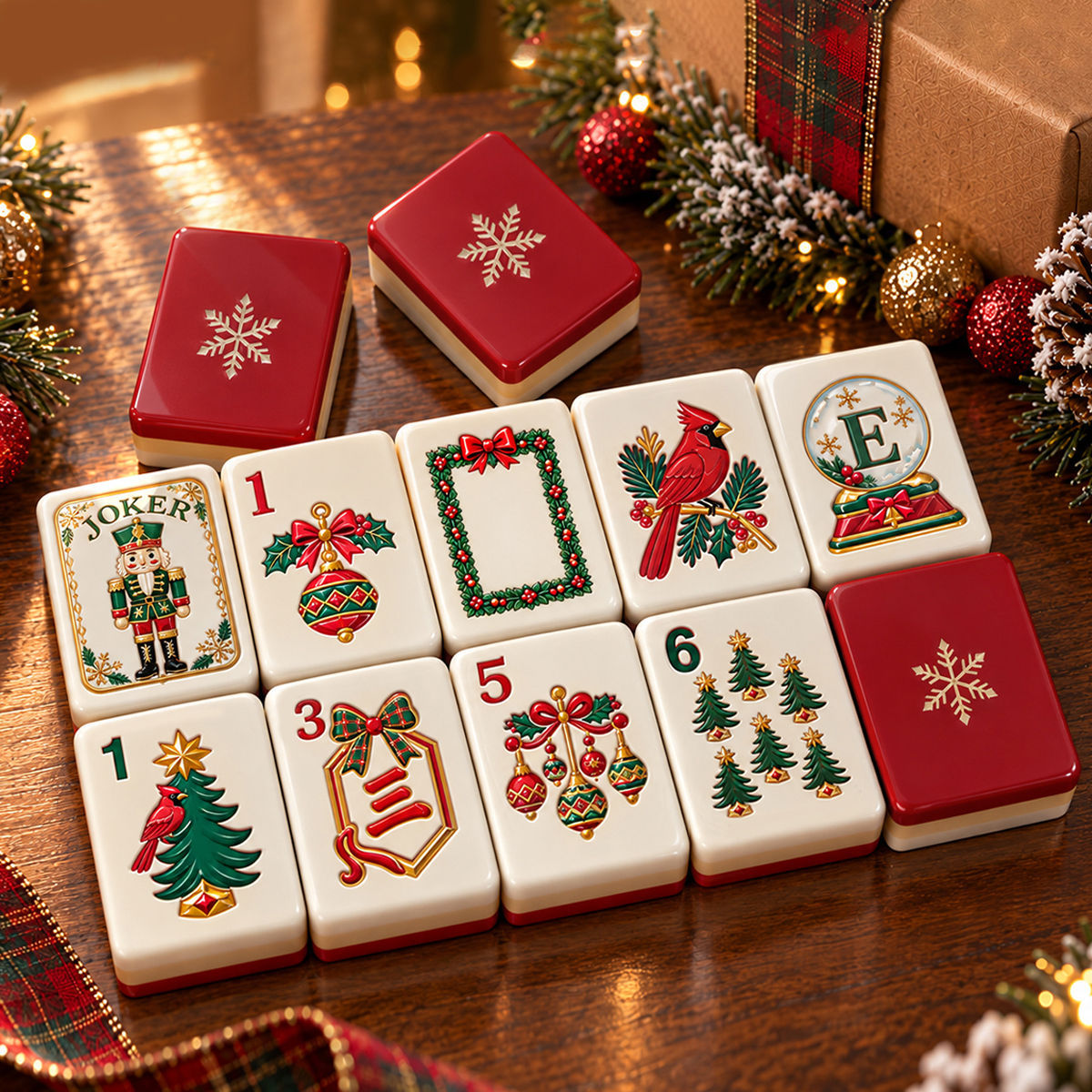
Redeeming a joker is the act of swapping a joker tile that another player has used in an exposed meld (pung, kong, or higher) with the actual tile it stands in for. When you do this, you take the joker into your hand and leave your real tile in its place on the table. Redemption can happen only after a player has exposed a meld containing a joker and before the next hand is drawn; you must announce "I redeem" or follow your group's call protocol. The redeemed tile must fit into a hand pattern on the current National Mah Jongg League card—if it doesn't, you cannot redeem. Redemption is free (no scoring penalty) and is a legitimate way to acquire tiles that complete winning hands. Many players keep a set with best-selling mahjong tiles nearby so jokers and real tiles look equally clear during play, reducing confusion during redemptions.
Redeeming a joker means replacing a joker tile that another player has used in an exposed meld (pung, kong, or higher) with the actual tile it stands in for. When you do this, you take the joker into your hand and leave your real tile in its place on the table. Redemption can happen only after a player has exposed a meld containing a joker and before the next hand is drawn; you must announce "I redeem" or follow your group's call protocol. The redeemed tile must fit into a hand pattern on the current National Mah Jongg League card—if it doesn't, you cannot redeem. Redemption is free (no scoring penalty) and is a legitimate way to acquire tiles that complete winning hands.
Why do jokers need redeeming in the first place?
American mahjong has exactly eight jokers for 152 playing tiles. Players use jokers as wildcards to stand in for missing tiles in exposed melds when they draw weak hands or need to build a scoring pattern fast. Because jokers are scarce, they move around the table constantly—one player's exposed meld becomes another player's opportunity. Redemption prevents one player from hoarding joker value; it forces circulation and keeps the game competitive. Without redemption, the player who drew joker-heavy tiles early would have an unfair structural advantage. Redemption levels the playing field and rewards sharp tile-reading.

When exactly can you redeem a joker?
You can redeem a joker only after it has been exposed as part of a pung, kong, quint, or sextet on another player's rack or side of the table. The window opens immediately after that meld is laid down and closes the moment the next hand is drawn (either a player draws from the wall or takes a discard). You cannot reach across the table and retroactively redeem a joker that was buried three turns ago. You must call your redemption clearly—say "I redeem the [tile name]"—so all four players hear and agree. If nobody objects within a few seconds, the swap stands; the redeemed joker goes into your hand, and the real tile fills the gap in the exposed meld. Some groups use a hand raise or a verbal confirmation chant; the ritual protects the game's integrity and prevents disputes.
What tile must you give up in exchange?
The tile you contribute to redeem a joker must be the exact same tile the joker represents. If a player has laid down three 7 Dots (one or more being a joker), and you want to redeem the joker, you must hand over a real 7 Dot from your rack. You cannot substitute a different tile, a tile from a different suit, or a tile with a different number. The rule is ironclad: one-for-one swap, identical tiles only. After the trade, that real tile sits visibly in the exposed meld for the rest of the hand so other players can see it and factor it into their strategy. You then hold the joker in your closed hand, where you can deploy it elsewhere in your winning pattern if needed.
What's the most common mistake people make when redeeming?
The biggest trap is redeeming a tile that doesn't complete a hand pattern on the current year's card. You see a juicy tile, you grab it eagerly, and you swap in a joker—only to realize at the end of the hand that the configuration doesn't match any listed pattern. In American mahjong, a tile is only valid if it moves you toward a card-legal hand; redemption doesn't override that rule. Before you redeem, glance at the card and mentally confirm that the redeemed tile fits a plausible pattern. Another pitfall: redeeming too late. If the next player has already drawn, your window closes; you miss your chance. Many experienced players keep a personal redemption note or pause briefly to check the card before drawing, so redemptions don't slow the table. The fastest way to prevent confusion is to use a mat with a built-in card holder—mahjong mats designed for clarity let you glance at the hand patterns without breaking focus.
🀄 Shop best-selling mahjong sets →

How does redemption change strategy and scoring?
Redemption shifts the psychology of the entire game. Players who lay down melds with jokers know they're handing opponents a potential gift—so they only expose melds when they're confident or when the joker trade-off won't hurt them. Conversely, sharp players scan the table for exposed jokers that match the tiles they need; redemption is an active offensive move, not just a passive right. Scoring-wise, redemption has no direct points; it's a neutral swap. But the tile you acquire through redemption can be the difference between a hand that scores and one that doesn't. If redeeming a 5 Bam completes a pattern worth 40 points on the card, that joker swap just unlocked a win. This is why reading the card and the table state matters as much as tile luck. Redemption rewards attention and speed, not randomness.
What variants handle joker redemption differently?
American mahjong's redemption rules are fairly strict and card-dependent. In Chinese and Hong Kong mahjong, jokers (called "flowers" or wildcards in some variants) may not be redeemable at all, or they follow entirely different substitution rules tied to hand completions and not to exposed melds. Riichi (Japanese mahjong) doesn't use jokers as wildcards; it relies on a closed-hand draw system with no exposed melds until a player wins, so redemption doesn't exist in the same form. Taiwanese mahjong has regional house rules that vary widely; some groups allow limited redemption, others forbid it entirely. If you play multiple variants—or teach newcomers from other countries—clarify your group's redemption rules before the first hand. American mahjong's redemption mechanic is one of its defining features; it keeps the pace brisk and rewards active, engaged play.
🎁 See our most-loved mahjong sets & accessories →
Comparison: Joker use across American mahjong scenarios
Scenario | Joker Used In | Redeemable? | Outcome If Redeemed |
Exposed pung (3 tiles, one joker) | Open meld on rack | Yes, immediately | Real tile replaces joker in meld; joker goes to your hand |
Exposed kong (4 tiles, two jokers) | Open meld on rack | Yes, one at a time | Each real tile swaps in separately; jokers leave one by one |
Closed hand pung (no exposure) | Your sealed hand | No | Cannot redeem; joker stays in your hand only |
Winning hand with joker in pattern | Your sealed hand at win | No | Joker counts as the tile; no swap needed |
Real-table tips for smooth redemptions
Announce loud and clear. Say the tile name and face the table. Mumbling "I redeem" invites confusion or disputes later.
Check the card first. Before you verbally commit, confirm on this year's card that your hand can legally use the tile. No second-guessing after the swap.
Keep your hand organized. Use a rack or racks with pushers to separate your closed tiles by suit and number so you can spot your redemption tile instantly without fumbling.
Watch for fast draws. If the next player draws before you redeem, you've lost your window. Be quick and decisive.
Respect the window. Once the next hand is drawn, the meld is final; no retroactive redemptions. This rule prevents chaos and keeps the game flowing.
Mark the redeemed tile visibly. Some players rotate the real tile slightly or touch it so everyone sees it's not a joker. This extra clarity prevents accidental re-draws or mix-ups later.
What to check before you buy a mahjong set for redemption-heavy play
Joker clarity. Jokers should look unmistakably different from regular tiles—different color, different design, or both. If jokers and real tiles look alike, redemptions become slow and error-prone.
Tile size consistency. All 160 tiles in your set should be uniform in thickness and weight so swaps feel natural and nobody can feel the difference by touch alone.
Number of jokers. American mahjong requires exactly eight jokers during play. A set sold as 160 tiles includes eight functional jokers plus spare tiles; confirm your set ships with enough jokers for error-free play.
Set durability. If your group redeems frequently, tiles get handled more often. Acrylic or bone sets hold up better than paper-thin tiles over hundreds of hands.
Organized storage. If you host weekly games, invest in a mahjong bag or case to keep all 160 tiles, jokers, and spare tiles together so nothing gets lost between sessions.
✨ Find your Mahstead set — free US shipping →

FAQ
Can you redeem a joker if it's not in an exposed meld?
No. Jokers in your closed hand cannot be redeemed. Only jokers that another player has exposed in a pung, kong, quint, or sextet are redeemable. Once a meld is exposed, jokers in it become fair game for anyone at the table.
What happens if you redeem a tile and then realize it doesn't fit your hand?
You cannot undo the redemption. This is why checking the card before you announce is essential. If the tile truly doesn't fit a legal pattern, you must discard it or find another use for it in your hand structure. This costly mistake teaches caution.
Can multiple players redeem the same joker in one turn?
No. Only the first player to call and redeem claims the joker. Once the swap is complete, that meld is locked and no further redemptions of the same joker are possible. The queue is first-come, first-serve.
Does redeeming a joker count toward your win if you're already close?
Only if the redeemed tile completes a legal hand pattern on the card and you declare "Mahjong" immediately. Redemption is not a win by itself; it's just a tile swap. You still must finish your hand the normal way: either draw or take a discard to complete a final meld.
If someone exposes a meld with a joker and I don't redeem it right away, can I redeem it later?
No. Once the next player draws a hand (from the wall or as a discard), the window closes permanently. Redemption is a now-or-never move. This rule keeps the game flowing and prevents players from claiming jokers retroactively after they've already drafted other tiles.
Are redemption rules the same in all American mahjong groups?
The core rule—swap a real tile for a joker in an exposed meld before the next hand is drawn—is universal. But house rules around timing, call protocol, or disputed redemptions vary by group. Ask your host or league secretary to clarify the local standard before your first game.


View More
View More
View More
