
What Is Chi in Mahjong? Call Rules & Examples
Last updated: Nov 23, 2026
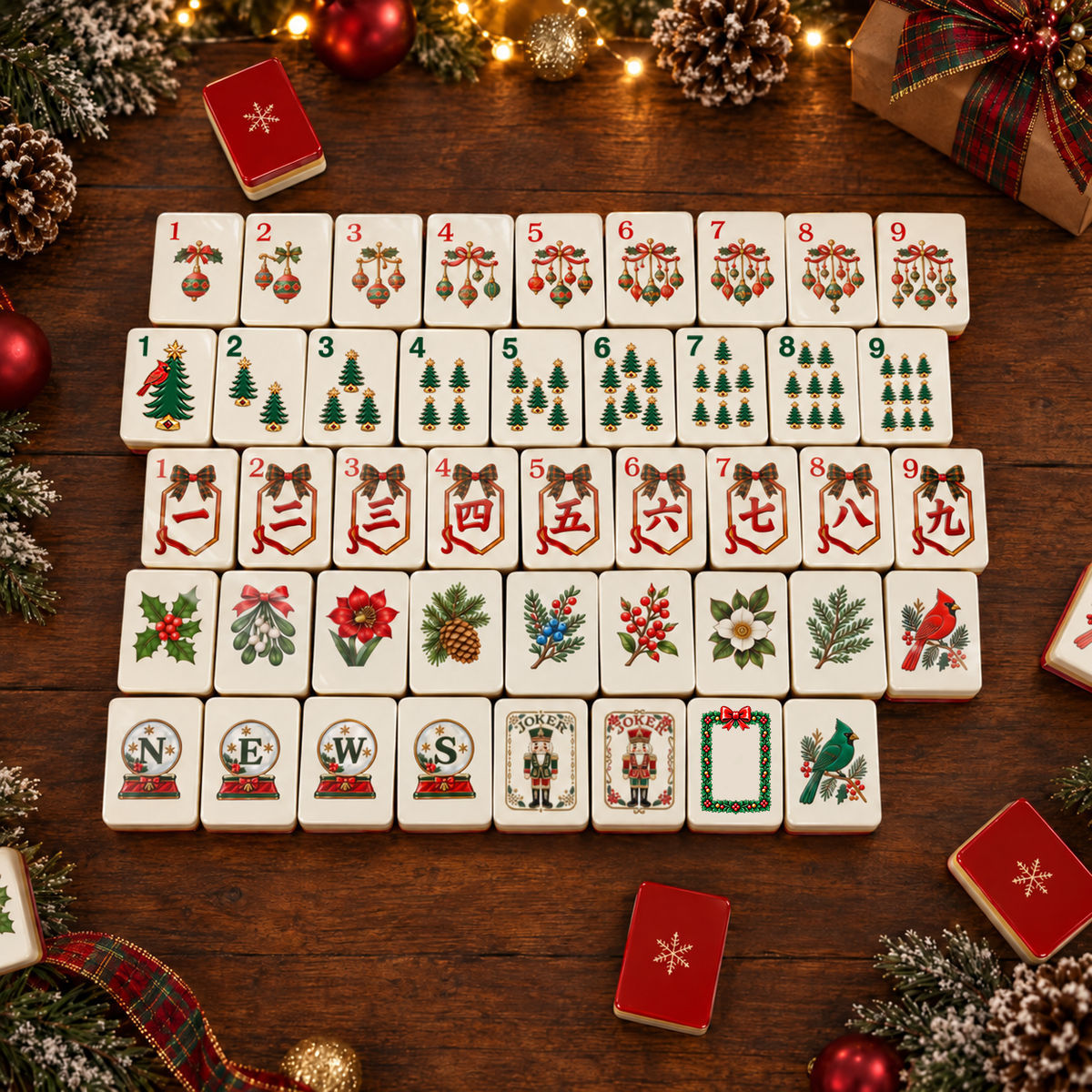
Chi is a claiming mechanic found in Chinese, Hong Kong, and Riichi variants that allows a player to call a discarded tile to form a sequence of three consecutive numbers in the same suit—for example, 3 Bam–4 Bam–5 Bam. Only the player immediately to the right of the discarder may claim chi. Chi exposes the completed sequence on the table, and the hand then plays open. American mahjong never uses chi; instead, we use pungs (three identical tiles), kongs (four identical tiles), and joker-wild exposures. Players considering variants beyond American should review their target region's rules carefully, as chi sequences, hand mechanics, and scoring differ significantly. Our best-selling mahjong sets are designed for American play; if you're learning a variant, confirm your set's tile count and markings match your ruleset. --- 🀄 Shop best-selling mahjong sets →
Is chi the same in all mahjong variants?
No. Chi exists in Chinese Standard, Hong Kong, and Riichi (Japanese) mahjong, but each applies it differently. In Chinese Standard and Hong Kong mahjong, only the player to the discarder's right can claim chi; in Riichi, it's the same rule but tiles must match number order and suit strictly. American mahjong has no chi at all—we build closed hands and expose only three-tile and longer groups. If you're learning from YouTube or a local group, always ask whether they play American or a regional variant first.

What's the difference between chi and pung in mahjong?
Chi is a sequence (three consecutive numbers: 1-2-3, 5-6-7, etc.); pung is three identical tiles (three 5 Dots, three East Winds). In Asian variants that use chi, both are valid melds. American mahjong only uses pung and kong (four identical); sequences are never called or exposed—they exist only on the current year's National Mah Jongg League card as part of a complete closed hand. This is the single biggest difference between American and Asian mahjong.
Can you claim chi from any player's discard?
No. In most chi-using variants, only the player immediately to the discarder's right can claim chi. This rule prevents chaotic calling and keeps turn order predictable. Other players can claim pung or kong (in variants where those are exposed), but not chi. American mahjong has no such claiming rules at all—you discard, and the tile goes into the dead pile; only a waiting player can call a pung, kong, or quint.
How do you use chi to win in mahjong?
In Chinese and Hong Kong mahjong, a winning hand must contain at least one sequence (chi) along with melds and a pair. A hand might be: chi (3-4-5 Dots) + pung (three 7 Craks) + pung (three East Winds) + pair (two Red Dragons). In Riichi, the winning hand is always melds of three plus a pair, and chi is often the fastest way to complete it. American mahjong hands are always defined by the current year's card and must include the exact combination of melds shown—no chi needed, no flexibility.
How does chi affect the pace and strategy of the game?
Chi speeds play by letting players claim discards and build open hands on the fly. It also makes defense harder: you must discard tiles unlikely to be used as sequences. In American mahjong, the pace is slower and more deliberate—you hold tiles longer because exposing a pung means you have fewer tiles to wait with, and you're locked into the specific hand you drew from the card. Chi play is more reactive; American play is more calculated. When choosing a game to host weekly, remember that chi-based variants require faster decision-making and a familiarity with position-relative claiming.
Chi Across the Major Variants: Quick Comparison
Variant | Uses Chi? | Who Can Claim? | Hand Structure | Pace |
Chinese Standard | Yes | Right player only | Melds + chi + pair | Medium-fast |
Hong Kong | Yes | Right player only | Melds + chi + pair | Medium-fast |
Riichi (Japanese) | Yes | Right player only | Melds + chi + pair | Fast |
American | No | N/A | Card-defined melds only | Slower, calculated |
Taiwanese | No | N/A | Card-based, closed | Slower, calculated |
🎁 See our most-loved mahjong sets & accessories →
What tiles can you use for chi?
In chi-using variants, you can form a sequence from any tile 1–7 in a suit, since you need three consecutive numbers (1-2-3, 2-3-4, … 7-8-9). You cannot make 8-9-10 or 9-10-11 because mahjong tiles only go to 9. The suit must be consistent: Bam-Bam-Bam or Crak-Crak-Crak or Dot-Dot-Dot. You cannot mix suits. In American mahjong, we don't form sequences at all during play, so this question doesn't apply—your melds are always identical tiles (pung, kong, quint, sextet) as shown on the card.
What happens if two or more players want to claim chi?
In chi-using variants, this situation is prevented by the rule: only the player to the immediate right of the discarder can claim chi. If another player (left or opposite) wants to claim the same discard for a pung or kong, a priority system kicks in. Generally, pung (or kong) claims override chi, and calls are resolved in turn order, with highest-ranking melds taking precedence. If it's a tie, the call closest to the discarder wins. American mahjong avoids this entirely—only a waiting player can call a pung, kong, or quint, and priority is settled by the hand you're playing to on the card.

Do you need to expose chi during play?
Yes. Once you claim chi, the meld is laid face-up on the table, visible to all players. This is called an "exposed meld" or "open meld." You then discard one tile to keep your hand at 13 tiles and pass play to the next player. This openness means your melds are locked; you cannot recombine tiles. American mahjong allows you to expose pung, kong, quint, and sextet, but unlike chi-based play, you can still discard and continue waiting for a specific hand from the card. The trade-off is different: in American play, exposing a pung locks you into a narrower winning path, whereas in chi play, exposing is often part of the natural progression toward a winning hand.
How do jokers work with chi?
In most chi-using variants (Chinese Standard, Hong Kong), jokers cannot be used as substitutes in a sequence—chi must be built from the exact three consecutive tiles. Jokers are reserved for pungs and kongs. Riichi mahjong similarly restricts jokers. American mahjong allows jokers in any pung, kong, or longer group except a pair or a single tile—and since we don't have chi, this is a major advantage: our wildcards give us more flexibility, which is why American hands feel more achievable to beginners.
What to Check Before You Play Chi or Choose a Variant
Ask the group first: Is this American or Asian mahjong? Mixing rules will break the game.
Confirm tile count: Asian variants typically use 136 tiles (no flowers, no bonus rules); American uses 152 tiles + 8 jokers. Make sure your set matches.
Read position rules: If chi is allowed, verify who claims (right player only, or all?), and practice turn order.
Review hand win conditions: Do you need at least one chi? Can you win with all pungs? This shapes your entire strategy.
Assign a scorekeeper: Chi-heavy games often have variant scoring; write down the rules before play.
If you're hosting a regular American game and want to try a chi variant once, use a best-selling acrylic set with large, clear markings so everyone can see sequences and melds from across the table—especially if new players are learning the difference in real time.
✨ Find your Mahstead set — free US shipping →
Variant Rules Comparison: When Chi Blocks American Sequences
Situation | American Mahjong | Chi Variant (e.g., Hong Kong) |
You discard a 5 Dot | Tile goes to dead pile; another player can call pung only if holding two 5 Dots | Tile can be claimed as chi (e.g., 4-5-6 Dot) by right player, or pung by anyone else |
A player calls a pung | Pung is exposed; that player must discard from their 14 tiles; you keep waiting for your card hand | Pung is exposed; next player discards; chi or pung claims happen in order, fastest to slowest |
You're waiting | You hold 13 tiles in hand, closed, waiting for one specific tile to win | You hold 13 tiles, but may have already exposed one or more chi; the remainder of your hand is closed |
Winning hand structure | Specific combination from current year's card (e.g., 2 pungs + 1 kong + 1 quint + 1 pair) | Melds (any chi + any pungs/kongs) + pair; no card needed; patterns vary by region |
Why American Players Don't See Chi
American mahjong was formalized in the 1920s by Joanne Strutz and the National Mah Jongg League as a closed-hand, card-based game. The ruleset eliminated chi (sequences) and added jokers, flowers, and the annual card to create a faster, more accessible puzzle for players who wanted a American pastime, not a deep Asian betting game. Today, nearly all American mahjong is played this way—no chi, no sequences, all melds drawn from the card. If you're learning American mahjong in Dallas or any major US city, 99 out of 100 games follow American rules, and chi never comes up.
That said, if a friend introduces you to Chinese or Riichi mahjong, chi is the game's backbone. Understanding chi lets you follow play, calculate winning odds, and hold your own. The rule is simple—right player only, three consecutive tiles, same suit—but the strategy of when to claim, when to pass, and how to defend is where chi variants get deep.
Hosting Your First Chi-Variant Game: A Checklist
Pick your variant (Chinese Standard, Hong Kong, or Riichi) and download one free ruleset per player.
Set the stakes (if any) and confirm scoring with the group.
Use a set with large, clear tile markings—Mahstead's engraved sets are readable from all angles and hold up to regular play.
Designate a scorekeeper and practice one round offline.
Agree on edge cases before money is on the table: What if two players both want chi? Who has priority? Write it down.
Play four complete games (one per wind) before calling it a night.
Debrief: Did everyone follow the rules? Any confusion points to clarify next week?

FAQ
Is chi used in American mahjong?
No. American mahjong uses only pungs (three identical tiles), kongs (four identical), and joker-wild melds. Chi (sequences) are not part of American play. We hand-build closed hands using the current year's National Mah Jongg League card.
Can I use a regular American mahjong set to play chi variants?
Yes, but check the tile count first. American sets have 160 tiles (152 play tiles + spares); most Asian chi-variants use 136 tiles. The markings are usually the same, so play is possible—just remove 16 tiles or adjust hand size accordingly. Confirm with your group's ruleset.
Who decides if chi or pung takes priority when both are claimed?
In most chi variants, only the right player can claim chi, so if two or more players claim the same discard, the hierarchy is: pung → chi → kong. If both want pung, the call closest to the discarder wins. Always agree on this rule before play.
Does chi make mahjong easier or harder for beginners?
Chi makes mahjong faster but not necessarily easier. Beginners must learn sequences, position-based claiming, and when to discard safely. American mahjong is slower but puzzle-like—you match your hand to the card. Choose based on your group's patience and time budget.
How do I transition from American mahjong to learning chi?
Start by learning one chi variant fully (Hong Kong or Riichi). Play 10+ games to internalize claiming rules and turn order. Then compare hand-winning logic: chi-games are pattern-matching; American games are card-matching. The underlying tile theory is the same.
Can jokers be wild in chi sequences?
No. In most chi variants, jokers cannot substitute in a sequence—chi must be made from exact consecutive tiles. Jokers work only in pungs and kongs. This is different from American mahjong, where jokers are wildcards in any meld except a pair.


View More
View More
View More
