
What Is Better in American Mahjong: Tiles, Sets, or Strategy?
Last updated: Nov 23, 2026
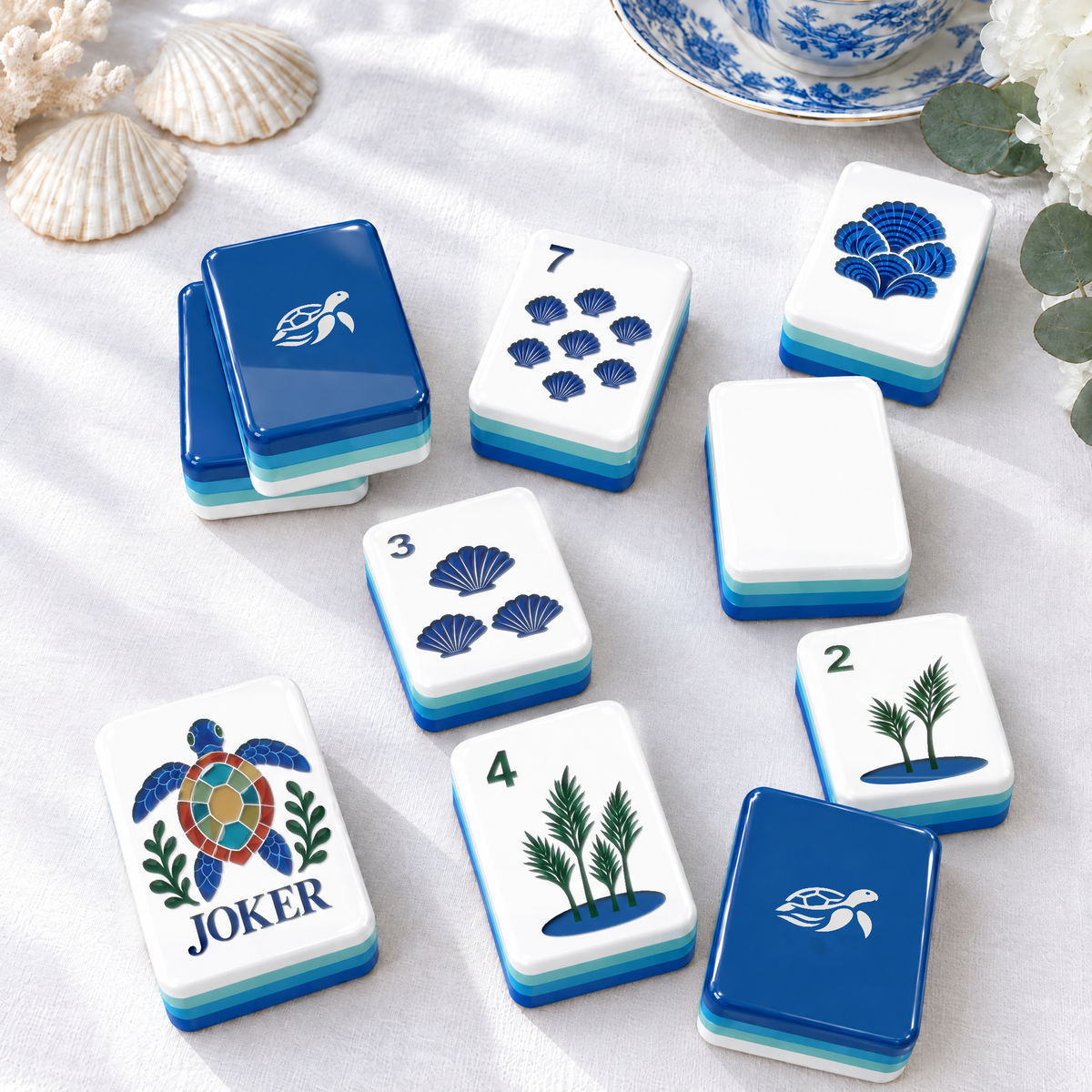
"Better" in American mahjong has three meanings: tile quality (acrylic vs. bamboo durability, ease of shuffling), hand strategy (which exposures win most often, how to read the National Mah Jongg League card), and equipment (mat size, rack stability, bag protection). For tiles, acrylic sets outlast bamboo and shuffle faster—critical if you play weekly. For strategy, better hands expose fewer tiles (concealed hands beat exposed ones, and limit hands beat non-limit), so studying the annual card teaches you which patterns win. For equipment, a mat with pushable racks and a properly sized case keeps tiles organized and safe. The best player combines all three: quality tiles, smart hand selection per the current year's card, and equipment that lets you focus on gameplay instead of losing pieces. We see this at every table—players with durable acrylic sets and a best-selling mahjong set from a trusted maker play longer, make better calls, and keep their tiles.
What does "better" mean when choosing a mahjong set?
"Better" depends on how often you play and what wears you down first. Acrylic tiles hold up to weekly play for years; bamboo and bone crack or split. Acrylic also shuffles faster and doesn't absorb humidity, which warps bamboo. If you play casually once a month, durability matters less. If you host weekly games, acrylic becomes non-negotiable. Better also means readability—tiles must be large enough to see clearly, especially if players over 50 sit at your table. A 160-tile set with extra jokers eliminates the panic of "where's the spare?" Invest in a best-selling mahjong set from Mahstead if durability and clear tile faces are your priority.

Which hands are better: exposed or concealed?
In American mahjong, concealed hands always beat exposed ones. A concealed hand means you never called a single tile; every tile came from your own draw or the wall. An exposed hand shows at least one pung, kong, quint, or sextet you called. The National Mah Jongg League card arranges hands by limit (non-limit at the top, limit at the bottom). Within each limit, concealed hands appear first. Why? Concealed hands are harder to make—you have no help from your opponents. A smart player studies the card section-by-section and focuses on concealed hands in easy combinations first. Exposed hands are your backup plan if the wall runs dry. Better strategy means chasing concealed wins when you can, and switching to exposed hands only when necessary. This discipline alone improves your win rate.
How do you know if a tile set is worth the investment?
Look at four markers: tile material (acrylic resists cracking; bamboo cracks under pressure), joker count (160-tile sets include extras so you never lose play), face clarity (characters and numbers must stay crisp after 100 shuffles), and case quality (a flimsy bag loses tiles; a reinforced case keeps sets safe for travel). Better tile sets also include pushable racks—these let you sort your hand without holding tiles, reducing wrist strain over a four-hour game. Check the tile weight in your hand; heavier is better because light tiles slide during shuffles. Read user feedback on clarity and durability, not price. A set that costs less but needs replacement after a year costs more than a best-selling mahjong set you'll use for a decade. Mahstead sets include engraving options (titles, names, jokes) so your set becomes personal—better motivation to maintain it. Compare sets by material and joker count, not marketing claims.
How does the mahjong mat improve your game?
A good mat does three things: stabilizes tiles so they don't skate during a shuffle, provides a clear playing surface so you see discard sequences, and protects your table. Better mats are made from felt or microfiber, not rubber (rubber sticks to tiles and slows play). A mat should be at least 30 inches square so all four players have arm room. If you use mahjong racks with pushers, the mat's texture must grip the rack base—test this before buying. A mat also hides wear on your table and reduces noise when tiles hit the surface (courteous to neighbors). Mats with printed hand guides or zone markers help newer players orient themselves. A mat sized to your table becomes better over time because muscle memory helps you play faster. The best mat is one you keep on the table all week, not one you roll up and lose.

What makes one strategy better than another at the table?
Better strategy means reading the current year's card efficiently, counting live tiles, and adjusting your hand in real time. Start by identifying the easiest exposures you can make—mark them mentally. Then scan for a concealed hand that only needs two or three more tiles. As discard pools grow, count how many of your key tiles have already been thrown away; if three of your four 5 Dots are gone, that hand dies. Better players also track what other players are drawing—if East player grabs three consecutive Dot tiles, assume they're building Dots and don't throw Dots into their discards. Study the card's pattern sections (numbered like 1, 2, 3 on the printed card) so you recognize quints, sextets, and odd-even pairs at a glance. This skill takes practice but separates winners from casual players. A guide on how to read the mahjong card helps you build this speed faster.
Factor | Beginner | Intermediate | Advanced |
Card speed | Finds hands in 30–60 sec | Scans in 10–15 sec | Pre-scans during Charleston |
Tile counting | Tracks own hand only | Counts own + discard pool | Tracks all players + predicts draws |
Hand flexibility | Commits to first pattern | Pivots to two backup hands | Maintains 3–4 concurrent wins |
Exposure strategy | Calls when needed | Delays calls unless needed | Calls only to block opponents |
Mistake recovery | Restarts hand analysis | Adjusts mid-hand | Never needed—plays prevention |
🀄 Shop best-selling mahjong sets →
What to check before you buy a better mahjong set
Ask these four questions before committing:
Do you play weekly or monthly? Weekly players need acrylic; monthly players can use bamboo if they budget for replacement.
Who sits at your table? Older eyes need larger tiles and higher contrast; younger players tolerate smaller faces.
Will you travel with the set? If yes, buy a reinforced travel bag or case and sets with acrylic (lighter, less breakage).
Do you want personalization? Engraved sets (with titles, names, or inside jokes) keep players engaged and make the set easier to identify in a club.
Also check: Does the set include a tile count chart in the box? Do jokers look visually distinct? Are racks included, and are they adjustable? Mahstead includes all these. A better set isn't just prettier—it lets you play better because you're not distracted by missing tiles, cracked faces, or wobbly racks.
✨ Find your Mahstead set — free US shipping →
American mahjong vs. other variants: is one better?
No. American mahjong uses 152 tiles + 8 jokers from a single year's National Mah Jongg League card, so hands are limited and strategy is pattern-matching. Chinese mahjong (144 tiles, no jokers, no annual card) relies on pure tile-counting and luck. Hong Kong mahjong adds speed and complex scoring. Riichi mahjong layers psychology. All are equally deep; they're different games. American mahjong is better for groups because the card gives everyone the same hands—newer players can compete with veterans if they read the card well. Chinese mahjong is better for speed—a round is faster because there's no card to study. If you're hosting Americans who want a structured, learnable game with clear hand lists, American mahjong is better. The equipment is the same (tiles, racks, mats), so your best-selling mahjong set works for any variant. The rules differ; the tools don't.
🎁 See our most-loved mahjong sets & accessories →

FAQ
What's the difference between a 160-tile and 152-tile set, and which is better?
A 160-tile set includes 152 playing tiles plus 8 spares (extra jokers). A 152-tile set has exactly what you need—no spares. A 160-tile set is better if you want backup jokers or plan to lend your set out; spares prevent panic if a joker goes missing. For your first set, 160-tile is safer.
Can I improve my game by buying better tiles?
Partially. Better acrylic tiles shuffle faster and last longer, so you play more consistently. But strategy matters far more. A player with a cheap set who studies the annual card beats a player with an expensive set who guesses hands. Buy quality tiles, then study the card.
Is American mahjong harder than Chinese mahjong?
Different, not harder. American mahjong requires card literacy; Chinese mahjong requires pure tile-memory. If you're new to mahjong, American is easier because the card does half the thinking. Experienced players find Chinese harder only if they've never played it.
What size mat should I buy if I don't know my table dimensions?
A standard 30-inch square mat fits any four-player table under 48 inches. If your table is larger (60+ inches), measure the playing area (usually 36–40 inches square) and buy a mat that covers it fully. A mat that's too small leaves tiles sliding on bare table.
Do I need special racks, or can I hold my tiles in my hand?
You can hold them, but racks with pushers reduce wrist fatigue over a long game and let you sort tiles without exposing your hand. If you play weekly, racks become nearly essential. Beginners can skip them until after your first ten games.
How do I know if my set is complete?
A standard American set has 152 playing tiles (108 from three suits, 16 winds, 12 dragons, 8 flowers, 8 jokers) plus spares. Count: three suits (1–9 each, four copies) = 108. Winds = 16. Dragons = 12. Flowers = 8. Jokers = 8. Total: 152 + spares. Your set is complete if you can draw a full hand of 14 tiles without repeating a tile more than its allotted copies.


View More
View More
View More
