
What Does the White Dragon Tile Look Like in Mahjong?
Last updated: Nov 23, 2026
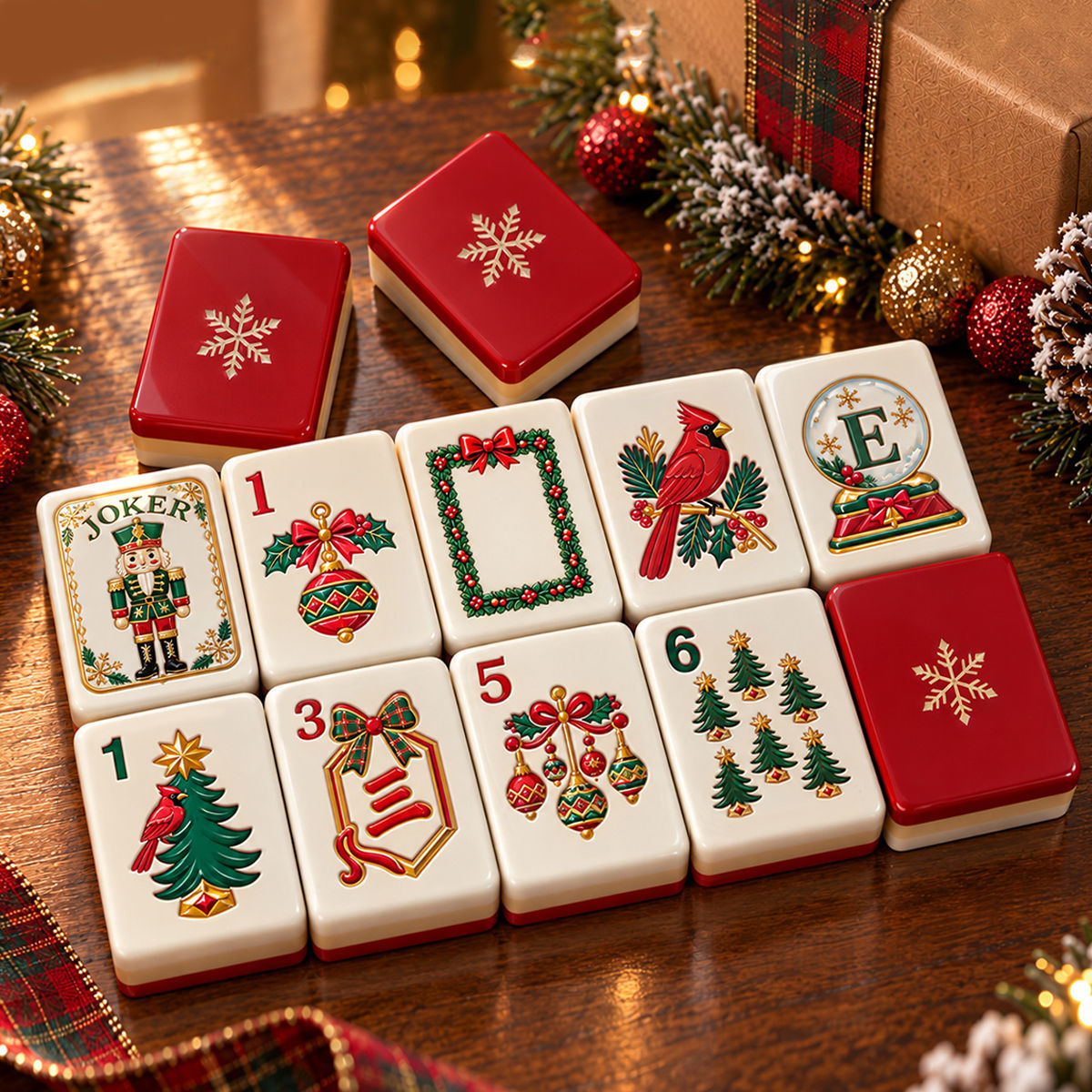
In American mahjong, the white dragon tile appears as a blank or near-blank square, typically with just a thin frame or dot—rarely ornate like the red dragon (usually marked with a red character) or green dragon (marked with a green character). The white dragon is also called "Soap" in casual play. There are four white dragon tiles in every standard American mahjong set, mixed with 148 other tiles including winds, flowers, jokers, and the three number suits (Bams, Craks, Dots). The white dragon often confuses beginners because its blank face can resemble a spare tile, but it is a live, playable tile. In hands on the annual National Mah Jongg League card, the white dragon frequently appears as a zero value in certain sequences. Many players prefer acrylic tiles with subtle frosted or beveled edges on the white dragon to distinguish it clearly at a glance.
The white dragon tile in American mahjong is the only dragon marked by absence—either completely blank or bearing only a thin frame or dot—rarely ornate like the red dragon (usually marked with a red character) or green dragon (marked with a green character). The white dragon is also called "Soap" in casual play. There are four white dragon tiles in every standard American mahjong set, mixed with 148 other tiles including winds, flowers, jokers, and the three number suits (Bams, Craks, Dots). The white dragon often confuses beginners because its blank face can resemble a spare tile, but it is a live, playable tile. In hands on the annual National Mah Jongg League card, the white dragon frequently appears as a zero value in certain sequences. Many players prefer acrylic tiles with subtle frosted or beveled edges on the white dragon to distinguish it clearly at a glance.
Why is the white dragon called "Soap"?
The nickname "Soap" dates back to early American mahjong slang. Because the white dragon tile is blank or minimal in marking—almost invisible—it was humorously called "Soap" (slippery, hard to see, easily slipped under a cuff). The term stuck in casual games and remains common in many clubs. You'll hear it most among veteran players and in games played outside the competitive National Mah Jongg League format. Knowing the nickname helps you understand hand notations and table banter. Modern sets usually print a small border or label to avoid confusion, though the tile remains intentionally understated.

How does the white dragon differ from red and green dragons?
Red dragons typically feature a bold red seal or character (often a Chinese glyph meaning "red" or a stylized mark). Green dragons display a green character or symbol, sometimes resembling a square or plant-like design. The white dragon stands apart by being unmarked, blank, or bordered only. All three are equally playable and rank as separate tiles in melds; you cannot mix them. In hand patterns on the National Mah Jongg League card, each dragon tile appears independently—a white, red, and green are three different tiles, not interchangeable. This distinction matters when forming exposed melds (pungs, kongs, or quints). Acrylic sets tend to make the difference clearest, as the three dragons appear in distinctly different colors or finishes.
Where does the white dragon appear on the mahjong card?
The white dragon appears throughout the annual National Mah Jongg League card in numerous hand patterns. It often represents a zero or special value in certain sequences, mixing with numbered tiles (1–9 Bams, Craks, or Dots) and wind tiles. Some hands call for a pung of white dragons (three identical white dragons), which you expose on the table. Others embed a single white dragon within a larger pattern. Understanding how to read the mahjong card is essential to spotting these placements and claiming your hand. Beginners often overlook white dragon hands because the tile's blank appearance makes them seem worthless—a costly mistake. Experienced players scan the card methodically to catch every dragon combination.
What common mistakes do new players make with white dragons?
Mistake 1: Confusing the white dragon with a blank spare tile. Every set sold as 160 tiles includes spare tiles beyond the 152 required for play. A white dragon is always a playing tile; a blank is a spare. Label or color-code your spare tiles to avoid picking one up accidentally.
Mistake 2: Discarding a white dragon too early. Because it looks empty, beginners assume it's less valuable and throw it away. In truth, hands requiring white dragons are common on the card. Hold white dragons until you've checked the card thoroughly.
Mistake 3: Exposing a white dragon in the wrong meld. A pung of white dragons must contain three identical white dragons—nothing else. You cannot mix a white dragon with a red or green in a single meld.
Mistake 4: Failing to distinguish white dragons from white tiles in other suits. The 1 Bam is typically white and shows a bird. The white dragon is distinct. Use your card and reference tiles side-by-side until recognition becomes automatic.
Mistake 5: Not organizing the white dragon zone on your rack. On a rack with pushers, keep white dragons clearly separated and grouped. Disorganization invites missed hands and delays. Many racks with pushers feature slots or dividers that help players corral tiles by type.

How do you spot a white dragon tile in a real game?
In play, white dragons sit on your rack or wall, usually standing upright like all other tiles. Look for the blank or bordered face. Under table lighting, acrylic white dragons often have a subtle frosted or matte finish that distinguishes them from painted or ceramic tiles. If your set uses hand-painted tiles, a thin border or embossed line marks the white dragon. The best way to train your eye is to sort a fresh set by type: pull out all four white dragons, all four reds, all four greens, and compare them directly. Within three or four games, recognition becomes instant. If you play on a mahjong mat with dedicated tile zones, organize your discard wall and hand wall so white dragons stand in a consistent spot. Consistency beats speed.
🀄 Shop best-selling mahjong sets →
Why do acrylic white dragons stand out better?
Acrylic tiles are cast or injection-molded, allowing designers to vary the surface finish without printing. A white dragon can be polished smooth, frosted matte, or beveled to catch light differently than the colored suits. Ceramic or wooden tiles often rely on painting or carving, which can fade or chip. Acrylic durability and visual clarity are especially important in casual home games where sets get shuffled weekly. The translucent or semi-opaque quality of acrylic also lets light pass through, making a white dragon's blank face visually distinct from a painted white tile. Many players who switched to acrylic sets report fewer white dragon mix-ups. If you host weekly games, our best-selling acrylic sets include clear, high-contrast dragon tiles designed for fast recognition.
What to check before you buy a mahjong set
Feature | Why it matters | What to look for |
White dragon visibility | Prevents missed hands and slow table time | Frosted finish, thin border, or embossed mark clearly visible under your table lighting |
Tile material | Durability, clarity, and weight in hand | Acrylic (durable, translucent) vs. ceramic (heavier, more brittle) |
Dragon color contrast | Distinguishes white, red, green at a glance | Red filled with solid character; green with distinct symbol; white blank or bordered |
Tile size and spacing | Fits standard racks and shuffles smoothly | Modern American sets are 1.25–1.5 inches wide; check your racks |
Set completeness | Ensures you have all playable tiles and spares | 152 playing tiles + spares; count before first game |
Storage case | Protects tiles and keeps dragons organized | Hard case or durable bag with dividers; travel-grade if needed |
🎁 See our most-loved mahjong sets & accessories →
Beginner checklist: white dragon readiness
[ ] Pull all four white dragons from your set and compare to red and green dragons.
[ ] Look up a hand on the current year's National Mah Jongg League card that uses white dragons.
[ ] Place white dragons in your hand rack and observe them under your game lighting.
[ ] Practice exposing a pung of three white dragons on the table.
[ ] Organize your discard wall so white dragons sit in a designated corner.
[ ] Play one full game consciously looking for white dragon hands on the card.
[ ] Label any spare tiles (blanks) in your set with tape so they never enter play.
The white dragon is no mystical tile—it's a straightforward, high-value piece that rewards close attention. New players who master white dragon recognition level up their speed and accuracy within weeks. If your set's white dragon lacks clear visibility, upgrading to an acrylic set with enhanced contrast is a practical investment for weekly hosts.
✨ Find your Mahstead set — free US shipping →

FAQ
Is the white dragon really blank, or does it have a hidden mark?
In American mahjong, the white dragon is intentionally blank or marked only with a thin border. There is no hidden character or symbol. The blankness is the design—it represents zero in many hand patterns. Some vintage or Chinese sets do print a small mark; if you inherit an older set, check the National Mah Jongg League card or ask your group's reference player to clarify.
Can I use a white dragon as a joker or wild tile?
No. In American mahjong, jokers are separate tiles (usually clearly marked as such) and serve as wild replacements only in specific hands on the card. A white dragon is always a white dragon tile. Jokers and dragons follow different rules entirely.
If I draw a white dragon early in the game, should I keep it or discard it?
Hold it until you check the card. Many hands use white dragons, so discarding one early is often a mistake. Once you've scanned the card and confirmed no remaining hands require a white dragon, discarding becomes reasonable. Always scan before throwing away any tile, especially dragons.
What's the difference between the 1 Bam and the white dragon on my rack?
The 1 Bam is white and typically features a bird image or distinct marking; it belongs to the Bam suit (36 tiles total). The white dragon is a separate honor tile (four total) and has no bird or suit marking. They look different once you've seen both side-by-side. Keep a reference tile from each suit on your rack until recognition is automatic.
Why do some players call it "Soap" and others call it the white dragon?
"Soap" is casual table slang from early American mahjong, referring to the tile's slippery, blank appearance. "White dragon" is the official name. Both are correct. Competitive leagues use "white dragon"; casual groups may favor "Soap." Learn both terms so you understand banter at any table.
Do expensive mahjong sets have better-looking white dragons than budget sets?
Higher-end acrylic sets often feature more refined finishes (frosted, beveled, or semi-translucent) that make the white dragon visually distinct. Budget sets may use flat paint or simple borders. Material and craftsmanship matter. For weekly home games, a mid-range acrylic set usually provides enough clarity. Test before buying if possible.


View More
View More
View More
