
What Does the Flower Tile Look Like in Mahjong?
Last updated: Nov 23, 2026
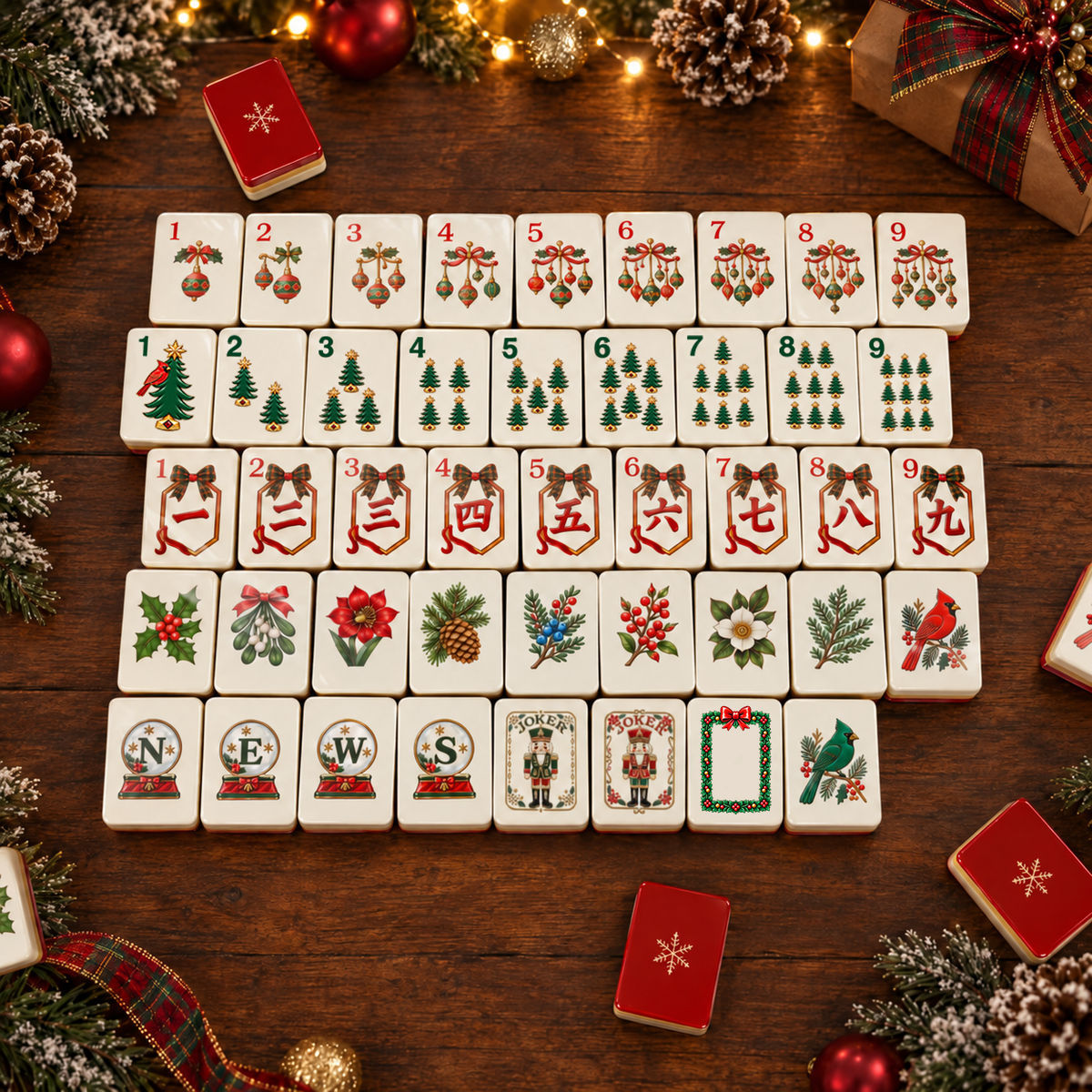
The flower tile in American mahjong is a decorative bonus tile depicting one of eight traditional designs—plum, orchid, bamboo, and chrysanthemum—each numbered 1 through 4 respectively. In a standard 152-tile set, there are eight flowers total: one of each design for each player. Flower tiles are not suited like Bams, Craks, or Dots; they stand apart as honor tiles. Each flower usually shows the plant alongside a number or symbol. When you draw a flower during play or the opening deal, you immediately expose it, draw a replacement from the wall, and continue your turn—flowers never stay in your hand. Unlike variants from other regions, American mahjong treats all eight flowers as interchangeable bonus tiles. Our sets use clear, bright colors and crisp numbering so flowers are instantly recognizable across the table.
How many flower tiles are in a standard American mahjong set?
A standard American mahjong set contains exactly eight flower tiles—one of each of the four flower designs (plum, orchid, bamboo, chrysanthemum), each numbered 1 through 4. These eight flowers are part of the 152 tiles that make up a complete playing set. They are not duplicated the way Bams, Craks, or Dots are; you will never have more than one of each specific flower in play at any time.

What does each flower tile look like visually?
Each flower tile typically displays a full-color illustration of its plant paired with a numeral. Plum flowers (1) often show pink or red blossoms; orchid (2) features purple or red petals; bamboo (3) appears as green stalks or shoots; chrysanthemum (4) shows white or yellow blooms. The plant artwork fills most of the tile face, with the number positioned in a corner or integrated into the design. Different tile manufacturers vary slightly in artistic style, color saturation, and tile material—resin tiles tend to have deeper, more translucent colors than ceramic. The back of every tile, including flowers, matches the rest of your set.
🀄 Shop best-selling mahjong sets →
How do flower tiles work during a game?
When you draw or are dealt a flower tile, you do not keep it in your hand. Instead, you immediately expose it face-up on the table in front of your rack, then draw a replacement tile from the end of the wall (the "dead wall" or loose tiles). This happens automatically and does not count as your regular draw; your turn proceeds normally afterward. If you draw a flower during the Charleston (the tile-passing ritual before play begins), you set it aside and draw a replacement, then pass it in the round normally. Flowers are visible to all players at all times and are never hidden or part of a closed hand.
Do flowers appear in all American mahjong hands?
Not every hand on the current year's National Mah Jongg League card requires flowers. Some hands use no flowers at all; others require one, two, or more. The card itself—issued each spring—specifies exactly which tiles (including flowers) make up each legal hand. You cannot meld a hand without checking the card first. Because flowers are drawn and exposed automatically, you cannot plan a hand strategy around getting a specific flower the way you would plan for a particular Crak or Dot.

How do flower tiles differ from other mahjong variants?
In Chinese, Hong Kong, Riichi, and Taiwanese mahjong, flowers and seasons operate very differently. Chinese and Hong Kong sets may include eight or twelve flower and season tiles with their own melding rules; flowers do not auto-draw as replacements but are kept in hand like regular tiles. Riichi mahjong uses no flowers at all. American mahjong treats flowers as simple bonus tiles that trigger automatic replacement, making the game faster and less strategic around flower acquisition. Learn more about what's in an American mahjong set to see how flowers fit into the full tile inventory.
Quick Reference: Flower Tile Recognition
Flower | Design | Typical Color | Number |
Plum | Blossoms, branch | Pink / Red | 1 |
Orchid | Petals, foliage | Purple / Magenta | 2 |
Bamboo | Stalks, shoots | Green | 3 |
Chrysanthemum | Blooms, layered petals | White / Yellow | 4 |
Each flower appears exactly once in a 152-tile set. Acrylic tiles tend to have uniform, bright color printing; bone or resin tiles may show hand-painted variation. When shopping for a set, check product images or ask the seller how clearly the flower designs stand out in overhead lighting—you'll be identifying them quickly across a table during play.
What to check before you buy: flower tile clarity
When evaluating a mahjong set, ensure flowers are visually distinct from winds and dragons. The best sets use contrasting background colors or shading to separate flowers from honor tiles. If flowers share the same tile size and weight as the rest of your set, they should be easy to spot even when stacked in your rack. Examine close-up photos before purchase. Our engraved American mahjong sets and Christmas mahjong sets are designed with crisp, readable flower imagery.
If you host weekly games, a mahjong mat with a dedicated flower display area or a rack with pushers that keeps exposed tiles neatly organized makes flower handling smoother and faster for all players. Clear sight lines mean less confusion and faster turns.
🎁 See our most-loved mahjong sets & accessories →
Common mistakes players make with flowers
Drawing and not exposing. Beginners sometimes pocket a flower without showing it. Expose it immediately; it's part of the rule.
Forgetting to draw a replacement. Once you expose a flower, draw a new tile at once. Skipping this step delays everyone's turn.
Confusing flowers with dragons or winds. Flowers have plant imagery and numbers 1–4. Dragons show Chinese characters (Red, Green, White). Winds show compass directions. They're visually distinct if your set has good contrast.
Trying to meld flowers. You cannot pair, pung, or kong flower tiles. They're bonus tiles only, automatically replaced.
Why clear, readable flower tiles matter in your weekly game
When you play twice a week or host regular games, you see thousands of tiles move across the table each month. Dull or poorly printed flowers slow the game because players hesitate or misread them. Acrylic tiles with UV-printed or high-contrast color designs stay legible for years and handle the wear of regular shuffling and stacking. If you're investing in a set you'll use 50+ times a year, flower clarity is worth the attention. Find your Mahstead set with clear, bright flower designs and enjoy faster, clearer games.
✨ Find your Mahstead set — free US shipping →

FAQ
Do all mahjong sets have the same flower tile artwork?
No. Designs vary by manufacturer. Some show realistic botanical art; others use stylized or modern illustrations. Check product images to confirm the flower style matches your preference and is clearly readable in your lighting.
Can you refuse a flower tile when you draw it?
No. Flowers are not optional. If you draw a flower, you must expose it and draw a replacement immediately. This is automatic and happens before your regular turn begins.
Are flower tiles worth points in American mahjong?
Flowers do not directly score points. However, certain hands on the current-year National Mah Jongg League card require specific flowers to complete. Check the card to see which hands use which flowers.
What happens if someone draws a flower during the Charleston?
Set the flower aside, draw a replacement from the wall, and continue passing tiles normally. The flower is then passed in the round as a regular tile, not as a bonus.
Can you use a joker to replace a flower tile?
No. Jokers never substitute for flowers. When you draw a flower, you draw a replacement from the wall. Jokers are used only to replace number and honor tiles within melds.
How do flower tiles in American mahjong compare to Chinese mahjong flowers?
American sets have exactly eight flowers (one of each, numbered 1–4). Chinese sets may have eight or twelve flowers and seasons combined; flowers stay in your hand and meld like regular tiles, not auto-replace. The rules are fundamentally different.


View More
View More
View More
