
What Does the Blank Tile Look Like in Mahjong?
Last updated: Nov 23, 2026
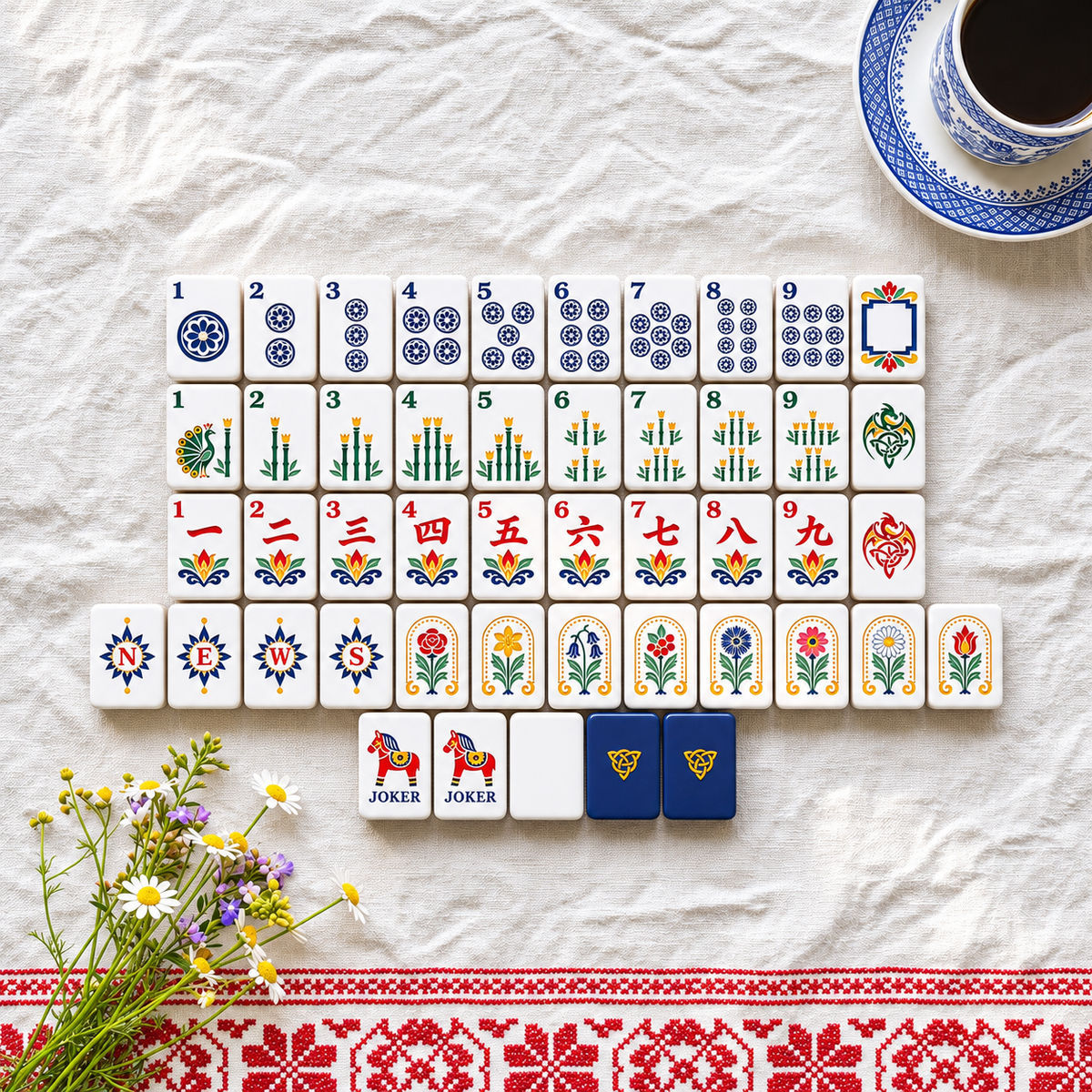
In American mahjong, blank tiles are plain acrylic rectangles with no printed symbols, suit, or number—just a uniform surface. They appear only in complete sets as spare tiles, never in the standard 152-tile playing deck. A 160-tile set typically includes blanks along with extra jokers; the exact count varies by set design, but all blanks stay in the box until needed. They serve one purpose: replacing a tile that's cracked, chipped, or illegible during play. Unlike jokers, which are active game pieces, blanks sit idle unless damage occurs. When selecting a set from our best-selling collection, check whether spare blanks and jokers are included—the product description tells you what extras come with that design.
In American mahjong, a blank tile is a spare tile with no markings—just flat, plain acrylic. It exists for one reason: to replace a damaged or unreadable tile mid-game or after years of use. It looks exactly like a standard mahjong tile in size and weight, but carries no symbol, number, or suit designation on its face.
Why does American mahjong include blank tiles at all?
American mahjong sets undergo real wear. After hundreds of shuffles, jokers fade, numbers blur, and cracks appear on edges. A blank tile lets you pull a damaged piece from the wall and keep playing without stopping the game or suspending a hand. Because mahjong must always use exactly 152 tiles for legal play, removing one without a replacement breaks the set. Blanks solve this: when a tile fails, you swap it out, maintain count, and continue. Most players discover blanks only when they need them—often years into ownership.

What do blank tiles look like compared to jokers and regular tiles?
Jokers carry a printed image (design varies by set), while regular tiles display a suit, number, or wind/dragon symbol. Blanks look like nothing: a solid, unmarked tile face. In acrylic sets, blanks are typically the same color as the tile body—often translucent or frosted. If you line up a blank, a joker, and a Bam tile on a mat, the blank stands out immediately because it's the only one with zero visual content. Size, thickness, and weight match perfectly so blanks slide and shuffle identically to playing tiles. Some sets use blanks only as true spares; others include blanks as part of the design for custom marking or gifting.
🎁 See our most-loved mahjong sets & accessories →
How many blank tiles come in a standard mahjong set?
American mahjong sets sold as 160-tile packages contain 152 playing tiles plus spare tiles—a combination of extra jokers and blanks. The exact number of blanks varies by set design; some sets may include two or three blanks, while others focus more jokers than blanks. The product description for each design specifies what spares are included. You don't need to know the exact count before buying—blanks are insurance, not active pieces. Having at least one blank per set is practical; having more than one is a bonus for players who host games weekly or maintain multiple sets.

When do you actually use a blank tile during a game?
You use a blank tile only if a playing tile becomes damaged, illegible, or physically compromised mid-game. This might happen if a joker's image fades completely, a number becomes unreadable due to wear, or a tile develops a visible crack. When it does, any player can call for a replacement. You remove the damaged tile from the wall or from a player's rack, set it aside, and place the blank in its original position. Play resumes immediately. No hand is declared dead, no scoring changes—the blank simply fills the role of the failed tile for that hand only. Most casual players go years without needing a blank; regular tournament or weekly hosts may use one every few years.
Scenario | Tile Type | Action | Result |
Normal play | Bam, Crak, Dot, wind, dragon, joker | Draw, discard, expose | Game continues |
Tile fades or cracks mid-game | Any damaged tile | Replace with blank | Game resumes at same point |
Blank used as spare | Blank | Stays in box until needed | No effect on current hand |
Blank not available when needed | Damaged tile with no spare | Debate rule, pause game | Disrupts play; prevents disputes |
🀄 Shop best-selling mahjong sets →
How do you choose a set with reliable spare tiles?
When shopping for a mahjong set, read the product description carefully. It will state what extras—blanks, jokers, or both—ship with that design. Acrylic sets typically include more spares than tile or bone sets because acrylic is more prone to cracking in transit or under normal play. If you host weekly games or own multiple sets, prioritize designs that include at least one blank. If you play casually once or twice a month, a set with fewer blanks is fine, though having one is still smart insurance.
Engraved sets often include custom blank tiles that match the design theme—these are both functional and decorative. For example, an engraved set with a personalized name or logo may have blanks that echo the engraving style. When you order from Mahstead, each set includes spares; the specific count and blank design appear on the product page. Acrylic sets, which we design and ship in-house, are precision-cut to minimize damage in transit, so blanks rarely needed early but are there when they do.
The choice ultimately depends on your play frequency and how many people gather at your table. Weekly hosts benefit from sets with visible spare inventory; casual players need less redundancy but shouldn't skip it entirely.
What to check before you buy:
Product description clarity: Does it say how many blanks and jokers come with the set?
Acrylic vs. other materials: Acrylic is durable but benefits from at least one blank; fragile materials may benefit from more.
Set size and gameplay frequency: Weekly groups → prioritize sets with spares; monthly players → one blank is sufficient.
Matching aesthetics: Do blanks and spares match the set's color, theme, or engraving style?
Shipping condition: Acrylic sets arrive intact; inspect on arrival and report any cracks immediately so replacements can be arranged.
✨ Find your Mahstead set — free US shipping →
Consider pairing your set with a protective mahjong mat and a durable travel bag if you transport it often. Mats cushion tiles during shuffles and reduce chipping; bags protect sets from dust and impacts. Together, these reduce the likelihood you'll ever need that blank tile—but having it anyway means you'll never be forced to stop a game due to damage.

FAQ
Is a blank tile the same as a joker?
No. Jokers carry a printed image and are active playing pieces used in hands and melds. Blanks are unmarked spare tiles that replace damaged tiles only—never used in active play unless another tile fails.
Do I need to replace a blank if I use it during a game?
After a hand ends, if you used a blank in place of a damaged tile, you return the blank to the spare set and repair or discard the damaged tile. The blank goes back in the box for next time.
Can you use a blank tile strategically, like a joker, to complete a hand?
No. Blanks are not game pieces and cannot be played. They exist only to replace a tile that has failed. Using a blank as an active tile violates American mahjong rules.
What happens if a set has no blank tiles and one breaks mid-game?
Play must stop. You cannot legally continue without exactly 152 playing tiles. This is why sets include spares. Always inspect for blanks before hosting a game, and replace any set missing them.
Are blanks included in every mahjong set sold?
Most complete acrylic sets include at least one blank, but always check the product description. Some budget or specialty sets may not include blanks, so confirm before purchasing if you want them.
Can I create my own blank tile replacement?
In a pinch, players have used plain white tiles or even cardboard, but this is a workaround, not a solution. A proper blank tile matches the weight, size, and finish of the set so shuffling and play feel consistent.


View More
View More
View More
