
What Does the 5 Crak Tile Look Like in Mahjong?
Last updated: Nov 23, 2026
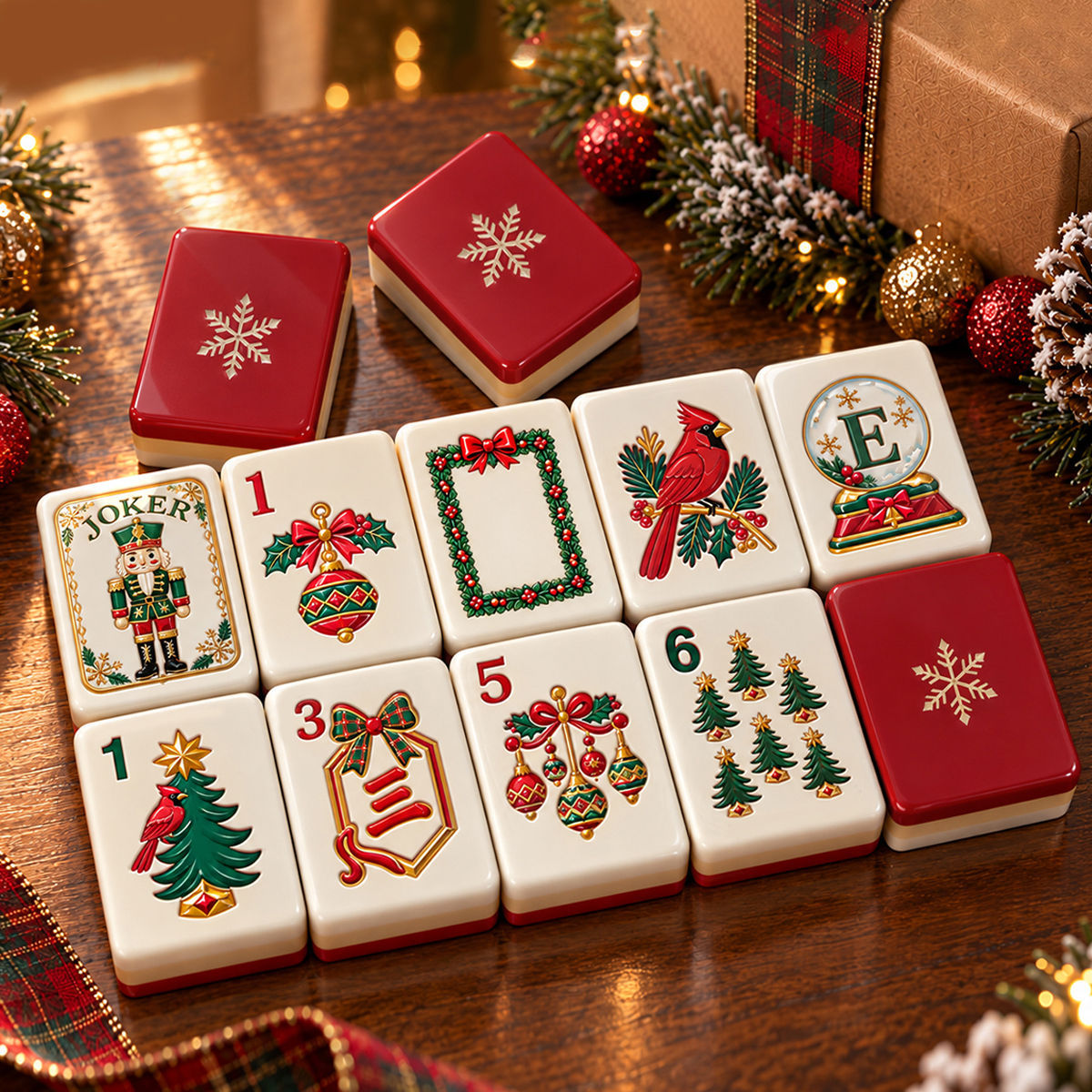
The 5 Crak displays five small Chinese ideographs—typically arranged with four in the corners and one in the center, though some designs cluster all five—on a single tile face. "Crak" refers to the Chinese character suit (also called coins or circles in other variants), and the 5 represents its numeric rank. In American mahjong, you receive exactly four identical 5 Crak tiles in your set of 152 playing tiles, plus 8 jokers. The tile is usually cream or light-colored with red or black printing. Acrylic sets from our best-selling collection feature clean, laser-engraved numerals that stay legible after thousands of shuffles, making the 5 Crak unmistakable even during fast play.
The 5 Crak tile sits at the heart of countless winning hands in American mahjong. Whether you're new to the game or returning after years away, knowing exactly what this tile looks like—and where it appears on the rack—speeds up your play and prevents the shuffle-and-squint moment that costs time and breaks flow.
How is the 5 Crak tile marked and colored?
The 5 Crak carries five Chinese characters, each called a "ideograph" or numeral marker. Traditional designs cluster them in a cross or quincunx (four corners, one center); modern acrylic sets often print them in a tidy grid or stacked pattern for maximum clarity under table lighting. The base tile is off-white, cream, or ivory; the numerals print in red, black, or gold ink depending on the set design. Look for a consistent, even finish—chipped or faded markings can make a 5 Crak blur into a 4 or 6 at a glance, a costly mistake mid-hand.

What's the difference between a 5 Crak and a 5 Bam or 5 Dot?
Each suit has its own unique visual identity. The 5 Bam (the bamboo suit) traditionally shows five thin stalks; the 5 Dot shows five circular pips or dots in a quincunx pattern; the 5 Crak displays five character glyphs. In acrylic sets, the three 5-tiles look distinctly different at arm's length—Craks remain character-based, Bams lean flatter or show stylized bamboo, Dots remain pure circles. Beginners often mix them during the Charleston pass or when building their opening hand; use the suit color border or a quick mental label ("characters," "sticks," "circles") to lock them in before play starts.
Why does the 5 Crak appear so often in winning hands?
The 5 Crak belongs to the middle-range number group (4, 5, 6) that forms the backbone of pungs, kongs, and sequences on the current year's National Mah Jongg League card. Because the card rotates yearly, the hands that call for 5 Craks change—but numerically middle values always anchor more patterns than edge numbers (1, 9). You'll spot the 5 Crak on roughly 15–20% of valid hand patterns depending on the season; players who instantly recognize all three 5-tiles build hands faster and spot their opponent's discards sooner, a tactical edge in close games.

How do acrylic tiles differ from bone-and-bamboo in appearance?
Acrylic tiles, which we design and engrave at Mahstead, use laser or precision etching to cut characters into the tile surface rather than painting them on. This means the 5 Crak in an acrylic set shows razor-sharp lines, no color bleeding, and durability through 10,000+ shuffles. Bone-and-bamboo tiles (traditional material still used in some tournament sets) hand-paint the characters, which can fade, blur, or chip with age. Acrylic also reflects light more evenly, so you spot a 5 Crak from across the table instantly—critical when three players discard at speed. If you host weekly games and move your tiles between tables or travel, acrylic sets in our best-selling collection hold their legibility for years.
When should you actually expose a 5 Crak during play?
You expose a 5 Crak only as part of a completed pung (three identical 5 Craks), kong (four identical 5 Craks), quint (five tiles—three 5 Craks plus two jokers), or sextet (six tiles—three 5 Craks plus three jokers). American mahjong does not permit sequences or chows; a 4-5-6 combination is illegal and cannot be exposed or called. If you're playing toward a hand that requires "5 Crak and wind" or "5 Crak pair plus pung," you keep it hidden in your rack until you're ready to win. Exposing too early telegraphs your strategy and gives opponents time to adjust discards—a common beginner mistake that costs games.
Tile Scenario | What You See | When to Expose | What Happens If You Expose Early |
5 Crak in your rack | One tile face-up in your hand | Never (until ready to win) | Opponents block discards; you lose the hand |
Pung of 5 Craks (3 identical) | Three 5 Craks laid flat | When the hand calls for it + you've drawn | Declares part of your winning hand |
Kong of 5 Craks (4 identical) | Four 5 Craks laid flat | Same; triggers a replacement draw | You stay in play longer; board opens up |
Pung + joker quint | 3 Craks + 2 jokers | When hand pattern allows | Bonus points; signals to opponents |
No 5 Craks available | Blank space in rack | All game long | You pursue a different hand from the card |
🀄 Shop best-selling mahjong sets →
What should you check before you buy a new set and how to verify the 5 Crak is clear?
Before purchasing, confirm the set includes exactly four 5 Crak tiles (one of 108 numbered tiles, plus 16 winds, 12 dragons, 8 flowers, and 8 jokers = 152 playing tiles, plus spare jokers). Hold the 5 Crak under table lighting and a desk lamp; the characters should remain sharp and readable, no fading or blur at the edges. Run your finger across the tile face—acrylic should feel smooth, not rough or chipped. If you're buying online, request a photo of the middle-number tiles (4, 5, 6 in each suit) to confirm clarity. Sets sold as 160-tile collections include 152 playing tiles plus spares for long-term use; this redundancy protects your investment if one tile ever chips.
For game nights, pair your set with a quality mat to protect tiles from spills and scratches, and a rack with pushers so players hide their hands and organize tiles by suit without fumbling—both keep the 5 Crak (and all 152 tiles) visible only to the player who needs it.
✨ Find your Mahstead set — free US shipping →
To deepen your knowledge of how tiles work together, read our full guide what's in an American mahjong set. Understanding the full roster of 152 tiles and how the 5 Crak fits into winning patterns from the yearly National Mah Jongg League card unlocks faster play and sharper strategy.
🎁 See our most-loved mahjong sets & accessories →

FAQ
Can I use a 5 Crak in a sequence like 4-5-6 in American mahjong?
No. American mahjong prohibits all sequences or chows. The 5 Crak can only appear in pungs (3), kongs (4), quints (5 with 2 jokers), sextets (6 with 3 jokers), or solo/pair patterns on the National Mah Jongg League card.
How many 5 Crak tiles are in a standard 152-tile American mahjong set?
Exactly four. American mahjong includes four identical copies of every numbered tile (1–9) in each of three suits, so four 5 Craks appear in every standard set.
What does the 5 Crak tile look like compared to a 5 Dot or 5 Bam?
The 5 Crak shows five Chinese character ideographs; the 5 Dot shows five circular pips or dots; the 5 Bam shows five bamboo stalks or stylized sticks. Each suit has a visually distinct design so players can spot the right tile in seconds.
If my 5 Crak tile gets chipped or faded, can I still use it?
You can keep playing, but faded or damaged tiles create confusion and slow the game. Sets sold as 160-tile collections include spare tiles for this reason. We recommend retiring a damaged 5 Crak and using a fresh replacement from your spares to keep play smooth and fair.
Why does the 5 Crak appear in so many winning hands on the mahjong card?
Middle-range numbers (4, 5, 6) form the backbone of most pung and kong patterns on the yearly card. The 5 Crak anchors approximately 15–20% of valid hand patterns, making it one of the most frequently called tiles in American mahjong.


View More
View More
View More
