
Vintage Style Mahjong Rack Bag: Storage & Travel Guide
Last updated: Nov 23, 2026
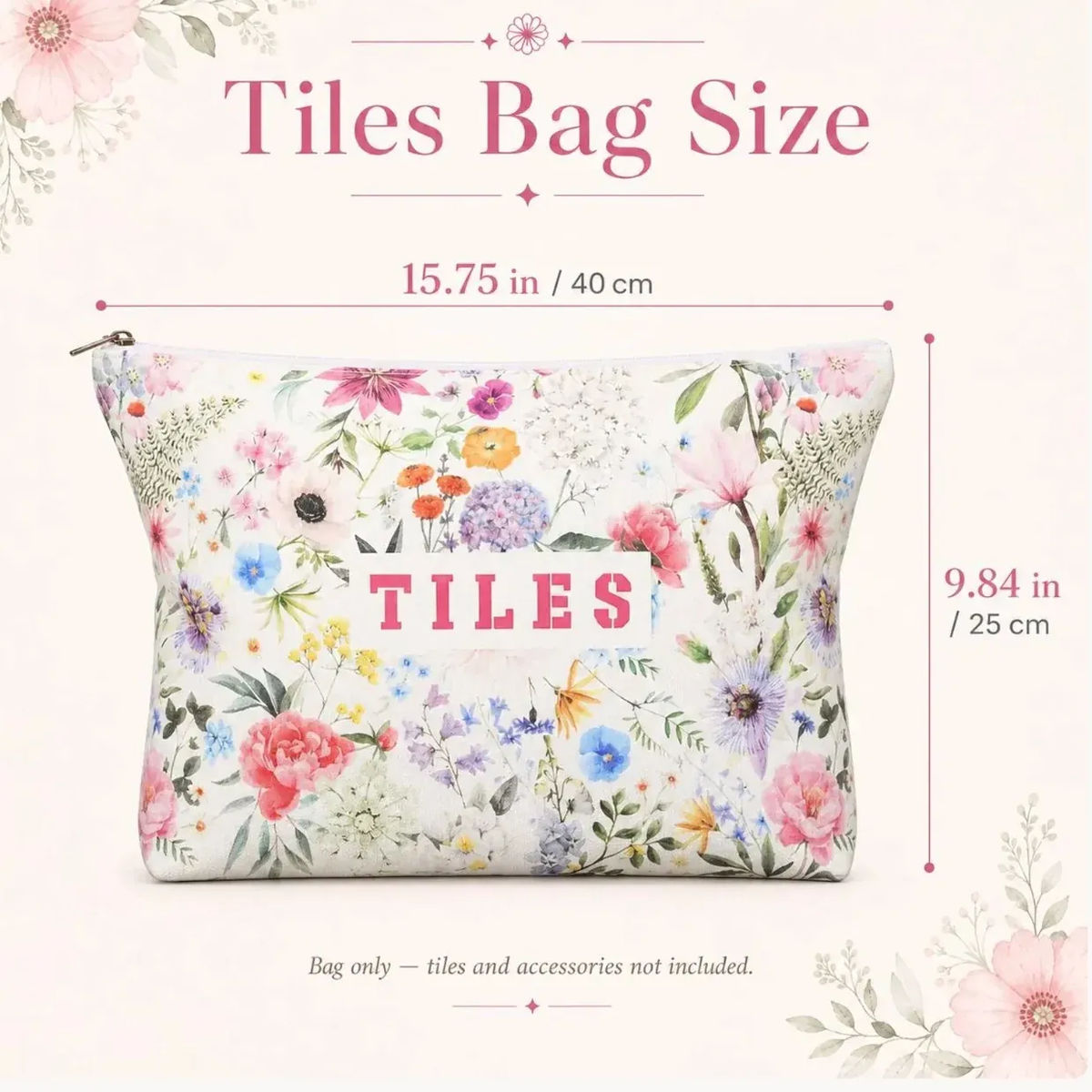
A vintage-style mahjong rack bag is a standalone or integrated carrier that holds your American mahjong racks (with pushers), the set itself, and often a mat, designed to evoke classic or retro aesthetics. These bags range from soft fabric totes with compartments to structured cases with wooden or brass accents. Most hold a full 160-tile set plus two to four racks without strain. Unlike generic game bags, mahjong-specific versions feature divided sections for tiles, racks kept upright, and mat slots. Pricing varies by material and construction; see the mahjong bags and cases collection for current options. Avoid bags without reinforced seams if you play weekly—that's when wear shows first.
🀄 Shop best-selling mahjong sets →
What makes a vintage-style rack bag different from a regular tote?
Vintage mahjong bags are engineered for the game's weight and fragility in ways ordinary totes aren't. They include padded dividers that separate tile racks so pushers don't slide loose, elastic or canvas loops to anchor mats, and reinforced bottoms to handle tile stacks without tilting. A regular tote compresses everything into one pocket, risking bent racks and spilled tiles. Vintage designs often add aesthetic touches—faux-leather trim, wooden handles, embroidered labels, brass clasps—that signal it's a dedicated game bag, not a generic carryall.

Should you choose a bag with built-in rack storage or separate racks from tiles?
Built-in racks compartments work well for hosting players who want one-bag simplicity: you grab it, empty it at the table, and never search for a missing rack. Separate tile and rack storage suits competitive players or anyone with multiple sets, because you can swap racks between bags or leave extras at home. Built-in designs cost slightly more but save setup time; separate storage lets you customize. Choose built-in if you host weekly games and want grab-and-go convenience. Choose separate if you own two or more best-selling mahjong sets or play at different venues.
What material lasts longest for a weekly-use mahjong bag?
Canvas with poly-cotton lining outlasts synthetic fabrics in our experience. Canvas breathes (preventing mildew in humid climates), resists punctures, and develops a lived-in patina that feels authentically vintage. Faux-leather looks polished but cracks after 18–24 months of weekly transport. Nylon is lightweight and water-resistant but can snag and absorb odors. Wool felt or burlap accents age beautifully but require spot-cleaning. If you host year-round in a humid region, prioritize canvas or linen with waterproof seams. For mild climates and occasional travel, poly-blend fabrics are sufficient. Check seam thickness before ordering—double-stitched or bar-tacked seams at stress points (handles, corners, zipper edges) are non-negotiable for longevity.
How do you know if a vintage-style bag will fit your set and racks?
Measure your racks: most American mahjong racks with pushers are 8–10 inches wide and 2–3 inches tall. A typical 160-tile set in acrylic is roughly 6 inches × 4 inches × 4 inches when fully assembled. If the bag lists internal dimensions (length × width × depth in inches), add 1–2 inches of padding space: a bag rated 14″ × 10″ × 6″ internally should safely hold two racks plus a set plus a mat. If only exterior size is listed, subtract 1.5 inches from each dimension for wall thickness. Always ask the maker whether mats fit flat on the bottom or must roll. Ask if the bag accommodates a fully assembled set or only loose tiles. Bags that claim "fits one complete set and four racks" often assume compact racks and no mat.
🎁 See our most-loved mahjong sets & accessories →

Vintage aesthetics: which era suits your game style?
Era / Style | Who it's for | Character | Care notes |
1960s-70s (bold print, brass hardware) | Collectors, hosted games | Retro maximalist; photo-friendly | Dust brass monthly; protect from direct sun |
1980s–90s (minimalist canvas, leather corners) | Serious players, frequent travelers | understated, durable look | Condition leather twice yearly; canvas darkens with use |
Shanghai chic (silk, embroidery, wood frame) | Heritage players, gift-givers | Elegant, traditional | Hand-wash embroidery; avoid machine laundering |
Mid-century modern (structured angles, natural materials) | Design-conscious hosts | Neutral, architectural | Wipe exterior; air-dry interiors after humid season |
Cottage core (linen, floral appliqué, wood knobs) | Casual players, social groups | Cozy, handmade feel | Hand-stitch loose appliqués; wash linen separately from bright fabrics |
Your game culture matters: if you host formal Thursday-night rotations, a Shanghai-inspired silk bag signals respect for tradition. If you're a monthly casual group in a living room, cottage-core linen works and feels personal. Competitive tournament players often choose mid-century modern—minimalist, professional, ages gracefully.
What should you check before ordering a vintage-style rack bag?
Ask these five questions:
Zipper or clasp? Zippers last longer but can jam on thread. Clasps look period-authentic but wear faster. For weekly play, prioritize the zipper; budget 10% more.
Is the interior divided or open? Open bags save cost but force you to organize manually. Divided compartments cost more but save table setup time.
Does it hold a mat? If yes, can the mat roll inside or must it roll outside? Outside placement risks creasing.
What's the warranty or return window? Reputable makers allow returns within 30 days if seams fail immediately. If the seller offers no returns, pass.
Are replacement parts available? If a handle tears or a zipper breaks, can you order a replacement rather than rebuy the whole bag? Ask before ordering.
Weight limit? A full set plus four racks plus a mat weighs 6–8 pounds. If the bag claims a 5-pound capacity, it's undersized. Bags designed for mahjong never lie about capacity; generic bags sometimes do.
Comparison: What fits your hosting needs?
Need | Best bag style | Why |
Host weekly, same venue | Built-in racks + mat slot | Everything in one grab; no pre-game setup |
Travel between venues (2–3 per month) | Compartmented canvas with shoulder strap | Balanced load; handles frequent transit |
Collect multiple sets | Separate tile and rack bags | Mix-and-match; store unused bags flat |
Aesthetic priority (gifts, photos) | Vintage print or embroidered | Looks intentional, conversational piece |
Durability priority (daily players) | Canvas, double-stitched seams, brass hardware | Longevity over style; simple repairs |
✨ Find your Mahstead set — free US shipping →](https://mahstead.com/en-us/collection/best-selling)
What to check before you buy
Measure your racks and set. Don't assume "fits a mahjong set"—bring a ruler. Your racks may be larger than standard.
Read the interior layout description. Open bags are cheaper but chaotic. Compartments cost more but save sanity at the table.
Test the zipper or clasp in person if possible. Hardware quality separates a five-year bag from a five-month bag.
Ask about seam sealing. Waterproof-taped seams or hot-sealed stitching matter if you store the bag in a basement or humid closet.
Confirm return policy before payment. If seams split within two weeks, you want a no-questions return.
Check if mats roll inside the bag. Outside-rolled mats crease and fray; inside-rolled mats stay protected.

FAQ
Can you use a vintage mahjong bag for travel on planes?
Yes, if it fits carry-on dimensions (22″ × 14″ × 9″ for most US carriers). Hard-sided vintage cases work best; soft bags can compress during overhead stowage, bending tiles. Always pack tiles flat, not standing upright. Remove the mat and carry it separately.
How often should you replace a vintage-style mahjong bag?
Weekly-play bags last 4–6 years if seams are double-stitched and material is canvas or poly-blend. Monthly casual players see 8–10 years. Replace when seams split, zipper fails, or water enters the main compartment. Leather corners and handles can be re-conditioned rather than replaced, extending life another 2–3 years.
Are vintage-style mahjong bags more expensive than modern ones?
Sometimes. Bags with authentic vintage reproduction details (wood handles, brass hardware, silk lining) cost more than utilitarian plastic-handled designs. However, durability justifies the cost: a $X vintage canvas bag outlasts a $Y synthetic bag by 4+ years, lowering cost-per-use.
Can you wash the interior of a vintage-style mahjong bag?
Spot-clean only. Mix warm water and mild dish soap, wipe stained areas with a soft cloth, then air-dry for 48 hours with the bag open and inverted. Never machine-wash a structured bag (it loses shape). For fabric interiors, wipe and dry immediately after a tile spill to prevent mold.
What's the difference between a vintage-style bag and a vintage *reproduction* bag?
Vintage-style is new-made, designed to look retro (prints, colors, hardware). Vintage reproduction is a historically accurate copy of a specific 1960s–80s design. Reproductions cost more and may have limited inventory. For mahjong, either works; choose reproduction if you collect for history, style if you prioritize function.
Do vintage-style mahjong bags protect tiles from dust and breakage?
Yes, if compartments are padded and the bag is fully closed. Acrylic tiles stay clean in a sealed bag; wooden or bone tiles benefit from slight air circulation to prevent moisture buildup. Open-top or loosely closed bags don't protect tiles; enclosed bags with zippers do. Check the travel bag collection for fully enclosed options.


View More
View More
View More
