
Vietnamese Mahjong Winning Hands: Rules, Patterns & Strategy
Last updated: Nov 23, 2026
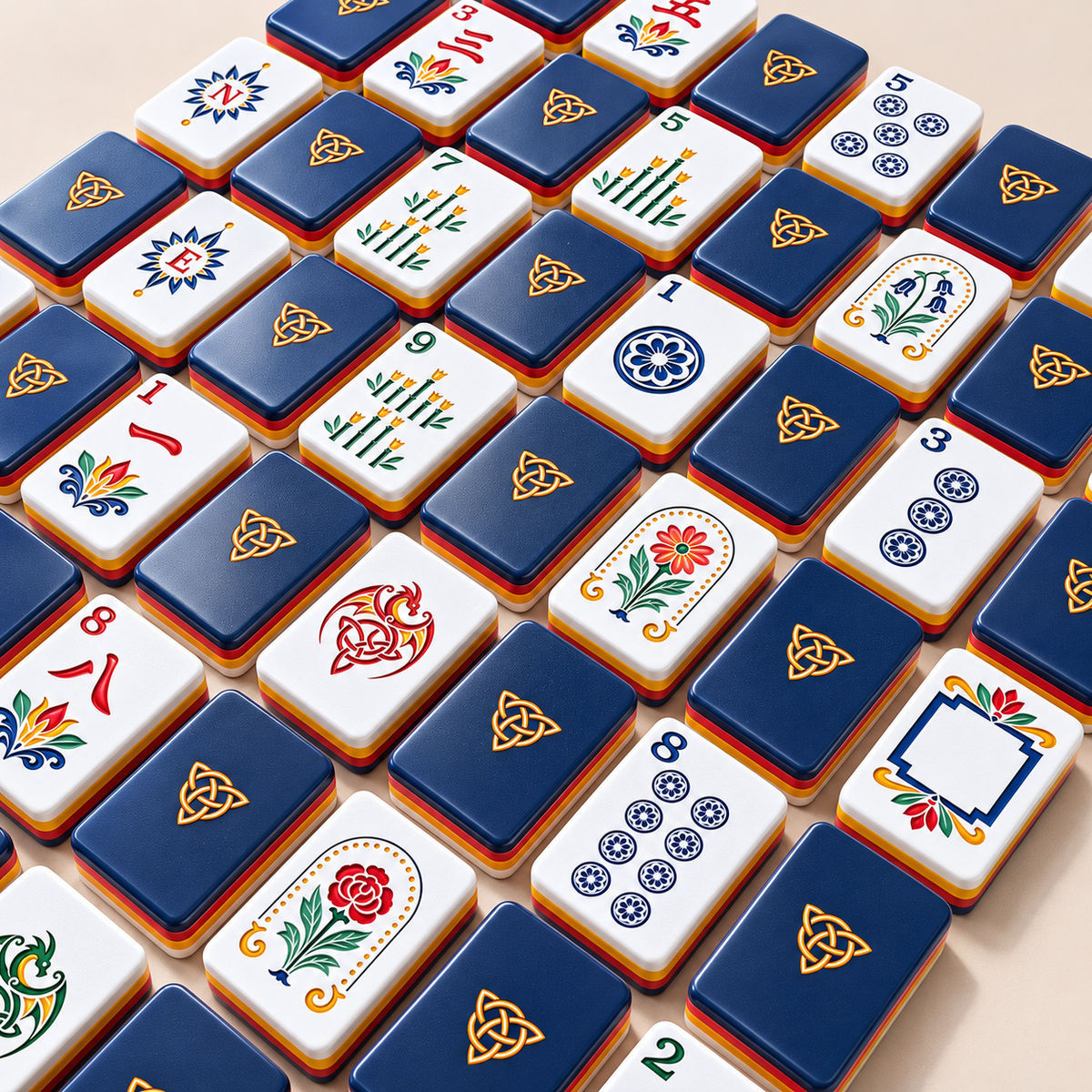
Vietnamese mahjong winning hands consist of four melds plus one pair (14 tiles total). Unlike American mahjong, which locks hands to a seasonal card, Vietnamese allows players to declare any valid combination: pungs (three identical), kongs (four identical), chows (sequences like 1-2-3 in one suit), or eyes (pairs). Bonus tiles include flowers and seasons that award extra points. The game ends when someone completes their hand by drawing or claiming a discard. Speed and adaptability matter more than memorizing a fixed set; players read the board live and pivot strategy mid-game. Winning typically requires at least one honor pung (wind or dragon) and often a "no pairs" or "all chows" restriction for higher scores. Because hands are fluid, players use mental pattern recognition rather than card references, making variant sets and clear tile visibility essential for avoiding disputes—a reason many Vietnamese players prefer engraved or colored-dot tiles over uniform designs from best-selling mahjong sets. 🀄 Shop best-selling mahjong sets →
How are Vietnamese and American mahjong hands different?
Vietnamese mahjong hands form anywhere during play (not just at game start from a printed card). American mahjong requires exact matches to the current year's National Mah Jongg League card; Vietnamese allows "loose" hands like all sequences, no honors, or honor-heavy combos. Vietnamese uses 144 tiles; American uses 152. Chows (1-2-3 sequences) can be called from the table in Vietnamese but never in American mahjong. Speed is prized in Vietnamese play—winning can happen on turn two or turn twenty with equal validity.

What tiles make up a valid Vietnamese winning hand?
A valid Vietnamese hand contains exactly 14 tiles: four melds plus one pair. Melds are either pungs (three 5 Dots, for example), kongs (four 5 Dots), or chows (1 Dot, 2 Dot, 3 Dot in sequence). The pair must be identical (two 5 Dots). Many hands carry restrictions: "All Chows" means no honor tiles; "Mixed" means tiles from two or three suits; "All Honors" means winds, dragons, flowers, or seasons only. Some hands must include a "eye" (the pair) from a specific rank—often dragons or winds. Bonus tiles (flowers, seasons) add points but do not count as melds; a player holding spring, summer, fall, and winter earns bonus points on top of their hand score.
Which winning hand types score highest in Vietnamese mahjong?
High-scoring hands typically require more restrictions or rare combinations. "All Honors" (four honor pungs plus a pair) is extremely hard to achieve and scores well. "All Chows" (all sequences, no honor tiles) is easier to form but scores less. "Concealed hand" (no melds called from the table—all hidden until win) beats an "open hand" (melds exposed during play). "Self-draw" (winning by pulling from the wall, not claiming a discard) doubles the score. "Robbing the Kong" (winning from a tile just added by an opponent's kong) carries bonus points. Hands with all terminal and honor tiles, or all one suit ("All Bams," for instance), rank high. Scoring varies by region and house rules, so always agree on a point system before play starts.
What hand restrictions do players need to know?
Common Vietnamese hand restrictions include "No Pairs" (only one pair allowed—rarely used); "All Chows" (no honors, only sequences); "All Terminals" (1s and 9s only); "Mixed" (multiple suits required); "One Suit" (Bams, Craks, or Dots only); "All Honors Only" (winds, dragons, flowers, seasons—no number tiles); "All Simples" (2–8 tiles, no terminals or honors); and "Pair of Honors" (the pair must be a wind or dragon). Some hands demand a specific bonus tile—a spring must be present, for instance. Flowers and seasons can substitute or elevate a hand's rank. House rules often add local twists: some tables permit "heavenly hand" (winning on the first draw) as an automatic win regardless of hand type. Clarify restrictions before the Charleston begins.

How do flowers and seasons affect a winning hand?
Flowers (four tiles: plum, orchid, bamboo, chrysanthemum) and seasons (four tiles: spring, summer, fall, winter) are bonus tiles in Vietnamese mahjong. When drawn, they are immediately replaced with a draw from the wall, giving that player extra tiles and points. Holding all four flowers scores bonus points; holding all four seasons scores additional points. A hand that includes both sets (eight bonus tiles total) earns even more—sometimes doubling the base hand value, depending on house rules. Bonus tiles often unlock special hand categories: "Hua" (five or more bonus tiles) is a premium winning hand. Players cannot use flowers or seasons as part of melds; they exist purely for bonus scoring. This rewards luck and draw timing, making late-game comebacks possible even after weak early plays.
Winning Hand Comparison Table: Vietnamese vs. American Mahjong
Element | Vietnamese Mahjong | American Mahjong | Impact on Play |
Tile count | 144 total | 152 total | Vietnamese games run 10–15 % faster |
Melds allowed | Pungs, kongs, chows | Pungs, kongs only (no chows) | Vietnamese offers more meld options, faster hand assembly |
Hand source | Any valid combo, live reading | Fixed yearly card only | American requires pre-game memorization; Vietnamese plays intuitively |
Bonus tiles | Flowers, seasons replace with draw | Flowers only; no season mechanic | Vietnamese offers more scoring paths and dramatic comebacks |
Jokers | Rare or regional variant | Always 8 in the set | American joker strategy shapes every hand |
Winning speed | First turn possible | Usually 8–14 turns minimum | Vietnamese rewards quick pivots and pattern spotting |
Scoring | Region/house-dependent | Official NMJL point schedule | American scores are standardized; Vietnamese vary |
🎁 See our most-loved mahjong sets & accessories →
How do you identify a winning hand at the table?
Spot a winning hand by checking three rules: the hand has exactly 14 tiles, it forms four melds plus one pair, and all melds are valid (no orphaned tiles). Call "Mahjong!" and lay your tiles in neat groups so others verify immediately. In Vietnamese play, speed matters—hesitation invites challenges. Lay pungs as three identical tiles, kongs as four, and chows as three consecutive tiles in the same suit. Place the pair clearly apart. Bonus tiles (flowers, seasons) sit separate and are scored after verification. If a tile is disputed, discuss rules before the next hand. If you miscounted or mismatched a meld, you pay penalty points and sit out one round—another reason clarity and good lighting (or well-designed tiles from engraved mahjong sets) prevent headaches.
What common mistakes cost players in Vietnamese mahjong?
Meld confusion: Forgetting that chows must be consecutive in the same suit. A 1 Dot, 2 Crak, 3 Bam is not a chow—all three must be Dots (or all Craks or all Bams).
Pair errors: Declaring a pair of mixed tiles (one 5 Dot, one 5 Crak). Pairs must be identical.
Bonus tile mistakes: Drawing a flower and forgetting to set it aside and draw a replacement. This clouds your tile count and invites disputes.
Concealing too long: Holding your hand face-down without revealing melds. Vietnamese rules vary—some tables require at least one exposed meld before you can win; others allow fully concealed wins with a point multiplier.
Misreading house rules: Not confirming whether "all chows" means no honors or no terminals. A quick 30-second rules chat saves arguments.
Slow play: Agonizing over every discard. Vietnamese mahjong is fast; hesitation annoys faster players and slows the social rhythm.
Joker overuse: Some regional variants treat jokers as wild; others forbid them entirely. Confirm before the first tile is drawn.
What setup and equipment help Vietnamese mahjong players?
Vietnamese mahjong works best with a clean, well-lit table, clear tile markings (especially for the 1 Bam bird and white dragon), and mahjong mats that reduce glare and provide dedicated zones for melds, the draw wall, and the discard pile. Racks with pushers keep tiles upright and organized, cutting mistakes and speeding play. Many Vietnamese players prefer sets with bold dot patterns (not just pips) and engraved numerals for speed reading. A small travel bag or case protects your set between weekly games. Dice roll the wall position and draw order—standard two or three cubes suffice. For home or club play, a dedicated set stored in a case outlasts loose tiles and prevents tiles from mixing with other games.
✨ Find your Mahstead set — free US shipping →
What to check before you buy a mahjong set for Vietnamese play
Tile clarity: Ensure numbers and suits are engraved or deeply printed, not flat. You read Vietnamese hands faster than American ones; slow tiles cost you.
Tile count: Confirm the set has 144 tiles (Vietnamese standard) or 152 (if you also play American). Some sets include extra blanks or jokers—clarify.
Suit colors: Check that Bams are bamboo-colored (usually green), Craks are red (or orange), and Dots are clearly distinct. Mixed colors speed recognition.
Material: Acrylic is durable and lightweight; bone/bamboo is heavier but feels premium. Both work for casual and weekly play.
Case or bag: If traveling, confirm packing fits your lifestyle. A cloth bag is fine for local tables; a hard case protects sets in a car trunk.
Bonus tiles: Confirm flowers and seasons are included and easily distinguished from number tiles (usually with small images or solid marks).

FAQ
Can I use an American mahjong set to play Vietnamese mahjong?
Not directly. American sets have 152 tiles and 8 jokers; Vietnamese needs exactly 144. American sets lack some joker flexibility and bonus tile mechanics. You'd need to remove eight tiles and adjust joker rules, which invites confusion. It's better to use a dedicated 144-tile set built for Vietnamese play.
Do I need to memorize hand patterns like in American mahjong?
No. Vietnamese mahjong rewards live pattern reading—you spot pungs, chows, and pairs on the fly. Memorization helps (knowing common sequences speeds decisions), but the game flows faster than American, where card reference is mandatory.
What's the difference between a concealed and open hand in Vietnamese mahjong?
A concealed hand is kept face-down; you reveal only when you win, earning a score multiplier (often double). An open hand exposes melds during play as you form them, earning standard points. Concealed hands are riskier but reward boldness.
Do house rules really change how I play Vietnamese mahjong?
Absolutely. Rules for bonus tile scoring, joker use, and concealed-hand multipliers vary by region and table. Always spend two minutes clarifying scoring and winning restrictions before shuffling tiles.
Which winning hand type is easiest to form in Vietnamese mahjong?
"Mixed" (multiple suits allowed) or "All Simples" (2–8 tiles, no terminals or honors). "All Honors" and "All Terminals" are harder because they limit tile sources and make theft (claiming discards) riskier. Speed play rewards flexibility.
Can flowers and seasons help me win if I'm behind?
Yes. Drawing bonus tiles mid-game gives extra points and a new draw, effectively giving you a "free" turn. This comeback mechanic makes late-game play exciting and can flip the score in a few hands.


View More
View More
View More
