
Vietnamese Mahjong vs Wright-Patterson: Rules & Tile Differences
Last updated: Nov 23, 2026
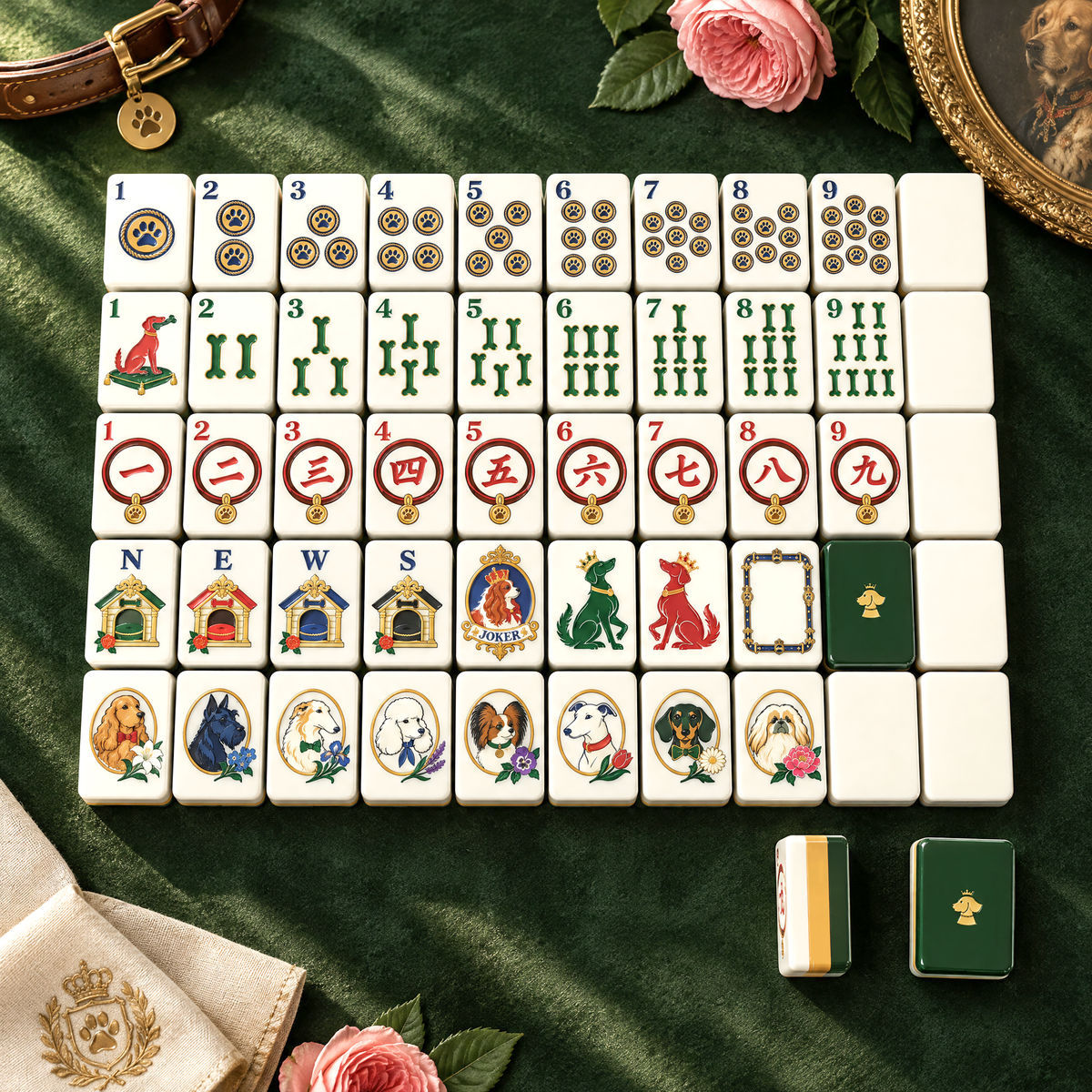
Vietnamese mahjong uses 120 tiles (fewer than American's 152) and drops some winds and dragons to simplify the game; Wright-Patterson mahjong, played primarily in military circles around Ohio, uses a 144-tile format with modified hand-matching rules that emphasize speed and tactical flexibility over the rigid card-based patterns of American mahjong. Neither variant uses the National Mah Jongg League card, so hands are memorized or written down by players themselves. Vietnamese mahjong typically plays faster and suits casual social gaming, while Wright-Patterson attracts competitive players seeking a middle ground between Chinese speed rules and American structure. American mahjong remains the most accessible variant in the US because standardized 152-tile sets with best-selling mahjong sets are widely available and the annual card provides consistency across tables.
What exactly is Vietnamese mahjong?
Vietnamese mahjong strips the game down to 120 tiles by removing some winds and dragons, keeping only the three numbered suits and simplified honors. Players rely on memory and negotiated house rules rather than an official card, making it faster and more fluid than American play. Games often last 20–40 minutes per round. The hand patterns favor runs and simpler combinations, so the learning curve is gentler for newcomers.

How does Wright-Patterson mahjong differ from American?
Wright-Patterson mahjong uses 144 tiles (12 fewer than American) and permits chows—sequences like 1-2-3 of the same suit—that can be called and exposed during play, which American mahjong forbids entirely. Hands are created on the fly rather than matched to a fixed card, giving players more creative freedom but requiring stronger pattern recognition. The variant is named after Wright-Patterson Air Force Base in Dayton, Ohio, where military personnel standardized a hybrid ruleset in the mid-20th century.
Why can't you play Wright-Patterson with an American set?
A standard American 152-tile set has too many tiles for Wright-Patterson's 144-tile framework; you'd have eight spares left over, and the tile balance would be incorrect. More critically, American mahjong tile construction assumes no chows will be played as open melds, so the suit distribution isn't optimized for chow-heavy hands. You'd lose point precision and hand validity. Some players adapt by removing eight jokers or blanks, but this creates rule inconsistencies. Playing Wright-Patterson properly requires a dedicated 144-tile set designed for that variant.
Is Vietnamese mahjong easier to learn than American?
Yes, Vietnamese mahjong is generally easier because it has fewer tile types to remember, no official hand card to consult, and faster round times that keep new players engaged. You learn patterns through repetition rather than card memorization. However, the flip side is that house rules vary wildly—your Monday game might differ from your Thursday game—so consistency suffers. American mahjong's rigidity—the card, the fixed hand list, the standardized 152 tiles—actually makes long-term learning predictable and fair, even if the initial complexity feels steeper.
Where do Vietnamese and Wright-Patterson mahjong players congregate?
Vietnamese mahjong thrives in Vietnamese American communities, particularly in California, Texas, and Oregon; you'll find casual games in homes, Vietnamese community centers, and during family gatherings. Wright-Patterson players are scattered thinly across the US, with small groups in Ohio, Kentucky, and military retiree circles nationwide; they typically organize through word-of-mouth or local game clubs rather than public venues. American mahjong dominates public spaces—synagogues, community centers, libraries, country clubs—because the standardized rules and widely available engraved American mahjong sets make it easier for clubs to teach and enforce consistent play.
What tiles do you actually need for each variant?
Variant | Total Tiles | Suits | Winds | Dragons | Special |
American | 152 | 3 (Bam, Crak, Dot) 1–9 × 4 | 4 each (N/E/W/S) | 3 types × 4 | 8 flowers, 8 jokers |
Vietnamese | 120 | 3 (Bam, Crak, Dot) 1–9 × 4 | 2 types × 4 (East/West only) | 2 types × 4 (Red, Green) | few or no flowers; no jokers |
Wright-Patterson | 144 | 3 (Bam, Crak, Dot) 1–9 × 4 | 4 each (N/E/W/S) | 3 types × 4 | minimal flowers; 8 jokers |
American mahjong's extra winds and all three dragons—Red (pairs with Crak), Green (with Bam), White/Soap (with Dot and acts as zero)—give you more hand options and force you to think strategically about honor tile distribution. Vietnamese simplification makes the game lighter cognitively and faster socially. Wright-Patterson's 144-tile count is a tactical sweet spot: enough complexity for serious play, but fewer tiles means tighter hand math and quicker reshuffles.
Do you need a special mat for Vietnamese or Wright-Patterson mahjong?
A quality mahjong mat works for any variant because the play surface—wall building, tile placement, discard rows—is mechanically identical. What matters is personal comfort: if you're hosting Vietnamese casual games with friends, a standard mat keeps tiles organized and prevents spills. If you're running a Wright-Patterson tournament, a mat with clear marked zones helps players rotate positions without confusion. The mat doesn't change the rules; it just makes the table feel professional and shields your furniture.

How does scoring work in each system?
American mahjong assigns point values based on hand complexity (listed on the card); a simple hand might be worth 25 points, a harder one 70 or more. Vietnamese mahjong typically uses simpler scoring—often just counting completed melds and paying flat amounts per hand won—because there's no card to reference. Wright-Patterson scoring falls between the two: hands have assigned values, but the list is shorter and easier to memorize than the full American card. If you play all three variants, you'll notice American rewards planning and long-term pattern memory, Vietnamese rewards speed and adaptability, and Wright-Patterson rewards tactical flexibility in real time.
Should I buy one set that works for all three variants?
No—a single set cannot serve all three well. American and Wright-Patterson sets are close (152 vs. 144 tiles), but mixing them creates error-prone games because tile counts don't align and players lose confidence in fairness. A Vietnamese 120-tile set is so different that attempting to play American or Wright-Patterson rules with it will frustrate everyone: missing tiles, invalid hand combinations, and broken scoring. If you host multiple variants, invest in a dedicated set for each. If you commit to just one, American mahjong is the most accessible—best-selling mahjong sets are plentiful, the rules are published and consistent, and a 160-tile set with spare jokers gives you durability for years of weekly play.
Which variant should a beginner choose?
🀄 Shop best-selling mahjong sets →
Start with American mahjong if you want to join established clubs, access free online tutorials, and learn from published books. The learning curve is steep—the card has hundreds of hand patterns—but the payoff is community: synagogues, libraries, and senior centers run American games nationwide. Vietnamese mahjong suits you better if you live near a Vietnamese community, already have family members playing, or prefer low-pressure social games without memorizing dozens of patterns. Wright-Patterson is the hardest entry point because the player base is small and geographically scattered; you'll need a friend or online mentor to teach house rules.
What to check before you buy
Variant confirmation: Know which mahjong type your table plays before ordering. Asking "What set do you use?" prevents buying a mismatched set.
Tile count: Count the box contents (or ask the seller) to confirm you have the right number—152 for American, 144 for Wright-Patterson, 120 for Vietnamese.
Spare tiles: American 160-tile sets include spares; they're never added to play, so don't panic if your count seems high.
Durability: Acrylic tiles outlast bamboo for casual weekly play; check that jokers and blank tiles (if included) are clearly marked.
Storage: Mahjong bags and cases keep sets organized and protected during transport; essential if you rotate between locations.
Rules source: Before your first game, confirm the table's rule source (printed card, website, or group memo). Disagreements on hand validity waste time; clarify upfront.
Why American mahjong dominates in the US
American mahjong succeeded because it standardized rules (through the National Mah Jongg League card), created consistent play across regions, and built infrastructure—clubs, published books, online forums—that made the game stick. Vietnamese and Wright-Patterson mahjong never centralized; they stayed regional and variant-dependent, which kept them intimate but limited their reach. If you're starting a game group and want long-term sustainability, American rules give you the broadest resource base and the easiest path to recruiting new players who've already heard of it.
🎁 See our most-loved mahjong sets & accessories →
Setting up your first game with a specific variant
Confirm your group's variant – Text or email your players: "Are we playing American, Vietnamese, or Wright-Patterson?"
Source the right set – Buy a set labeled for your chosen variant; don't improvise.
Get a mat – Mahjong mats organize play and protect your table from scratches and spills.
Print or share the rules – American players get the current year's League card; Vietnamese and Wright-Patterson players need a written house-rules memo to prevent mid-game disputes.
Practice one round before betting – Walk through tile distribution, wall building, and one complete hand so everyone knows the rhythm.
Invest in racks with pushers – They keep your tiles upright and hidden until you're ready to play; this matters for all three variants and prevents accidental reveals.
Real talk: Why most US players stick with American
American mahjong has critical mass. Every library system in the US knows what it is. The annual card forces rule consistency; you can move to a new city and join a table confidently. Tiles are affordable and durable. Books and YouTube tutorials are abundant. Most importantly, clubs exist—you don't have to be related to someone or live in a specific ethnic enclave to find a game. Vietnamese mahjong is beautiful and social, but it lives in pockets. Wright-Patterson attracts serious players, but the community is thin. If you're building a game group from scratch and want staying power, American mahjong gives you the largest pool of potential players and the easiest onboarding path.
✨ Find your Mahstead set — free US shipping →
#

FAQ
Can you convert an American mahjong set to play Wright-Patterson by removing eight tiles?
Technically yes, but it breaks the tile balance. American sets are built with 152 tiles in precise ratios; removing tiles changes suit distribution and joker availability, creating invalid hand combinations. Buy a dedicated 144-tile Wright-Patterson set instead for fair, consistent play.
Why doesn't Vietnamese mahjong use jokers like American?
Vietnamese mahjong evolved independently and relies on substitution rules (using blanks or honor tiles as wild cards) rather than dedicated joker tiles. This keeps the tile count lower and simplifies manufacturing for casual home games where standardization wasn't a priority.
Is there an official Vietnamese mahjong rulebook?
No single official rulebook exists. Vietnamese mahjong rules vary by region and family tradition. Ask your players for a house-rules sheet before joining a game; clarify scoring, allowed melds, and whether blanks substitute for missing tiles.
Can you learn American mahjong if you already play Vietnamese?
Yes, but the card-based hand patterns will feel rigid at first. American requires memorizing dozens of hand combinations; Vietnamese teaches pattern recognition through play. The transition takes 3–5 weeks of weekly games for fluency.
Which variant is fastest to complete one full round?
Vietnamese mahjong, typically 15–25 minutes per round due to simpler hand patterns and no card-matching delay. American averages 30–45 minutes because the card adds decision time. Wright-Patterson runs 20–35 minutes depending on player experience and how quickly patterns are called.


View More
View More
View More
