
Chinese Mahjong Fan Counting Tips: Beginner's Guide
Last updated: Nov 23, 2026
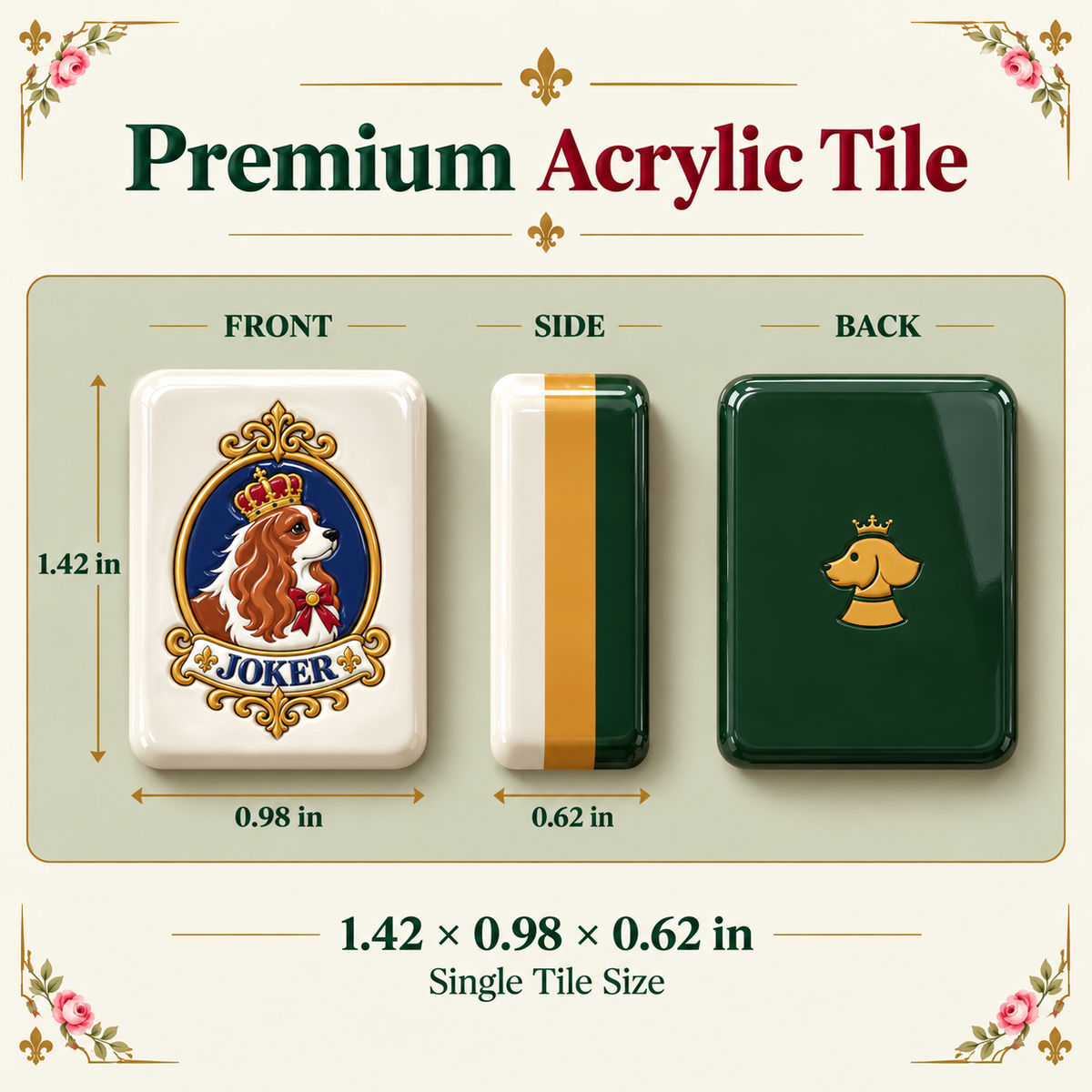
Chinese mahjong awards points by "fan" (番), a unit that multiplies your base score. A hand wins when you complete a specific pattern: four melds (sequences or sets) plus a pair. Each pattern scores a minimum fan value; if you hit bonus patterns (like all same suit, or all honor tiles), fans stack and multiply. A typical winning hand earns 1–8 fan in casual play; tournament hands may go higher. Unlike American mahjong, which locks hands to an annual card, Chinese mahjong lets you build any legal pattern. The key is recognizing which patterns score, stacking them correctly, and knowing when to discard safety. We host games weekly and see the biggest scoring mistakes happen when players miscalculate stacks or forget that certain fans block others. Mahstead's best-selling acrylic sets work perfectly for Chinese play, since the tile count and suit system match exactly what you need.
What does "fan" actually mean in the scoring system?
Fan (番) is a multiplier tier. Each winning hand has a base score—usually 20, 30, or 40 points depending on your table's rule set—and the fan count multiplies it. Two fan = 40 or 60 points; three fan doubles that again. The higher your fan, the faster your score climbs. Fan exist to reward pattern difficulty: a simple hand (maybe one suited pair) earns 1 fan; a hand built entirely from one suit with honor tiles mixed in earns 5+ fan. Your table leader should clarify the scoring rule at the start—some groups play "Chinese Standard," others use regional variants—but the fan principle stays the same everywhere.

Which patterns count as one fan, and how do they combine?
Here's where beginners trip up. In Chinese mahjong, certain patterns are worth exactly 1 fan and cannot combine with each other; others stack freely.
Non-stackable 1-fan patterns (pick the highest):
All Pungs (four sets, all triplets)
All Chows (four sequences, no triplets)
Mixed one-suit (hand uses only one number suit plus honors)
Stackable patterns (can combine):
All one suit (Bamboos only, or Dots only, or Craks only) = 1 fan minimum, often 2–3 when combined with others
All terminals and honors (only 1, 9, winds, dragons) = 2–3 fan
All dragons (at least one set of Red, Green, White) = 1 fan per dragon set present
All winds (all four wind tiles as sets) = 1 fan
No honors (hand uses no winds or dragons) = 1 fan
The rule: if a pattern is stackable, you add its fan value to every other stackable fan you hit. If it's non-stackable, you score only the highest one.
Example: You build: Bamboo 2-3-4, Bamboo 5-6-7, Bamboo 8-8-8, Bamboo 9-9, plus one White dragon set. Your hand is all one suit (Bamboos) + a terminal pair. That's 1 fan for all one suit + 0 fan for the dragon set (since it's not pure) = 1 fan total. You don't add them.
Compare this to: Bamboo 2-3-4, Bamboo 5-6-7, Red Dragon, Red Dragon, Red Dragon, Green Dragon, Green Dragon, Green Dragon, White Dragon, White Dragon, White Dragon, White Dragon (wait—four sets plus pair). That's all dragons (three sets): 3 fan. Add all one suit? No—you have no suit melds, only dragons. So 3 fan total.
How do you spot bonus patterns that multiply your fan quickly?
Look for these high-value overlaps after you've locked your base hand:
Pattern | Fan Value | How to Build It | Common Mistake |
All Bamboos (or Dots or Craks) | 1–2 | Four melds + pair, one suit only | Forgetting that mixing suits kills it |
Terminal/Honor only | 2–3 | 1s, 9s, winds, dragons; no 2–8 | Adding a middle pip tile by accident |
All pungs, no sequences | 1–2 | Four triplets + pair | Thinking one sequence ruins it (true) |
Dragons (one, two, or three sets) | 1–3 | One Red, one Green, one White = 1 fan each | Counting a dragon pair as a set (pairs don't score) |
Winds (one or all four) | 1–2 | North, East, South, West as sets | Forgetting your own seat wind bonus (table rule) |
Mixed suit + one honor | 1 | Two suits + one wind or dragon | Trying to combine with "all one suit" (blocks it) |
The fastest multiplier is all one suit + all terminals/honors—if you can stack those cleanly, you jump to 3–4 fan immediately. The trap is mixing suits or pips by one tile; that erases the bonus.
What's the biggest mistake with discard safety in fan-heavy hands?
When you're chasing high fan, you hold dangerous tiles too long. Say you're building all Bamboos and you're holding a Red dragon—safe to throw early. But at round five, you throw it and someone else completes a hand with it. Now you've given them a free dragon tile and they might have built three dragons instead of one.
The real danger: fan-driven hands take longer to complete, so you stay unsafe longer. Newer players see a hand worth 3 fan on the board and lock into it, discarding middle-range tiles that would've been safe normally. Then they wait three more rounds, the winning tile never comes, and they're exposed to someone else's faster hand.
Concrete rule we use at the table:
Rounds 1–4: discard honors and terminals freely (they're rarely melded).
Rounds 5–8: switch to number-suit safety; assume anyone still playing might have honors locked.
Round 9+: assume opponents are ready; throw only proven dead tiles (tiles that hit the discard zone twice).
High-fan hands are beautiful, but a 2-fan hand you complete now beats a 5-fan hand you never finish.

How do you read the official Chinese mahjong rule variations?
Chinese mahjong has regional dialects: Cantonese (Hong Kong), Shanghai, Sichuan, and tournament-standard Riichi. Each tweaks fan definitions and blocking rules.
Cantonese (Hong Kong) rules: All Pungs = 1 fan; All Dragons = 3 fan (one per dragon set); All Honors = 2 fan. This is the most permissive for stacking.
Shanghai rules: More restrictive: All Pungs blocks All Terminals, and mixed-suit patterns are penalized. Fewer fans fit in one hand.
Riichi (Japanese tournament): Closely defined yaku (winning patterns); you declare "ready" and freeze your hand. Fan count here is standardized and internationally used for competition.
Your table's rule set is law. Ask explicitly before you sit:
Does a pung of your own seat wind score bonus fan?
Can you stack "no honors" with "all one suit"?
Is the base score 20, 30, or 40?
Write down the answers. Many arguments happen because players assumed different rules.
🀄 Shop best-selling mahjong sets →
What to check before you buy your first Chinese mahjong set
Tile count: Chinese mahjong uses 144 tiles (108 number tiles—three suits, 1–9, four copies each—plus 16 winds, 12 dragons, 8 flowers). American sets sold at Mahstead are 160 tiles (152 playing tiles plus spares), which include all tiles you need for Chinese play plus extra jokers. Make sure your set has the flower tiles if your local group uses them (some regions skip them).
Tile visibility: Acrylic tiles in a best-selling collection have clear engravings and high contrast. In Chinese play, you're reading tiles fast during a round; cheap tiles with smudged numbers slow you down.
Rack space: Chinese mahjong hands sit in your rack longer than American hands (you're waiting for the discard you need, not locked to a card). A sturdy rack with pushers keeps tiles organized so you can spot patterns without fumbling.
Travel case: If you're hosting weekly games or joining a local club, you'll move your set around. A sturdy bag or case protects acrylic tiles during transport and keeps all pieces in one place.
🎁 See our most-loved mahjong sets & accessories →
Quick reference: scoring checklist for your first 10 hands
Count your melds. Four sets or sequences? Four melds = valid hand. Three = not finished.
Identify the pair. Honor pair, terminal pair, or number pair? Check if it blocks a fan.
Spot suit. Is every meld the same suit? If yes, mark "one suit" = 1 fan.
Check honors. Any winds or dragons? Which ones? Count them separately.
List non-stackable patterns first. (All pungs, all chows, mixed one-suit.) Pick the highest fan among these.
List stackable patterns next. (Pure suit, dragons, no honors, etc.) Add all their fan together.
Confirm nothing blocks. Do your patterns conflict? (All dragons blocks pure suit.)
Double-check with the table leader. Read your hand aloud. Let them confirm before you record.
Record the fan count, not the score. Write "3 fan," not "120 points" (score varies by region).
Move to the next hand. Reset and rebuild; each round is independent.
✨ Find your Mahstead set — free US shipping →

FAQ
Can I build a legal Chinese mahjong hand without any honors (winds or dragons)?
Yes. If your hand uses only number tiles from one, two, or all three suits, it's valid. Depending on your region's rules, using no honors at all may score a bonus fan ("no honors" or "all numbers"). Always confirm with your table leader first.
What happens if I discard a tile that someone else wins with—do I lose points?
In most Chinese mahjong rules, if you discard the winning tile, you pay a penalty (often double or triple the normal payout). If someone draws it from the wall (the remaining pile of face-down tiles), you don't pay extra. This is why discard safety matters in higher fan hands.
Do flower tiles count as part of a fan pattern?
Flower tiles are usually not part of melds in Chinese mahjong. If you draw one, you set it aside and draw a replacement tile. Some regional rules treat them as bonus points instead. Check your group's rules before play.
If I'm building "all one suit," can I include a wind tile in one of my melds?
No. "All one suit" means all four melds use only that suit (Bamboo, Dot, or Crak). Any honor tile (wind or dragon) breaks the pattern and you lose the fan. You'd fall back to a lower-value pattern.
How do I know if two patterns can stack or if one blocks the other?
Your local rule set defines blocking. General rule: stackable patterns (pure suit, dragon sets, no honors) add together. Non-stackable patterns (all pungs, all chows, mixed suit) are mutually exclusive—pick one. Write down your group's blocking rules or ask the leader before every session.


View More
View More
View More
