
Vietnamese Mahjong Tile Sets: American Variants vs. Traditional Versions
Last updated: Nov 23, 2026
Vietnamese mahjong players typically use one of two main tile-set types: American mahjong sets (152 tiles with Bams, Craks, Dots, Winds, Dragons, Flowers, and Jokers), popular in Vietnamese-American communities and played with the current year's National Mah Jongg League card; or traditional Chinese/Hong Kong sets (136–144 tiles with chows and sequences allowed), common among older generations and rural players. American sets offer more accessible rule clarity and standardized hands; traditional sets demand deeper strategic knowledge of tile combinations. Cost varies by material and design—acrylic American sets from best-selling collections are durable and ship ready to play, while traditional sets may require custom sourcing. Before buying, confirm which rules your group plays, whether you need a carrying case, and if you prefer engraved designs for personal use or gifts. 🀄 Shop best-selling mahjong sets →
What rules do Vietnamese players actually use?
Vietnamese mahjong divides along community and generational lines. Older players and those with family roots in rural Vietnam or southern China often play traditional Hong Kong or Cantonese mahjong—fast-paced, with chows (sequences like 1-2-3), honor tiles, and 16 rounds per game. Vietnamese-American urban players, especially in Texas, California, and the Northeast, have adopted American mahjong: no sequences, standardized hands from the annual card, the Charleston tile pass, jokers as wild tiles, and exposure of sets (pungs, kongs, quints). Vietnamese-Canadian communities use a hybrid approach, mixing American structure with looser hand interpretations. Ask your group which card they use (American NMJL, or a regional printed card) before ordering; this single choice determines everything about your set.

What's inside an American mahjong set for Vietnamese games?
American sets contain exactly 152 playing tiles plus spare jokers and blanks. You get 36 Bams (including the bird 1 Bam), 36 Craks, and 36 Dots (numbered 1–9 in sets of four); 16 Winds (North, East, West, South, four of each); 12 Dragons (Red paired with Craks, Green with Bams, White "Soap" with Dots and serving as zero); and 8 Flowers (usually numbered 1–4 representing seasons, or symbols). The 152-tile count never changes during play—spare tiles stay in the box. Jokers are wild and cannot form a single tile or pair. Unlike Chinese sets, American mahjong has no blank tiles in the playable deck; any extras are spares. What's in an American mahjong set explains each tile's role in detail. Vietnamese groups who switch from traditional to American mahjong often find the tile reduction (144→152 due to different compositions) surprisingly smooth once everyone learns the card layout.
🎁 See our most-loved mahjong sets & accessories →
American vs. traditional Vietnamese mahjong: which set do you need?
Variant | Tile Count | Key Rules | Hand Source | Set Type | Best For |
American (NMJL) | 152 | No chows; exposure of 3–6 identical tiles; jokers wild; no sequences called | Annual NMJL card | Acrylic, durable | Urban, standardized, new players |
Hong Kong/Cantonese | 136–144 | Chows allowed; pairs + sets + chows form hands; traditional honor tiles | Memory, regional books | Bamboo, bone, or acrylic | Older players, family tradition |
Vietnamese Traditional | 136–144 | Variant of Hong Kong; may omit flowers; regional rule changes | Oral tradition or printed local card | Mixed materials | Rural Vietnam, heritage play |
Each variant demands a different set because tile composition and count vary. American sets enforce standardization; traditional sets allow for regional tweaks. Vietnamese groups in diaspora often keep two sets—one American for consistency and speed, one traditional for family players visiting from overseas. Acrylic American sets are easier to clean, shuffle, and store than bone or bamboo, and they won't crack or stain.
How do you choose between material and design for Vietnamese play?
Vietnamese players value durability and visibility. Acrylic tiles stand up to weekly games, humid climates (common in Vietnamese households), and handling by children or elderly players. Bamboo and bone sets have cultural prestige but require care: avoid moisture, direct sun, and temperature swings. Engraved designs—names, dates, or family symbols—add personal meaning; Vietnamese families often commission sets as wedding gifts or heirloom pieces. Engraved American mahjong sets let you customize a set with names or initials in English, Vietnamese, or decorative patterns. If your group rotates sets weekly or travels between homes, acrylic is practical. If the set stays in one household and belongs to a single family, bone or engraved acrylic honors the tradition. Confirm tile size (typically 1.25–1.5 inches wide) before ordering; Vietnamese players with arthritis or low vision prefer larger tiles and higher-contrast colors.

What accessories do Vietnamese mahjong groups actually need?
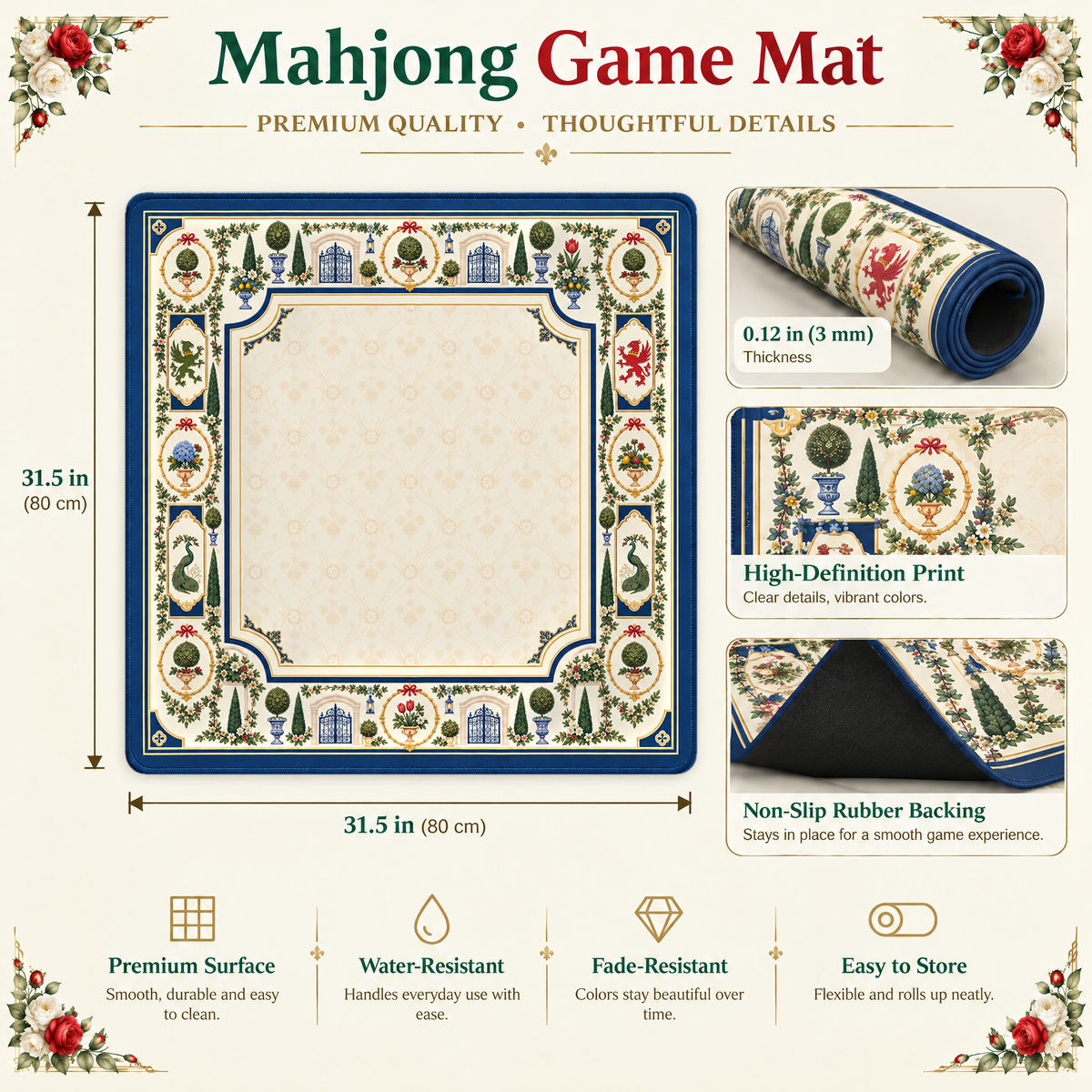
A complete game setup includes more than tiles. A mahjong mat protects tiles, marks positions (north, east, south, west), and provides scoring tracks and a card holder—essential for American play. Racks organize and hide tiles from opponents; mahjong racks with pushers let players sort and reveal tiles smoothly without fumbling. A carrying case or travel bag keeps tiles, mat, and racks together for easy transport between homes, especially common among Vietnamese players who host rotating games. Dice are built into mats but purchasing separate dice offers backup. Vietnamese families hosting weekly games report that a complete setup (set + mat + racks + bag) prevents arguments about shuffling and tile placement, speeds up rounds, and signals commitment to the group. Budget for all four components, not just tiles.
What common mistakes do Vietnamese buyers make?
Mixing American and traditional rules. The most expensive error: ordering a 144-tile traditional set for a group playing American mahjong, or vice versa. Confirm your group's card and rules before purchase. American sets require the current year's NMJL card; traditional sets use memory or printed regional guides.
Underestimating tile size. Vietnamese players used to bone tiles from Vietnam often expect smaller pieces. American acrylic sets run larger—1.25 inches or more—which some find unwieldy at first. Order a single sample or visit a local game group before committing to a full set.
Neglecting a carrying case. Tiles scatter in transit. A travel bag or case costs far less than replacing lost tiles or dealing with unshuffled, dusty tiles at game time.
Buying without a mat. A dedicated mat prevents tiles from sliding, provides position markers, and includes a card holder and score tracker. It's not optional for American play and greatly improves traditional games.
Forgetting spare jokers and blanks. American sets include spare tiles in the box—keep them. One lost joker stops an entire hand mid-game.
What to check before you buy
Rules: Ask your group for the exact card type (NMJL year, or traditional regional card). Do not assume.
Tile count: American = 152 playing tiles always. Traditional = 136–144, varies by region.
Material: Acrylic for durability and travel; bone/bamboo for prestige and tradition.
Tile size: Confirm if 1.25 inches or larger fits your players' hands and eyesight.
Carrying needs: If tiles move between homes weekly, prioritize a mat and case.
Customization: Engraving adds lead time; order early for gifts or events.
✨ Find your Mahstead set — free US shipping →

FAQ
Can I use an American mahjong set to play traditional Vietnamese mahjong?
No. American sets contain 152 tiles with no sequences; traditional Vietnamese play requires 136–144 tiles with chows (1-2-3 runs). The hand structures are incompatible. You need a set designed for your variant.
Do Vietnamese players in the US prefer American or traditional mahjong?
Urban Vietnamese-Americans predominantly play American mahjong—it's standardized, uses a printed card, and integrates with broader American mahjong clubs. Older players and those with strong family ties often keep traditional sets for heritage play. Many households maintain both.
What's the difference between a Vietnamese mahjong set and a Chinese one?
Traditional Vietnamese mahjong evolved from Hong Kong and Cantonese variants and shares tile counts (136–144) and chow-based rules. Vietnamese regional play may omit flowers or adjust honor tiles; traditional Chinese sets are the closest commercial match. Exact rules vary by family and region.
How often do Vietnamese mahjong groups replace their tile sets?
Well-maintained acrylic sets last 5–10 years of weekly play before tiles wear smooth or crack. Bone and bamboo last longer but require climate control. Most groups retire a set when tiles slip during shuffling or scoring becomes illegible.
Is it OK to buy a mahjong set without a mat if I have a table?
For American play, no—you need a mat to mark positions, hold the card, and track scores. A bare table creates disputes over hand placement and makes scoring slow. A mat is a required accessory, not optional.
Can I customize a Vietnamese mahjong set with names or dates?
Yes. Engraved acrylic sets accept Vietnamese names and dates in English letters or decorative designs. Lead time varies; order 2–3 weeks ahead for weddings or gifting events.


View More
View More
View More
