
Vietnamese Mahjong Special Hands: Rules & Pattern Guide
Last updated: Nov 23, 2026
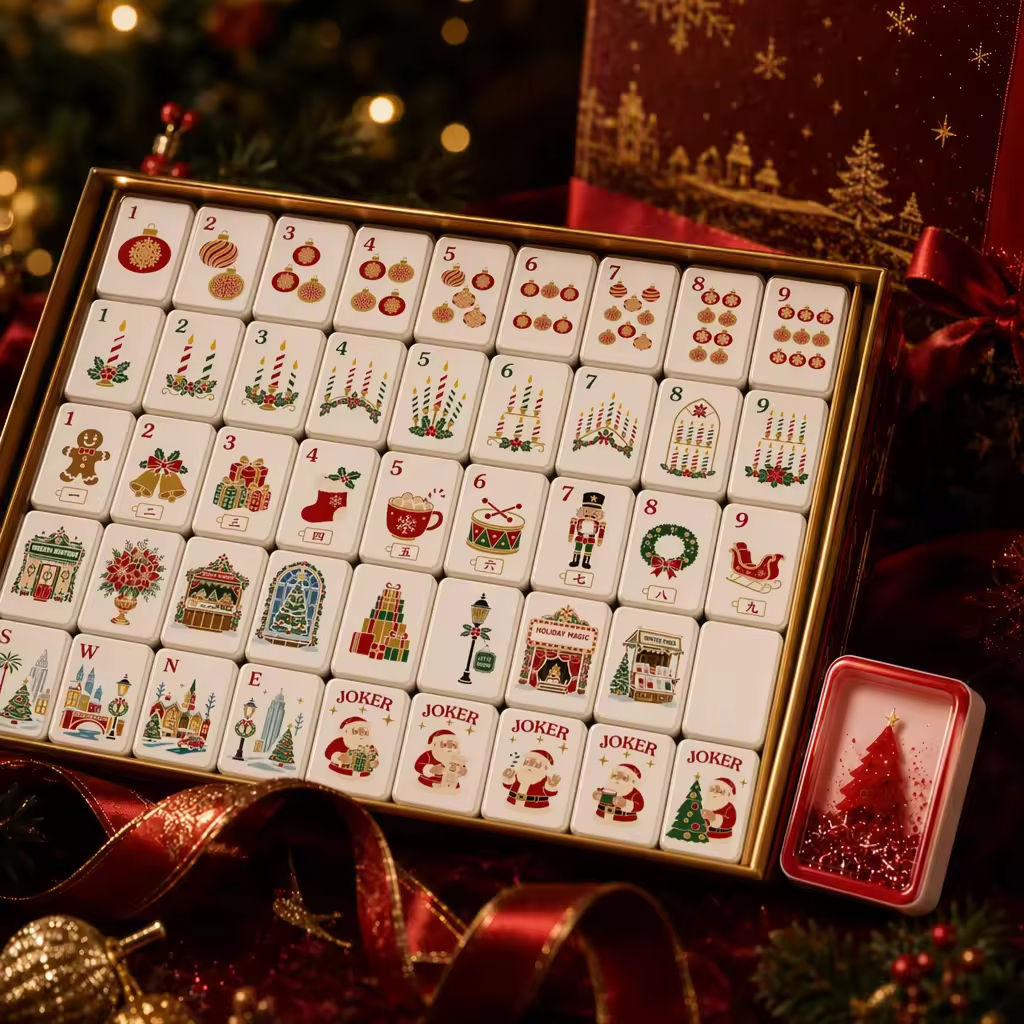
Vietnamese mahjong uses a 144-tile set (same core suits and honors as Chinese play) and requires 13 tiles plus 1 drawn tile to win—a structure closer to Chinese than American mahjong. Special hands include all pungs (three-of-a-kind sets), all honors (winds and dragons only), concealed hands (tiles drawn privately, not exposed), and mixed-suit combinations with specific honor and number ratios. Scoring depends on complexity: concealed all-honor hands rank highest, while simple mixed hands score lower. Unlike American mahjong, Vietnamese play uses no jokers, no passed tiles (no Charleston), and honors can form sequences in some regional rules. Most games are played among family or community groups; formal tournament rules vary by region. Hands reset after each player's turn as East, and rounds continue until someone goes out or the wall depletes.
Vietnamese mahjong shares tiles with American and Chinese variants but uses its own hand patterns, patterns, and bonus scoring. Special hands include all pungs (three-of-a-kind sets), all honors (winds and dragons only), concealed hands (tiles drawn privately, not exposed), and mixed-suit combinations with specific honor and number ratios. Scoring depends on complexity: concealed all-honor hands rank highest, while simple mixed hands score lower. Unlike American mahjong, Vietnamese play uses no jokers, no passed tiles (no Charleston), and honors can form sequences in some regional rules. Most games are played among family or community groups; formal tournament rules vary by region. Hands reset after each player's turn as East, and rounds continue until someone goes out or the wall depletes.
How do special hands differ from regular winning combinations?
A regular winning hand in Vietnamese mahjong needs 4 melds (groups of 3 or 4 tiles) plus 1 pair. Special hands break that rule: they're fixed patterns that score bonus points and typically require all tiles to match one theme—all pungs, all honors, all from one suit, or a concealed draw. For example, an all-pung hand means every meld is a three-of-a-kind, never a sequence. A concealed hand means you drew every tile yourself (no discards from opponents), which guarantees higher value. These patterns matter because they multiply your score significantly compared to an ordinary four-meld-plus-pair hand.

What's an all-honor hand and why does it score highest?
An all-honor hand uses only winds (North, East, South, West) and dragons (Red, Green, White)—no number suits at all. This is one of the highest-value hands because honors appear less frequently in the wall draw, making the hand harder to build. A concealed all-honor hand (drawn entirely from the wall, no opponent discards) is the top-ranking special pattern in most Vietnamese regional rules. If you can complete 4 honor melds plus an honor pair without taking a single opponent discard, you've earned maximum bonus multiplier. In practice, this happens rarely, so when it does, the payment from other players reflects the skill and luck required.
Can you explain sequences and how honors behave differently?
In Chinese mahjong, sequences (1-2-3, 5-6-7, etc.) must be all from the same suit—Bams, Craks, or Dots. Vietnamese rules often allow sequences the same way, but some regional variants permit honors to form sequences with each other (a rare exception). The standard rule is: numbers form sequences; honors form only pungs (triplets). Unlike American mahjong, which forbids sequences entirely and requires exposed or concealed melds to match specific hand patterns from an annual card, Vietnamese mahjong has fluid rules by region. If you're playing with a new group, always clarify upfront: do sequences count, which honors pair with which numbers, and does a concealed hand mean unexposed melds only, or completely self-drawn tiles? Consensus at the table prevents disputes.
🀄 Shop best-selling mahjong sets →
What bonus points do all-same-suit and mixed-suit hands earn?
An all-same-suit hand (all Bams, all Craks, or all Dots) is a mid-to-high special pattern because it requires strategic discarding to avoid giving opponents useful suits. Mixed-suit hands that blend honors with numbers in a specific ratio (e.g., 2 honors + 2 number melds) score fewer bonus points, reflecting their easier assembly. The exact multiplier varies: some groups use fixed point bumps (add 10 or 20 points); others use multiplier tables (double or triple the base). Before every session, agree on a bonus schedule with your table. A simple rule: concealed > all-honors > all-same-suit > mixed hands. Regional rulesets published online or in Vietnamese mahjong guides will specify exact values, but the principle holds everywhere—rarity and difficulty drive the score.
Hand Type | Composition | Difficulty | Typical Bonus | When to Aim For It |
All pungs, mixed suits | Four triplets + pair, no sequences | Low to medium | ×1–2 base score | Safe, achievable with patience |
All-honor + 1 number pair | Honors only in melds, 1 number pair | High | ×3–5 base score | Rarely achievable; wait for honor-heavy wall |
All same suit, mixed melds | All tiles from one suit, sequences + pungs | High | ×2–4 base score | When one suit dominates early wall |
Concealed (pure draw) | Every tile self-drawn, no opponent discards | Very high | ×4–8 base score | Rare; treat as bonus, not strategy |
All honors, all pungs | Only winds & dragons, four triplets | Very high | ×6–10 base score | Exceptional; plan 2–3 rounds to build |

How do you recognize a winning hand at the table?
When the wall is down to a few tiles or another player passes (announces they can't continue), check whether anyone has completed a valid hand. A valid hand is 4 melds (each 3 or 4 tiles) plus 1 pair—14 tiles total. Look for the pattern: every group must be identical (pung: 3 Craks, 3 Craks, 3 Craks) or consecutive (sequence: 4 Bams, 5 Bams, 6 Bams). The pair must match exactly (2 Red Dragons, not a Red and a Green). If you spot all one suit, all honors, or all concealed tiles, you've found a special hand—announce it and verify with the table before scoring. If the pattern is ambiguous, ask the winner to lay out their tiles visibly and walk through each meld. Disputes are rare if everyone checks melds as they form.
🎁 See our most-loved mahjong sets & accessories →
What's the East player advantage and how does it affect special hands?
In Vietnamese mahjong, the East player (dealer) draws first and wins with a lighter hand if they draw the winning tile on their first turn (a "self-drawn" bonus). East may also claim bonus payments from all three other players instead of splitting with table-mates, depending on regional rules. If East completes an all-honor or concealed special hand, the payout multiplies again. Positions rotate after each hand—South becomes East, East becomes South, etc.—so over a full session everyone gets dealer advantage. Knowing who holds East changes strategy: if East has built obvious honor-melds, other players discard Bams and Dots aggressively to deny them the all-honor completion. The special-hand hierarchy matters more to East because their scoring multiplier is already higher.
What common mistakes do beginners make with special hands?
Mistake 1: Chasing a special hand too long. Beginners often hold tiles for an all-honor or all-suit hand when a regular four-meld hand is already achievable. If you've drawn 10 tiles and only have 1 meld plus scattered pairs, pivot to the ordinary win—don't wait for the perfect special pattern. Mistake 2: Holding discards that block opponents. If you're close to a special hand, opponents will discard carefully to starve you. If you then need a common tile (like 5 Craks) but opponents smell the special-hand attempt, they'll hoard it or use jokers strategically—meanwhile, the wall shrinks. Mistake 3: Forgetting the pair. New players sometimes complete 4 melds but forget to reserve a matching pair. You'll have 12 tiles instead of 14 and must draw again—wasting your turn. Count melds out loud: "One pung, two pung, three pung, four pung, pair"—that's 14. Mistake 4: Misreading region rules. Vietnamese mahjong varies by community. Always ask: Do honors form sequences? Is the concealed hand worth more than all-honors? What multipliers apply? Ten minutes of clarity at the start beats 30 minutes of argument mid-game.
✨ Find your Mahstead set — free US shipping →
What equipment do Vietnamese players use, and does it matter for special hands?
Vietnamese mahjong is traditionally played with a 144-tile bone-and-bamboo set—the same tile composition as Hong Kong mahjong (no jokers, no blanks). A standard best-selling mahjong set designed for American play contains jokers and extras, which won't be used in Vietnamese games but won't harm play either; you simply set them aside. If you're hosting regular Vietnamese mahjong sessions with friends or family, a dedicated 144-tile set keeps play authentic and avoids confusion. Acrylic or plastic sets work fine—durability matters more than material. Pair your set with a mahjong mat to protect the table and organize tiles by suit during wall building. A mahjong rack with pushers is optional but helps players organize their 13 tiles neatly and discards remain visible and tidy. None of these change the hand patterns or scoring, but they speed up play and reduce errors—key when you're learning special hands.
What to check before you buy
Tile count. Does your set have 144 tiles (Vietnamese) or 152 (American)? Both work, but 144 is traditional for Vietnamese play.
Jokers and blanks. Vietnamese play uses neither. Confirm the set doesn't require them or plan to ignore them.
Marker clarity. Can you see the suit markings and numbers clearly in any light? Bad markers slow down pattern recognition.
Tile weight & feel. Do they stack neatly and feel pleasant to shuffle? Lightweight plastic is fine; check reviews for durability.
Case or bag. Is the set packaged securely for storage, or will you need a travel bag if you carry it often?

FAQ
Is Vietnamese mahjong played with 144 tiles or 152?
Vietnamese mahjong uses 144 tiles (same as Hong Kong mahjong): 3 suits × 1–9 × 4 copies each (108 tiles) + 16 winds + 12 dragons. American mahjong adds 8 flowers and 8 jokers for 160+ tiles. Vietnamese rules don't use jokers or flowers, so if you have an American set, simply set those aside.
Can an all-pung hand and an all-honor hand overlap, and which scores higher?
No, they're separate patterns. An all-pung hand means every meld is a triplet (no sequences), but can include any suit and honors mixed. An all-honor hand uses only winds and dragons, and can include both triplets and sequences (by region). All-honor typically scores higher because honors are scarcer. Clarify with your table which pattern beats which.
What happens if two players both complete a valid hand on the same turn?
In most Vietnamese rules, the player drawing from the wall (self-drawn) wins over a player claiming a discard. If both drew from the wall simultaneously (rare), East wins, or the player closest to East by rotation. Agree on tiebreaker rules before play starts to avoid disputes.
Do you have to announce a special hand before revealing your tiles?
No. You reveal your tiles and lay out your melds. The other players verify the pattern matches a known special hand. Some groups allow a brief "I have a special" to signal, but the final count and scoring depend on inspection. Honesty is essential—misrepresenting a hand damages trust at the table.
Can you use a discard to complete a special hand, or must special hands be self-drawn?
Depends on the region and specific pattern. A concealed hand must be self-drawn (no opponent discards). An all-honor or all-suit hand can sometimes be completed with a discard from an opponent, but the payout is lower than a concealed win. Ask your table before each session: "Does a discard into a special hand count, and at what multiplier?"
How does the wall get built at the start of a Vietnamese game?
All four players draw 34 tiles each, pile them into two stacks in front of their seat, and leave a small gap. East breaks the wall at a random position (point to a tile, count from that spot). Tiles are drawn two at a time in rotation, starting with East. No Charleston (tile-passing) happens in Vietnamese mahjong—play begins immediately after the wall is built and each player's initial draw.


View More
View More
View More
