
Singapore vs. Wright-Patterson Mahjong: Key Differences
Last updated: Nov 23, 2026
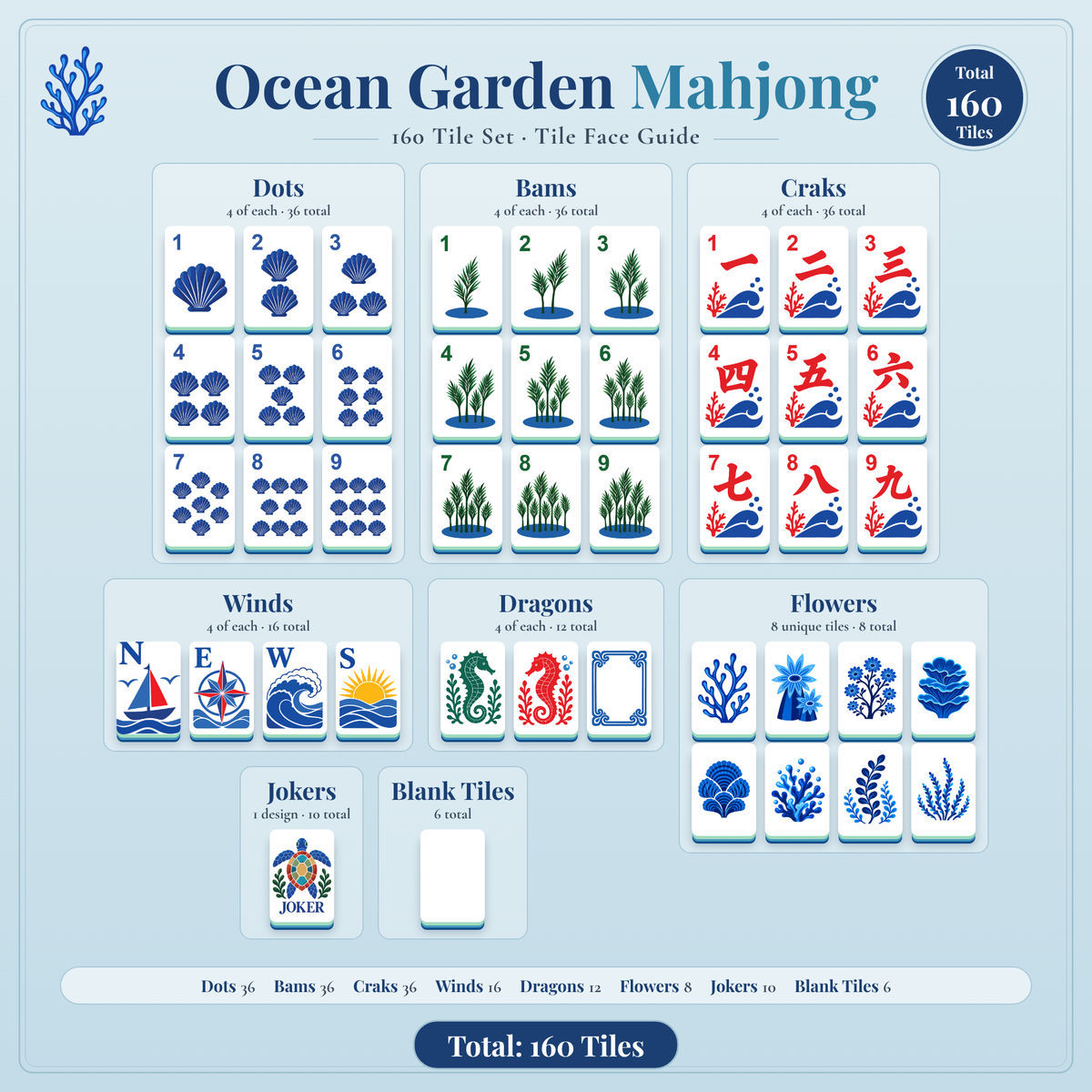
Singapore mahjong uses 144 tiles (Bams, Craks, Dots, 1–9 each; winds; dragons; flowers) with hand-drawing and discarding similar to Hong Kong rules, emphasizing melds and terminal/honor pungs. Wright-Patterson mahjong, played primarily among U.S. military communities, uses the American 152-tile format with jokers, the Charleston pre-game exchange, and hands drawn only from that year's National Mah Jongg League card—a rigid, standardized system unlike Singapore's more flexible traditional structure. Singapore games typically last 3–4 hours with cash scoring; American Wright-Patterson rounds are shorter and rely on hand validation against a printed card.
What is Singapore mahjong's core rule set?
Singapore mahjong follows classical East Asian rules: players draw and discard to form melds (pungs, kongs, chows) and a pair, with emphasis on concealed hands until win. There are no jokers; no pre-game tile exchange; all hands are traditional, not deck-dependent. Scoring is based on points for concealed melds, winds, and lucky combinations, accumulated across rounds—often played for stakes.

How does Wright-Patterson mahjong differ in tile count and format?
Wright-Patterson is American mahjong: 152 tiles plus 8 jokers, exactly as specified by the National Mah Jongg League. Singapore uses 144 tiles with no jokers. This 8-tile gap changes everything—jokers can substitute in American sets to complete melds; in Singapore they don't exist. American hands must match the annual card; Singapore hands follow traditional pattern rules only.
Which variant uses the Charleston and why does it matter?
Only American mahjong (including Wright-Patterson) uses the Charleston—the three-way tile pass before play begins. Singapore players deal and begin immediately. The Charleston adds strategy and chance: you can reshape your starting hand before the game starts, making Wright-Patterson feel more tactical and less luck-dependent on the initial draw.
How do hands and winning conditions compare?
Singapore: players construct hands freely from traditional patterns (chow/pung/kong/pair), often with bonus points for special combos. Wright-Patterson: hands are only valid if they appear on that year's National Mah Jongg League card. This means Wright-Patterson has ~200 legal hands per year; Singapore has hundreds of traditional patterns but no card restriction. You must own the current card to play Wright-Patterson legally; Singapore games require only rule knowledge and a pen.

What does the scoring and game length difference mean for players?
Singapore rounds often run 2–4 hours, play for cash, and accumulate scores across multiple hands in an evening. Wright-Patterson games are shorter (often 30–60 minutes per round) and use point cards and manual scoring after each hand ends. Singapore prizes concealed play and reading opponents; Wright-Patterson emphasizes speed, card knowledge, and exact meld construction.
Singapore vs. Wright-Patterson: Quick Comparison
Feature | Singapore | Wright-Patterson (American) |
Tile count | 144 (no jokers) | 152 + 8 jokers |
Hand selection | Traditional patterns | Annual League card only |
Pre-game exchange | None | Charleston (three passes) |
Chows allowed | Yes, can be exposed | No exposed chows in American play |
Game length | 3–4 hours typical | 30–90 minutes per round |
Scoring | Cash or points across evening | Points card per round |
Joker use | None | Substitute in melds |
Learning curve | Pattern-based, flexible | Card-dependent, rigid |
🀄 Shop best-selling mahjong sets →
What happens if you use the wrong tile set for your variant?
Using a 160-tile American set for Singapore rules will confuse players—the joker count and tile composition don't match. Similarly, playing Wright-Patterson with only a 144-tile classical set means you lack the exact 152-tile base American mahjong demands. Worse, you'll be missing the current year's League card, so no one can verify hand legality. Before buying tiles, confirm your group's variant and whether you need a specific annual card. American sets work only for Wright-Patterson and other American games.
How to choose the right equipment for your game
If you play Wright-Patterson (American mahjong):
Buy a 160-tile acrylic set designed for American play (152 tiles + spares).
Ensure you have the current year's National Mah Jongg League card.
Pair your set with a mahjong mat for clean, durable play surfaces.
Add racks with pushers to organize your hand and reduce table fatigue.
If you play Singapore or classical variants:
You need a traditional 144-tile set (not sold by Mahstead, which specializes in American mahjong).
Verify your rules source before buying anything.
No annual card is required; rules are fixed and traditional.
🎁 See our most-loved mahjong sets & accessories →
Real table mistakes to avoid
Using American jokers in Singapore. Jokers don't exist in Singapore; if someone includes them, the game is broken. Check your tile bag before starting.
Forgetting the current League card for Wright-Patterson. Without it, you can't validate hands. Expired cards change hand legality year to year.
Mixing variant rules mid-game. Wright-Patterson has no chows you can expose; Singapore does. Agree on the variant before shuffling, not halfway through a hand.
Not accounting for game length. Planning a 2-hour evening? Singapore may run over. Wright-Patterson fits tighter schedules. Choose your variant based on available time.
What to check before you buy
Which variant does your group actually play? Ask directly—don't assume.
Do you have the current year's League card if playing American? (Required for Wright-Patterson, not needed for Singapore.)
What tile count and composition does your variant require? (152 American vs. 144 classical.)
Will you play casually or competitively? (Casual allows flexibility; competitive demands exact rule adherence and current materials.)
How long are your typical game sessions? (Singapore = longer; American = shorter, flexible.)
✨ Find your Mahstead set — free US shipping →
For American Wright-Patterson players, our engraved and specialty sets combine durability with custom designs, so your tiles reflect your group's style while meeting exact American mahjong standards. Singapore players should seek classical 144-tile suppliers who specialize in that traditional format.

FAQ
Can I play Wright-Patterson with a Singapore tile set?
No. Wright-Patterson requires exactly 152 tiles plus 8 jokers; Singapore uses 144 with no jokers. The tile composition is incompatible, and jokers function differently in American rules—they substitute in exposed melds, which doesn't apply to classical play.
Where is Wright-Patterson mahjong most popular?
Wright-Patterson Air Force Base in Ohio gave the variant its name, and it remains common in U.S. military communities and retired military circles. American mahjong more broadly is widespread among civilian players across the U.S., particularly in retirement communities and social clubs.
Do I need a new card each year for Singapore mahjong?
No. Singapore mahjong uses fixed, traditional hand patterns that don't change annually. Only American mahjong (Wright-Patterson included) requires a new League card each spring; hands are deck-dependent and rotate.
How long does a typical Wright-Patterson game last?
Most players finish a round in 30–90 minutes, depending on table speed and hand complexity. Singapore games often run 3–4 hours, with players cycling through multiple hands and accumulating evening-long scores.
Are there jokers in Singapore mahjong?
No. Singapore uses classical 144-tile sets with no jokers. Jokers are an American innovation and are integral to Wright-Patterson and all American mahjong variants.
Can beginners learn Wright-Patterson faster than Singapore?
Not necessarily. Both require pattern recognition and strategy. Wright-Patterson is rigid—hands must match the card exactly—so once you memorize the card structure, it feels mechanical. Singapore is flexible—more traditional patterns to learn, but more forgiving of creative play. Beginners often find Singapore's rule set simpler once they grasp chows and pungs.
What does the Charleston do that Singapore doesn't offer?
The Charleston lets you reshape your starting hand before play begins—three passes of tiles among the four players. This adds a second decision layer: not only do you choose what to draw and discard, but you also engineer your starting position. Singapore has no pre-game exchange, so luck of the deal carries more weight.


View More
View More
View More
