
Vietnamese Mahjong Quick Start Guide for Beginners
Last updated: Nov 23, 2026
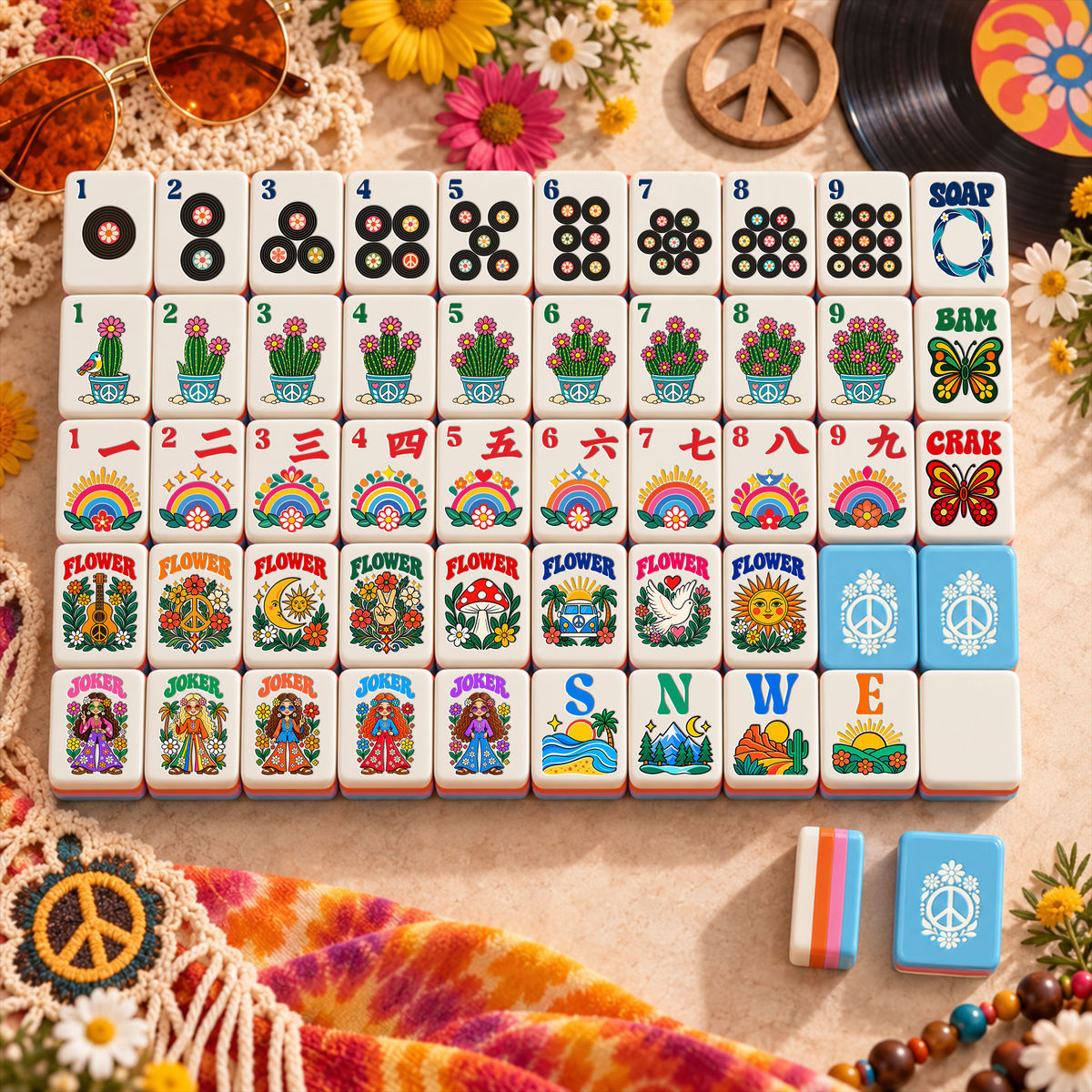
Vietnamese mahjong uses 136 tiles (suits 1–9 Dots, Bams, Craks; winds; dragons; flowers) dealt 13 each to four players, with one drawn per turn. Players form melds (pungs, kongs, chows) and declare when holding a winning hand of four sets plus a pair. Games typically last 20–40 minutes per hand. Unlike American mahjong—which requires the current year's card and blocks chows to exposed play—Vietnamese mahjong allows any chow (1-2-3, 7-8-9) to be called from the discard pile or completed from your hand. Scoring is straightforward: wins earn points from all players or just the discarder, scaled by hand type (concealed, lucky, simple). Beginners play on luck and pattern recognition; no advanced card memory required. A standard set with clear numerals helps everyone learn faster.
How is Vietnamese mahjong different from American or Chinese mahjong?
Vietnamese mahjong sits between Chinese and American in complexity. Chinese mahjong (Hong Kong style) allows chows in exposed melds; Vietnamese does too, but simpler. American mahjong locks chows—you can only expose pungs, kongs, and quints, never sequences. Vietnamese uses 136 tiles; American uses 152 with 8 jokers and a seasonal card; Chinese varies by region. Hand values in Vietnamese are tied to the hand type (concealed win, "lucky" win, etc.), not multiplier scoring like American. If you've played American, Vietnamese feels faster and more open. If you've played Chinese, Vietnamese is slightly looser on Kong rules. The key: Vietnamese lets you call any completed chow from the discard pile, making the game more social and reactive.

What tiles do you need and how do they split into suits?
Vietnamese mahjong needs exactly 136 tiles: four copies each of numbers 1–9 in three suits (Dots, Bams, Craks), four each of four winds (North, East, South, West), four each of three dragons (Red, Green, White), and eight flowers (two each: Plum, Orchid, Bamboo, Chrysanthemum). Dots typically show circular pips; Bams show bamboo sticks; Craks show Chinese characters or symbols. Winds and dragons are marked by symbol or character; flowers by their classical names. A full set also includes wind indicator and (in formal play) a dice to set the starting dealer. Most Western players start with a 160-tile set that includes spare tiles for learning, since losing even one from 136 disrupts the game's balance—our best-selling mahjong sets come with spares so you're never short mid-game.
🀄 Shop best-selling mahjong sets →
What's the step-by-step deal and turn order?
Four players sit in compass order (East, South, West, North). East dealer shuffles all 136 tiles face-down and builds a 17-tile wall per side. Each player draws 13 tiles (East draws first); East draws one more, then the turn passes. On your turn: draw the newest tile from the wall (or the live discard), form your melds, then discard one tile face-up. Your discards are called aloud; opponents declare within seconds if they claim it for a pung, kong, or chow. If no one calls your discard, play moves to the next player. You win when you hold exactly four melds (pung, kong, or chow) plus a pair. Winning from a draw is "concealed"; winning from a discard is "open." Each win type scores differently, paid by all players or the discarder. Games move fast—most hands finish in 15–25 minutes once everyone knows the hand patterns.
What are the main winning hands and how do you score?
Vietnamese mahjong recognizes five main win types based on hand composition and how the win occurred. A concealed win (zimo or "self-drawn") means your last tile was drawn from the wall—highest score, paid by all players. An open win (hu or "win from discard") means you declared on an opponent's discard—paid by that discarder and often the entire table, at a lower rate. A lucky win (e.g., winning on your own first turn or on the dealer's opening draw) carries bonus points. A simple hand wins with no honors (dragons or winds), lower payout. A all-chows hand (no pungs except the pair) is rare and high-value. Scoring multiplies the hand value: concealed wins are worth 2–4 times a basic hand; lucky wins earn 1.5× to 3×. Most casual games use simplified scoring: East player pays all others double; non-dealers pay East triple on East wins, double otherwise. Exact payouts vary by region and table house rules. Before you play, agree on a scoring method with your group—it's easier than learning the National Mah Jongg League card rules used in American mahjong.

What common mistakes should beginners avoid?
Mistake 1: Declaring a win too early. Vietnamese mahjong requires exactly 14 tiles (four melds + one pair). Many beginners count wrong. Count aloud: "Three dragons = one set, three 5 Dots = one set, three West winds = one set, one Kong (four 3 Bams) = one set, two 8 Craks = pair. Four sets + pair = 14 total. Good to go." Write it down if unsure.
Mistake 2: Forgetting the pair rule. Your winning hand must include one pair. Three of a kind plus a fourth tile is not a win—it's a pung (three) plus an extra tile. This trips up players coming from American mahjong, where quints (five) are allowed.
Mistake 3: Calling or exposing melds carelessly. Once you declare a pung, kong, or chow face-up, you can't change it. If you declare a chow (1-2-3) and realize you needed that tile elsewhere, it's too late. Declare only when sure.
Mistake 4: Not paying attention to discards. In Vietnamese mahjong, any discard can be claimed. If your opponent throws a tile, you have one turn to call it or lose the chance. Slow play confuses the table.
Mistake 5: Misunderstanding Kong rules. A Kong (four identical tiles) can be called from a discard or built from your hand. If an opponent adds a fourth tile to your exposed pung, they form a Kong and draw an extra tile. This changes hand counts mid-game.
Prevention checklist:
Count your tiles out loud before declaring a win.
Write the hand on paper: "Pung 5D, Pung 3B, Kong 1C, Chow 2-3-4C, Pair 7D."
Call melds only when 100% certain.
Watch every discard; bid within one second or forfeit the tile.
Ask a veteran to verify your hand before declaring on your first few games.
What do you need to host a game at home?
To start a casual game, you need one mahjong set with 136 clear tiles, a smooth table (preferably 36 inches or larger for comfort), and four people who can commit 1–2 hours. A padded mahjong mat protects tiles and dampens sound (helpful in apartments); racks with pushers keep hands organized and speed play. A dedicated mahjong bag or case protects your set during storage and transport. Optional: a wind indicator tile (marks the current dealer) and two dice for formal dealing. Most home games skip the formality and just rotate dealers after each win.
Item | Why it matters | Beginner need? | Upgrade later? |
136-tile set | Core game—can't play without it | Yes | Quality set lasts 20+ years |
Padded mat | Protects tiles, quiets the game | No, use a cloth | Yes; speeds tile sliding |
Racks with pushers | Organizes hands, hides tiles | No, hold in hands | Yes; faster, cleaner play |
Bag or case | Stores and transports tiles safely | No, use a box | Yes; protects investment |
Wind indicator | Marks dealer officially | No, rotate verbally | Nice-to-have for serious groups |
Dice | Sets starting wall formally | No, count to 13 | Nice-to-have for formal games |
🎁 See our most-loved mahjong sets & accessories →
What to check before you buy a set
Tile clarity: Numerals and suit symbols must be readable from across a table—at least 0.5 inches wide per numeral. Test: hold a tile 2 feet away; if you squint, the set isn't beginner-friendly.
Tile thickness and weight: Tiles should weigh 8–12 grams each and be thick enough to shuffle without chipping. Thin or hollow tiles break in your first week.
Suit markings: Vietnamese sets often mark Dots as circles, Bams as bamboo sticks, Craks as Chinese characters. Beginners do better with clear pictorial symbols than tiny glyphs.
Complete count: Verify all 136 tiles are present (36 per suit, 4 winds, 3 dragons, 8 flowers). Missing even one ruins gameplay.
Spares included: Sets sold as 160-tile packages include extra jokers and blanks for practice, so you're never scrambling to replace a lost piece.
Surface finish: Matte or semi-gloss tiles grip your hand better than ultra-glossy; glossy tiles fly across the mat unpredictably.
Storage and case: If ordering online, confirm the set arrives in a protective box, not loose in a bag.
✨ Find your Mahstead set — free US shipping →

FAQ
Can I play Vietnamese mahjong with an American mahjong set (152 tiles + jokers)?
Technically yes—ignore the jokers and extra tiles, use only the 136 core tiles (Dots, Bams, Craks, winds, dragons, flowers). But American sets often lack the 8 flowers, so you're missing pieces. Start with a set designed for Vietnamese play to avoid confusion.
How long does a typical Vietnamese mahjong game take?
One hand (one win) takes 15–25 minutes for beginners, 10–15 for experienced players. A casual session is usually 3–6 hands, so 45 minutes to 2 hours total. Games end when players agree—no fixed number of hands.
What's the difference between a chow and a pung in Vietnamese mahjong?
A pung is three identical tiles (e.g., three 5 Dots). A chow is three consecutive tiles of the same suit (e.g., 3-4-5 Bams or 7-8-9 Craks). Pungs are common; chows are easier to complete but riskier to call from a discard if you need that tile elsewhere.
Can I play Vietnamese mahjong with fewer than four players?
Yes, but the game changes significantly. Three-player variants use 108 tiles (one copy fewer per tile) and different winning hands. Two-player games exist but are rarely played casually. Stick to four players for the standard game until you've mastered it.
Do I have to use the same wind order every game?
No. Players can agree to rotate the dealer, or the winner can stay as dealer for the next hand (common in friendly games). Formal play designates an initial dealer before round one, then rotates East → South → West → North after each hand, regardless of who won.
What happens if someone calls a tile but doesn't need it (a false call)?
In casual play, false calls are penalized by giving back the tile to the discarder and forfeiting your turn or paying a penalty (agreed beforehand). In formal play, a false declaration can cost you money. Always be certain before calling a discard.
How do I know if I'm one tile away from winning?
You're "one away" (called "waiting" or "ting") when you have four complete melds and need only one more tile to form a pair, or you have three melds, one incomplete chow or pung, and a pair. Count your 13 tiles: if any single remaining tile completes the hand, you're waiting. Alert the table so they know not to discard that tile—this speeds play and prevents accidental losses.


View More
View More
View More
