
Two Player Mahjong Tips: How to Adapt and Win
Last updated: Nov 23, 2026
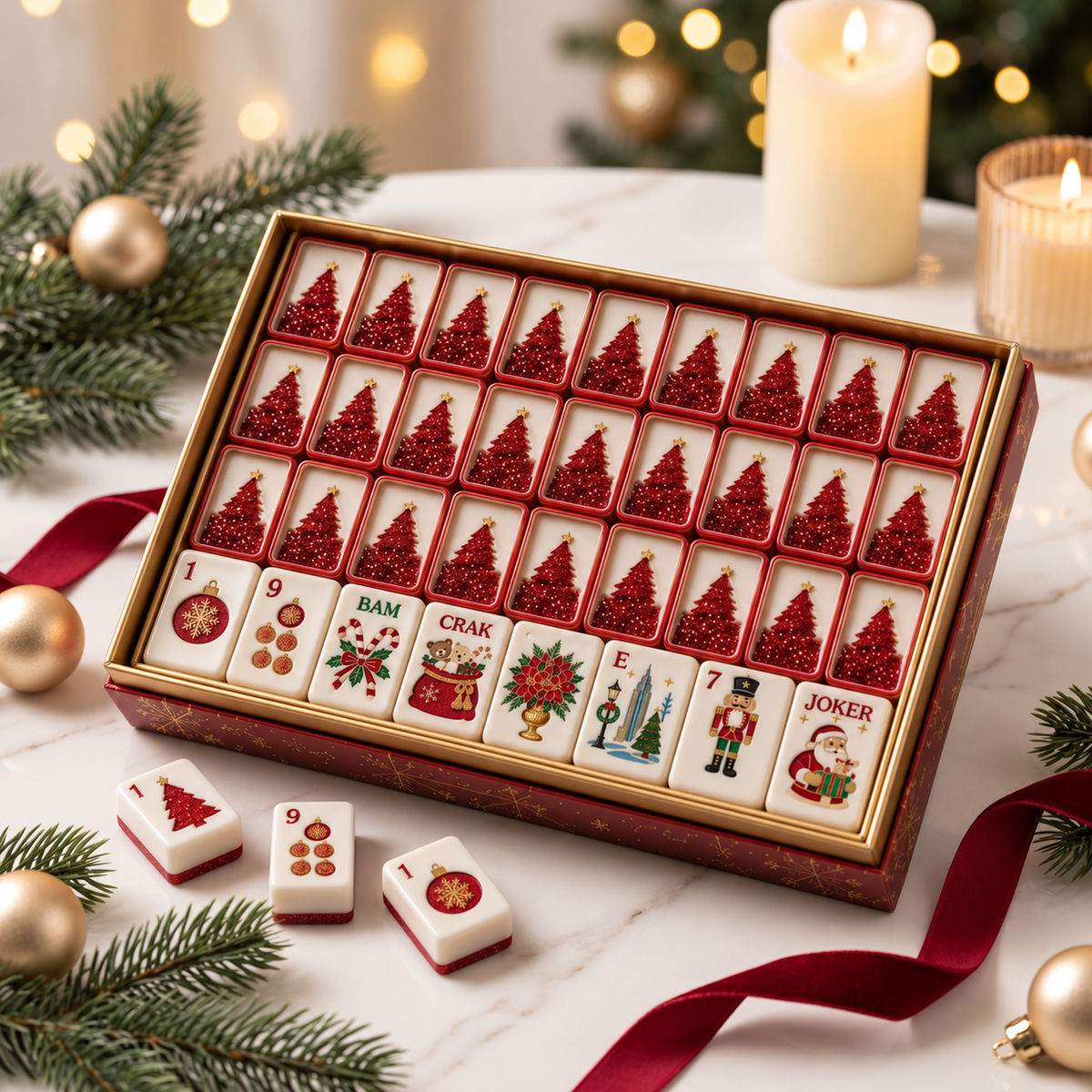
American mahjong is designed for four players; two-player games require house rules because the tile economy changes dramatically. Most players adapt by reducing the Charleston (or skipping it), dealing fewer tiles per person, and allowing some tiles to remain undrawn (the wall stays larger). Some groups use the National Mah Jongg League card but lower hand point minimums; others play a simplified variant with fewer unique hands. No official "two-player American mahjong" exists, so you and your partner set the rules before dealing. Play three rounds (East/South/West) with one player East each round, keep score on paper, and agree whether you're playing for fun or points. Mahstead's best-selling acrylic sets work just as well for two-player house rules—the tiles don't change, only how you distribute and score them.
Most of us learn mahjong at a table of four, where the tile math, the Charleston passing ritual, and the hand structure all fit together tightly. Two-player mahjong breaks that rhythm because there are fewer tiles in play and fewer walls to draw from. The good news: it's absolutely playable if you agree on rules upfront and adjust your strategy to the new tile flow.
What changes when you go from four players to two?
The core issue is tile distribution. With four players, 108 tiles go out in the Charleston and dealing (28 per player, 4 for flowers/loose tiles, plus 16 in each player's wall). With two players, you have the same 152 playing tiles but no wall between you—it's all one pool. Most two-player house rules deal 13–16 tiles per person, skip or shorten the Charleston to one pass instead of three, and leave 80–100 tiles in the center wall for draws. This slows the game and makes tile reading more important because you can't count on two other players to discard certain suits. Start by dealing each player 14 tiles and one flower tile each; leave the rest in the wall.

How do you modify the Charleston for two players?
The Charleston (the pre-game tile-passing ritual) isn't practical with two players because you'd each pass to an empty seat. Most two-player games skip it entirely or use a single "exchange round" where each player passes eight tiles to the other across the table. Some groups pass 14 tiles (one full hand) and then deal from the wall as normal—this is faster and keeps the element of chance. If you do use a simplified Charleston, agree before dealing whether it's mandatory or optional and whether all tiles are passed face-down. The simplest rule: deal 14 tiles each, no Charleston, and start drawing immediately. This keeps the game moving and focuses play on what's on the table, not on pre-game maneuvering.
How do you choose hands from the National Mah Jongg League card in a two-player game?
The League card is still valid, but you'll want to adjust point minimums because two players see fewer discard cycles. On the standard card, hands range from 20 to 50 points or more; in a two-player game, 20–35 points is often more realistic. Some players photocopy a section of the card and focus only on "easy" hands (low points, fewer jokers) for their first game; others play a completely separate set of two-player hands they've written themselves—typically simpler patterns with fewer required sets. A safer approach: pick any hand from the card, but count jokers more generously. For example, a hand that normally allows two jokers might allow three in two-player mode. Write your house rules down (hand minimum, joker allowance, how many tiles stay in the wall) before the first deal and stick to them for at least one session so you can see what works.
What's your strategy when there's less tile flow and fewer discard options?
With four players, each discard creates signal and noise—you can't track every tile. With two players, you'll remember almost every tile that's been thrown. This flips the advantage to defensive play: be cautious about discarding singletons in any suit, because your opponent will see the pattern and adjust. Focus on declaring "ready" (one tile away from a hand) only when you have a solid backup plan, because your opponent will stop throwing tiles you need. Conversely, watch what your opponent picks from the wall; if they're taking Bams, assume they need Bams and throw Dots and Craks more freely. Keep your walls (your rack of hidden tiles) organized by suit and number; racks with pushers make it far easier to spot your own patterns and keep your plays tight under pressure. With fewer turns between your draws, every pick matters more.

How do you keep score fairly in a two-player game?
Standard American mahjong scoring involves all four players; two-player scoring is custom. The simplest rule: the winning player scores their hand's point value, and the losing player pays double (so a 25-point hand is a 50-point swing). Alternate East each round (play three rounds total, or nine if you want to go longer), and the player with the higher total score wins. Keep a running tally on paper so there's no dispute at the end. Some groups play "zero-sum": the loser pays the winner their hand's exact points, and ties mean no payment that round. If you're playing for stakes, agree on the point value before dealing. If you're playing casually, just agree on how many rounds you'll play and tally the score at the end. The key is clarity: write down the rule before the first hand and follow it consistently.
🀄 Shop best-selling mahjong sets →
Can you play two-player mahjong without the National League card?
Yes—in fact, many casual two-player players skip the card entirely and play "hand-free" or use simplified house hands. Common two-player hands include any three-tile combination (three Bams, three Dots, three Craks, any three winds, any three dragons, etc.) grouped into three sets plus a pair, or looser "point-count" systems where any completed pattern scores points based on the tiles used. This speeds up play and lowers the barrier for beginners. Chinese mahjong (Mahjong solitaire variant) and Hong Kong mahjong also have two-player modes with different hand requirements, though these are less common in American circles. If you and your partner are learning, start with the simplified version: make your own hands, play for fun, and graduate to the League card once you're comfortable with the tile mechanics. You don't need special rules or modified sets—any American mahjong set works.
Factor | Four-Player Standard | Two-Player Adaptation | Why It Shifts |
Tiles dealt per player | 13 + 1 flower | 14 + 1 flower | Fewer players, but play must still last multiple rounds |
Charleston | 3 passes across 4 players | 1 pass or skipped | No "next" player; reduces setup time |
Wall draw size | 16 per player | 80–100 total in center | Same total tiles; less wall pressure per player |
Hand minimum (points) | 20–50 (varies by card) | 20–35 (more achievable) | Fewer draw cycles; easier hands work fine |
Joker allowance | Per card rules | +1–2 more jokers often allowed | Tile availability lower with 50% fewer players |
Rounds per session | 4 (N/E/S/W) | 3–9 (house choice) | No fixed rule; play as long as you want |
What should you check before you buy a set for two-player mahjong?
You don't need a special "two-player" set—any standard American mahjong set works. What matters is tile clarity and durability because two-player games mean longer draw cycles and more tile handling. Look for sets with crisp, deeply engraved or printed tile faces so you can read Bams, Craks, and Dots quickly across a short distance (you'll be closer to your opponent than in a four-player game). Acrylic tiles are tougher than bamboo or bone if you play frequently, and they're easier to see under any lighting. Get a mat to protect the tiles and keep them from sliding; a quality mahjong mat also gives you a clear boundary for your hand and the discard area, which is crucial when only two people are playing. If you travel to play, a bag or case keeps tiles and a mat organized. Test one hand before committing to a multi-session rule set—you'll spot problems quickly.
✨ Find your Mahstead set — free US shipping →
Common mistakes in two-player mahjong—and how to dodge them
Forgetting to agree on hand minimums. You start the first hand and realize you both want different hands from the card (or one wants the card and the other doesn't). Solution: write down the three to five house rules on a piece of paper and keep it in sight.
Losing track of discard position. With two players sitting across from each other, it's easy to confuse whose discard is whose. Use a small separator or keep discards in a straight line between the two of you.
Playing too aggressively too early. Two-player tile flow is slow; declaring "ready" before turn four almost always tips your opponent, and they'll lock down their hand. Play the first five draws defensively and only push forward once you're ahead.
Misjudging wall size. If you leave too few tiles in the wall, one player might draw and leave none for the other—creating a stalled hand. Agree on the wall size before dealing and stick to it.
Skipping score tracking. Without a scorecard, disputes arise. Write down every hand, the winner, and the points paid. It takes 10 seconds and saves arguments.
The core strategy for two-player mahjong is simpler than four-player: fewer players mean tile patterns emerge faster, so read the table ruthlessly, defend your weak suits, and don't overcommit early. Agree on your rules, deal from the same best-selling sets everyone uses for four-player games, and play at least three hands so the variance evens out. Two-player mahjong isn't a formal variant, but it's a solid way to practice tile memory and decision-making when a full table isn't available.
🎁 See our most-loved mahjong sets & accessories →

FAQ
Is two-player mahjong an official American mahjong variant?
No. The National Mah Jongg League card is designed for four players. Two-player games use house rules—agreed-upon modifications to dealing, the Charleston, hand minimums, and scoring. There's no single "correct" way to play.
How many tiles do you deal each player in a two-player game?
Most two-player house rules deal 13–16 tiles per player plus one flower tile each, leaving 80–100 tiles in the center wall for draws. Agree on the number before the first deal and keep it consistent.
Can you use the National Mah Jongg League card in a two-player game?
Yes, but you'll want to lower the hand point minimum (20–35 instead of 20–50) because fewer draw cycles make some hands harder to build. Some groups allow extra jokers or skip the card entirely and play simplified hands.
How do you keep score in two-player mahjong?
The simplest method: the winner scores their hand's point value, and the loser pays double. Alternate East each round and play three to nine rounds total. Keep a running tally on paper.
What's the biggest mistake beginners make in two-player mahjong?
Not agreeing on rules before the first hand. Disagreements over hand minimums, Charleston rules, and joker allowance can derail a session. Write your three to five house rules down and follow them consistently.
Do you need a special mahjong set for two-player games?
No. Any standard 152-tile American mahjong set works. What matters is tile clarity and durability, since you'll be reading tiles across a closer distance and handling them more often.


View More
View More
View More
