
Three Player Mahjong with 2 Players: Rules & Setup
Last updated: Nov 23, 2026
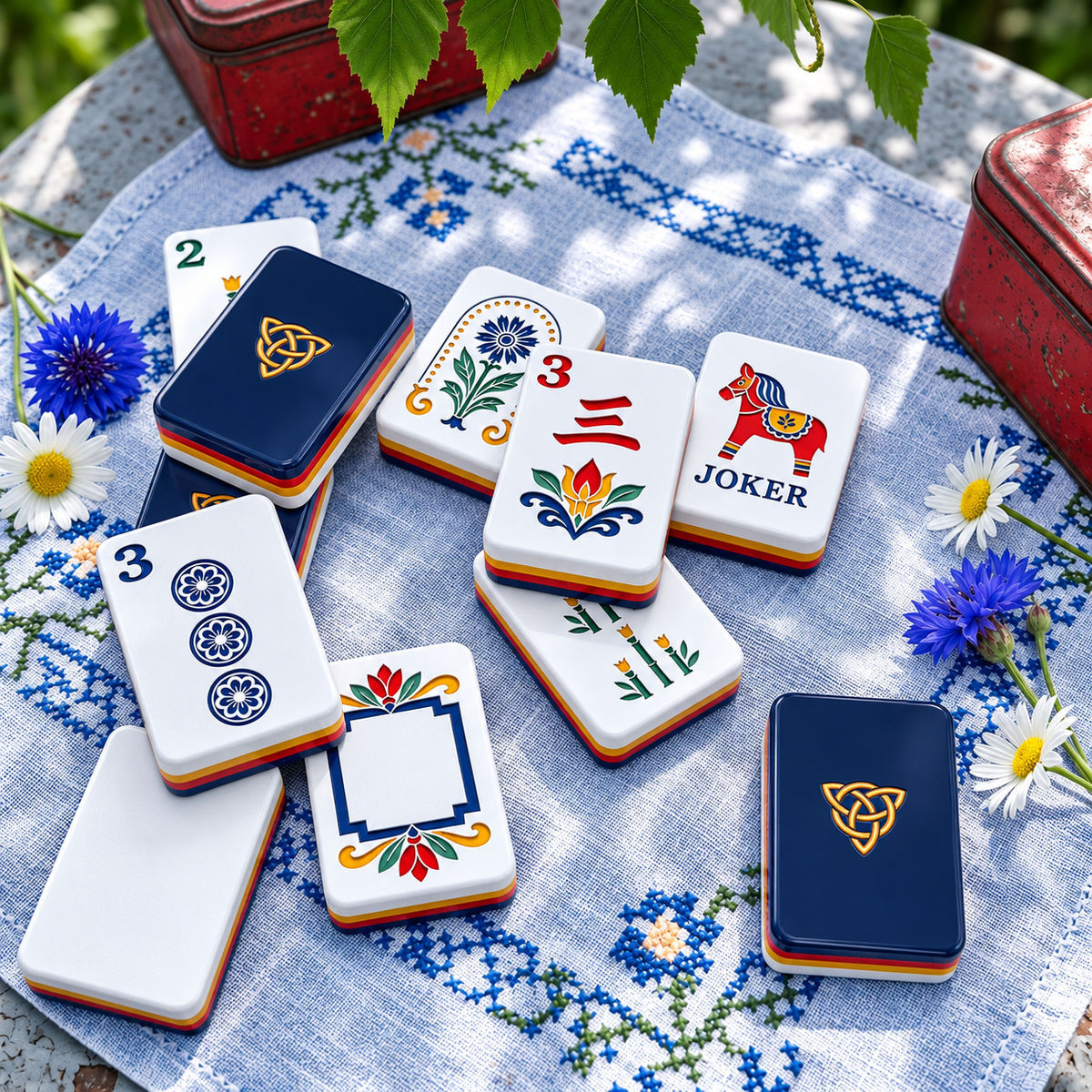
American mahjong is designed for four players and one 152-tile set. True three-player American mahjong doesn't exist in the National Mah Jongg League rulebook, and two-player American mahjong is structurally difficult because the tile-passing Charleston becomes chaotic and hand diversity collapses. Your real options: play an official two-player variant (sometimes called "2-player American" with adapted discard rules and reduced tile count); use a three-player ghost seat (a computer or dummy fourth hand that no one plays); or switch to Chinese, Riichi, or Hong Kong mahjong, which have legitimate two- and three-player versions. We recommend checking the official rulebook for your preferred variant before buying a set, since tile counts and hand structures differ sharply.
Why American Mahjong Breaks Below Four Players
American mahjong's entire tile economy rests on four independent players. The Charleston—the pre-game tile-passing ritual—requires exactly four hands to shuffle and balance the distribution. Below four players, one person receives tiles from both sides every round, creating artificial cycles. More critically, you cannot access enough hand variety on the current year's card to sustain play fairly. The card was designed assuming four distinct discard streams; two or three players collapse that diversity into repetition, and hands either become nearly impossible or trivially easy. The 1 East player advantage also amplifies when fewer seats are in play. Honest assessment: playing American mahjong with fewer than four people at the same table requires rule changes that aren't published or tested. Most groups don't attempt it.

Option 1: Use a Ghost Fourth Hand
Many two-player groups run a "dummy" or "computer" fourth seat. One player or both players manage the missing hand—no one actually plays it, but it discards, wins, and counts in the rotation. This preserves the Charleston and tile distribution. Set up three active hands and one face-down hand that neither player controls. Before play starts, deal the ghost hand normally. On the ghost's turn, draw a tile and discard it face-up (or a player can randomly select its discard from its hand). The ghost cannot win, so any hand that would go out is blocked if it's the ghost's turn to discard the winning tile. This works mechanically but feels artificial and slows the game. We've used it in a pinch when a fourth player cancelled, but honesty: it's not satisfying for long sessions. Use it for a single game if a regular is late, not as a standard format.
Option 2: Two-Player Variants (Non-American)
If you're willing to leave American rules behind, legitimate two-player formats exist in Chinese, Hong Kong, and Riichi mahjong. Chinese two-player often reduces the hand to 13 tiles, doubles the wall, and allows chows (sequences) which American does not. Hong Kong two-player uses similar logic—13-tile hands, adapted scoring, unique melds. Riichi two-player (called "heads-up" in some contexts) runs with 13-tile hands and different winning patterns. All of these are fast, fair, and actually designed for two people. The catch: tile counts, hand structure, and scoring differ dramatically from American mahjong. If you own an American set, these variants won't map directly to your tiles. You would benefit from a set designed for your chosen variant, since dragons, winds, and flowers serve different roles. A group moving to two-player Chinese or Riichi mahjong should invest in the correct equipment for that game, not try to force American tiles into it.

Option 3: Accept the Mismatch and Play as Solitaire Practice
Some players use a two-person setup for solo study of American hands. One person plays the caller (reads aloud from the season's card), and the other builds hand after hand against the clock, discarding by house rules instead of against opponents. This isn't competitive play—it's drill. Players rotate roles or do multiple rounds. It's genuinely useful for beginners memorizing hand patterns or for veterans testing speed and recognition. However, it's not a game, so it doesn't replace your weekly four-player session. Think of it as cross-training, not a format unto itself.
🀄 Shop best-selling mahjong sets →
When Two Becomes Three: Adapting for Real Play
If you're committed to adapting American mahjong for three players, here's the honest framework: you must decide whether you're compromising fairness, authenticity, or both. A common compromise runs three active hands and a ghost fourth seat, with an explicit house rule that no one explains in the official League card (because it isn't there). Another approach: each round, one of the three players takes the ghost hand for one cycle, then returns to active play—a rotating phantom seat. This distributes the disadvantage. However, you lose the consistent four-seat structure that the card and scoring system assume.
Format | Player Count | Fair? | Official? | Speed | Learning Curve |
American + ghost | 2–3 + dummy | No | No | Slow | Moderate |
Two-player Chinese | 2 | Yes | Yes | Fast | Steep |
Two-player Riichi | 2 | Yes | Yes | Fast | Steep |
American solitaire drill | 1–2 | N/A | No | Variable | Low |
Common Mistakes When Playing Short-Handed
Mistake 1: Not discarding the ghost hand fairly. If one player controls the dummy, bias creeps in. Establish a rule before play—random draw, strict rotation, or a neutral method—and stick to it.
Mistake 2: Forgetting the Charleston still requires four turns. Even with a ghost seat, all four hands must pass tiles. If you skip the ghost's Charleston turn, tile distribution becomes broken and hand difficulty spikes.
Mistake 3: Assuming your current set is enough. A standard 160-tile American set includes 152 playing tiles and spare tiles. You have everything you need for four players, but if you're experimenting with two- or three-player variants from other mahjong traditions, you may need a different set designed for that format.
Mistake 4: Mixing rule variants mid-game. Decide on your format before the first hand. If you switch from "ghost seat" to "rotating phantom" mid-session, scoring and hand availability become incoherent. Write it down.
What to Check Before You Buy
Before purchasing a set, confirm your target format. If you're staying American, any standard American set works for four players—our best-selling collection includes 160-tile sets suited to weekly games and tournaments. If you're exploring two- or three-player variants from other mahjong families, research whether those traditions have published rules and what tile counts they use. Don't assume your American set transfers cleanly. Many Asian mahjong traditions use different tiles, scoring sequences, and hand structures. Buying the right set for your chosen variant—rather than stretching an American set into a format it wasn't designed for—saves frustration and keeps the game fair.
🎁 See our most-loved mahjong sets & accessories →
If you do stay with American mahjong and need to accommodate a two- or three-player session, consider what your group can commit to: a ghost seat, a variant rule, a different mahjong tradition, or waiting for a fourth. Each choice has a cost in authenticity or speed. After years of hosting weekly games, we've found that four players and the official American rulebook create the cleanest, fairest experience. When numbers are short, a solitaire drill or a pivot to a variant purpose-built for fewer players beats improvisation. Invest in the format you'll actually play, and the game stays fun.
✨ Find your Mahstead set — free US shipping →

FAQ
Can I play American mahjong with exactly two players?
Not fairly or officially. American mahjong requires four independent discard streams for the Charleston to work and the tile count to balance. Two-player American is mechanically possible with heavy rule changes, but it's not a League format and hand difficulty becomes unreliable.
What's the fastest way to play if my fourth cancelled last minute?
Run a ghost hand. Set up all four seats normally, then randomly discard or rotate control of the dummy hand on its turn. It preserves tile distribution and the game flow stays mostly normal. Finish your session, but don't adopt it as a permanent format.
Should I buy a different set for two-player mahjong?
Only if you're switching to a non-American variant like Chinese or Riichi two-player. These use different tile counts and structures than American. If you're sticking with American, one 160-tile set handles any number of players from two to four.
Is three-player American mahjong a real thing?
No. The National Mah Jongg League doesn't publish three-player American rules. Some groups use a rotating ghost seat or adapted hand sizes, but these are house rules, not official, and fairness varies. Three-player variants exist in Chinese and Hong Kong mahjong with full rule support.
Can I play American mahjong solo?
Yes, as practice drill, not competitive play. One person or two people can call hands from the current year's card and build or recognize patterns against the clock. It's excellent for learning but isn't a game you'd keep score in.


View More
View More
View More
