
Two Player Mahjong: Rules, Variants & Setup
Last updated: Nov 23, 2026
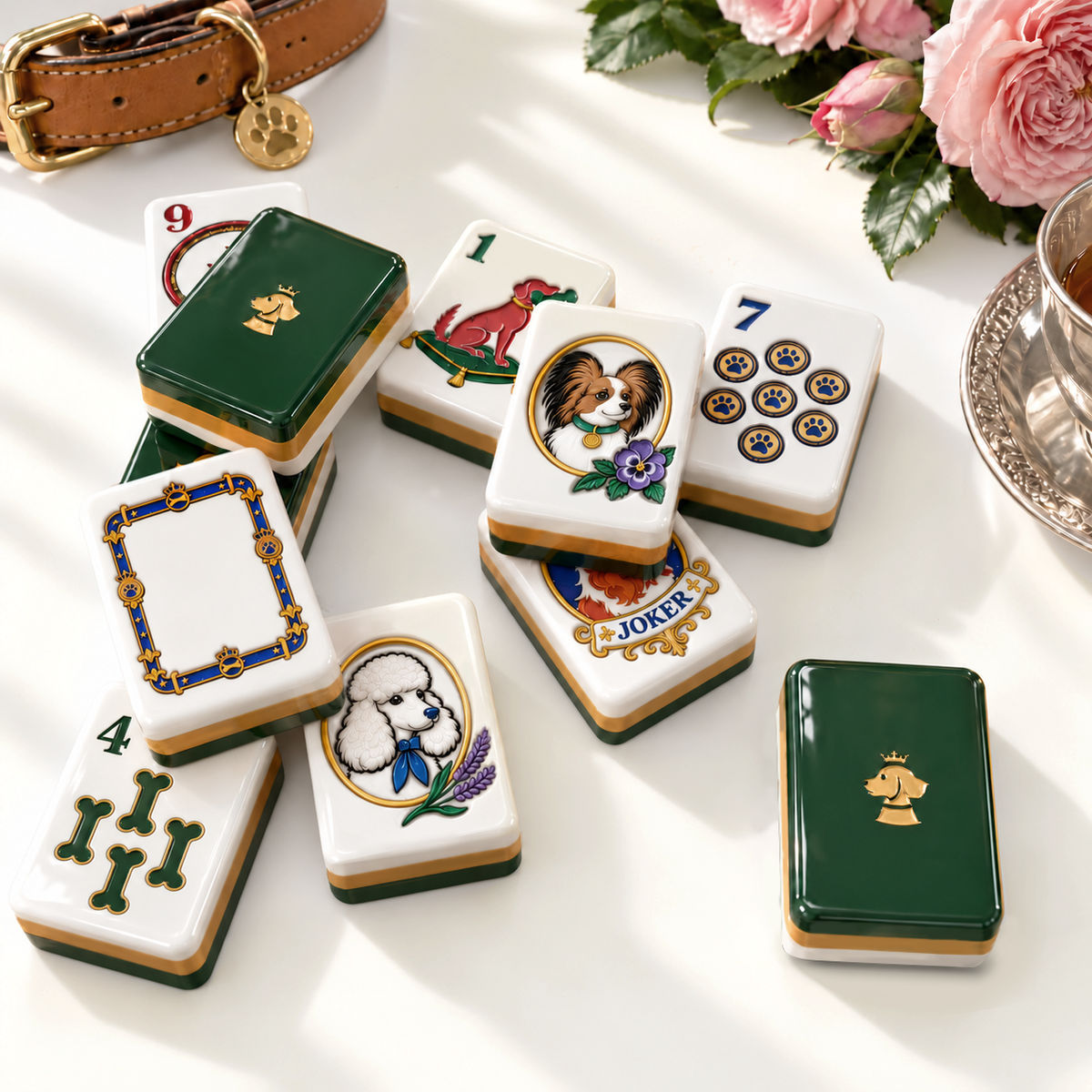
Standard American mahjong is designed for four players, but you can play with two using adapted rules. Most players either (1) use official two-player variants like Taiwanese or Hong Kong two-player, (2) play American mahjong with dealer cycles (one player holds East/South for multiple hands while the other cycles through West/North), or (3) draw from a reduced live wall. Two-player games typically last 15–30 minutes per hand depending on the variant and player skill. You'll need a full mahjong set—whether engraved American tiles or a standard acrylic set from our best-selling collection—plus the current year's NMJL card if playing American rules. Honest truth: two-player mahjong often feels faster and less strategic than four-player because fewer tiles circulate and hand patterns narrow. If you love the social rhythm of a full table, consider inviting a third or fourth player instead.
Two-player mahjong isn't the standard four-player format, but several variants and house rules let you adapt the game for two. Most players either use official two-player variants like Taiwanese or Hong Kong two-player, play American mahjong with dealer cycles (one player holds East/South for multiple hands while the other cycles through West/North), or draw from a reduced live wall. Two-player games typically last 15–30 minutes per hand depending on the variant and player skill. You'll need a full mahjong set—whether engraved American tiles or a standard acrylic set from our best-selling collection—plus the current year's NMJL card if playing American rules. Honest truth: two-player mahjong often feels faster and less strategic than four-player because fewer tiles circulate and hand patterns narrow. If you love the social rhythm of a full table, consider inviting a third or fourth player instead.
Can you play American mahjong with two players?
Yes, but not by the official rules. The National Mah Jongg League card assumes four seats and a full live wall. To adapt American mahjong for two, you either (1) skip the Charleston, deal 13 tiles to each player, and cycle the dealer/direction seats (one player stays East/South for 2–4 hands, then swaps), or (2) use a house rule where players draw from both ends of a shortened live wall. The hand patterns on the NMJL card remain the same—you're just limiting the number of tiles in play and rotating seats faster. This works in a pinch, but the game loses the tile-passing drama and the mathematical spread that makes American mahjong rewarding. Most players who want a genuine two-player experience switch to a variant designed for two.

What is the official two-player variant?
Hong Kong mahjong and Taiwanese mahjong both have true two-player modes. In Hong Kong two-player (also called "sanma" or three-player variant adapted to two), each player draws from a single wall that wraps around the table, and the hand composition shifts: some hands use exposed sequences (chows), some use hidden or semi-hidden sets. Taiwanese two-player mahjong often uses a dedicated "two-player card" or simplified hand list with patterns that work for a tighter tile pool. The rules differ significantly from American mahjong: Taiwanese variants allow chows (1-2-3, 2-3-4, etc.) and value winning hands differently. If you're serious about two-player, we recommend learning one of these variants fully rather than improvising American rules, because they're designed from the ground up for the speed and tile economy of heads-up play.
How do you score two-player mahjong?
Scoring depends entirely on the variant you're playing. American mahjong uses a fixed point value from the NMJL card (e.g., 40 points for a simpler hand, 70+ for a complex one); multiply that by four in four-player to distribute payment. For two players, some houses pay double (the non-winning player pays double), while others use the four-player payout but only two people settle. Hong Kong two-player uses fan (multiples of a base unit) and points calculated by tile count, hand pattern, and whether the win was self-drawn or called. Taiwanese mahjong has its own multiplier system based on hand rarity and winning method. The key rule: agree on scoring before you deal. Write it down if you're playing house rules, so disputes don't derail the game. Most casual two-player games use a simple tally: winner gets 1 point per hand, first to 5 or 10 wins the session.
What's the best way to set up a two-player game?
Start by choosing your variant: if you want quick, social play without strategy depth, use adapted American rules (skip Charleston, cycle dealer every 1–2 hands). If you want a legitimate game, learn Hong Kong or Taiwanese two-player fully—watch a tutorial video, read a rulebook, and practice one hand before playing for points. Then set up your space: you need a clean, flat surface (a mahjong mat sized for four players works fine for two; use just two sides of the mat). Each player sits opposite the other; the wall goes between you. Deal and draw the same way you would in four-player, but remove seats West and North from the rotation—or, in Hong Kong two-player, use a dealer-and-non-dealer system for the entire game. Keep the NMJL card or your variant's hand list visible. Most two-player games move faster than four-player (10–15 minutes per hand), so don't feel rushed if it seems snappy at first.
How do you handle the wall and live tiles in two-player?
This is where two-player variants diverge most from four-player. In adapted American mahjong, you build a full wall (152 tiles), but the "live wall"—the tiles available to draw from during play—shrinks because only two players are drawing and discarding. One house rule: build the wall normally, but mark the endpoints clearly so both players know when tiles run out. The first discard ends the game if no player can win before the wall closes. In Hong Kong two-player, the wall layout changes: it's often smaller or split differently to match the tile economy. In Taiwanese two-player, there may be a dedicated draw order or a central "kong box" that works differently than four-player. The core truth: fewer players mean fewer discards, so hands resolve faster and the late-game ("endgame") often doesn't happen. Plan your strategy early; sitting tight waiting for a tile rarely pays off in two-player.

What mistakes do two-player players make?
Playing without a clear rule agreement. The biggest trap: you start a game with vague rules, someone wins differently than expected, and trust evaporates. Write your scoring, hand list, and dealer rotation on a notepad before you play. Assuming four-player NMJL hands work as-is. They don't, not always—some hands rely on having four players' worth of discards to fish from. In two-player, you may find you can't form certain patterns because the tile flow is too restricted. Test a variant on practice hands first. Forgetting to cycle the dealer in adapted American rules. If the same person stays East forever, the other player gets frustrated and the game feels unfair. Rotate seats every 1–2 hands so both players face each dealer role. Playing too passively. Two-player games reward action. If you wait for the perfect tile, your opponent discards it and you miss your window. Push for a win early; holding off rarely gives you a better outcome. Not watching your opponent's discards carefully. With only one opponent, you have total sight-line to their discard pile. Use that: read what they're avoiding, what suit they're chasing, and block them before they declare a win.
Which variant should you choose: American, Hong Kong, or Taiwanese?
Variant | Best for | Hand Complexity | Setup Time | Play Length/Hand | Why Choose It |
American (adapted to two) | Casual, quick | Medium–high | 2–3 min (no Charleston) | 12–18 min | Familiar if you know four-player; fast |
Hong Kong two-player | Strategy lovers, regulars | High (uses chows) | 3–5 min | 15–25 min | Rich tile combos; legitimate variant |
Taiwanese two-player | Social, forgiving | Medium | 2–3 min | 10–15 min | Simpler rules than HK; good for learners |
Choose American if you already play four-player and want a quick two-player session; the NMJL card won't feel foreign. Choose Hong Kong if you want a "real" two-player game with depth—it's played worldwide and has published rules. Choose Taiwanese if you want something faster and more approachable than Hong Kong but more serious than adapted American. Whichever you pick, stick with it long enough to feel natural (at least 3–5 hands), or the game will feel stilted.
What equipment do you need for two-player?
A standard American mahjong set includes 152 playing tiles plus spare tiles (jokers and blanks), enough for any two-player game. You'll need a mahjong mat to protect your table and keep tiles from sliding (a four-player mat works fine; two of you simply use two of the four sides). Racks with pushers help you organize your hand and avoid accidentally tipping tiles—especially useful if you're new to mahjong and still building hand-management muscle memory. A mahjong bag or case keeps everything portable if you're playing at different locations. If you're playing American mahjong (even adapted), you need the current year's NMJL card. For Hong Kong or Taiwanese, grab a printed rulebook or have a video tutorial open on your phone. That's it.
🀄 Shop best-selling mahjong sets →
How do you avoid common disputes in two-player?
Define "win" before play. In American mahjong, a win requires showing all 14 tiles as a complete hand (four melds of three or a pair, drawn from the current NMJL card). In Hong Kong two-player, a win may include one self-drawn tile plus declared melds on the table. Know the rule for your variant or you'll argue mid-game. Agree on joker substitution. In American mahjong, jokers can never be in a single (a pair)—only in pungs, kongs, quints, or sextets. If you're playing a variant that allows jokers differently, write it down. Lock in the scoring system. Decide: Does the loser pay the winner a fixed amount per hand, or do you play to a total score over a session? Does the winner pay any special penalty if they lose the next hand? Write this down. Use a timer if draws are slow. If one player takes more than 10–15 seconds to decide their draw or discard, set a gentle timer (phones work fine). Two-player games feel slow if someone broods over every tile. Keep a tally sheet. Even for casual play, write down each hand winner and score so no one misremembers who's ahead. It kills disputes before they start.
What to check before you buy
Set tile count and completeness: A mahjong set needs exactly 152 playing tiles (plus spares for backup). Count the suits and winds when your set arrives; missing tiles ruin a game mid-play.
Mat size and grip: If you're playing on a real table, a four-player mat (typically 28–30 inches) works for two; check that the mat grips your table surface so tiles don't slide during draws.
Card currency: If playing American mahjong, confirm you have the current year's NMJL card. Older cards have different hand patterns and won't sync with your tiles.
Racks and pushers fit your tiles: Tile thickness varies. Check your set's tile dimensions (usually 0.75–0.9 inches wide) against any rack you buy, so your tiles slide smoothly.
🎁 See our most-loved mahjong sets & accessories →
Two-player mahjong works best when you pick one variant, learn it properly, and stick with it. American mahjong adapted to two is fastest but least satisfying; Hong Kong and Taiwanese two-player offer richer gameplay but require upfront learning. The social payoff—sitting across from someone, reading their strategy, and competing head-to-head—is real. The speed is also real: two-player hands move fast, so you'll play more rounds in an evening than a four-player game. If you're setting up for regular play, grab a sturdy acrylic set with clear tile markings (engraved sets from our best-selling collection hold up to frequent shuffling), a mat to protect your table, and racks if you want to reduce fumbles. Most importantly: agree on your rules before you deal, and play the same variant consistently until both of you feel confident. Two-player mahjong is genuinely fun when the rules are clear and the tiles flow smoothly.
✨ Find your Mahstead set — free US shipping →

FAQ
Can I use the same NMJL card for two-player American mahjong as I do for four-player?
Yes—the hand patterns on the card don't change. The difference is only in dealer rotation and wall draw order, which you adapt yourself. The hands remain valid; you're just cycling through them faster with fewer players drawing discards.
Is two-player mahjong harder than four-player?
Not harder, but different. With fewer tiles in circulation, patterns resolve faster and fewer hands mature to completion. Strategy shifts: you win or lose quickly, and conservative play rarely pays off. Many experienced players find two-player less strategic overall.
What if I only have one friend who plays mahjong?
Two-player works, but if you're new to mahjong, consider inviting a third or fourth player if possible—the game breathes better with more people. If two is your only option, pick Hong Kong or Taiwanese two-player; they're designed for that player count and feel more rewarding than adapted American rules.
Do I need a mat for two-player mahjong?
Not strictly, but it helps. A mat prevents tiles from sliding, protects your table from scratches (tiles are ceramic or acrylic and can dent surfaces), and gives you a defined play space. Any four-player mat works; just use two of the four sides.
How long does a two-player session usually take?
A single hand typically lasts 10–20 minutes depending on variant and player speed. A casual evening of 4–6 hands takes 1–2 hours. Two-player games move faster than four-player because fewer tiles circulate and hands resolve more quickly.
Which two-player variant has the easiest rules for a beginner?
Taiwanese two-player or adapted American mahjong (dealer cycles, normal NMJL card) are simplest to learn. Hong Kong two-player has richer rules but steeper learning curve. Start with whichever feels closest to games you already know.


View More
View More
View More
