
Tianjin Mahjong Scoring: Rules, Hand Values & Play Differences
Last updated: Nov 23, 2026
Tianjin mahjong scoring awards points using a fan system: each winning hand earns a base value (typically 2 to 8 fan, where 1 fan ≈ 1 point multiplier) multiplied by the tile count or die roll. A player who goes out (wins) collects from all three opponents or pays all three, depending on whether the win was drawn or discarded. Scoring depends on hand composition (melds, pair, terminal or honor tiles, all simples/honors, concealed kongs) and whether you drew the winning tile or called someone's discard. The discarder pays double. Unlike American mahjong's seasonal card with fixed patterns, Tianjin uses traditional Chinese variant rules where players memorize valid combinations. Hands range from 1 fan (basic) to 8+ fan (all honors, all terminals, or four kongs). Most casual games settle at 1–4 fan per hand, with payouts calculated by fan × base unit (agreed beforehand by the table). Our best-selling mahjong sets suit any variant—many players keep a scorepad and one quality set for both American and Chinese play.
What is a fan in Tianjin mahjong scoring?
A fan is a multiplier that increases the base point value of a winning hand. In Tianjin, one fan represents one unit of complexity or luck. A 2-fan hand (e.g., one pung of dragons plus a pair) is worth twice as much as a 1-fan hand (e.g., a basic all-simples win). Most hands score 2–4 fan; rarer patterns (like four kongs or all terminals) earn 8+ fan. The exact payout is then multiplied by the die roll or tile count at your table.

How does the discard penalty work in Tianjin?
When you win by calling (taking) another player's discard, that player (the discarder) pays you double the agreed fan value; the other two players pay the single amount. If you draw your winning tile from the wall (self-draw), all three opponents pay the single amount. This penalty structure encourages careful discarding and rewards wall draws. In tournament play, some venues apply additional surcharges for dangerous discards (high-value dragons or terminals late in the hand).
What hand patterns earn the most fan?
High-scoring patterns include: four kongs (8 fan); all honors (7 fan); all terminals (7 fan); three kongs plus a pung (5 fan); two dragons pungs (3 fan); one dragon pung (1 fan); all simples (variable, 1–2 fan depending on melds). Hands with mixed terminals and simples score lower (1–2 fan). The more complex or rare the combination—especially if it includes concealed melds (kongs you declared without a discard)—the higher the fan count. Learning these patterns requires memorization; there is no seasonal reference card as in American mahjong.
How do concealed melds affect scoring in Tianjin?
A concealed kong (四暗杠, four tiles you drew without claiming a discard) adds 2 fan to your hand value; a concealed pung (drawn, not claimed) adds 1 fan. Exposed melds (claimed from discard) earn no bonus. This reward system encourages wall play and self-sufficiency. If you go out with a concealed hand (no claimed melds), you earn an additional 1–2 fan bonus. Some tables double the entire hand if you achieve a concealed win (门清, or "clean door"), making wall draws far more valuable than claiming discards.
Tianjin vs. American mahjong—how do scoring systems differ?
Aspect | Tianjin (Chinese) | American |
Scoring method | Fan (multiplier) + base unit | Points per hand, fixed on seasonal card |
Payout rule | Discarder pays double; self-draw all pay single | Winner collects equally from all three OR may pay all three (varies by hand) |
Hand reference | Memorized patterns, no card | Current-year National Mah Jongg League card (required) |
Melds allowed | Chows (1-2-3 sequences) + pungs + kongs | Pungs, kongs, quints, sextets only; no chows |
Concealed bonus | Yes (adds 1–2 fan) | Not applicable |
Tile count | 136 tiles (standard Chinese set) | 152 tiles (American sets) |
Game length | Typically 16 rounds, 4 winds | Typically 4 rounds per wind, 2–3 hours |
American mahjong relies on a printed reference card refreshed annually; you cannot win a hand unless it appears on that card. Tianjin requires memorization and allows more freestyle hand-building. American payouts are fixed per hand; Tianjin scales with fan complexity. If you play both variants, using a quality engraved American mahjong set at home and learning Tianjin rules from a local teacher (often found at Chinese community centers or libraries) gives you flexibility.
🀄 Shop best-selling mahjong sets →

How do you calculate the final payout in a Tianjin game?
The basic formula is: Payout = Fan value × Base unit × Die roll (if used) or Fan value × Base unit × Number of tiles remaining. Players agree on the base unit beforehand (e.g., 1 yuan, 1 point, 1 chip per fan). If the table uses a die roll, you roll after the win to multiply the payout randomly. Some tables skip the die and use the tile count left in the wall (e.g., if 10 tiles remain, the payout is fan × base unit × 10). Example: you win with a 3-fan hand, base unit is 1 point, and the die shows 4. Discarder pays you 3 × 1 × 4 × 2 = 24 points; the other two each pay 3 × 1 × 4 = 12 points.
Can you play Tianjin with an American mahjong set?
Yes, but with caveats. American sets contain 152 tiles (including 8 jokers); traditional Chinese play uses 136 tiles with no jokers. If you remove the jokers, you have 144 tiles—close enough for casual play, though some players discard extra flower tiles to reach 136. The tile face artwork differs: American sets use a standardized design optimized for English-speaking players, while Chinese sets often show traditional calligraphy and regional variants (Shanghai, Sichuan, Tianjin, Cantonese). If you plan to play both American and Tianjin regularly, buy a dedicated Chinese set for Tianjin play and keep your American set for league-style games. This avoids confusion and respects each game's tile count.
🎁 See our most-loved mahjong sets & accessories →
What mistakes beginners make in Tianjin scoring?
Mistake 1: Forgetting the discarder penalty. Many new players forget that the discarder pays double. Always clarify before play: does the discarder pay 2× or do all three pay equally? Most Tianjin games favor 2× for the discarder.
Mistake 2: Confusing fan levels. Beginners often mis-assign fan—calling a 2-pung hand (actually 1 fan) a 2-fan hand. Study the fan chart at your table or ask an experienced player to confirm your hand's value before payout.
Mistake 3: Ignoring concealed bonuses. If you draw your winning tile (self-draw), confirm whether your table awards the self-draw bonus (usually +1 fan or automatic ×2 payout). Missing this costs money.
Mistake 4: Not agreeing on the base unit. Start each session by stating the base unit aloud: "1 point per fan" or "1 chip per fan." Ambiguity causes disputes.
Mistake 5: Discarding high-fan tiles carelessly. In the endgame, avoid discarding honor tiles (especially dragons) if multiple opponents are close to winning—you may trigger a multi-fan win and owe everyone double.
What to check before you buy tiles for Tianjin play
Tile count: Verify the set includes at least 136 tiles (ideally 144). American sets have 152 tiles plus jokers; you'll remove jokers and possibly flowers.
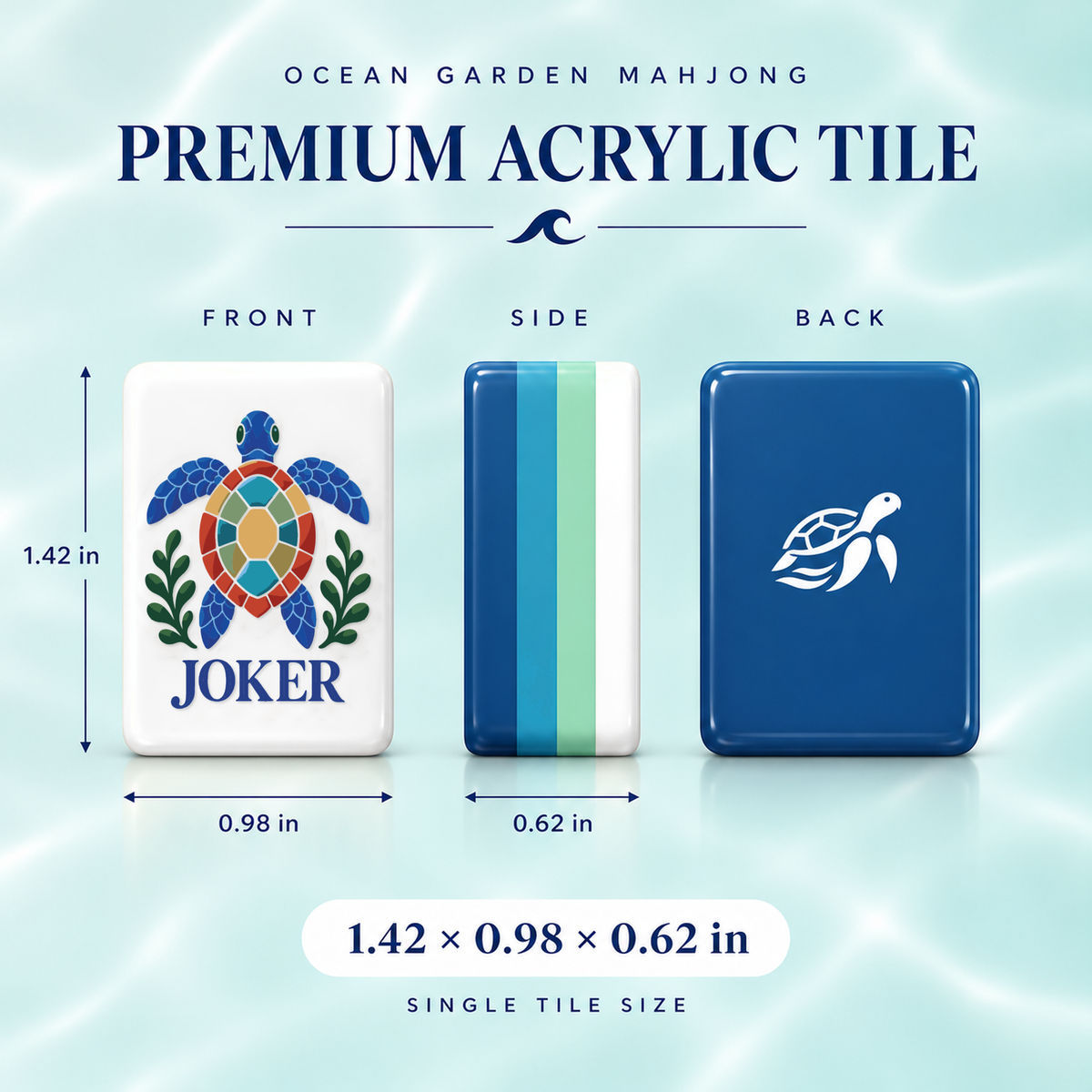
Tile size & weight: Standard Tianjin tiles are 30 mm × 20 mm × 15 mm. Check the product dimensions to ensure they feel natural in your hand and slide smoothly across a mat.
Face markings: Confirm the set uses traditional Chinese numerals or Arabic numbers you recognize. If the set uses regional calligraphy you don't understand, ask the seller or a Tianjin player to verify the tile set's origin.
Cracking or chip risk: Examine photos for thick, durable bamboo or bone backing. Cheaper plastic or thin bamboo chips easily—especially if you play weekly.
Racks, if included: If the set comes with racks, check whether they accommodate Tianjin tiles. Some American racks are too deep for Chinese tiles.
Storage & transport: If you host weekly games, use a padded travel bag or case to protect tiles from dust and damage. Tianjin tiles accumulate years of patina; avoid washing them, as it fades the art.
✨ Find your Mahstead set — free US shipping →
How do regional Tianjin rules vary from Shanghai or Cantonese mahjong?
Tianjin mahjong traditionally allows chows (1-2-3 sequences), which American and pure Cantonese versions do not. The fan values and concealed-hand bonuses also differ by region. Shanghai mahjong (上海麻将) uses a 8-fan maximum and heavier penalties for specific losing hands (e.g., "fouled" if you discard the winning tile). Cantonese mahjong emphasizes luck-based scoring (winning hand value × die roll, similar to Tianjin) but has fewer fan patterns. If you learn Tianjin from a teacher or online, confirm whether they teach Beijing-style (slightly different) or classic Tianjin rules. Most casual games use Tianjin rules because they balance skill and luck fairly.

FAQ
Is Tianjin mahjong harder than American mahjong?
No, just different. American mahjong requires reading a reference card and memorizing allowed patterns for one year; Tianjin requires memorizing fan patterns but lets you play year-round without updates. American is card-dependent; Tianjin is skill-dependent. Most players find one easier than the other based on whether they prefer reference tools or memory work.
Can you use jokers in Tianjin mahjong?
Traditional Tianjin uses no jokers. Modern casual tables sometimes allow one or two jokers as wild tiles, but this is non-standard. If you play in a club or tournament, jokers are forbidden. Check the house rules before play.
What is the typical base unit in Tianjin games?
Base units vary by region and player wealth. Casual home games often use 1 point, 1 chip, or 1 penny per fan. Wealthier groups or clubs may use higher units. Always agree in advance and state it aloud before the first tile is drawn.
How long does a Tianjin game take?
A typical game (often called a "session" of 16 rounds, four for each wind direction) takes 1–2 hours for four players. American mahjong typically runs 2–3 hours because there are more rounds and hand verification steps. Tianjin is faster because there is no card reference.
Do you need a special mat for Tianjin tiles?
Not necessarily. A standard bamboo or cloth mahjong mat works fine. If you prefer a dedicated surface, a mat with an embroidered Tianjin design or bamboo finish looks traditional and protects your table. American-style woven mats with English labels work too, but neutral or Chinese-aesthetic mats feel more authentic.
What is the highest-scoring hand in Tianjin mahjong?
The absolute maximum is typically 8 fan (or higher in tournament variants). Common 8-fan hands include: four kongs, all terminals, all honors, or a concealed win with four kongs (which some tables score at 12+ fan with multipliers). Payouts for 8-fan hands can exceed 1,000 points in high-stakes games, so confirm the table's maximum fan and multiplier rules beforehand.


View More
View More
View More
