
How to Play Changsha Mahjong: Rules & Tile Setup
Last updated: Nov 23, 2026
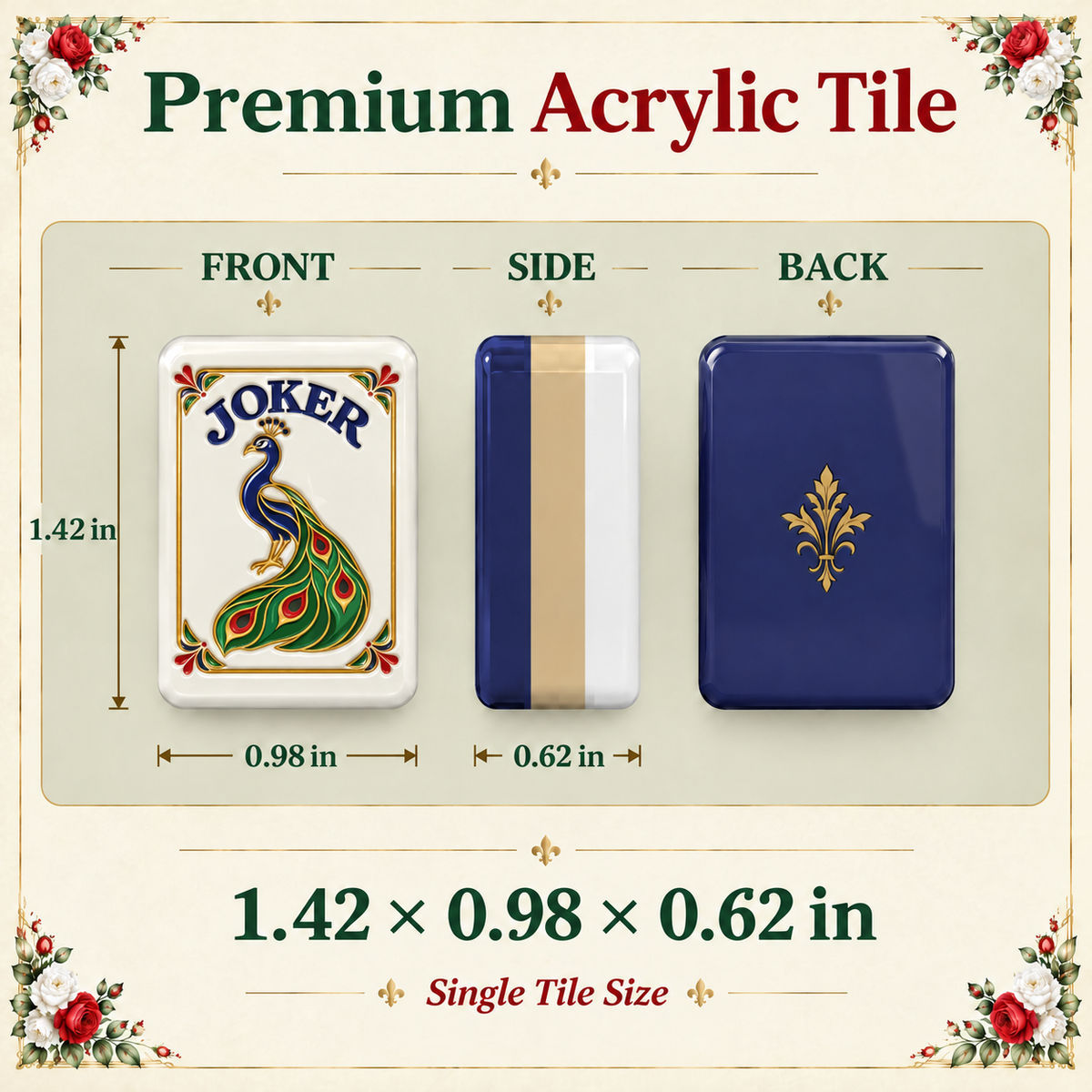
Changsha mahjong uses 108 tiles (four copies each of Bams 1–9, Craks 1–9, Dots 1–9; four winds; three dragons—no flowers or jokers). Each player draws 13 tiles; the dealer draws 14 and discards one face-up. A hand wins by forming four melds (three-tile groups: identical pungs or sequential chows like 3-4-5 Bams) plus a pair. Winning is called "hu." The discard pile sits face-up in the center; any player can claim a discard to complete a pung or win—this acceleration makes Changsha faster than most variants. There's no shuffling ritual like the Charleston; tile draws are rapid and turns last 10–15 seconds. Win conditions emphasize closed hands (all tiles drawn, not claimed) for higher scores. Most games finish in 20–30 minutes.
Changsha mahjong is a fast, dynamic variant popular across central China that rewards aggressive play and quick discards. Unlike American mahjong's formal hand lists, Changsha uses flexible combinations and a stripped-down tile count. Each player draws 13 tiles; the dealer draws 14 and discards one face-up. A hand wins by forming four melds (three-tile groups: identical pungs or sequential chows like 3-4-5 Bams) plus a pair. Winning is called "hu." The discard pile sits face-up in the center; any player can claim a discard to complete a pung or win—this acceleration makes Changsha faster than most variants. There's no shuffling ritual like the Charleston; tile draws are rapid and turns last 10–15 seconds. Win conditions emphasize closed hands (all tiles drawn, not claimed) for higher scores. Most games finish in 20–30 minutes.
What tiles are used in Changsha mahjong?
Changsha uses 108 tiles: Bams, Craks, and Dots numbered 1–9 (four copies each); four winds (North, East, West, South); three dragons (Red, Green, White). No flowers, jokers, or blanks. The 1 Bam shows a bird. Winds are honor tiles; dragons are also honors. Most sets sold for Changsha variants come as compact acrylic or bone-and-bamboo designs suited to rapid play—lighter and quieter than American sets, with clear face markings for quick recognition at speed.

How do you form a winning hand in Changsha?
A winning hand requires four melds plus one pair (the "eye"). A meld is either a pung (three identical tiles: 5-5-5 Dots) or a chow (three consecutive tiles in one suit: 4-5-6 Bams). The pair must be two identical tiles. You win when you have these five groups and draw or claim a tile that completes the hand—for example, drawing a fourth meld or the missing tile for your pair. Chows work only in one suit and only with consecutive numbers; 9-1-2 is not a valid chow. Winning by drawing your own tile ("tsumo" in other variants) often scores higher than winning by claiming someone else's discard ("ron").
Why is the discard pile central to Changsha gameplay?
In Changsha, all discards remain face-up and visible in the center of the table. When a player discards, any other player can claim it immediately to complete a pung or to win. This is radically different from American mahjong, where no discards can be claimed and no melds are exposed until the hand is finished. The open discard pile means you must watch all four players' discard sequences continuously; missing a discard you could have claimed costs you a turn or a winning opportunity. This makes Changsha social and interactive—you can't zone out, and blocking another player's win by discarding carefully is a core strategy. Turns move quickly because players must decide in seconds whether to claim a discard or let it pass to the next player.
What are the key scoring and penalty rules?
Changsha scoring varies by region, but most versions award points based on the hand's complexity and whether you won with your own draw or another player's discard. Closed hands (won without claiming any discard) typically score double or triple. If you win on another player's discard, that player pays you directly; others pay half. Breaking your own hand—declaring a winning pattern but finding a tile missing—usually results in a penalty: you sit out a round or pay all players. Mishandling tiles during play (exposing a tile accidentally, dropping the wall) may forfeit your current hand. Speed infractions (playing out of turn) can cost a tile to the player you skipped.
🀄 Shop best-selling mahjong sets →
How does Changsha differ from other mahjong variants?
Aspect | Changsha | American | Chinese (standard) |
Tiles | 108 (no flowers/jokers) | 152 + 8 jokers | 144 (no jokers) |
Meld types | Pungs, chows | Pungs, kongs, quints (no chows) | Pungs, chows, kongs |
Winning pair | Any identical pair | Specific pair per card | Any identical pair |
Discard visibility | All visible, claimable | Not visible after play | Visible; claiming rules vary |
Hand lookup | Flexible patterns | Fixed National League card | Flexible patterns |
Typical game length | 20–30 minutes | 30–45 minutes | 25–40 minutes |
Speed of play | Very fast (10–15 sec/turn) | Moderate (20–30 sec/turn) | Moderate to slow |
Changsha's stripped-down tile set (no flowers or jokers) simplifies the game but demands faster mental math. No formal hand card means you memorize winning patterns—most players learn 20–30 common combinations and recognize them instantly. This frees you to focus on opponent strategy and the live discard pile. American mahjong's fixed National League card provides a safety net but also slows play; you're consulting a reference. Chinese standard (Cantonese, Hong Kong, Riichi) uses more tiles and complex scoring; Changsha is the "fast-casual" variant, perfect for weeknight games.

How do you set up and begin a game of Changsha?
Before the first hand: shuffle tiles face-down, form a wall of 27 stacks (two tiles per stack). Players sit in cardinal directions: North (dealer), East, South, West. The dealer sits opposite East and draws 14 tiles from the right end of the wall; others draw 13 each. Before play begins, some groups do a limited tile pass (fewer exchanges than the American Charleston), but many skip it entirely to save time. The dealer discards one tile face-up in the center. Play moves counter-clockwise (North to West to South to East). Each player draws one tile from the wall and discards one face-up. If a discard completes a meld or wins the hand, claim it immediately; otherwise it stays in the center for the next player to consider. If no one wins after the wall is exhausted, that hand is a draw ("gong," or blank).
🎁 See our most-loved mahjong sets & accessories →
What to check before you buy a Changsha set:
Tile count: Confirm you're buying a 108-tile set, not a 144 or 152-tile American set.
Tile material: Acrylic sets are durable and quiet for fast play; bone-and-bamboo sets are traditional but require more care.
Face clarity: For rapid-play variants, bold symbols and high contrast (dark Bams on light backgrounds) help you recognize tiles at speed.
Bag included: Changsha games move between tables often; a padded bag protects tiles during transport.
Mat and racks optional: Many Changsha players skip a mat (use any flat surface) and play with tiles in hand rather than racks, to keep play snappy.
Is a special mat or rack needed for Changsha play?
No—Changsha is often played without a dedicated mat or rack. Because the game is fast and turns are short, many players keep tiles in hand or in a simple discard pile without formal racks. A basic cloth mat (not a dedicated mahjong mat with marked walls) can protect the table surface, and some groups use a simple tile rack for organization. However, the lack of a formal Charleston and the rapid pace make mats and racks less critical than in American mahjong. If you want to play on a clean, defined surface, a compact travel-friendly mat works well. Racks with pushers are rarely necessary because you're drawing and discarding so frequently that organized rows become clutter.
✨ Find your Mahstead set — free US shipping →
Common mistakes new Changsha players make
Slow discard decisions: If you hesitate for 20+ seconds, you've already lost momentum. Changsha rewards snap judgment; study the wall and opponent patterns before your turn.
Forgetting chows are sequential: 9-1-2 is never a chow. Sequences wrap only at the boundaries you set (1-2-3 or 8-9 + wind, but not across suits).
Miscounting your hand structure: Four melds and one pair = 14 tiles total in hand. If you have 13 and draw, you have 14; if you claim a discard to win, that tile completes your 14th. Count aloud before declaring "hu."
Missing an open discard: If you need a 5 Crak to win and someone discards it, you must claim it or lose your chance that round. Pay attention to every discard.
Playing out of turn: In rapid play, it's easy to draw before your turn ends. Wait for the previous player to finish and discard; then and only then do you draw.
Exposing tiles accidentally: Keep your hand close and tiles face-down until you confirm a complete winning pattern. Exposed tiles can be claimed by opponents.
How Changsha fits into your mahjong journey
If you're coming from American mahjong, Changsha will feel like moving from a formal dinner party to a lively bar game—same core tiles and combos, but raw energy and speed. If you're new to mahjong, Changsha teaches you pungs and chows fast because you play 6–8 hands in an hour. The lack of a hand card forces you to learn patterns by heart, which actually accelerates your recognition of other variants later. Many players keep a best-selling mahjong set at home for casual nights and a Changsha-optimized compact set (acrylic, loud-and-clear faces) in a travel bag for drop-in games at friends' houses.
Join a regular Changsha group—most cities with Asian communities have informal games at community centers, restaurants, or online meetups. Watch 1–2 hands before asking to join; the rhythm will be obvious. After three games, you'll recognize the common 15–20 winning patterns. By 10 games, you'll spot winning opportunities instantly and manage the discard pile like a pro.

FAQ
Can I play Changsha with four players and fewer than 108 tiles?
No. The game requires exactly 108 tiles for a fair wall and fair draw distribution. Playing with fewer tiles breaks game balance and often results in unfinished hands or all-draw rounds.
If someone claims my discard to win, do I pay them or does the whole table pay?
The player who discarded the winning tile pays double; other players pay single. Payment rules vary by region—agree on scoring before the game starts.
What happens if the wall runs out before anyone wins?
That hand is a draw ("gong"). The discard pile stays on the table; no scoring. The next dealer (rotated clockwise from the current dealer) begins a new hand.
Is Changsha played with the Charleston tile-passing ritual?
Some groups skip the Charleston entirely to save time. Others do a brief one-pass exchange (one tile per player to the right, then one to the left). Never a full three-pass Charleston like in American mahjong.
Can chows wrap around (like 9-1-2)?
No. Chows are strictly consecutive within a suit: 1-2-3, 2-3-4, up to 7-8-9. The sequence cannot loop back.
If I draw a tile but realize my hand is broken (missing a tile for a meld), what penalty do I face?
You lose your current hand and may sit out the next round or pay all players a fixed amount. Honest mistakes (counting wrong, miscalculating) are usually forgiven in casual play; intentional false declarations are penalized. Agree beforehand.


View More
View More
View More
