
Three Player Mahjong Tile Sets: What You Need to Know
Last updated: Nov 23, 2026
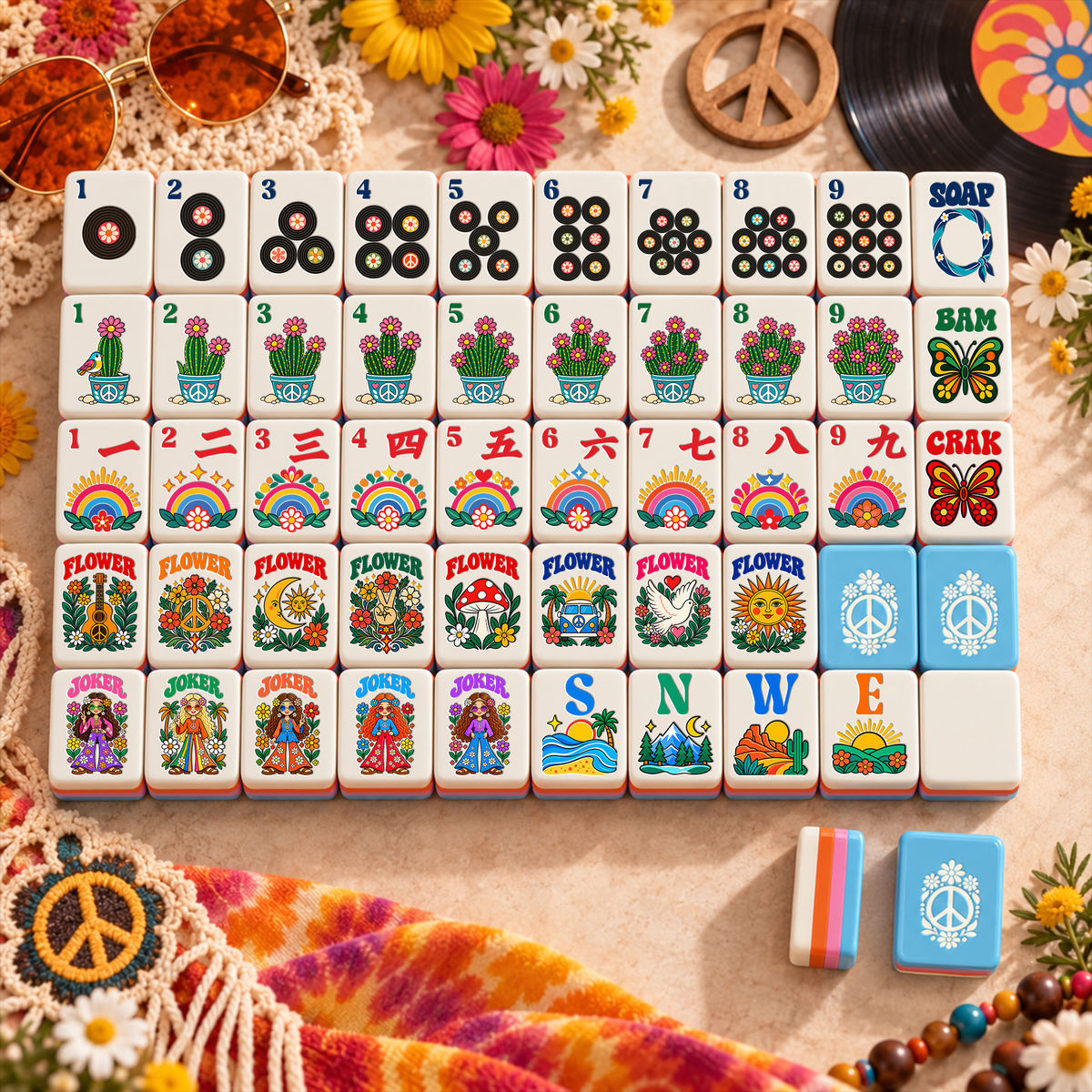
Three-player American mahjong uses a modified ruleset where one seat stays empty and the tile pool shrinks strategically. You still use a full 160-tile acrylic set (152 playing tiles plus spares), but only three winds are in play. The National Mah Jongg League publishes specific hands for three-player variants, and you'll follow the same Charleston passing ritual and joker rules as four-player. The main challenge: tile math. With three players drawing and discarding at different rates, the game ends faster and hands feel tighter. Most players rotate which seat sits out each game so no one camps on the same wind all evening. You'll need the same acrylic tiles, a mat, and racks you'd use for four-player—no special equipment—but understanding the rhythm takes practice. Mahstead's best-selling mahjong sets include everything three players need; just grab the current year's three-player card from the National Mah Jongg League before you start. 🀄 Shop best-selling mahjong sets →
How does three-player mahjong differ from four-player?
In four-player American mahjong, all four winds (North, East, South, West) are in play and each player sits at one wall. In three-player, one wind sits empty—usually decided beforehand or rotated per game. The tile pool is exactly the same (152 playing tiles), but the draw and discard rhythm changes because fewer hands are competing. Hands are generally harder to complete because the wall discards faster with one fewer player cycling tiles. The National Mah Jongg League publishes a separate card each year for three-player variants showing which hand patterns are legal that season. Scoring and payment structures often adjust too—some groups use a three-way split instead of four-way. The core rule remains: you can only play hands listed on the official card for that year and variant.

What tile set do you actually need for three players?
You need a standard 160-tile American mahjong set—no special "three-player" version exists. The set includes 152 playing tiles (four copies each of Bams, Craks, and Dots 1–9; four winds; four each of the three dragons; eight flowers) plus eight jokers as spares. The spare jokers ensure that if one gets lost or damaged mid-game, you can still play without delay. You'll also want a mat to protect the acrylic surface, racks with pushers to hold and organize your tiles, and a bag for transport if you play at different homes. Because American mahjong tiles are acrylic and hand-engraved, they survive years of weekly play; engraved American mahjong sets handle the wear three-player games create just as well as four-player games.
Which seat stays empty, and how do you rotate?
The empty seat is a strategic choice. Some groups always leave South (the starting dealer position) empty; others rotate so each player gets a turn at every wind over several games. If you rotate, keep a written order: Game 1, North sits out; Game 2, East sits out, and so on. This ensures fairness and lets everyone experience how each wind affects hand-building odds. The tile pool resets each game regardless, so the empty seat doesn't carry advantage. Before each game, all three active players perform the Charleston (the traditional three-pass tile-exchange ritual) to randomize the hand; the empty seat's tiles sit untouched until the next rotation. Many regular three-player groups use a simple notebook to track rotations over weeks—it removes any argument.
🎁 See our most-loved mahjong sets & accessories →

What rules change, and what stays the same?
What stays the same:
You still use the current year's National Mah Jongg League card (three-player edition).
Jokers cannot be used alone or in pairs; they replace tiles in melds only.
Exposed melds are pungs (3), kongs (4), quints (5), and sextets (6)—no chows.
The Charleston passes tiles before play starts.
Winning still requires a named hand from the official card with all tiles accounted for.
What changes:
Only three winds are active; one wind's entire rack sits empty.
The wall exhausts faster, so dead wall size may be adjusted by house rules.
Payout structures often shift to three-way instead of four-way splits.
Hand difficulty tends higher because the tile discards move quicker through fewer players.
The ruleset for three-player American mahjong is formal and printed on the League card each spring. If you're new to three-player, download or order the current three-player card before your first game; understanding the official card is as critical in three-player as it is in four-player.
What equipment setup works best for three players?
Arrange three seats (or two seats if you're using the empty seat for spare tiles and tools). Each active player sits with a rack with pushers in front to hold 13–14 tiles organized by suit. Place the wall in the center so all three can reach it equally—if the table is rectangular, put the wall parallel to one long edge rather than at a corner, so draws are fair. Use a mahjong mat to protect the acrylic tiles and create a defined play zone; a standard mat fits three or four players equally. Keep the current year's official three-player card visible to all players at the table. The empty seat's space can hold a dice set for determining who draws first and the card itself. If you're hosting weekly three-player games, a mahjong bag makes transport and storage simple—racks, pushers, dice, and cards fit neatly inside.
Setup Element | Three-Player Need | Why It Matters | Notes |
Acrylic tile set | Yes (160 total) | No variant set exists; standard set works perfectly. | Buy once, use for years. |
Racks with pushers | 3 active + 1 spare | Organizes tiles, prevents fumbling, speeds play. | One spare rack for empty seat tools. |
Mat | 1 standard size | Protects tiles, defines play zone, equals four-player mat. | Fits three or four equally. |
Official card | Three-player edition | Hands differ from four-player; wrong card = invalid hand. | Order fresh each spring with League. |
Dice | 1 set | Determines draw order and initial wall break. | Standard dice; any set works. |
Bag | Optional but helpful | Makes transport, storage, and setup faster if hosting. | Not needed if all play at one home. |
✨ Find your Mahstead set — free US shipping →
What mistakes do three-player groups make?
Using a four-player card: The most common error. Four-player and three-player hands are NOT interchangeable. If you play a four-player hand in three-player, it's invalid—no win, tiles reset, hand ends. Buy or download the correct three-player card each spring.
Not rotating the empty seat: Leaving the same wind empty every game creates an illusion of fairness but statistically favors the two players sitting opposite that wind. Rotate every game or every few games.
Misunderstanding joker rules in three-player: Jokers work identically—they replace tiles in melds, never stand alone, never form pairs. The three-player rhythm doesn't change joker mechanics.
Forgetting the wall shrinks faster: Because one fewer player is cycling tiles, hands feel "thinner" and harder to complete. Don't panic; this is normal. The tile math is correct; the tension is simply higher.
Setting the wrong empty wind strategically: Some groups choose to leave North (dealer) empty to avoid arguing about dealer status; others leave South empty for tradition. Either works; just decide and state it before shuffling.
What to check before you buy:
Confirm the card edition. Order or download the current year's National Mah Jongg League card for three-player, not four-player.
Count your tiles. A Mahstead 160-tile set gives you 152 playing tiles (enough for any American game) plus spares. Verify the set arrives complete.
Test acrylic durability. If you play weekly, acrylic tiles outlast bamboo or plastic over months. Check that engraving is crisp and doesn't fade with use.
Choose a mat size. Standard mats fit three or four players; measure your table to confirm there's space for racks, the wall, and discard space.
Plan your rotation. Decide in advance which wind sits out in Game 1, and write down the rotation for Weeks 1–4. This removes debate.

FAQ
Can you play American mahjong with only three people using a standard four-player set?
Yes. A standard 160-tile set works perfectly for three players. One wind stays empty; all 152 playing tiles are still in the wall. No special set exists or is needed.
Do the hand patterns change between three-player and four-player?
Yes. The National Mah Jongg League publishes different cards for three-player and four-player each year. Hands listed on the four-player card may not be legal in three-player, and vice versa. Always use the correct card for your variant.
How do you pay out scores in three-player mahjong?
House rules vary. Common methods include: (1) winner takes from each losing player proportionally to their hand score, (2) three-way split of points instead of four-way, or (3) a fixed payment per hand. Agree on the payout before you start.
What happens if the empty wind changes each game—do you reset the tiles?
Yes. Every new game, regardless of which wind is empty, you shuffle and build a fresh wall. The empty seat's tiles are dealt into the wall but never drawn or played. The rotation doesn't carry tile state between games.
If someone sits out one game, can they rejoin for the next?
Yes. The empty seat rotates by design. If Group A plays North-empty for Game 1, then East-empty for Game 2, all three players get a turn in each game. Many groups rotate the empty wind after every 2–3 hands to keep it fair.
Where do you find the official three-player card?
The National Mah Jongg League publishes it each spring online and in print. Search "National Mah Jongg League three-player" or contact a local mahjong club or library to order. You'll need the current year's card; old cards have different hands.


View More
View More
View More
