
How to Use the Blank Tile in American Mahjong
Last updated: Nov 23, 2026
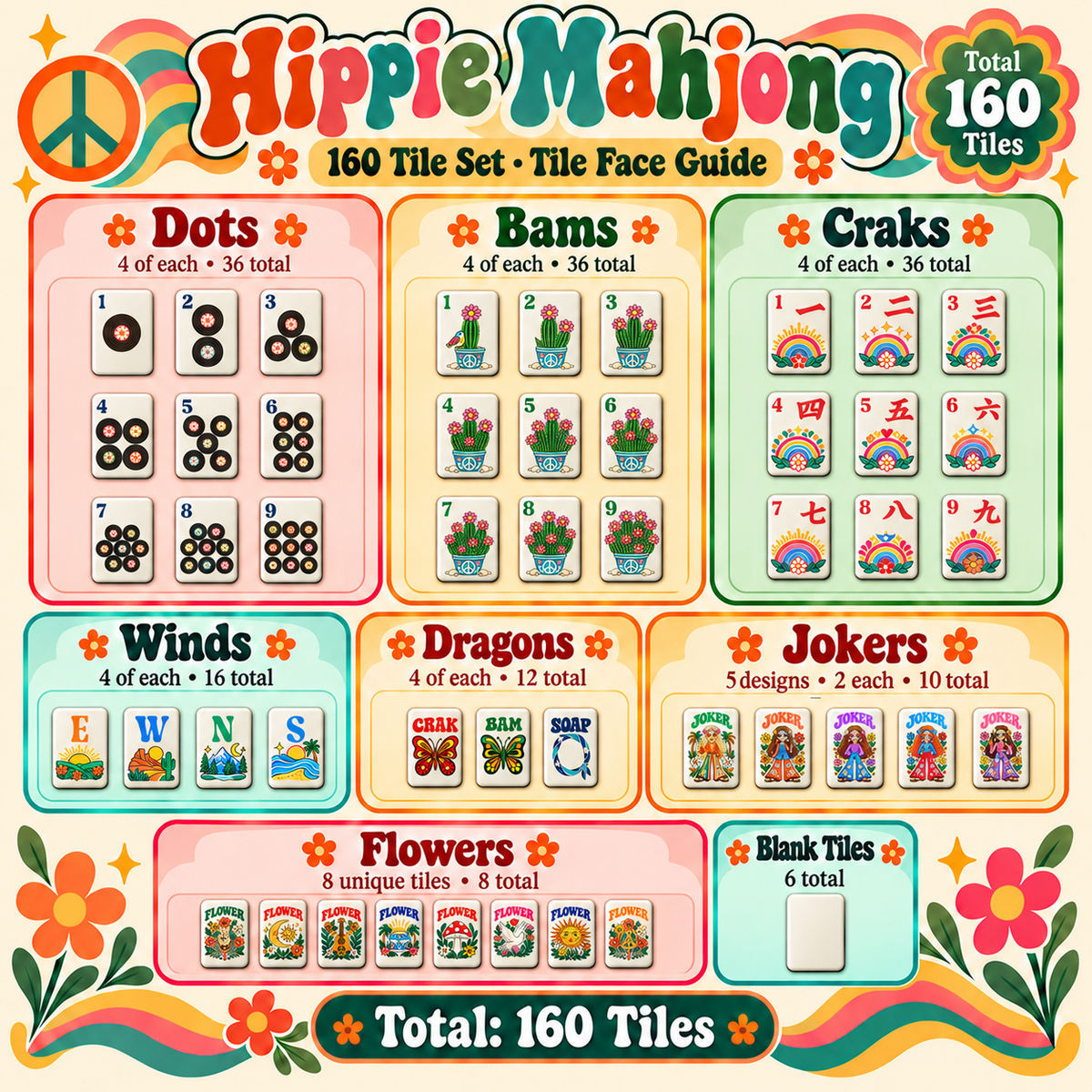
American mahjong is played with exactly 152 tiles and 8 jokers—no more, no less. Blank tiles are spare tiles included in 160-tile sets to replace lost, cracked, or damaged tiles. They are never played during a game and should be set aside before the match begins. The 152-tile set contains only the tiles you use: 108 suited tiles (Bams, Craks, Dots in 1–9, four of each), 16 winds, 12 dragons, 8 flowers, and 8 jokers. When a set arrives with 160 tiles total, the extras are blanks and bonus jokers kept as backups. If a tile breaks mid-game, you pause, swap it with a blank from your spare collection, and resume play. Blanks are not substitutes during active play—they're insurance only.
Why do 160-tile sets include blank tiles?
Acrylic tiles chip and crack. Over seasons of weekly games, one or two tiles will develop edge damage or a hairline fracture. Rather than lose a full set to a single broken tile, what's in an American mahjong set explains that manufacturers include 8 spare tiles—blanks plus extra jokers—so you can swap a ruined tile and keep playing. A blank tile is unmarked acrylic cut to the same dimensions as a standard tile. When you need a replacement, you mark the blank with a pen or engraver to match the lost tile and slot it into the rack. This approach is far cheaper than replacing the entire set.

Can you use a blank as a joker during play?
No. Jokers and blanks serve completely different roles. The 8 jokers printed with the set are active, playable tiles that substitute for any tile you need to complete a hand. A blank tile has no suit, number, or symbol—it's a blank canvas. During play, blanks must remain set aside. If you run out of jokers during a game, you cannot substitute a blank; instead, you continue with the jokers available. Using a blank as a joker violates the rules because it breaks the fixed tile count (152 tiles + 8 jokers) and gives one player an unfair advantage. Keep blanks in the box until a tile actually breaks.
What should you do if a tile breaks during a game?
Stop play immediately. Announce which tile broke (for example, "5 Dot broke"). Remove the damaged tile from the rack or wall. Take a blank from your spare collection and, if needed, mark it to match the lost tile's identity. Return the blank to the wall or rack where the original tile came from, and resume play. The delay is minimal—under a minute in most cases. However, if your set is brand new and no blanks are marked, you may need to delay marking until after the game ends. Keep a permanent marker near the mahjong table for this reason. In rare cases where you have no unmarked blanks left (meaning multiple tiles have broken over time), you'd need to order a replacement set or buy individual replacement tiles from a supplier.
How do you mark a blank tile to match a specific suit and number?
Use a permanent marker or acrylic paint pen. Identify the exact tile that broke—note its suit (Bam, Crak, or Dot), its number (1–9), and confirm whether it's a wind, dragon, or flower. For numbered tiles, write the number and draw the suit symbol. For winds (N, E, W, S), write the letter clearly. For dragons (Red, Green, White), use the dragon label or its associated suit. For flowers (1–8), write "Flower 1" or the equivalent. Test your marker on a spare tile first to ensure it dries quickly and won't smudge during play. Acrylic markers designed for plastic tiles dry faster than standard markers. Mark both sides if the tile might be rotated, and let it cure for a few minutes before returning it to play.

When should you replace a blank you've already used?
Once you've marked and played a replacement blank, keep it in the set permanently. You now have one fewer unmarked spare. If a second tile breaks weeks or months later, mark another blank. Over years of heavy play, a well-used set may exhaust all its blanks. At that point, you have three options: buy a replacement set, order additional spare tiles if available, or accept that your set is near end-of-life. To extend the life of your tiles, store them in a protective case, handle them gently during the Charleston (the tile-passing ritual before each game), and clean them occasionally with a soft cloth. High-quality engraved American mahjong sets and acrylic designs resist chipping better than cheaper alternatives, which is one reason investing in a durable set pays off over time.
What do you do if you run out of blanks and another tile breaks?
This is rare but possible. If you've marked and used all your blanks and a new tile breaks, you have two immediate options: temporarily use an unmarked blank if you can identify the broken tile by context (the other three copies are still in play), or borrow a tile from another set if a player has one. In formal game settings, you'd pause and acknowledge the broken tile to all four players before proceeding. Long-term, order a replacement set or spare tiles. Because blanks cost nothing (they're spares), running out means your original set has seen many seasons of play—a good sign that you've loved the game enough to wear it out.
Scenario | What to do | How long it takes | Rules violation? |
Tile breaks mid-game | Swap with marked blank; resume play | <1 minute | No |
No marked blanks available | Mark a blank on the spot if you have a pen; otherwise pause | 2–3 minutes | No |
Using blank as joker during play | Not allowed; set aside immediately | N/A | Yes |
Blank needed but none left | Borrow a tile or order a replacement set | Varies | Depends on house rules |
🀄 Shop best-selling mahjong sets →
What sets include enough blanks for long-term play?
All 160-tile best-selling mahjong sets include the same spare-tile standard. The exact mix of blanks and extra jokers varies slightly by design, but every set includes enough spares to handle at least one tile replacement. If you host weekly games or play frequently, you'll appreciate sets designed with thicker, more durable acrylic, as they crack less often. Personalized or engraved sets often ship with robust construction to justify the custom work. Casual players and gift recipients rarely use enough tiles to wear them out, so a standard 160-tile set provides years of backup coverage.
🎁 See our most-loved mahjong sets & accessories →
What to check before you buy
Confirm the set contains 160 tiles (152 playable + 8 spares).
Ask or check the product description: how many blanks are included?
Inspect tiles upon arrival for manufacturing defects; a crack out of the box means you'll use a spare sooner.
Store the set in a protective mahjong bag or case to reduce accidental damage during storage or travel.
Keep a permanent marker near your table so marking a replacement tile takes seconds, not minutes.
If you play more than twice a week, consider keeping two sets on hand—one in active rotation and one as a full backup.
✨ Find your Mahstead set — free US shipping →

FAQ
Are blanks the same size as regular tiles?
Yes. Blanks are cut to identical dimensions—both front and back—so they slide seamlessly into the rack and wall after marking.
Can I use a blank instead of a joker if I'm out of jokers?
No. A joker is a playable tile; a blank is a spare. This is a rules violation and unfair to other players.
How do I know which tile to mark on the blank?
Identify the three remaining identical tiles still in the wall or rack. Write or draw their suit and number on the blank to match.
What permanent marker works best on acrylic tiles?
Acrylic or paint markers designed for plastics dry fastest and resist smudging. Avoid water-based markers, which may fade during play.
What happens if I mark a blank wrong?
If you mark it with the wrong tile's identity before play starts, erase or cover the mark and re-mark it correctly. If a mistake is discovered mid-game, announce it and replace the blank with the correct tile if another blank is available.
Do I need to replace blanks after the game ends?
No. Marked blanks become permanent parts of the set. They're no longer "spares"—they're working tiles. Keep them in the set.


View More
View More
View More
