
Taiwanese Mahjong Strategy: How to Win with Speed and Flexibility
Last updated: Nov 23, 2026
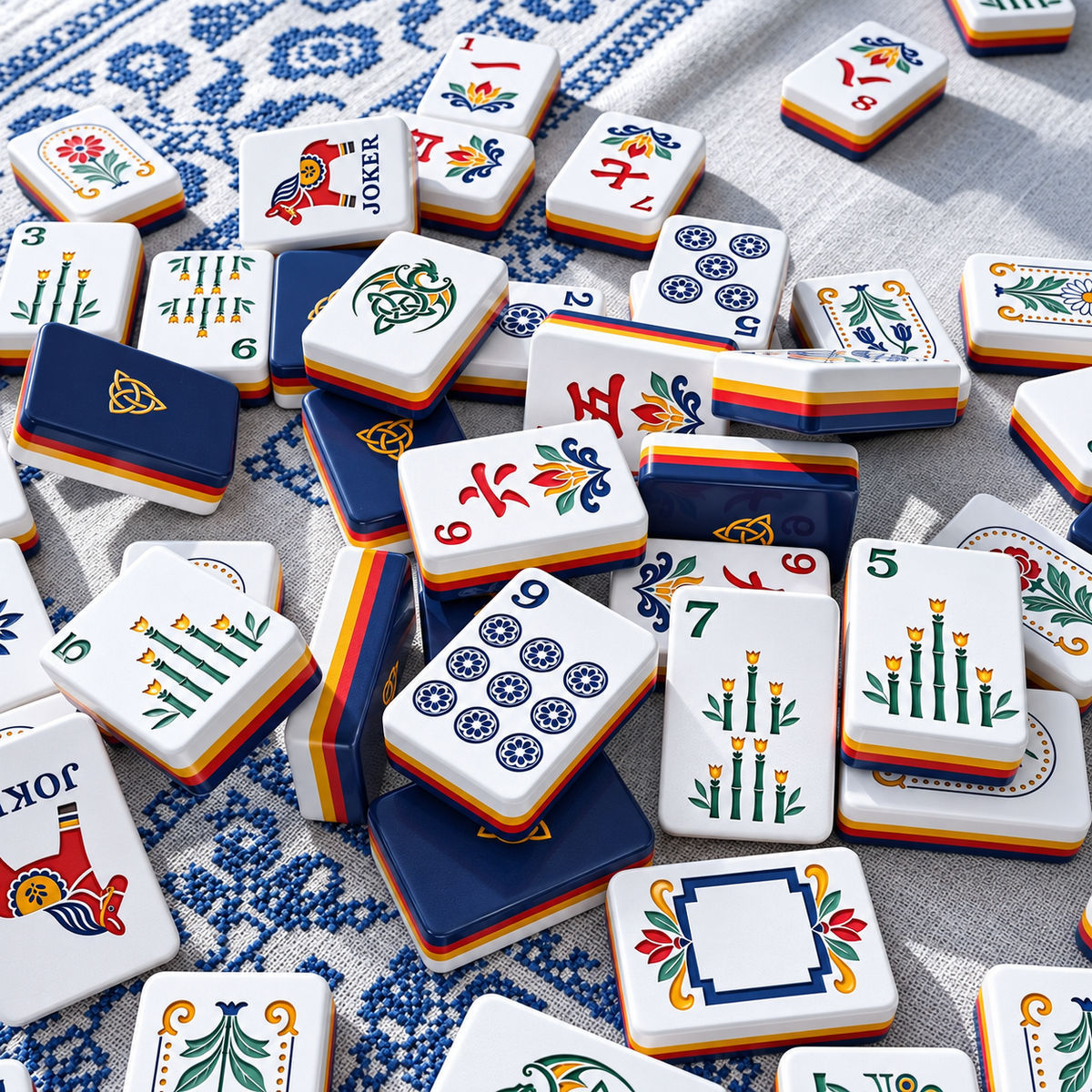
Taiwanese mahjong strategy centers on speed, flexible meld sequences (chows, pungs, kongs), and rapid decision-making—fundamentally unlike American mahjong's rigid card-based hands. Victory depends on: (1) reading opponents' discards to infer their melds and threats, (2) balancing concealment against speed (exposed melds reveal your hand but accelerate play), (3) tracking the live wall to judge winning odds, and (4) managing honor tiles (winds, dragons) as wild-card options. Unlike American mahjong, where hands are fixed and jokers supplement, Taiwanese play allows chows (sequences like 3–4–5 Craks) to be called from the discard pile or assembled from the wall in real time. A typical hand takes 8–15 minutes; scoring is point-based rather than card-driven. Success hinges on pattern memory, tile-counting intuition, and ruthless prioritization of winning speed over safe concealment. Mastering Taiwanese strategy requires a quality tile set with clear markings and a mat that supports rapid tile manipulation—our best-selling mahjong sets are designed for quick, accurate play in any variant.
Why is speed the top difference in Taiwanese vs. American mahjong?
American mahjong locks hands to the year's official card; you assemble hidden melds and declare when complete. Taiwanese mahjong is open and continuous: melds form from the discard pile in real-time, players call and expose immediately, and the hand evolves round by round. This means a Taiwanese player must decide within seconds whether to draw, pass, or claim a discard—hesitation costs tempo and advantage. The game rewards pattern fluency and rapid tile-reading over deliberate planning. Your brain is always processing: Can I use that 5 Dot? Does the East player's discard hint at a Kong? Is the live wall thin enough to justify a risky call? American players typically think 20–30 seconds per turn; Taiwanese regulars expect a decision in 5–10. Speed trains memory and intuition, making tile-counting and hand-inference your real weapons, not a printed card.

What is the "flexibility" rule, and how do you exploit it?
In Taiwanese mahjong, a meld can be a pung (three identical tiles), a kong (four identical), or a chow (three consecutive tiles in the same suit: 1–2–3, 2–3–4, etc.). Critically, chows can be called from the discard pile or built from hand during your draw phase, and the sequence wraps (8–9–1 is valid in many variants). American mahjong forbids chows entirely and restricts exposed melds to pungs and kongs. This flexibility means: (1) you're never locked into one pattern, (2) a single discarded tile can unlock multiple winning paths, and (3) opponents can read your strategy from your exposed melds. Exploit this by assembling open pungs when your hand is weak—it signals strength (misleading opponents) while keeping your concealed hand flexible. Conversely, if an opponent builds many open melds, their concealed hand is likely weak; press the tempo and discard high-value tiles that force them to meld or pass, shrinking their options until they cannot win.
How do you read an opponent's hand from their discards and melds?
Taiwanese mahjong rewards obsessive tile-tracking. When East discards a 3 Bam early, note it—if they later build a 4–5–6 Bam chow, they were vulnerable to a 3 Bam trap; you now know they're defensive in Bams. If South exposes two pungs of winds (N and S) but never another wind, infer they're not hunting a wind pung or triple: they're playing for a simple hand and likely avoiding honor tiles. Watch discard order: rapid-fire, scattered discards = weak hand in flux; slow, deliberate discards = strong hand (they're pruning high-value tiles to avoid throwing winners). When an opponent calls a discard, observe who called: if West claimed your discarded 1 Crak immediately, they have 2 Crak and 3 Crak ready, so your 2 Craks and 3 Craks are now "hot" (dangerous to hold). Track the live wall depth; if it's thin (20 tiles or fewer), honor-tile discards become critical (many players cannot afford to draw into a risky hand late). This tile intelligence separates amateurs from competitors. A high-contrast tile set with clearly printed suit symbols, like those in our best-selling collection, lets you read the table quickly without hesitation.
🀄 Shop best-selling mahjong sets →
Should you expose melds aggressively or stay concealed?
This is the core Taiwanese strategic trade-off. Concealed hands (all melds hidden until you win) score higher and keep opponents guessing, but they're slower to complete—by the time you have three winning melds, the wall may be exhausted. Exposed melds (pungs and chows laid open after calling from the discard pile) accelerate winning odds and let you pivot quickly, but they reveal your suit preferences and hurt your final score. Winning strategy depends on hand state and wall depth:
Hand State | Wall Depth | Best Approach | Why |
1 meld complete, 1 pair | >40 tiles remain | Expose & accelerate | Plenty of draws to complete other melds |
2 melds complete, hunting pair | <20 tiles remain | Expose if called | Late wall = higher risk; speed beats score |
1 meld, no pair, mostly terminal tiles | >50 tiles remain | Stay concealed | Wait for a hot sequence before committing |
2+ melds, one complete chow (3-suit) | 30–40 tiles remain | Mix: expose if chow, keep terminal honor tiles hidden | Chows telegraph strategy; honors are wild-cards |
The rule: expose when you're ahead on speed and behind on time; conceal when you're behind on speed but ahead on odds. A player with three drawn tiles forming 6–7–8 Bam should claim an incoming 5 Bam immediately (call and expose the chow) if the wall is thin, because completing a fourth meld by drawing is risky. Conversely, if you have a hidden 1–2–3 Dot chow and need only a wind pung to win, conceal it—keep opponents guessing until you're certain of a wind, then strike.

How does tile-counting and probability shift your decisions?
Taiwanese players track the live wall obsessively because it directly answers: What are my odds of drawing a winning tile? If you need a 5 Crak to complete a chow, and three of the four 5 Craks are already visible (either discarded or in exposed melds), your draw odds collapse. Assign yourself a "outs count": the number of remaining tiles that help your hand. If you have six outs and eight tiles left in the wall, your probability of drawing one is roughly 75%—strong odds to pursue. If you have two outs and 12 tiles remain, your odds are ~15%—fold the hand conceptually and switch to defensive discards. Taiwanese strategy demands you update this mental calculation after every single turn, because one discard or exposed meld removes tiles from the live wall. A common winning move is to deliberately expose a half-formed pung or chow early to bait an opponent into calling a tile you don't actually need; they'll discard their own winning tile out of panic, and you pivot to a completely different meld using your hidden tiles. This works only if you've counted the wall and verified you have enough outs in the concealed hand to win via a backup plan. Weak players freeze when a bait doesn't land; strong players have already calculated three alternatives.
🎁 See our most-loved mahjong sets & accessories →
What late-game moves separate winners from the rest?
When the live wall drops below 10 tiles, the game enters sudden-death mode. Most players panic and discard the safest tiles (honors they've held since the start). Winners use this window ruthlessly:
Throw one known-safe tile (something an opponent visibly discarded or built into a pung). It's mathematically impossible for them to need it now.
Watch for the "wall lean": if two players are drawing heavily from the wall but the third is passing, the third player is likely one or two tiles away from winning and waiting for a specific discard. Target them with whatever they're avoiding—the tile they refuse to pick signals vulnerability.
Honor-tile bluff: if you hold a wind that no one has exposed and the wall is critical, discard it slowly and watch for a micro-expression or hesitation from an opponent. If they hesitate, they probably need it; fold your hand and pivot to defense.
The double-call: if two players call the same discard simultaneously (rare but legal in some Taiwanese variants), the discard goes to the player whose turn is closest in rotation—but in the chaos, a third player may slip in an unexpected Kong or claim. Veteran players exploit this by calling slower than their rival, letting a fourth player commit first, then calling to steal priority.
Conceal a near-win: if you have two complete melds and are hunting a pair with 3–5 tiles left, do not expose anything. Discard mid-value tiles (4s, 5s, 6s) that opponents often collect; if no one claims them, you've signaled weakness and bought yourself a free turn to draw.
Late-game Taiwanese mahjong is chess at 200 mph. Your mahjong mat must support rapid, clean tile placement so you can read the table without confusion; a cluttered or slippery surface costs you critical seconds and misreads.
✨ Find your Mahstead set — free US shipping →
What to check before you buy a set for Taiwanese play:
Tile clarity: suit symbols must be large, high-contrast, and visible from across the table at a glance (no ornate fonts or pastel colors).
Tile weight and grip: Taiwanese play is fast; tiles need heft and texture to prevent slipping during rapid draws and discards.
Joker count: some Taiwanese variants use jokers as wild-cards (like American mahjong), others use a separate "cash tile" or none. Confirm your local variant before buying.
Rack system (optional but valuable): a rack with pushers lets you organize melds vertically and expose them quickly without fumbling tiles on the mat.
Mat grip: a mat with a rubberized or textured underside prevents tile slippage and keeps the table organized during 10-minute rounds.
Travel durability: if you're moving between venues or hosting multiple games weekly, a padded travel bag protects acrylic tiles from cracks and chips.

FAQ
How does a Taiwanese hand end, and when do you win?
You win when you hold a complete hand (usually four melds + one pair) and either draw a winning tile from the wall or claim a winning discard. Some variants require the winning tile to be visible (no concealed win); others allow it. A hand ends when someone wins or the live wall is exhausted.
Can you call a discard from any opponent, or only from the player whose turn just ended?
In most Taiwanese variants, you can call a discard from any player on your turn—this is called an "open call." The discard goes to the player who calls it (highest priority is the player next in rotation if multiple call simultaneously). American mahjong forbids calling entirely.
What's the difference between a chow and a pung in Taiwanese strategy?
A chow (sequence) is flexible—it can wrap (8–9–1) and signals a specific suit strategy. A pung (three identical tiles) is rigid but signals strength to opponents. Chows are called and exposed rapidly; pungs are often built over several turns in the concealed hand.
How many tiles does a Taiwanese mahjong set contain, and are they different from American sets?
A standard Taiwanese set contains 144 tiles (36 per suit × three suits, 16 winds, 12 dragons, 8 flowers, and often no jokers). American sets contain 152 tiles plus 8 jokers. Taiwanese sets focus on number and honor tiles; American sets integrate jokers as wild-cards.
Is tile-counting enough to win consistently, or do I need psychology/bluffing too?
Tile-counting is foundational but insufficient alone. Taiwanese victory requires three parallel skills: (1) probability calculation, (2) opponent psychology (reading hesitation, discard patterns, exposure choices), and (3) rapid hand-pivoting (switching strategy when odds shift). All three together separate amateurs from players who win 6 out of 10 rounds.
Should I practice Taiwanese mahjong on an American mat, or does the mat matter for strategy?
The mat matters significantly. A mat with clear rows, high contrast, and a textured surface helps you organize tiles and read the table quickly—speed is a weapon in Taiwanese play. A slippery or poorly marked mat forces you to slow down, costing you tempo and decision quality.


View More
View More
View More
