
History of Japanese Mahjong: From China to Modern Riichi
Last updated: Nov 23, 2026
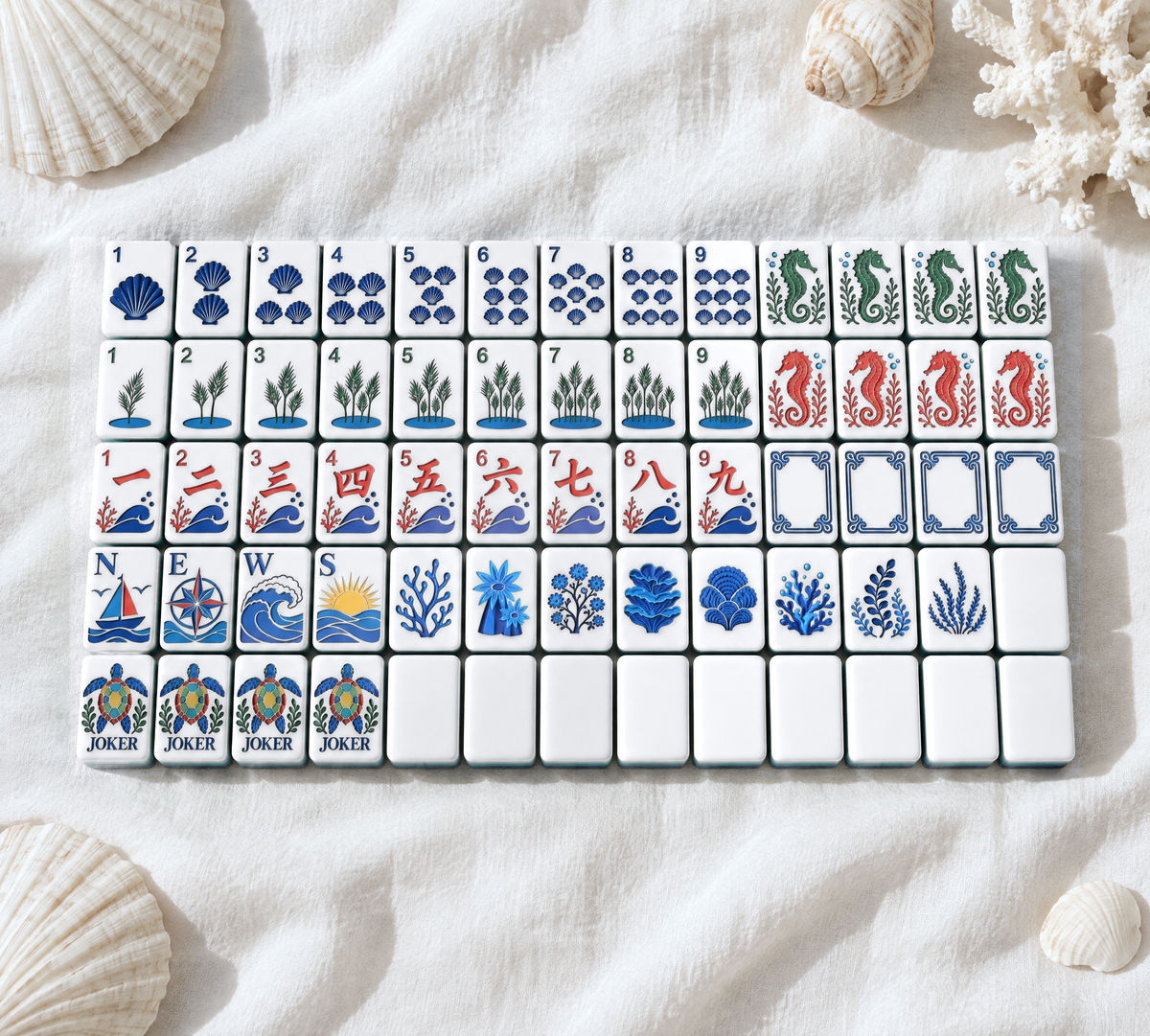
Japanese mahjong developed in the 1920s when Chinese mahjong reached Japan and underwent rapid local refinement. By the 1950s, players in Tokyo and Osaka had standardized a faster, more skill-intensive game called riichi (to declare readiness to win). Unlike American mahjong—which uses a printed card and exposed melds—Japanese mahjong requires players to conceal all tiles, study hand patterns from memory, and announce readiness before claiming a win. Winning hands must contain at least one yaku (scoring pattern), and the game uses 136 standard tiles with no jokers. The Japanese variant emphasizes mathematical probability, quick decision-making, and a level playing field where every session resets; no seasonal hand lists exist. Riichi remains the standard in arcades, clubs, and tournaments across Japan and has inspired competitive communities in South Korea, Europe, and North America.
Japanese mahjong emerged in the 1920s when Chinese mahjong arrived in Japanese ports and quickly captured urban audiences. Within two decades, Tokyo and Osaka players had adapted the rules to suit faster play, stricter hand validity, and a preference for hidden information. By the post-war era, riichi mahjong (麻雀) had become the dominant form, codified by arcades, television broadcasts, and a grassroots tournament culture that continues today. The variant prioritizes individual skill over luck, making it ideal for competitive play—a philosophy that has always separated Japanese from American and Hong Kong versions.
How did riichi mahjong differ from its Chinese origins?
Chinese mahjong (still played in Shanghai, Guangdong, and overseas communities) allowed players to form winning hands with zero yaku, meaning any complete hand—melded or concealed—qualified as a win. Japanese riichi introduced a mandatory yaku requirement: every winning hand must contain at least one recognized pattern (a pair of dragons, an all-terminal sequence, a straight, or other defined combinations). This single rule transformed the game into a deeper strategic puzzle. Riichi players must study dozens of yaku patterns from memory, calculate waiting tiles on the fly, and decide whether to "declare readiness"—a move that freezes your hand and signals competitors you're close to winning. The yaku system eliminated luck-heavy hands and raised the skill ceiling dramatically, making Japanese mahjong a game of pattern recognition and probability, not just tile collection.

What is the "riichi" declaration and why does it matter?
In Japanese mahjong, riichi (立直, literally "standing straight") is a formal announcement that your hand is one tile away from winning and contains at least one yaku. Once you declare riichi, you cannot change your hand strategy; you must draw and discard in a fixed pattern until you win or someone else claims victory. Declaring riichi locks your bet (you place a 1,000-point stick on the table) and broadcasts your intent to all players—a high-risk, high-reward move. If you win after riichi, your hand scores bonus points. If someone else wins while you're in riichi, that opponent collects payment from you. The riichi system creates dramatic tension absent from American mahjong: every discard becomes a potential hazard, every concealed hand a puzzle, and every decision a calculated gamble. This mechanic is why riichi tournaments attract serious players and why the game has inspired competitive leagues across Japan, Korea, and increasingly in Western cities.
How do the 136 tiles and scoring system work?
Japanese mahjong uses exactly 136 tiles: three number suits (Bam, Crak, Dot) numbered 1–9, each with four copies (108 tiles); 16 winds (four each of North, East, South, West); and 12 dragons (four each of Red, Green, White). There are no jokers, no flowers, and no blanks—every tile is distinct and functional. Winning hands score based on the yaku they contain and the round outcome. A simple hand (e.g., a pair and four melds) earns base points; add yaku and the score multiplies. If you're the dealer (kamicha), you score more; if you win on someone's discard versus self-draw, the payout differs. The scoring ladder is steep: a hand with five yaku can be worth 8,000 points or more, while a hand with zero yaku is invalid—you cannot win. This point system encourages players to pursue high-value patterns and punishes passive play. Unlike American mahjong, where a win is a win (you collect based on the card), Japanese scoring rewards aggressive, pattern-focused strategy.
Why do Japanese and American mahjong players rarely play each other's variant?
American mahjong uses 152 tiles (including jokers and flowers), allows exposed melds, follows a printed hand card that resets yearly, and requires no minimum yaku. A winning hand is simply a complete combination of melds and a pair, drawn from that year's card. Japanese riichi uses 136 tiles, enforces hidden hands, applies a universal yaku ruleset that never changes, and demands strategic declaration. The two games feel like entirely different sports: American play rewards card literacy and rapid meld recognition; Japanese play rewards pattern memory, probability calculation, and psychological resilience. An American player sitting down in a Tokyo riichi arcade would be lost without months of study; a riichi master joining a Dallas weekly game would struggle with the card lookup and the speed of exposed melds. Most players specialize in one variant and rarely switch. A few dedicated enthusiasts learn both, but the cognitive and social gap is real. This separation has created two thriving, parallel mahjong cultures worldwide, each with its own tournaments, media, and passionate communities.

How did Japanese mahjong spread globally?
Japanese mahjong began spreading internationally in the 1980s and 1990s via anime, manga, and YouTube. A pivotal anime series, Akagi, dramatized riichi play and introduced Western audiences to the game's psychological depth. By the 2000s, online platforms (now mostly defunct or region-locked) allowed players outside Japan to join riichi communities. Today, competitive riichi clubs exist in major cities across Europe, North America, and Asia. South Korea and Taiwan have developed their own riichi leagues. Unlike American mahjong—which is strongest in the United States and among diaspora communities—Japanese mahjong has achieved genuine international recognition as a competitive mind sport. The International Mahjong Association sanctions riichi tournaments, and players from a dozen countries regularly compete. This global footprint reflects riichi's appeal to a younger demographic and to players drawn to games with high skill ceilings and psychological intensity.
Aspect | Japanese Riichi | American Mahjong | Why It Matters |
Tiles | 136 (no jokers) | 152 (includes jokers, flowers) | Riichi purity; American flexibility |
Hand patterns | Memory-based yaku (universal, unchanging) | Printed card (resets yearly) | Riichi skill is portable; American requires card lookup |
Melds | All concealed until win | Exposed (pungs, kongs, etc.) | Riichi emphasizes deduction; American is visual/fast |
Jokers | None | Eight in play | Riichi: deterministic; American: wild-card leverage |
Win requirement | Minimum one yaku | Complete combination on card | Riichi invalidates zero-yaku hands; American accepts any card match |
Audience | Competitive, international tournaments | Social, community-based, seasonal leagues | Riichi attracts esports-minded players; American favors leisurely groups |
What should you check before buying equipment for Japanese mahjong?
If you're learning riichi, you need a standard 136-tile set—not an American 160-tile set with jokers and flowers, which will confuse your hand recognition. Look for sets labeled "riichi," "Japanese standard," or "EMA-compliant" (European Mahjong Association). Check that the set includes four copies of each number tile and clear, readable suit markings (Bam often shows a bird; Crak shows a circle; Dot is a simple pip). A riichi mat is essential if you're playing at home: it protects tiles, defines discard zones, and helps you memorize hand positions quickly. Acrylic tiles are durable for weekly play and easier to shuffle than bamboo. Avoid American-only sets (labeled with flowers or jokers) unless you plan to switch games. Since riichi tournaments require speed and precision, invest in tiles that feel smooth and slip cleanly; rough tiles slow you down. If you're buying as a gift for a riichi enthusiast, pair a quality set with a mat and a compact case for easy travel to clubs and tournaments.
🀄 Shop best-selling mahjong sets →
A beginner's path: from watching to playing
Start by watching riichi streams or anime to grasp the yaku names and hand categories. Download a free riichi app (several exist) and play solo hands for two weeks to internalize patterns. Join a local riichi club or meetup—most cities with Asian communities have one, often meeting in community centers, cultural centers, or game cafes. Ask experienced players to guide your early hands; riichi veterans are generous with teaching. Once you're comfortable recognizing yaku and declaring riichi without hesitation, attend a beginner tournament or league event. Most clubs welcome new players with trial sessions. Buy a personal set only after you've played 20+ hours; you'll know then whether you prefer acrylic, bamboo, or ceramic tiles, and whether you want engraved tiles or a travel case. This staged approach saves money and prevents buyer's remorse.
✨ Find your Mahstead set — free US shipping →
The history of Japanese mahjong is the history of a game that refused to stay simple. From its 1920s importation to today's global competitive scene, riichi evolved into a variant that demands memory, speed, strategy, and nerve. It has attracted millions of players, inspired anime and literature, and proven that mahjong—far from being a game of pure chance—can be a serious test of skill and psychological fortitude. Whether you're drawn to riichi for its mathematical beauty, its competitive appeal, or simply its cultural richness, playing it connects you to a century-old tradition that continues to grow worldwide.
🎁 See our most-loved mahjong sets & accessories →

FAQ
Can I use an American mahjong set to play riichi?
No. American sets contain 160 tiles including jokers and flowers; riichi requires exactly 136 tiles with no jokers. Using an American set will confuse hand counts and violate riichi rules. Buy a riichi-specific set.
What does "yaku" mean in plain English?
A yaku is a scoring pattern—a recognized hand combination like a pair of dragons, a straight of the same suit, or all terminals. Every winning riichi hand must have at least one yaku, or the win is invalid.
How long does it take to learn riichi mahjong?
Basic play (recognizing suits, forming melds) takes 2–4 weeks. Memorizing all standard yaku takes 2–3 months. Playing competitively at club level takes 6–12 months of regular practice. Full mastery is a years-long journey.
Is riichi mahjong played in the United States?
Yes, but in smaller communities than American mahjong. Major cities with Asian populations have riichi clubs. Online platforms and Discord communities connect distant players. Search local game cafes, cultural centers, or meetup boards for "riichi" or "Japanese mahjong."
What is the difference between riichi and *mahjong solitaire* (the computer game)?
Mahjong solitaire is a tile-matching puzzle, not the card game. Riichi is a four-player competitive game with hand strategy, bluffing, and real-time play. They share tiles but are entirely different games.
Do I need to speak Japanese to play riichi?
No. Yaku names are in Japanese, but most clubs teach them in English and many have cheat sheets. The core rules and strategy are language-agnostic; tens of thousands of non-Japanese speakers play competitively worldwide.


View More
View More
View More
