
Taiwanese Mahjong Scoring Strategy: Winning Hands Explained
Last updated: Nov 23, 2026
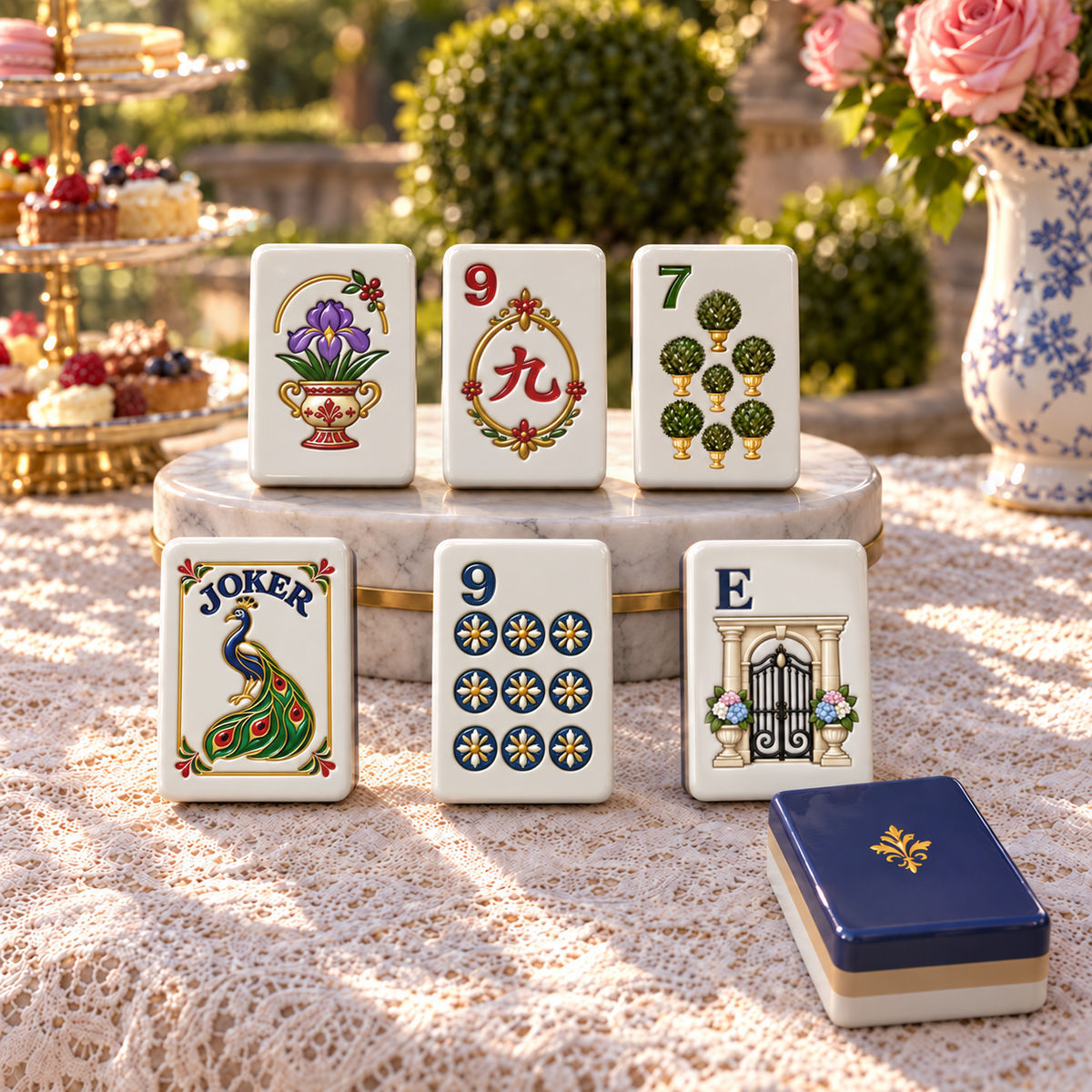
Taiwanese mahjong scoring awards fixed points per hand type rather than multiplying by seat and honors like American mahjong does. Common hands earn 2–8 points (a pair of identical tiles plus four melds, or five melds with no pair); bonus hands like "all honors" or "all one suit" earn 6–12 points or more. A complete hand requires fourteen tiles: one pair plus four melds of three or four tiles each. Players win when the discard matches their waiting tile (called "win" or "hu"), and the discarder pays; self-drawn wins earn double from all players. Scoring is determined at once—no calculation needed—making it faster than American mahjong. The game ends when someone reaches a set total (often 2000 points in casual play), and settlement happens immediately.
Taiwanese mahjong, also called Taiwanese or Taiwan mahjong, uses the same 152-tile inventory as American mahjong but plays by entirely different rules. The scoring system is its greatest departure: every hand has a fixed point value the moment it wins, with no wind or dragon multiplication. If you've played American mahjong, Taiwanese mahjong will feel like learning a new language—the tiles are familiar, but the grammar is foreign.
Why does Taiwanese scoring feel simpler than American mahjong?
American mahjong multiplies each hand's base value by the player's seat wind and by honors in the hand (doubling for dragons, wind, or honors), creating scores from 20 to 1000+ points. Taiwanese mahjong assigns a flat point value to each hand type—usually 2, 4, 6, 8, or 12 points depending on the hand's composition and rarity. Once you identify the hand, the score is locked; there is no multiplication, no bonus calculation, and no reading from an annual card. This makes Taiwanese mahjong faster to settle and easier for new players to learn, though mastering which hands earn which values still requires study.

What are the main hand types and their point values?
Basic hands (two to four points) include a pair plus four melds of three tiles each, or three melds plus one four-tile meld. Mid-level hands (six points) feature all melds of the same suit (a "clean hand"), honors only, or sequences from 1 to 9 in one suit. High-value hands (eight to twelve points) reward rarity: all honors, all terminal tiles (1s and 9s), all melded tiles (no pair), or hands with no simple melds—patterns like "all quints" or "two concealed kongs plus wins." Some variations award bonus points for self-drawn wins (double payment from all players) or dealer bonuses. The exact point table varies by region and house rules, so agreement before play is essential.
How do you count and combine melds to make a winning hand?
A complete Taiwanese hand has fourteen tiles: one pair (two identical tiles) plus four melds. A meld is either a pung (three identical tiles), a kong (four identical tiles), a chow (three consecutive numbers in the same suit, like 3–4–5 Dots), or a quint (five identical tiles in some house variants). The pair can be any tile; the four melds can be any legal combination. For example: pair of North winds + pung of 1 Bams + chow of 4–5–6 Craks + pung of 8 Dots + quint of 2 Bams. Once you draw or receive the fourteenth tile and it matches your waiting tile (the tile that completes the hand), you win immediately and declare your score. Importantly, Taiwanese mahjong allows chows—sequences like 1–2–3—which American mahjong does not permit as exposed melds, making hand-building more flexible.
What is the difference between winning by discard and self-drawn?
When the discarder plays a tile you need to complete your hand, you win and call "hu." The discarder pays the full hand value to you (and sometimes a small surcharge). If you draw the winning tile yourself from the wall—called a "zimo" or self-drawn win—you are paid double the hand value from all three other players, so your total is three times the base hand value. This asymmetry encourages players to hold hands that can be self-drawn (concealed melds, no pair) and punishes defensive play. Many versions also grant the dealer an extra bonus (called "dealer bonus" or "kong fee" when a kong is drawn), which accelerates scores and adds tension near the end of a session.
How do jokers and wildcards work in Taiwanese mahjong?
Most Taiwanese mahjong sets include joker or wildcard tiles (often red tiles or blank tiles in the spare set). Some house rules permit jokers as wildcards in melds—substituting for any tile—but this varies widely. Conservative games forbid jokers entirely or limit them to one per meld. Other versions allow unlimited jokers but reduce the hand's point value if jokers are used (a "joker penalty"). Before playing, confirm the house rule on jokers with all players; using jokers unknowingly can derail an entire game. American mahjong forbids jokers in pairs and limits them strictly by the annual card, so Taiwanese players switching to American need to abandon joker flexibility and learn the card's rules.

What strategic decisions should you make when pursuing a Taiwanese hand?
Early in the game, identify which hands you can build from your starting tiles (usually thirteen dealt plus one drawn). Taiwanese mahjong rewards chasing hands that are flexible—able to wait on multiple tiles—because waiting on one tile only is slow and risky; other players can discard around your wait or force you to change direction. Look for hands that let you self-draw, since doubling your payout is worth the patience. Defensive discarding matters too: watch which tiles other players have taken or discarded, and avoid throwing tiles that match their potential melds. As the score grows, adjust your risk tolerance; near the session total, aggressive play (chasing big hands, keeping many options open) can close a deficit faster than waiting for a safe hand. Late in the game, scoring often accelerates because one player's big win or loss can swing the session.
Strategy Goal | Hand Type to Pursue | Risk Level | Why It Works |
Quick win | Pair + four simple melds (2 points) | Low | Fast to complete; high success rate |
Safe self-draw | Honors or one suit (6 points) | Medium | Self-drawn doubles payout; fewer tiles to track |
Late-game swing | All honors or all terminals (8+ points) | High | Big payout to close deficit; rare enough to surprise |
Flexible mid-game | Multiple waiting tiles (any meld type) | Medium | More drawing chances; adapt if blocked |
🀄 Shop best-selling mahjong sets →
How does Taiwanese mahjong compare to other variants you might play?
Taiwanese mahjong sits between American mahjong (no chows, fixed card-based hands, multiplied scoring) and Hong Kong mahjong (chows allowed, fan scoring like Taiwanese but more complex). American mahjong is strictly structured by the National Mah Jongg League card, which resets each spring and governs every legal hand; you cannot play a hand unless it appears on the current year's card. Taiwanese mahjong has regional variations but no official annual card—house rules dominate, and players can invent or adapt hands. This freedom makes Taiwanese games more social and less competitive than American tournaments, but it also means every game group needs a scorekeeper and a referee for disputes. If you play American mahjong regularly, switching to Taiwanese requires unlearning the card dependency and relearning chow patterns; the tiles and pung/kong mechanics transfer directly, but the scoring logic is entirely different.
What mistakes do new Taiwanese players make, and how do you avoid them?
Beginners often pursue hands that are too ambitious, holding too many "waiting tiles" and blocking themselves from winning quickly. A good hand waits on two to four tiles maximum; waiting on six tiles is waiting for luck, not skill. Another error is ignoring the dealer bonus or self-drawn premium—undervaluing these opportunities means missing easy points. Many new players also discard dangerous tiles (those matching other players' melds) too late, allowing opponents to win before defensive strategy kicks in. To avoid these: write down the legal hand types and their scores before play, agree on joker and bonus rules in advance, and take a moment to count your waiting tiles before deciding to hold or fold a hand. Understanding the rules of your specific variant before sitting down saves arguments and speeds up learning.
🎁 See our most-loved mahjong sets & accessories →
What equipment do you need to play Taiwanese mahjong consistently?
You need a standard 160-tile mahjong set—152 tiles for play plus spares—and ideally a scorepad and pencil for tracking points. A mat with tile divisions helps organize the melds you've collected (called your "tableau") and prevents tiles from sliding. If you play regularly, racks with pushers let you hold your hand neatly and slide tiles as you meld, reducing hand strain and speeding play. A bag or case protects your set if you travel to different homes or games. Dice are not always used in Taiwanese mahjong (some versions deal in sequence instead of rolling for the starting player), so confirm that detail with your group. None of these are mandatory, but a mat and racks transform casual play into comfortable, repeatable sessions.
What to check before you buy a mahjong set for Taiwanese play
Tile clarity: Verify that numbers and suits are printed clearly on every tile. Taiwanese sets often use traditional symbols, so ensure you can distinguish 1 Bam (bird), Craks (circles with marks), and Dots easily under indoor light.
Joker count: Check whether your set includes spare jokers or blank tiles, and confirm your play group's joker rules before buying. A standard 160-tile set includes spares; know how many and whether your group uses them.
Case fit: If you travel between games, test that all tiles fit snugly in the case with minimal rattle. Loose tiles wear faster and can damage edges.
Scorer comfort: Confirm you have a scorepad (often sold separately) and that someone at the table is comfortable tracking cumulative points. Taiwanese play can involve large scores, so a clear system prevents disputes.
✨ Find your Mahstead set — free US shipping →

FAQ
Can I use an American mahjong set to play Taiwanese mahjong?
Yes—Taiwanese mahjong uses the same 152-tile inventory, so any standard set works. The difference is strategy and scoring, not the tiles themselves. You simply ignore the National Mah Jongg League card and follow Taiwanese hand and point rules instead.
Do I need to memorize all the hand point values before I play?
No. Write them down on a scorepad and keep it visible during play. Most players reference a cheat sheet for the first few sessions until patterns stick. Experienced players memorize common hands; beginners should not feel rushed to do so.
What happens if two players try to win on the same discard?
Priority typically goes to the player closest to the discarder in rotation order (usually the next player clockwise), or to whoever called "hu" first. Agree on this rule before the game starts; different regions handle it differently.
Is Taiwanese mahjong played with three players, or must it be four?
Most Taiwanese games are four-player, but three-player and two-player variants exist in some regions. Confirm before you sit down. Three-player games often use a dead hand (one seat stays empty) or adjust the tile count.
How long does a typical Taiwanese mahjong session last?
A casual session to 2000 points usually takes 45–90 minutes depending on how quickly hands form and how experienced the players are. Tournament or serious money games can run longer or play multiple rounds to higher totals.
Are house rules in Taiwanese mahjong as strict as the American mahjong card?
No. American mahjong is governed by one published annual card; Taiwanese mahjong varies by region and household. Always clarify rules in writing before play—joker use, bonus points, self-drawn payouts, winning conditions, and score totals can all differ.


View More
View More
View More
