
Taiwanese Mahjong Scoring: Points, Patterns & Fan System
Last updated: Nov 23, 2026
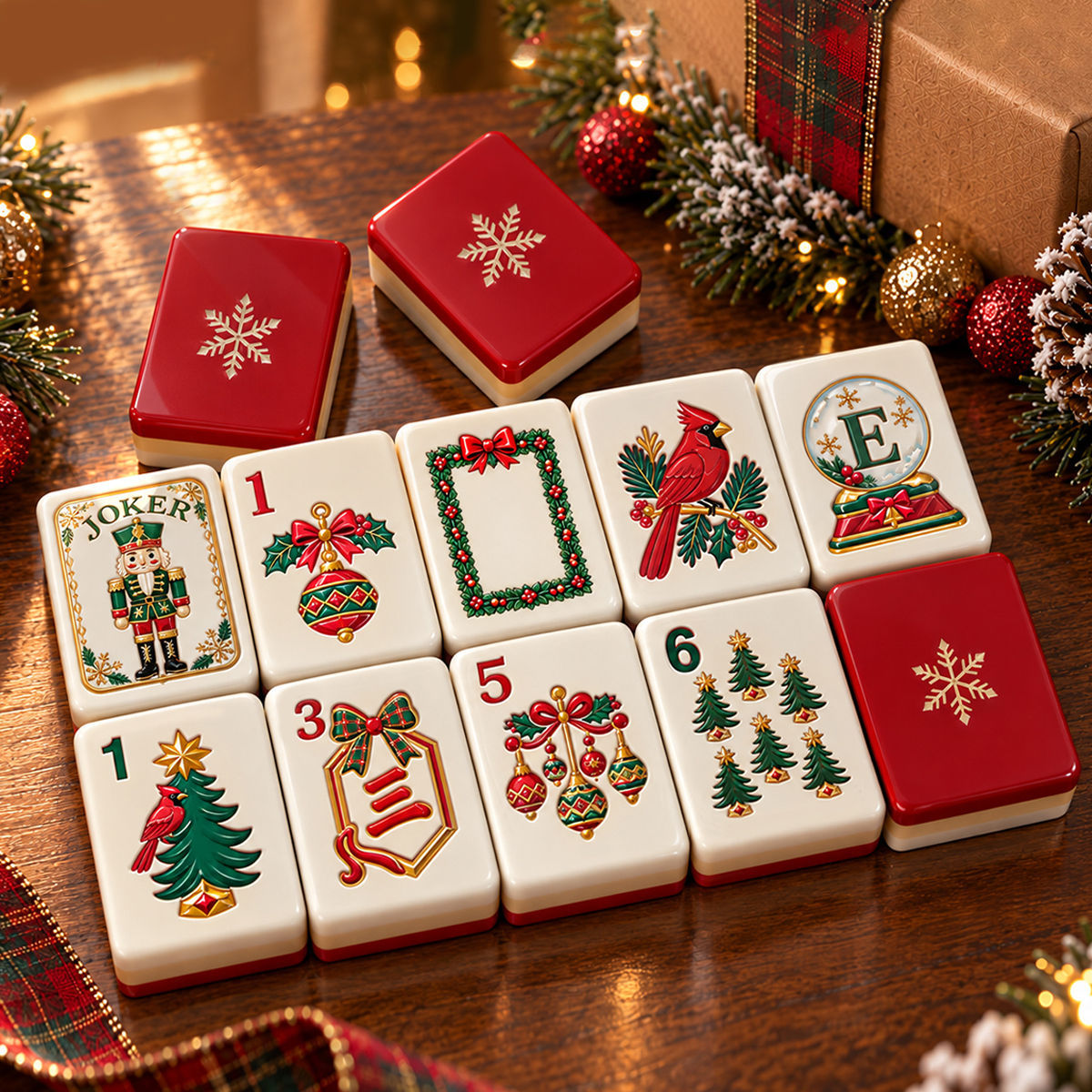
Taiwanese mahjong scoring assigns point values based on fan (difficulty multiplier) and base points, with winners collecting payment from all players or specific players depending on win type. A hand's fan count depends on its melds (pungs, kongs, chows, sequences), honor tiles, and terminal combinations; a winning hand typically earns 2–8 fan. Base points range from 20–160, multiplied by 2^(fan count), then adjusted for who paid (self-draw or discard). Unlike American mahjong, Taiwanese uses 144 tiles, allows chows (sequences like 1–2–3), and scores flow from the completed hand's structure rather than from a pre-set card. The system demands pattern recognition and quick arithmetic at the table. Most groups play with printed fan charts or memorize common combinations; Mahstead players hosting Taiwanese variants often keep reference cards handy beside their sets.
Taiwanese mahjong scoring differs fundamentally from American play. Instead of matching hands to a yearly card, Taiwanese players calculate points based on the hand's inherent structure—the melds they've built, the tiles they've collected, and how they've won. Understanding this system takes practice, but the logic becomes intuitive once you grasp how fan multiplies base points.
What is a fan, and why does it matter?
A fan is a multiplier that represents how difficult or rare a hand pattern is. Each hand earns 1, 2, 3, 4, 5, 6, 7, or 8 fan depending on its melds and composition. A hand with more fan pays higher than a hand with fewer fan; the point value doubles for each additional fan, creating exponential growth. This system rewards strategic play—building complex melds and collecting honor tiles increases fan count and final payout dramatically, unlike American mahjong where all winning hands on the card pay the same regardless of complexity.

How do you count fan in a winning hand?
Each meld and pattern adds fan to your total. A pung (three identical tiles) of terminal tiles (1 or 9) or honor tiles (winds, dragons) adds 1 fan; a chow (sequence like 2–3–4 Bams) adds no fan on its own but enables other patterns. A kong (four identical tiles) adds 1 fan, doubled if the kong is hidden (drawn, not exposed). All-pung hands (no chows), all-simples (no honor tiles or terminals), honor-tile sets, and dragon sets each contribute fan; some hands combine multiple patterns, stacking fan. Many groups follow a reference chart listing named patterns—"all honors," "all simples," "mixed straight"—each worth a fixed fan count. The hand must be complete (winning tile drawn or claimed) before you count fan; no partial hands score.
What is base points and how does it affect payment?
Base points start at 20 or 30 (depending on house rules) and increase with hand complexity. Once you've calculated fan, base points are multiplied by 2^(fan count). A hand with 2 fan and 30 base points pays 30 × 4 = 120 points per player (if self-draw) or 120 × 3 (if a single discard). Higher fan hands multiply faster: 4 fan makes base points × 16; 6 fan makes base points × 64. Payment flows from all three other players in a self-draw win; only the discarder pays if you've won off their tile. Some groups cap payments at a maximum fan value (e.g., no more than 64 base points) to keep games social rather than financially punishing.
How does winning method change the payout?
If you draw the winning tile yourself (zimo), all three other players pay you the full amount. If an opponent discards your winning tile (hu), only that player pays—typically triple the base amount to account for the other two players. This distinction rewards self-draw wins and makes discarding riskier as the game progresses. Late-game discards carry higher stakes because remaining players often hold winning combinations and the pool of dangerous tiles shrinks. Some variants assign different payouts: one player pays double, two pay single, or all pay equally regardless of win type. Agree on house rules before play begins; clarify who pays whom and whether payments cap at certain fan levels.
What is the most common fan chart used in Taiwanese play?
Most Taiwanese groups follow a simplified 8-fan system aligned with Hong Kong mahjong but adapted for local play. Named patterns include: all-pung (2 fan), all-chows (2 fan), all-simples (2 fan), terminal and honor only (3 fan), two terminal sets (2 fan), all-honor (6 fan), three kongs (3 fan), and four kongs (8 fan, a rare limit hand). Other fan accrue from dragon sets (each dragon set = 1 fan), wind sets (your own wind or prevailing wind = 1 fan each), and specific sequence combinations. No two groups' charts are identical; regional and family rules vary widely. Before your first Taiwanese game, ask players to show you their chart or clarify rules for two or three specific hand examples. This prevents disputes and speeds up scoring during play.
🀄 Shop best-selling mahjong sets →

How does Taiwanese differ from American mahjong scoring?
Aspect | American | Taiwanese |
Tile count | 152 tiles + 8 jokers | 144 tiles, no jokers |
Hand source | Current year National League card | Player-built patterns & melds |
Scoring method | All winning hands on card pay the same | Points = base × 2^(fan), fan varies per hand |
Sequences (chows) | No exposed or called sequences | Chows allowed, scored in patterns |
Payment | Player discarded × 3 or all-play | Discarder pays full, or self-draw pays 1:3 split |
Setup speed | Longer (card reference required) | Faster (pattern recognition) |
Complexity | Rule-based from card | Calculation-based with house rules |
American mahjong is fixed—your hand either matches the card or it doesn't, and all matching hands pay equally. Taiwanese is dynamic—two different hands can pay wildly different amounts based on their fan and base points. American rewards luck and card-reading; Taiwanese rewards tactical meld-building and pattern recognition. Both are engaging, but they demand different mental approaches.
What common mistakes kill your score in Taiwanese games?
Miscounting fan: The biggest error is double-counting patterns. If your hand has all-pung and all-honors, you claim both for higher fan—but you cannot claim the same meld twice. Write down your melds before announcing to avoid confusion.
Forgetting hidden kongs: A hidden kong (drawn, not exposed mid-game) adds more fan than an exposed kong. If you've added a drawn kong to your hand without exposing it, clarify this during scoring so opponents pay the correct multiplier.
Unclear discard vs. self-draw: State zimo (self-draw) or hu (discard win) immediately. Ambiguity leads to payment disputes and slows the game; house rules should specify what counts as a valid win announcement.
Not agreeing on fan caps: If your group plays a capped maximum (e.g., 8 fan = 64× base points, period), confirm this before dealing. Unlimited fan can lead to huge payouts on rare hands, which some groups avoid for social play.
Confusing sequences with pung rules: Chows must be consecutive (1–2–3, 5–6–7). You cannot score a chow as if it were a pung, and mixing up these melds inflates fan count illegally.
🎁 See our most-loved mahjong sets & accessories →
What should you check before your first Taiwanese game?
Before sitting down, clarify these with your group:
Fan chart: Ask to see the printed reference or have someone explain 3–4 named patterns.
Base point value: Confirm whether play starts at 20 or 30 base points.
Fan limit: Is there a maximum fan, or does it scale infinitely?
Payment split: For self-draw, do all three pay equally, or does the discarder who triggered the draw pay more?
Exposed vs. hidden melds: How do kongs revealed mid-game vs. added to a closed hand differ in scoring?
Win conditions: Must you have at least 1 fan to win, or can 0-fan hands be claimed?
Tie-breaking: If two players reach points simultaneously, how is it resolved?
Write these down or take a photo of the chart. Refer to it during the first few hands until the system feels natural. Most groups are patient with newcomers; asking upfront beats disputes mid-game.
How do you read and use a Taiwanese mahjong fan reference chart?
A typical chart lists named hands (e.g., "Pung of Winds," "Pure Sequence," "All Terminals") with fan values in a table or card format. Each row shows the pattern name, fan count, and sometimes an example. The chart may group patterns by category—dragon sets, wind sets, sequence sets, terminal sets—to help you scan quickly during play. To use it: after winning, identify your melds, look up each meld or named pattern in the chart, add the fan values together, multiply base points by 2^(total fan), and announce the payout. Some charts include payment examples (e.g., "3 fan + 30 base = 240 points from discarder") to speed calculation. Laminated or waterproof versions survive spills; many groups keep one at the table. If your group uses a house-designed chart, request a copy before your first game so you can study at home.
✨ Find your Mahstead set — free US shipping →
What you'll need to host Taiwanese mahjong nights
Taiwanese play uses 144 tiles, no jokers. If you own a standard best-selling American mahjong set and want to play Taiwanese, you'll need to set aside the jokers and remove 8 Bams, 8 Craks, and 8 Dots (leaving one copy of each 1–9 in each suit). Alternatively, source a dedicated Taiwanese set. Beyond tiles, you'll want:
A non-slip mat for the table to keep tiles stable during draws and melds.
Racks with pushers to organize your hand and hide melds if playing with concealed hands.
A printed or laminated fan chart (house-specific; your group provides this).
Pen and paper or a scoring app to track points across rounds.
Mahjong mats designed for tile play work for both American and Taiwanese variants. Racks with pushers are optional but helpful if your group plays with concealed hands or melds that must be hidden until the win. A travel bag or case protects your set if you're hosting or traveling to games regularly.

FAQ
Do I need to memorize the entire fan chart before playing Taiwanese mahjong?
No. Most players keep a reference chart at the table during their first dozen games. Patterns repeat; after a few sessions, common fan combinations become automatic. Beginners are always permitted to consult the chart mid-hand.
What happens if I miscalculate fan and announce the wrong payout?
If discovered before payment, correct the fan count and recalculate. If payment is already made, house rules determine whether to reverse or accept the error. Confirm your group's policy upfront; many play that obvious errors are corrected on the spot, but accidental overpayment stands.
Can I play Taiwanese mahjong with an American mahjong set?
Yes, if you remove the jokers and set aside 8 tiles from each suit to create a 144-tile deck. This works for casual play, though a dedicated Taiwanese set keeps the tile count consistent. Many players own both for flexibility.
How long does a typical Taiwanese mahjong game take?
A round (one hand) usually takes 10–15 minutes with experienced players, longer with newcomers doing calculations. A full session of 4–8 rounds typically runs 1.5–2 hours, depending on pace and chatter.
Is Taiwanese mahjong harder than American mahjong to learn?
Differently challenging. American mahjong requires card-reading and memorizing dozens of hand patterns; Taiwanese requires quick arithmetic and recognizing pattern categories. Most players find one easier than the other based on whether they prefer visual matching or numerical calculation.
Why does Taiwanese mahjong use 144 tiles instead of 152?
Taiwanese and Hong Kong variants evolved separately with fewer tiles and different meld rules. The 144-tile format (36 per suit for Bams, Craks, Dots, plus 28 honor and flower tiles) is traditional in East Asian play and creates different hand probabilities and strategies than the American 152-tile version.


View More
View More
View More
