
Riichi Mahjong Pinfu Rules: Complete Guide
Last updated: Nov 23, 2026
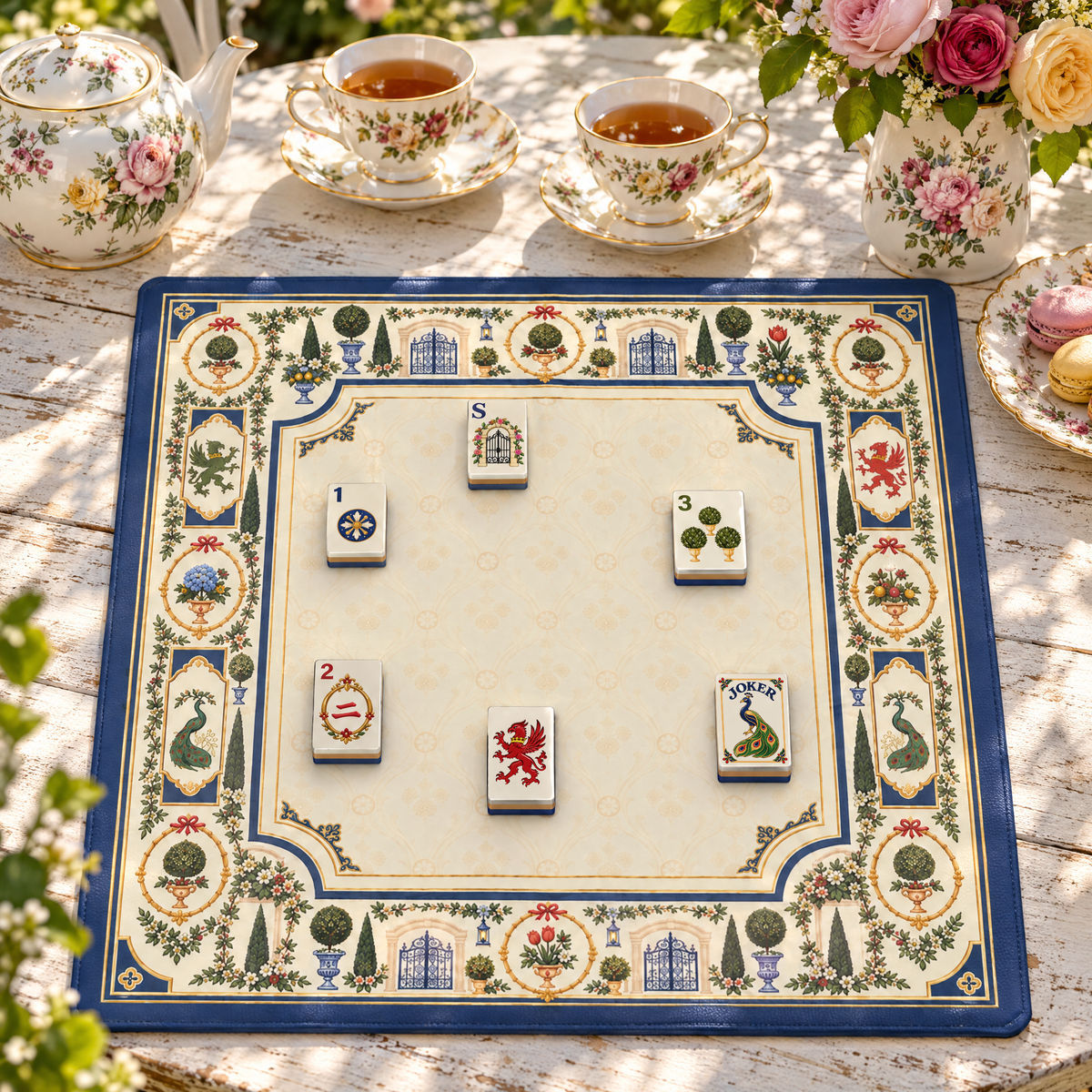
Pinfu (平和, "flat hand") in riichi mahjong is a winning hand made of four melds that are all sequences (chows: three consecutive numbered tiles of one suit)—never triplets—plus a pair. Unlike American mahjong, which requires sets from the current year's card and doesn't permit sequences to be called, riichi mahjong scores pinfu by fan multiplier: a 1-fan pinfu is typically worth 1,000–2,000 points depending on who paid and wind position. The hand must be "closed" (concealed) when winning off a discard; if you draw the winning tile yourself, it's pinfu tsumo, often worth more. The four sequences can be any mix of Bams, Craks, and Dots (honors—winds and dragons—cannot form sequences in pinfu). Pinfu has no triplets, no honored pairs, and no special melds, making it the most common but least lucrative hand in riichi play. Players learning riichi benefit from tiles marked with both Arabic numerals and Chinese characters; our best-selling acrylic sets are designed for all variants, including riichi notation.
Riichi mahjong and American mahjong look similar—same 34 tile types—but their rules are fundamentally different. Pinfu is riichi's purest, most frequent winning pattern, and understanding it opens the game. Here's what separates pinfu from the rest.
What exactly is a pinfu hand?
Pinfu is a closed hand of four sequences (chows) and a pair. The four sequences must each be three consecutive tiles of the same suit: 1–2–3, 2–3–4, 3–4–5, up to 7–8–9 Bams (or Craks or Dots). You cannot mix suits within a sequence. The pair must be two identical tiles. That's it—no honors, no triplets, no sextets. A pinfu hand winning off a discard counts as a ron win; if you draw the winning tile yourself (tsumo), it's typically worth more, as all opponents pay.

How does pinfu scoring differ from American mahjong?
American mahjong awards points by hand pattern (as printed on the National Mah Jongg League card each year), with jokers filling gaps. Riichi mahjong scores by yaku—defined hand types—each assigned a fan value. Pinfu is 1 fan when closed and you win on a discard (ron). The fan count then multiplies a base score of 1,000 or 2,000 depending on wind seating and dealer status. A 1-fan pinfu from a non-dealer, for example, earns 1,000 points if an opponent discards it; if the dealer wins the same pinfu tsumo, each opponent pays 500 points (1,500 total). American players accustomed to fixed hand values must shift to this multiplier logic—it's a clean break.
Can pinfu include honors (winds and dragons)?
No. Pinfu strictly prohibits winds, dragons, and flower tiles in any form. This is because honors cannot form sequences; riichi mahjong only scores a hand as pinfu if all four melds are chows (sequences). If your hand contains even one triplet of any tile, or one wind, it's no longer pinfu—you'd be scoring a different yaku (possibly tanyao, toitoi, or another). This strict composition is what makes pinfu both common (you're always trying to build sequences) and lower-scoring than hands with honors.
What's the difference between pinfu ron and pinfu tsumo?
Ron (ロン) means you win off a tile someone discarded; tsumo (ツモ) means you drew the winning tile from the wall yourself. A closed pinfu ron is 1 fan and worth roughly 1,000–2,000 points depending on who pays. A closed pinfu tsumo, by contrast, is often 2 fan under riichi rules (because tsumo itself adds a yaku), making it worth 2,000–4,000 or more. Some rule sets award a 1-fan pinfu tsumo as 2,000 base instead of 1,000. The key: tsumo always pays more because all three other players contribute instead of one. American mahjong has no tsumo rule, so this is another pivotal difference.
How do you avoid losing when holding a nearly-complete pinfu?
When you're one tile away from pinfu, announce "riichi" (a one-tile wait declaration that costs 1,000 points but signals closed hand status and earns bonus fan). Once you've called riichi, other players play more defensively—they know you're close. Common mistakes: holding a pair for too long when you could build a second sequence; betting on unlikely internal waits (like hoping for a 5 Dot to complete 4–5–6 and 5–6–7) instead of edge or pair waits; or, in friendly games, forgetting to riichi before drawing—which forfeits the bonus fan and confuses scoring. The safest approach: build three sequences first, then riichi on the pair, since pairing is statistically fastest.
When does pinfu NOT count as a winning hand?
Pinfu fails if any of these occur:
• A triplet appears instead of a sequence – the moment you have three identical tiles (whether concealed or called), it's no longer pinfu. • An honor (wind or dragon) is in the hand – even a pair of winds disqualifies pinfu. • The pair is a wind or dragon – some riichi schools allow this under a modifier yaku, but pure pinfu requires a number-suit pair. • The hand is open (you've called a meld) – pinfu must be closed when you declare ron; if you've exposed any chow or triplet during play, pinfu is lost. • You win on the first discard – pinfu requires at least a short wait; dealers or special draws may score differently.
Pinfu's constraints make it beginner-friendly to identify: four chows, one pair, all number tiles, all concealed. If any of those conditions breaks, pinfu is gone.
🀄 Shop best-selling mahjong sets →

How pinfu compares to other riichi yaku
Yaku | Melds | Honors? | Fan (ron) | Common? | Difficulty |
Pinfu | 4 chows + pair | None | 1 | Very high | Low |
Tanyao | 4 chows/triplets + pair | None; only 2–8 tiles | 1 | High | Medium |
Yakuhai | Any 4 melds; triplet of winds/dragons | Yes (triplet) | 1 | Very high | Low |
Toitoi | 4 triplets + pair | Any | 2 | Medium | Medium |
Honroutou | 4 triplets/pairs + pair; only 1, 9, honors | Yes | 2 | Low | High |
Pinfu's advantage: it's simple, frequent, and fast to build. Its disadvantage: it's worth little on its own (1 fan), so you'll chase higher-value hands in serious play.
How to tell if you should chase pinfu or pivot to another hand
Early in the round (draw 1–8), if two suits flow smoothly, pinfu is worth pursuing. Mid-round (draws 9–13), if you're one tile from pinfu but far from any triplet, complete the pinfu—taking a known 1-fan win beats chasing a hypothetical 2-fan hand. Late game (draw 14 onward), pivot: if the discard pile is thick with 5–7 tiles in multiple suits, other players are likely building triplets; pinfu is harder to hide, so a switch to tanyao or a triplet hand may succeed better. This decision hinges on table tempo—if discards are fast and varied, pinfu is alive; if opponents are cycling similar numbers, they're likely blocking your sequences.
🎁 See our most-loved mahjong sets & accessories →
How riichi tile notation helps you learn pinfu faster
Riichi tiles show suit symbols, Arabic numerals (1–9), and often Chinese characters. When learning pinfu, this dual labeling lets you instantly spot sequences without translating; you see "3–4–5 Bam" as clearly as the character リーチ (riichi). Tiles without this notation require memorization of bamboo (spike count), circle (dot number), and character (Chinese numeral)—slow for new players. Our acrylic mahjong sets designed for riichi use modern notation that accelerates learning. Once you've played 10 games, the characters stick; the numerals are instant backup.
Building a pinfu practice routine at home
Set up a mat or clean table. Deal 13 tiles to yourself (as if mid-game) and score how many ways you can pinfu-win within five draws. Rotate through three rule sets: (1) closed ron, (2) closed tsumo, (3) riichi declaration on your wait. This drills sequence-building muscle memory and teaches you to recognize fan bonuses. After 20 hands, you'll intuitively know which tile sequences block each other and which waits are ambiguous (needing riichi to clarify). For two-player practice, deal two hands and have a partner discard; you declare ron or fold, building real-time decision-making. Pair practice with mahjong racks with pushers so your tiles stay visible and organized—crucial when tracking four sequences.
What to check before you buy a riichi mahjong set
Tile notation: Confirm the set shows both Arabic numerals and Chinese characters. Honor suits should be labeled (East, South, West, North; Red, Green, White).
Size: Riichi tiles are typically 1.3–1.4 inches wide; check you can shuffle comfortably.
Jokers and blanks: Riichi play uses the full 34 tile types only—no jokers, no blanks. A 152-tile set meant for American play won't work; riichi needs only the base tiles.
Durability: Acrylic or resin sets last decades with daily play; plastic wears quickly.
Pair count: Riichi uses four of each tile type (like American), so any set labeled for riichi or universal play is correct.
✨ Find your Mahstead set — free US shipping →

FAQ
Can a pinfu hand include one triplet instead of a sequence?
No. Pinfu is defined as four sequences and a pair, with no triplets. If you have a triplet, the hand is a different yaku (yakuhai, toitoi, or another), not pinfu.
Does riichi mahjong use jokers like American mahjong does?
No. Riichi uses only the 34 standard tile types: 1–9 in each of three suits (27 tiles), plus four winds and three dragons (7 tiles). No jokers, no blanks, no wildcards. American mahjong adds eight jokers to the 152 base tiles to fill gaps in card-defined hands; riichi has no card and no gaps.
If I call a chow during play, can it still be pinfu?
No. Pinfu must be a closed hand, meaning all four sequences are hidden when you win. If you've called (exposed) any meld—chow, triplet, or pair—the hand is open and does not qualify as pinfu. It may score another yaku, but not pinfu.
What's the base point value for a 1-fan pinfu if a non-dealer discards it?
A 1-fan pinfu ron from a non-dealer typically scores 1,000 points (the dealer or the winning player's opponent pays). If the dealer wins a 1-fan pinfu ron, the non-dealers often each pay 1,500 points. Rule variations exist, so confirm with your group before play.
How does pinfu scoring interact with the riichi bonus?
Declaring riichi adds 1 fan and costs 1,000 points (called a riichi stick). So a closed hand with riichi declaration that wins and is also pinfu counts as 2 fan: 1 for pinfu, 1 for riichi. This doubles the payout. However, once riichi is declared, your hand is locked; you cannot change it, and pinfu becomes a concrete target.
Are there regional differences in pinfu scoring between Japanese, Hong Kong, and other riichi variants?
Yes. Japanese Riichi (the most common) scores pinfu as described here. Hong Kong mahjong (Cantonese) uses different melds, scoring systems, and terminology (it calls winning "eating" and has no riichi declaration). Taiwanese mahjong has variants too. If you're learning, confirm which standard your group uses; mixing standards causes disputes. Mahstead's riichi-notation sets are designed for Japanese Riichi but work for any variant with clear tile labeling.
Can the pair in a pinfu hand be a 1 or 9 Dot/Bam/Crak?
Yes. Pinfu pairs can be any number 1–9 in any suit. A pair of 1 Bam or 9 Dot is perfectly legal. The only restriction: the pair cannot be a wind or dragon. Number-suit pairs of any value (1 through 9) are allowed.


View More
View More
View More
