
Soap Mahjong Tile Symbol Explained: What It Is & Why
Last updated: Nov 23, 2026
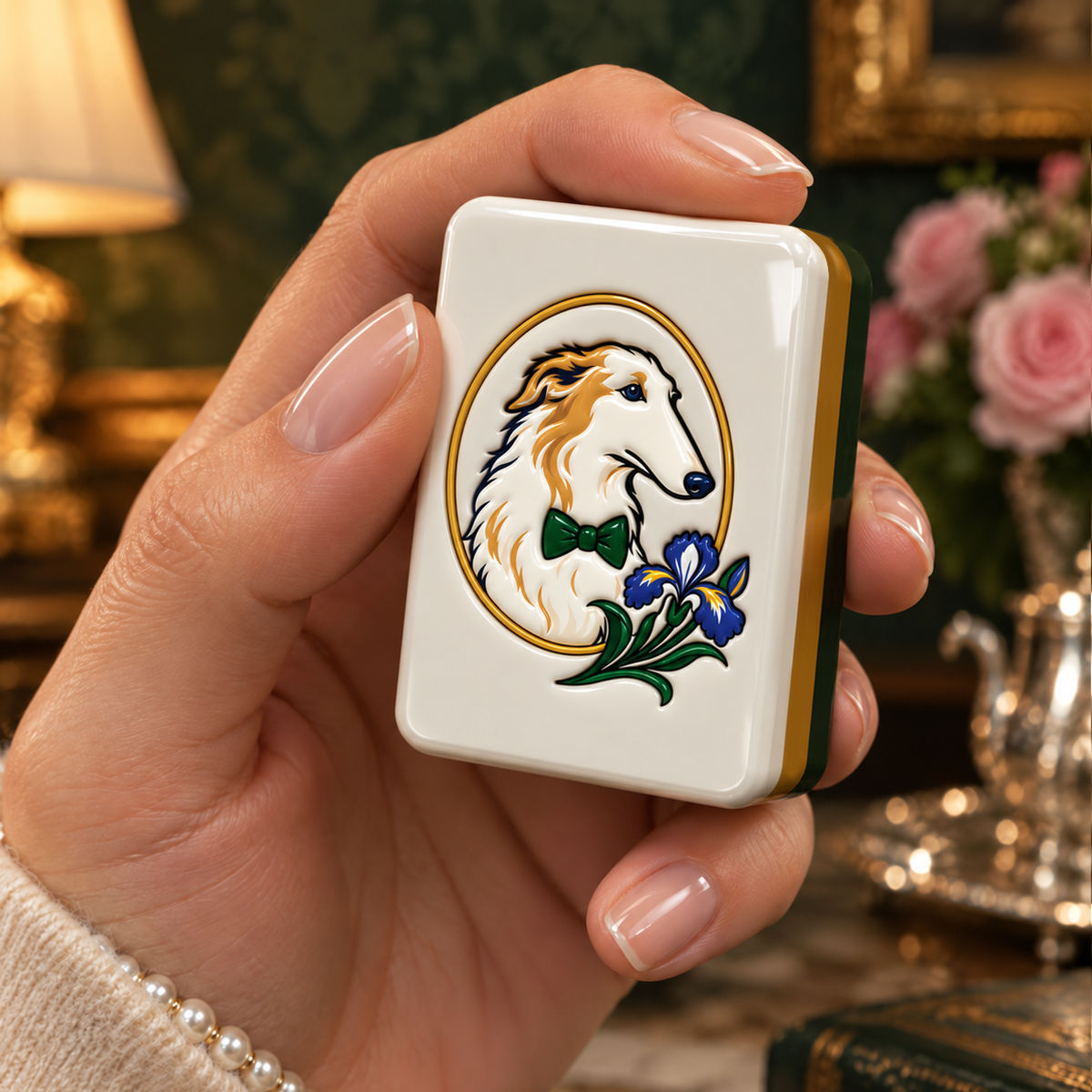
In American mahjong, the "Soap" tile is the White Dragon, one of twelve Dragon tiles (four each: Red, Green, and White). The Soap is blank or nearly blank on its face—no suit symbol like Bams, Craks, or Dots—and lives in three roles simultaneously. It belongs to the Dragons suit and pairs with Dots (so "White Dragon/Soap + Dot" reads as zero in hand notation). Unlike jokers, Soap cannot replace a single tile or form a pair alone; it's a true tile that must be drawn and played like any other. The National Mah Jongg League card shows Soap in hand patterns just as a regular tile. On a standard set from Mahstead, the White Dragon tile has a simple, clean face so you'll spot it instantly among the 152 playing tiles—no engraving required.
What does the White Dragon/Soap look like on the tile?
The White Dragon tile is deliberately minimal—usually a blank face or a very faint outline. It's not ornate like the Red Dragon (a solid red symbol) or Green Dragon (a green symbol). You'll see it listed as "White Dragon" on the box, but players call it "Soap" (a historical nickname that stuck). On Mahstead sets, the White Dragon sits among the other Dragons in your rack and is instantly recognizable by its clean, unmarked appearance—easier to spot than any engraved tile, which is why many of us prefer simpler designs for speed during play.
🀄 Shop best-selling mahjong sets →

Where does Soap appear on the National Mah Jongg League card?
The current year's National Mah Jongg League card shows Soap (White Dragon) in hand patterns just like Red and Green Dragons—no special notation. When you see a pattern with "Dot/Soap" notation, it means a Dot tile paired with a White Dragon tile, and that pair counts as zero for scoring or hand position. Soap appears in patterns across all four year sections and in multiple categories. It's a true tile, not a substitute; the card won't tell you "use Soap to replace X"—that's a joker's job. Learning to spot Soap in hand notation is one of the fastest wins for new players who study the card before their first game.
Can you use Soap as a wildcard like a joker?
No. This is the biggest beginner mistake at the table. Soap is a real Dragon tile; jokers are wildcards. Soap must be played as a White Dragon or in the zero-Dot position it occupies in a hand. You cannot use Soap to replace a missing 3 Bam or fill a gap in a pung. Jokers do that job—and there are eight jokers in every American mahjong set. If you need a wildcard, draw or grab a joker, not Soap. A quick table rule: "Soap is a tile; jokers are builders." Once you lock that rule in, the confusion disappears.
How does White Dragon/Soap fit into hand patterns?
Soap appears in hand patterns on the National Mah Jongg League card in two contexts. First, as a Dragon—it forms pungs, kongs, or other groupings of three or four White Dragons, listed as "Soap/Soap/Soap" or similar. Second, as zero-Dot—it pairs with a Dot tile in hand notation (e.g., "1 Dot/Soap" reads as "1 Dot and zero"). When you're scanning the card for a potential hand, treat Soap the same way you treat any Red or Green Dragon. If a pattern calls for "Dot/Soap," you must hold exactly one Dot tile and one White Dragon tile; you cannot substitute a joker for either. The card is your truth; if Soap is written, Soap goes in the rack.

Why is it called "Soap"—and does the name matter in play?
"Soap" is a colloquial nickname with roots in early American mahjong culture; nobody agrees on the exact origin, but the name has stuck for decades. At the table, you'll hear "Do you have Soap?" or "I need Soap for that hand." The nickname matters only for table talk—it speeds up communication. On official scorecards or when studying the card, you'll use the proper name "White Dragon." The nickname is purely social shorthand among players. If you're learning from a new group, they may use "Soap" or "White Dragon" interchangeably—both mean the same tile, the blank-faced Dragon.
🎁 See our most-loved mahjong sets & accessories →
Comparison: Soap vs. Red Dragon vs. Green Dragon vs. Joker
Tile | Face Symbol | Role | Can Replace Others? | Can Be a Pair? |
Red Dragon | Solid red marking | Dragon suit, pairs with Craks (1 Crak/Red = "1") | No | Yes, if the hand calls for it |
Green Dragon | Solid green marking | Dragon suit, pairs with Bams (1 Bam/Green = "1") | No | Yes, if the hand calls for it |
White Dragon (Soap) | Blank or faint | Dragon suit + zero-Dot (1 Dot/Soap = "1 Dot and zero") | No | Yes, if the hand calls for it |
Joker | Joker mark | Wildcard only | Yes—fills any gap | No, never a pair |
The table shows why Soap is not a joker: Soap is a real tile with fixed roles, while a joker is pure utility. A hand pattern either calls for Soap by name or it doesn't.
A 60-Second Rule for Beginners: The Soap Decision Tree
When you pick up a tile and wonder "Is this Soap?":
Does it have a blank or nearly blank face? → Likely Soap.
Is it grouped with Red and Green Dragons? → Definitely Soap.
Are you looking at the card and see "Dot/Soap" notation? → Pair one Dot tile with this blank tile.
Does someone ask "Do you have Soap?" → Hand them the blank-faced Dragon.
Are you trying to fill a gap and have no jokers? → Soap won't work; draw another tile or declare your hand incomplete.
This tree works 100% of the time in play. Once you run through it twice, the confusion evaporates.
✨ Find your Mahstead set — free US shipping →
What to Check Before You Buy a New Set
When you order an American mahjong set, confirm the White Dragon (Soap) tile is clearly visible and easy to distinguish from other tiles. Our best-selling acrylic sets come in contrasting colors and bold designs—crisp, high-contrast faces mean you'll spot Soap and every other tile in seconds, which matters during fast play. If you're hosting weekly games, a set with clean tile faces and a sturdy carrying case will save you time shuffling and sorting. Mahstead ships free across the US, so if you're upgrading from an old or unclear set, this is the moment to do it.

FAQ
What's the difference between "Soap" and "White Dragon"?
Same tile, two names. "Soap" is the casual nickname players use at the table; "White Dragon" is the formal name on the box and National Mah Jongg League card. Both refer to the blank-faced Dragon. Use whichever your group prefers—they mean the same thing.
Can I use Soap to replace a missing tile in a pung?
No. Soap is a real Dragon tile, not a joker. If you need to fill a gap, use a joker. Soap can only appear in a hand pattern if the National Mah Jongg League card explicitly shows it. Once you internalize "Soap is a tile, not a builder," this error stops happening.
Where does Soap appear on the current year's mahjong card?
Throughout all sections and categories, just like Red and Green Dragons. Check the card notation: if you see "Soap" or "White Dragon" listed, that tile belongs in that hand. The card is your source of truth—if it's written, it counts.
Is the White Dragon tile worth more or less points than Red or Green?
All Dragons are equal in the standard American game. Scoring is based on the hand pattern itself, not the individual Dragon type. Check the National Mah Jongg League card for the point value of your specific hand.
Why does Soap pair with Dots to make "zero"?
In American mahjong notation, tiles are numbered: Bams (1–9), Craks (1–9), Dots (1–9). The White Dragon is the zero placeholder, and pairing it with any Dot (e.g., 1 Dot) creates the zero-Dot position. This is just how the game's notation evolved; it's a historical design choice that's now standard.
If I have four White Dragons, can I use them all?
Only if the hand pattern on the National Mah Jongg League card shows a grouping of four White Dragons (often a kong of Soap). You cannot use all four just because you hold them—the card must call for it. Draw hands only from the current year's card.


View More
View More
View More
