
Singapore Mahjong: Rules, Tiles & How It Differs from American
Last updated: Nov 23, 2026
Singapore mahjong uses 144 tiles (not 152) across three suits, winds, dragons, flowers and jokers. Players draw and discard to build a hand of four melds plus a pair, winning when they declare "mahjong" with a legal combination. Games typically last 30–50 minutes per round. The core difference from American mahjong: Singapore allows chows (1-2-3 runs) that can be called or exposed on the table, jokers can stand in as wild tiles in any position (including pairs), and hands are not locked to a yearly card—players negotiate house rules on scoring and speed. The game rewards quick reading of the wall and aggressive claiming. A standard set contains tiles of uniform size and durability, though players hosting regular games often upgrade to engraved sets with protective mats and racks to keep play smooth and organized. No single governing body sets rules; Southeast Asian clubs vary hand values and speed rules locally.
Singapore mahjong is a fast, aggressive variant played across Southeast Asia with unique hand patterns, a smaller tile pool, and scoring rules that reward strategy over luck. It differs sharply from American mahjong in tile count, legal melds, and how jokers (if used) function. Players draw and discard to build a hand of four melds plus a pair, winning when they declare "mahjong" with a legal combination. Games typically last 30–50 minutes per round.
What is Singapore mahjong exactly?
Singapore mahjong is a sped-up, high-variation form of classical Chinese mahjong played in Malaysia, Singapore, and across Southeast Asia with localized rule tweaks. Four players draw and discard tiles to form four melds (triplets, quads, or runs) plus a pair; the first to complete and declare wins the hand, scoring based on tile value and how they won. No standard national rulebook exists—clubs and families set their own house rules on scoring multipliers, joker use, and speed timers. Many games are played in rapid-fire rounds over an evening; winning a hand pays out points or chips immediately.
🀄 Shop best-selling mahjong sets →

How does Singapore mahjong differ from American mahjong?
The biggest difference: Singapore allows chows (1-2-3 runs across the suit), which American mahjong forbids entirely. Singapore uses exactly 144 tiles; American uses 152. Jokers in Singapore can appear anywhere—as wild tiles in pairs, triplets, quads, or runs—whereas American jokers cannot be used in pairs or single tiles. Singapore players use no reference card and negotiate hand values per session; American players use the National Mah Jongg League card issued each spring. Singapore hands finish faster because runs are legal and the tile pool is smaller. Scoring in Singapore is often points-per-hand; American uses a complex scoring table tied to hand pattern and wall draw. If you've played American mahjong and switch to Singapore, expect to see runs exposed on the table and jokers plugging gaps in pairs—this feels alien to American players at first.
What tiles are in a Singapore mahjong set?
A standard Singapore set holds 144 tiles: three suits (Bams, Craks, Dots) numbered 1–9 with four of each (108 tiles total), 16 winds (four each of North, East, West, South), 12 dragons (four Red, four Green, four White), eight flowers, and (typically) jokers—the exact count varies by local rule. Some sets add extra jokers to create fast, high-stakes play; others use zero. Tiles are bamboo-faced cardboard or acrylic; acrylic sets last years of weekly play without chip or fade. High-end sets include matching racks (with or without pushers to slide tiles), a mat to protect the playing surface, and a storage case. Many Singapore clubs prefer uniform tile sizes (larger for visibility, smaller for portability) and bright, readable numerals—factors that matter during speed rounds when error costs money or pride.
How do you score and win in Singapore mahjong?
A player wins by declaring "mahjong" when holding four melds plus a pair. Scoring depends on which melds form the hand and how the winner drew the winning tile (from the wall or by claiming another player's discard). Common scoring systems award points based on: suit purity (all one suit scores higher), dragon or wind presence, pairs of dragons or winds, and whether the hand is "all simples" (1–8 only, no terminals or honors). Some clubs multiply scores for speed (doubling each round or awarding bonus points for a fast win within a timer). A single hand may pay anywhere from one chip to several dozen, depending on house rules. The real skill lies in managing the discard pile—reading which tiles opponents need and blocking them while building your own hand fast enough to claim early.
Can you use jokers in Singapore mahjong?
Jokers function as wild tiles in Singapore mahjong and can substitute for any tile in any position—pairs, triplets, quads, or runs. This is radically different from American mahjong, where jokers cannot appear in pairs or single tiles. Using jokers accelerates hand completion and raises winning frequency, making games shorter and more volatile. Some clubs ban jokers entirely for a purer, slower game; others mandate one or two per set to keep rounds snappy. A joker in play is tracked by all players because it signals which tiles are available and which melds likely exist at opponents' hands. If you're hosting a Singapore game and want fast, entertaining rounds with newer players, including jokers lowers the barrier to winning. For veteran players preferring strategy, eliminate them.

How fast is a typical Singapore mahjong game?
Singapore mahjong rounds move fast—often 3–5 minutes per hand with experienced players, sometimes under 2 minutes in high-speed money games. A full session of four rounds (one per wind) may wrap in under 90 minutes. American mahjong rounds typically run 10–20 minutes per hand because hands are locked to the card and calculating scoring takes time. Singapore's speed comes from: smaller tile pools, legal chows reducing pung-only constraints, joker flexibility, and no reference card. Many clubs use timers (30–60 seconds per turn) to enforce pace and prevent analysis paralysis. New players often feel rushed; after a few sessions, hand-reading becomes instinctive. If you enjoy quick, aggressive play where you lose money or points fast, Singapore suits you; if you prefer contemplative sessions with deep hand evaluation, stick to American or classical Chinese mahjong.
What are the main regional rule variations?
Singapore, Malaysia, and Hong Kong each have local tweaks to the base game. Malaysian mahjong sometimes permits pairs of jokers (very rare) and uses different scoring tables. Hong Kong mahjong (a close cousin of Singapore) emphasizes wait patterns and scores based on waiting type and draw method. Taiwanese mahjong introduces "small hands" (winning on draws before the wall opens fully) and complex multiplier rules. Singapore proper tends toward a simpler, cash-game-friendly ruleset: win on four melds and a pair, score based on the hand, pay up immediately. If you're planning to play in a specific region—Singapore, KL, Hong Kong—ask local players or club hosts for their rulebook before sitting down; rules vary block to block and club to club, and house rules always trump published guidelines.
How do I choose a set for Singapore mahjong?
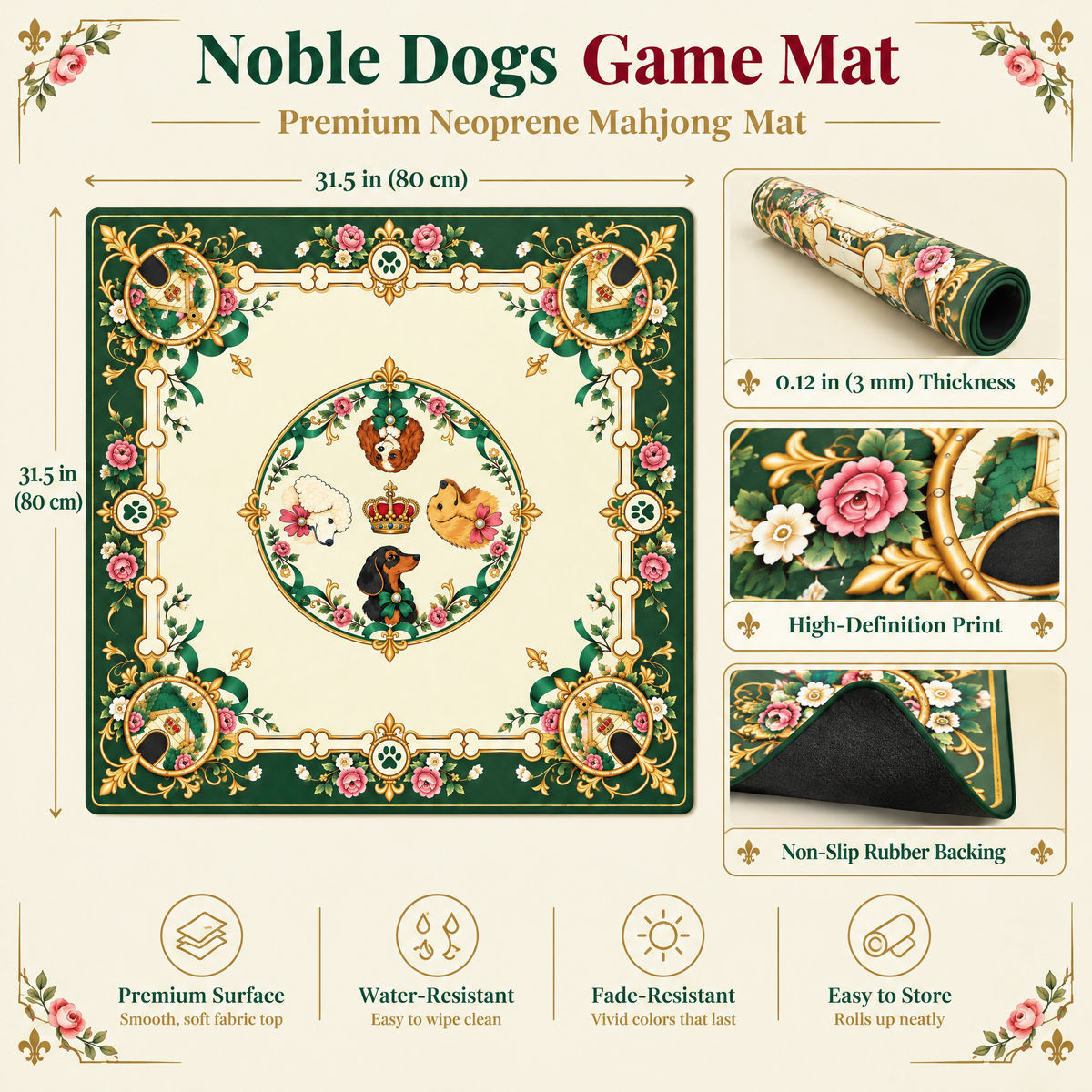
A good Singapore set needs durable tiles (acrylic over bamboo-face cardboard if you play weekly), large readable numerals and symbols (to spot tiles during fast play), and preferably a matched mat, racks, and case. Many players prefer acrylic sets because they resist wear from rapid shuffling and are easier to clean. Look for tiles that are uniform in size and weight; uneven tiles cause a biased draw. A quality mat protects your table and speeds up tile movement by reducing friction. Racks with pushers let players slide tiles smoothly without fumbling, essential for speed rounds. If you're hosting regular Singapore games, a best-selling set with matching protective mat and pushers signals respect for the game and keeps play flowing. For casual travel play, a compact case with tiles and a foldable mat suffices.
Aspect | Singapore Mahjong | American Mahjong |
Tile count | 144 | 152 |
Legal melds | Triplets, quads, runs | Triplets, quads only |
Joker use | Any position, pairs included | Never in pairs or single tiles |
Reference card | None (house rules) | Yes (NMJL card, annual) |
Typical round length | 3–5 minutes | 10–20 minutes |
Chows (1-2-3 runs) | Allowed, can be exposed | Forbidden |
Speed emphasis | High (timers common) | Medium (deliberate play) |
Scoring system | Points per hand (local variation) | Complex table (hand type + draw) |
🎁 See our most-loved mahjong sets & accessories →
What to check before you buy a Singapore mahjong set
Tile durability: acrylic tiles outlast bamboo-face cardboard; check reviews or request samples if ordering unseen.
Numeral clarity: numerals and symbols must be large and legible under indoor light; poor contrast causes errors in fast games.
Uniformity: all tiles should feel the same weight and size; unevenness skews draws.
Joker count: confirm how many jokers are included and whether that matches your house rules (zero, one, four, or more).
Mat fit: measure your playing table; a mat should cover the play area without bunching at edges.
Racks and case: confirm whether racks include pushers (essential for speed play) and whether the case fits your storage space.
Customization: if you're hosting a weekly game, consider an engraved set—it builds group identity and resale value if players leave the group.
Many players upgrading from a basic set report that a quality mahjong mat and racks with pushers reduce play friction and lower errors during rapid rounds. A well-organized table keeps the game flowing and enjoyable.
Where can I learn Singapore mahjong rules?
No single authoritative rulebook exists; Singapore mahjong is taught by club hosts and family members who pass down local variations. To find a local game: check community centers, libraries, cultural associations (Chinese, Malaysian, or Singaporean), and meetup boards for mahjong clubs. Many clubs welcome visitors to observe or join; ask the host for a quick rules overview before buying a set. Online communities and forums dedicated to classical and Southeast Asian mahjong post regional rulesets. YouTube tutorials exist but vary widely in accuracy; prefer videos posted by Southeast Asian players or clubs. Before hosting your first game, sit in on a session at a local club and ask questions about hand values, joker rules, and speed expectations. This saves you from hosting a game with conflicting rule assumptions.
✨ Find your Mahstead set — free US shipping →

FAQ
Can I play Singapore mahjong with an American mahjong set?
Technically yes, but you'll be limited. American sets (152 tiles, 8 jokers) have extra tiles and follow American hand patterns. Singapore uses 144 tiles and allows runs, so the tile mix feels alien. You'd need to adapt house rules and remove tiles. Better to source or borrow a true Singapore or classical Chinese set (144 tiles) to avoid confusion.
Do I need to learn American mahjong before Singapore mahjong?
No. Both games share tile names and basic melds (triplets, quads), but rule foundations differ—American forbids runs, Singapore requires them. Learning one doesn't accelerate the other. Start with whichever community is accessible to you; switching later is easier than you'd expect.
What's the fastest way to learn Singapore mahjong?
Sit in on a local club game and watch two hands without playing. Ask the host to explain each win. Play passively (discard and claim slowly) for 3–4 hands before joining speed rounds. Most players pick up hand-reading patterns within one session.
Are jokers required to play Singapore mahjong?
No. Many clubs and families play with zero jokers for a purer game emphasizing strategy. Others use one or two to speed up wins. Agree house rules with your table before starting; some groups permit joker pairs (rare) while others forbid jokers entirely.
How is Singapore mahjong different from Hong Kong mahjong?
Hong Kong mahjong emphasizes wait patterns and scores based on how you wait (pair wait, edge wait, etc.). Singapore is simpler and faster, favoring immediate payouts over complex scoring analysis. Both allow chows and use 144 tiles, but Hong Kong is slower and more strategic, while Singapore rewards speed and aggression.
Can I play Singapore mahjong with fewer than four players?
Rarely. Three-player variants exist but require special rules (one position sits out each round). Four-player is standard. Two-player Singapore mahjong is impractical and not widely played.


View More
View More
View More
