
Singapore Mahjong: How to Count Points Like a Local Player
Last updated: Nov 23, 2026
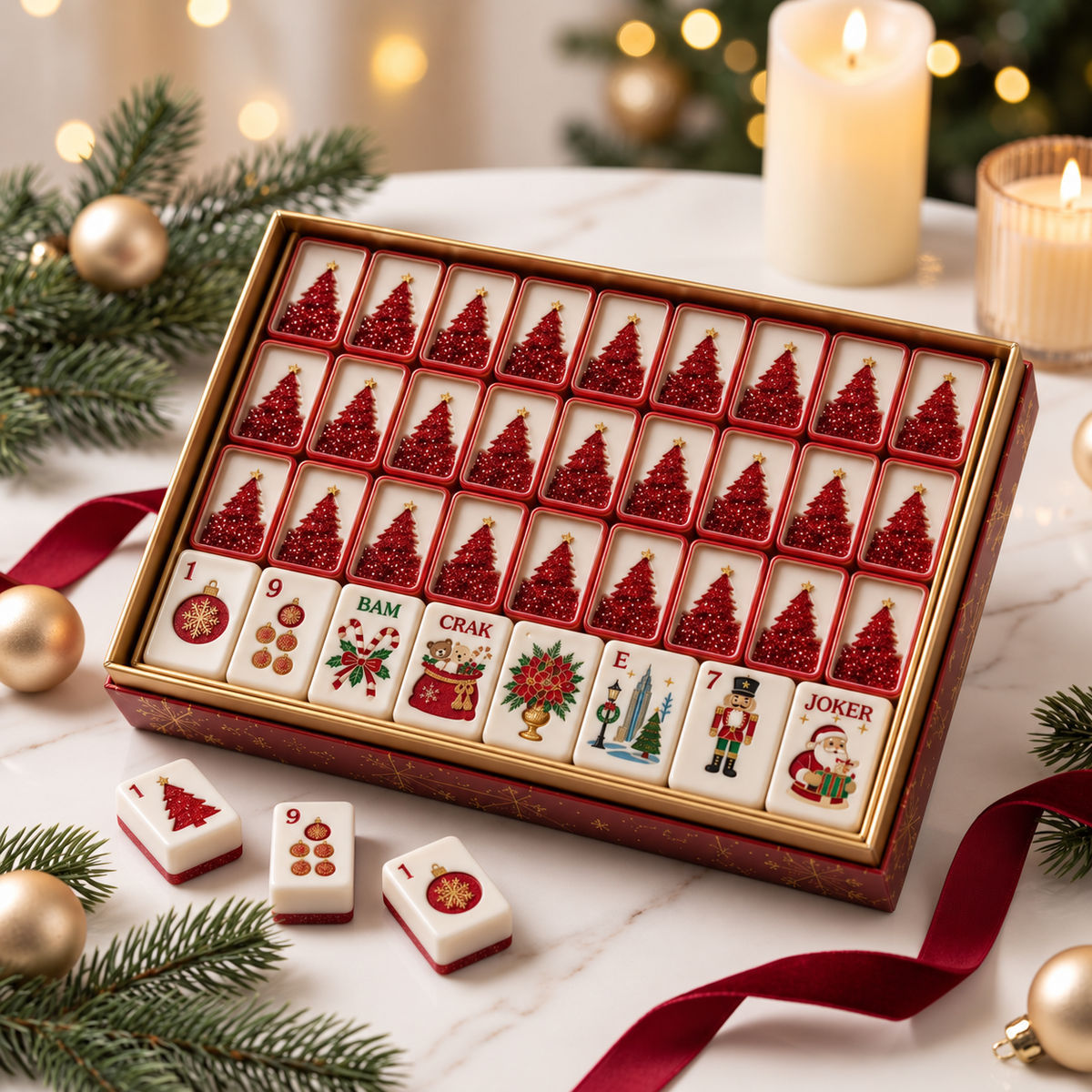
Singapore mahjong scoring starts with a base point value determined by your hand's complexity, then multiplied by your seat position (East pays/receives double). A winning hand begins at 1 point (basic win), escalates through melds and honors (usually 2–8 points per feature), and compounds with multipliers: doubles for concealed melds, flowers, seasons, or all-one-type hands. East player (dealer) pays/receives twice; non-East players settle one-to-one. Games use 144 tiles in Chinese or Taiwanese sets, not the 152-tile American format. Payment moves counterclockwise from loser to winner(s). Unlike American mahjong's fixed-card hands, Singapore scoring rewards tactical play: the more complex your combination, the higher your multiplier. Most casual games cap payouts to keep stakes reasonable, and house rules on kong timing or flower timing vary by region—clarify before play. Our best-selling sets include acrylic and bamboo options suited for casual Western play; for serious Singapore-style games, many players prefer traditional tile weight and feel, though scoring mechanics stay the same regardless of tile material.
How do Singapore mahjong base points work?
A winning hand receives a base point value ranging from 1 to 8 (or higher with variants). You earn base points by holding specific combinations: a simple pung of common tiles = 1 point; a pung of dragons or winds = 1 point; each flower or season tile adds points; a concealed pung or kong adds multipliers. Each meld class has its own point threshold. The hand is scored as a total base, then multiplied. East players (dealers) receive twice what West, North, or South pay. Most beginner-friendly groups use a simplified 1–8 scale rather than intricate calculation tables. Knowing your hand's base value tells you its payout tier before multipliers apply.

What are multipliers and how do they stack?
Multipliers double or triple your base points when specific conditions are met. A concealed hand (no exposed melds) = ×2. An all-one-suit hand = ×2. All honors (dragons and winds only) = ×2. All-one-type (all pungs, or all chows) = ×2. These stack multiplicatively, not additively—so a concealed, all-Bams hand = 1 base × 2 × 2 = 4× the original payout. A winning hand with three multipliers at 2 base points becomes 16 points to East. East pays twice; non-East pay normal. Keeping a running note of your multiplier conditions during play helps you recognize when a hand is climbing in value. Beginners often undercount by forgetting one multiplier layer.
How do flowers, seasons, and bonus tiles affect the score?
Flowers and seasons (two per player in Singapore sets) are settled separately from the main hand in most regional rules. You declare and set aside any flower or season when drawn or at turn-start; opponents each pay you a fixed value (often 1 point per tile, though some groups use 2). If you draw a replacement tile and it's another flower, you settle again immediately. Some variants use a "flower bonus" pool: all players contribute to a common pot at game-start, and whoever holds the most flowers wins it. This pre-hand settlement keeps flower income independent from your final score, so your 5-point hand remains 5 points even if you pocket 4 flower points separately. Clarify your group's flower-timing rule before the first hand—many players disagree here.
What's the difference between East-player payouts and regular payouts?
East (dealer) always receives and pays double. If you win with a 5-point hand as East, South, West, and North each pay you 5 points (total +15). If you win the same hand sitting South (non-East), East pays you 10, North and West each pay 5 (total +20 to you, but East's payout is twice). When East loses, they pay twice: if South wins a 3-point hand, East pays 6 while North and West pay 3 each. This rule creates risk-reward: East's dealer position is prestigious and lucrative when winning but costly when losing, encouraging defensive play. After each round, the seat rotates, so East moves counterclockwise. Tracking East position prevents payment confusion.

How do you calculate a complete Singapore mahjong hand from start to finish?
Step-by-step example:
Step | Detail | Points |
1. Identify melds | 3 pungs (Dots, Winds, Dragons) + 1 pair | Base = 3 |
2. Check concealment | All melds hidden (not exposed) | ×2 multiplier |
3. Check all-honors | No—hand has Dots suit | ×1 (no bonus) |
4. Check flowers | Drew 1 flower, settled separately | +1 point (paid already) |
5. Apply multiplier | 3 base × 2 (concealed) | = 6 points |
6. Determine seat | You are South (non-East) | East pays 2×; others pay 1× |
7. Collect payments | East pays 12; West & North pay 6 each | Total earned = 24 |
Most groups stop multipliers at 2× or 3× to cap runaway payouts. Always confirm your group's "maximum double" rule before starting.
🀄 Shop best-selling mahjong sets →
Common scoring mistakes and how to avoid them
Mistake: Forgetting East pays double on both sides. When East loses, you often forget they owe you twice. Tip: Say aloud "East pays double" after declaring a win so all players hear it.
Mistake: Stacking multipliers incorrectly. A concealed, all-Craks hand = base × 2 × 2, not base + 2 + 2. Always multiply, never add. Write out "(base) × multiplier A × multiplier B" on a tally sheet if unsure.
Mistake: Settling flowers during hand-scoring. Many groups pay flowers separately before the main hand is scored. If you mix them, accounting becomes confused. Agree on flower timing: settle immediately when drawn, or after the hand resolves.
Mistake: Ignoring regional rule variations. One group's "all Bamboo = 2 points" may be another's "1 point." Ask your group's experienced player for their house rules before sitting. Write them down.
Tip to verify: After each hand, the winner and payer both confirm the point total aloud before money moves. This catches arithmetic fast.
Singapore vs. American mahjong scoring: why it matters
American mahjong uses a fixed National Mah Jongg League card that lists legal hands and their point values each season—no calculation needed, just match your tiles to the card and claim the printed score. Singapore mahjong requires live calculation every hand: you assess melds, multipliers, and position instantly. American games use 152 tiles; Singapore uses 144. American mahjong has no East/West dealer mechanic; Singapore's dealer rotation adds strategy.
If you play both, the tile materials differ too. American sets typically feature acrylic or bone tiles in a Western case, while traditional Singapore sets use bamboo or ivory racks that let tiles slide smoothly. Scoring tables, hand combinations, and betting mechanics are wholly separate systems—learning one doesn't directly transfer, though the tile names and suit order remain similar.
🎁 See our most-loved mahjong sets & accessories →
What to check before you buy a set for Singapore mahjong
Tile count: Confirm the set includes 144 tiles (not 152). Many Western retailers stock American sets by default.
Tile feel: Do you want lightweight acrylic or heavier bamboo? Singapore players often prefer the traditional heft and sound.
Rack style: Singapore racks typically slide or pivot; ensure replacements fit your existing frame if upgrading.
Case durability: Frequent transport? Check that seams and latches withstand weekly games.
Bonus tiles: Verify flowers and seasons are clearly marked—you'll need to identify them instantly during play.
✨ Find your Mahstead set — free US shipping →

FAQ
Is Singapore mahjong scoring the same across all regions?
No. Jakarta, Bangkok, Hong Kong, and Singapore all have variants. Multiplier rules, flower payouts, and kong timing differ by city and house rules. Always ask local players for their house rules before wagering money. A: No. Jakarta, Bangkok, Hong Kong, and Singapore all have variants. Multiplier rules, flower payouts, and kong timing differ by city and house rules. Always ask local players for their house rules before wagering money.
Can I use American mahjong tiles to play Singapore mahjong?
Technically yes—both use Bams, Craks, and Dots. But American sets come with 152 tiles and extra jokers; Singapore uses 144 tiles and no jokers. You'd need to remove 8 tiles before play, which is awkward. Stick with the correct tile count for smooth games.
How do I know when to stop calculating multipliers?
Most friendly games cap multipliers at ×2 or ×3 maximum (e.g., "no hand can be worth more than 8 points base, or max 24 points with triple multiplier"). Agree on your group's cap before the game starts to avoid disputes.
What happens if I win by drawing a flower?
You settle flower payouts separately (usually 1 point per flower from each player, paid immediately), then you also score your hand normally. The hand payout and flower payout are independent—don't double-count.
Who collects payment if two players declare a win in the same turn?
In most Singapore rules, only the first declared winner collects; other claims are void. If players tie, the player closer to East position (clockwise) wins. Confirm your group's tie-break rule beforehand.
Can I use a scorekeeper app or written tally instead of memorizing calculations?
Yes. Many Western groups use pen-and-paper tallies or a simple scorecard app to track East position, base points, and payouts. This speeds play and reduces disputes—highly recommended for casual groups learning the system.


View More
View More
View More
